Artwork
Untitled
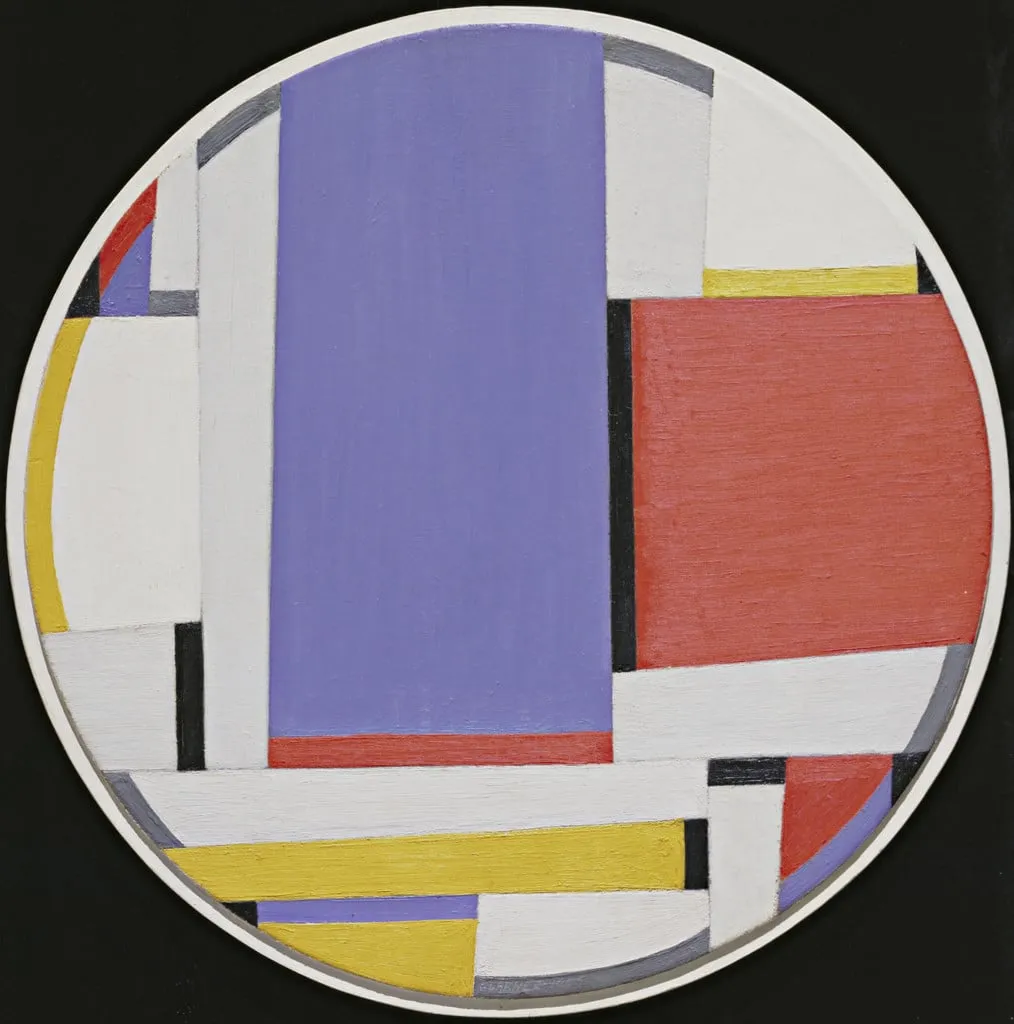
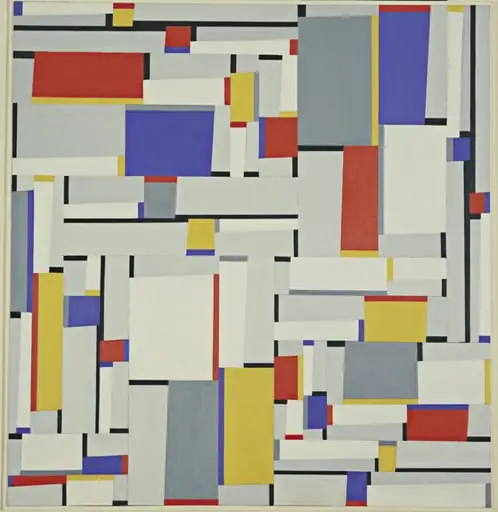
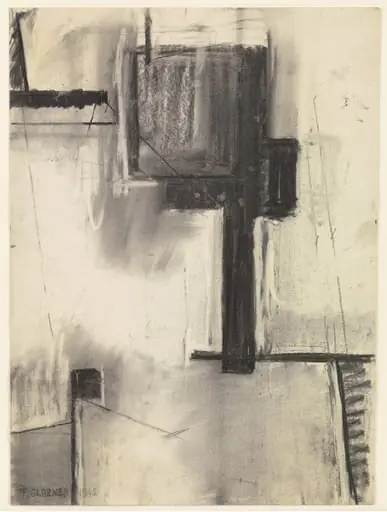
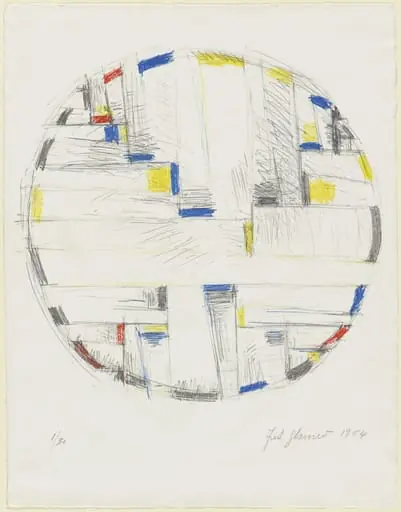
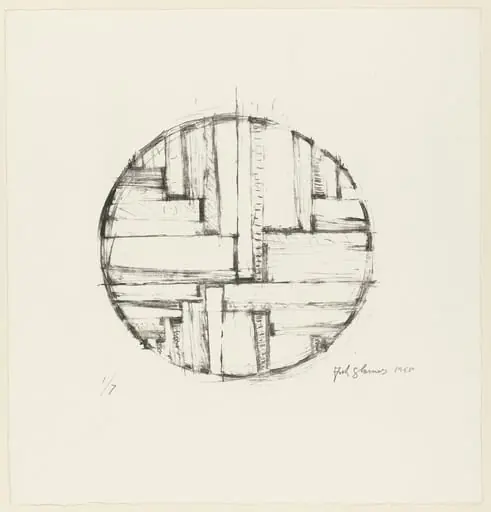
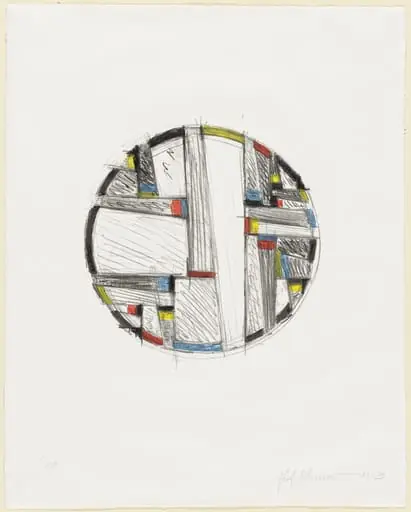
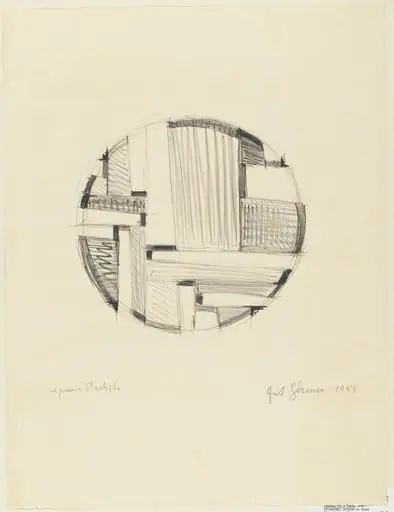
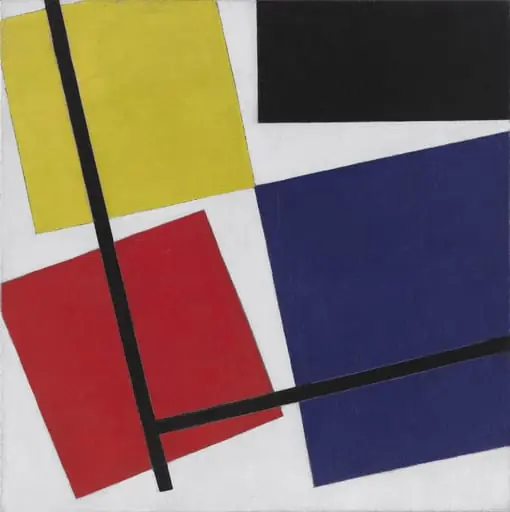
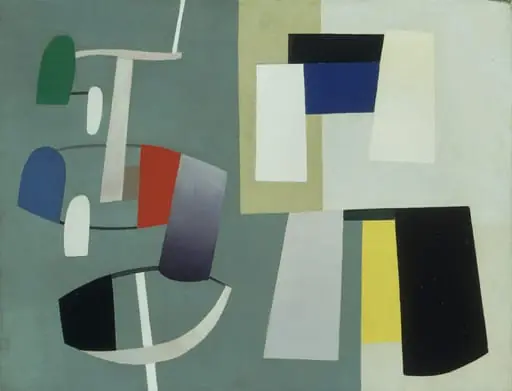
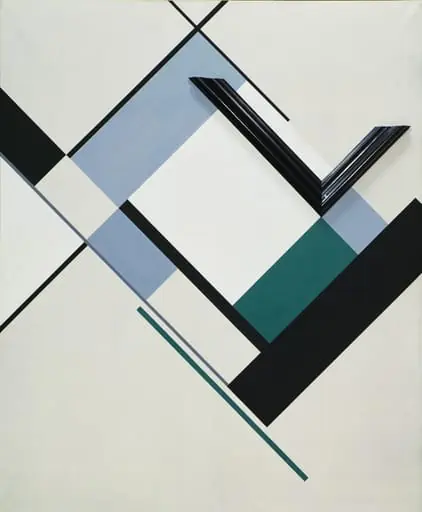
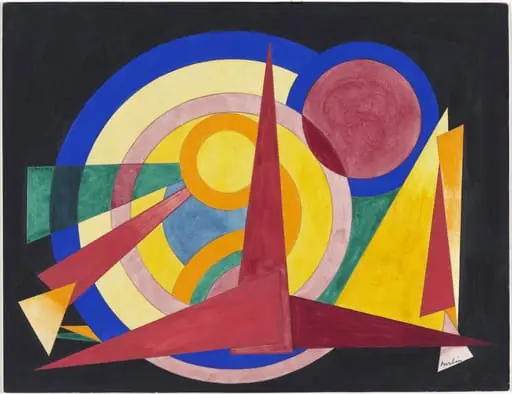
Untitled is an oil painting by the Abstract Expressionist artist Fritz Glarner. It dates from 1955 and is held in the collection of the Museum of Modern Art.
About this work
Overview
The composition features flat, measured shapes—squares and rectangles—in red, blue, yellow, gray, and white, arranged with deliberate symmetry.
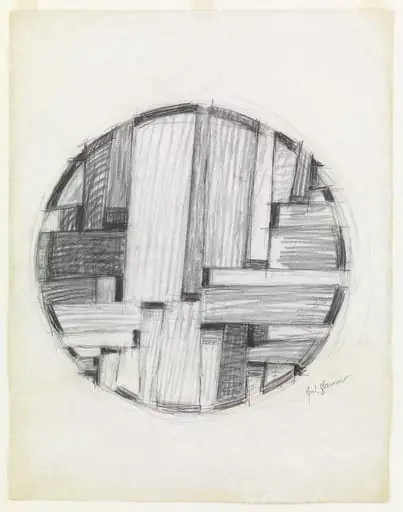
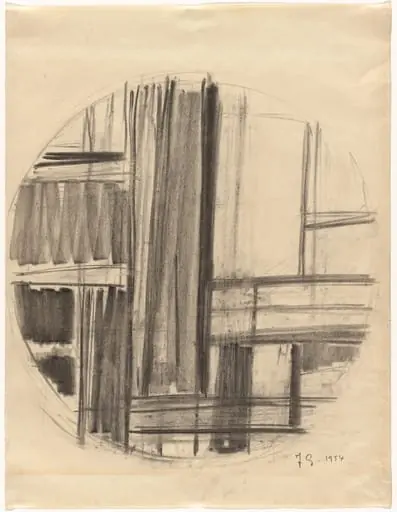
Fritz Glarner’s Untitled, painted in 1955, is an oil on board work in a circular format known as a tondo. It belongs to a series exploring structured abstraction through geometric forms. The composition features flat, measured shapes—squares and rectangles—in red, blue, yellow, gray, and white, arranged with deliberate symmetry. The background is uniformly white, enhancing the sense of spatial equilibrium. Glarner’s approach rejects spontaneity, favoring precision over expression.
Subject & Meaning
The painting has no representational subject; its meaning arises from the relationships between color and form. Glarner developed a theory called 'Relational Painting,' likening visual elements to musical notes in a harmonic structure. The arrangement of blocks follows a logic of balance and proportion, aiming for visual calm rather than emotional intensity. The circular frame reinforces this sense of centered order, directing attention inward without narrative distraction.
Technique & Style
Glarner employed strict measurement and drafting tools to create each shape, avoiding freehand lines or curves. Paint is applied evenly, with no visible brushwork, resulting in a flat, uniform surface. Colors are chosen for their optical contrast and spatial interaction, not symbolic meaning. The tondo format constrains the composition, demanding a more concentrated arrangement of elements. This method reflects a systematic, almost mathematical approach to abstraction.
History & Provenance
Created in 1955, Untitled is part of Glarner’s mature period, during which he refined his relational system. It entered The Museum of Modern Art’s collection shortly after its creation, reflecting institutional interest in postwar geometric abstraction. The work has remained in the museum’s holdings since, consistently displayed as an example of structured, non-representational art from the mid-20th century.
Context
Glarner’s work emerged alongside European and American movements like Concrete Art and De Stijl, but he developed a distinct methodology rooted in personal theory rather than collective manifestos. His avoidance of organic forms and emotional gesture set him apart from Abstract Expressionism. The 1950s context—marked by Cold War rationalism and scientific optimism—resonates with his emphasis on order, clarity, and system.
Legacy
Untitled exemplifies Glarner’s enduring contribution to abstract art: a disciplined, non-emotive language of form and color. His influence is seen in later artists who prioritize structure over expression, particularly in minimalism and conceptual painting. Though less widely known than contemporaries, his systematic approach continues to inform discussions on the relationship between geometry, perception, and harmony in modern art.
Artist & collection
Artist
Fritz Glarner was a Swiss-American painter. He was a proponent of Concrete Art movement and a disciple of Piet Mondrian.