Artwork
Mercury and Pandora
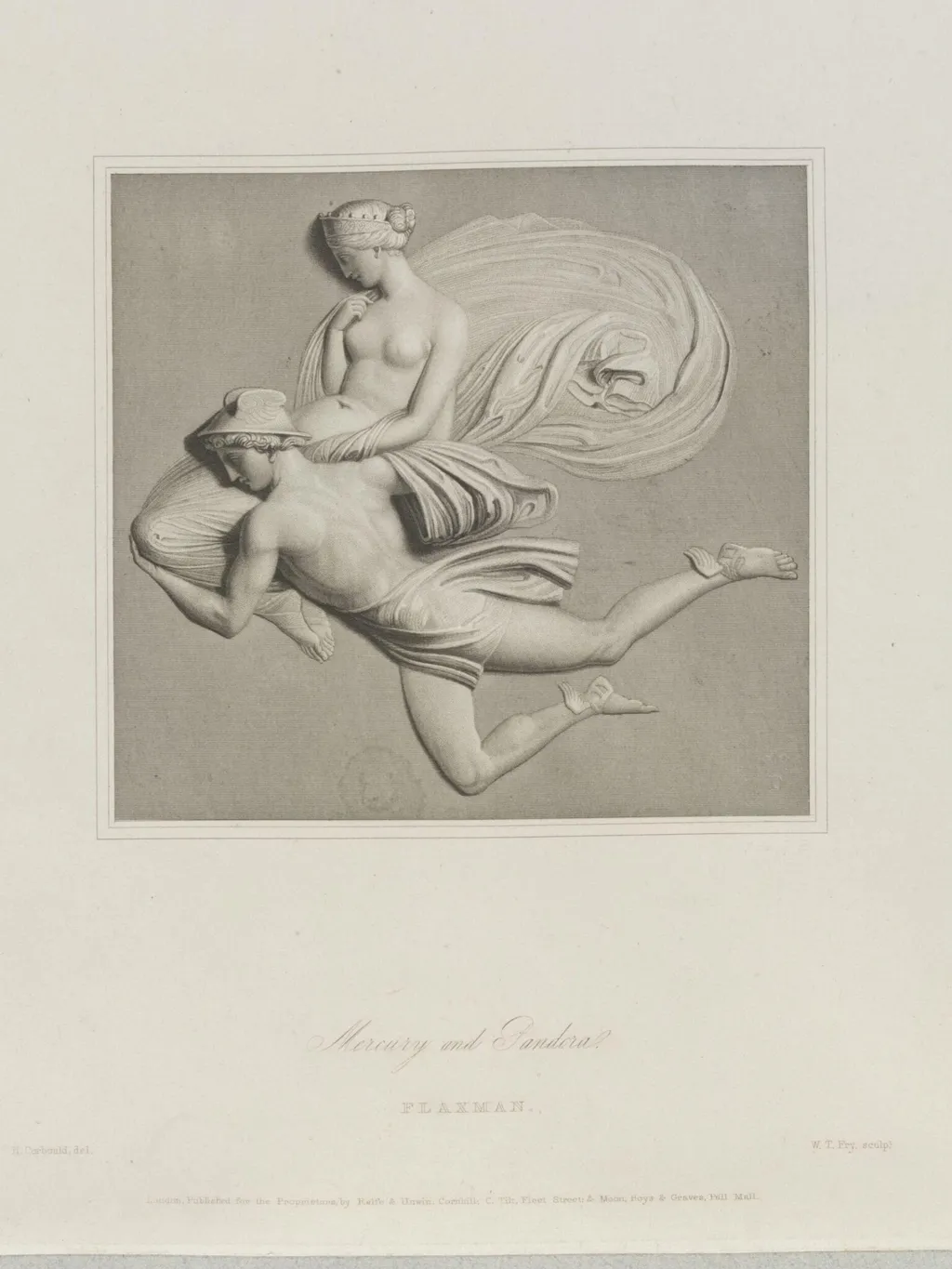
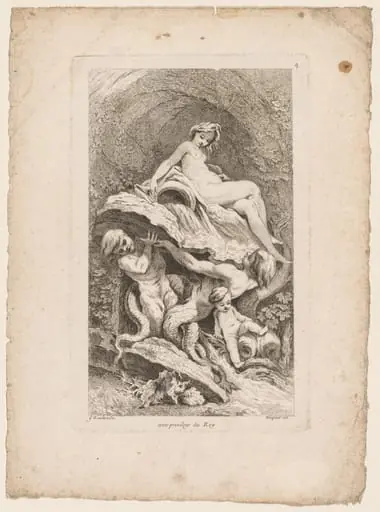
Mercury and Pandora is a print by William Thomas Fry. It is held in the collection of the Victoria and Albert Museum.
About this work
Overview
The scene captures a moment from classical myth, rendered with precision and clarity, emphasizing form over elaborate setting.
Created in 1850 by engraver William Thomas Fry, this print is a reproductive work based on a design by John Flaxman. Executed in ink on paper, it translates Flaxman’s linear composition into a finely detailed engraving. The scene captures a moment from classical myth, rendered with precision and clarity, emphasizing form over elaborate setting. The solid background isolates the figures, directing focus to their interaction and motion.
Subject & Meaning
The image illustrates Mercury, the messenger god, carrying Pandora, the first woman in Greek myth. Their dynamic pose suggests a moment of transition—perhaps her delivery to humanity or a symbolic journey. Mercury’s swift movement contrasts with Pandora’s passive form, hinting at her role as both gift and burden. The scene evokes themes of fate, curiosity, and divine intervention, central to the myth’s moral ambiguity.
Technique & Style
Fry employed fine-line engraving to render Flaxman’s neoclassical design with crisp contours and subtle tonal gradations. Chiaroscuro is achieved through controlled hatching, modeling the figures’ forms without shading or wash. The absence of detailed background enhances sculptural clarity. The composition’s asymmetry and elongated limbs reflect Flaxman’s admiration for ancient relief sculpture, prioritizing idealized proportion over naturalism.
History & Provenance
The print was produced during a period of renewed interest in classical mythology among British artists and publishers. Fry, known for reproducing Flaxman’s designs, worked within a commercial print culture that made mythological imagery accessible beyond elite collections. While the original drawing by Flaxman is lost, Fry’s engraving survives as a key record of his compositional approach and the dissemination of neoclassical ideals in mid-19th-century Britain.
Context
In the mid-1800s, British art institutions promoted classical themes as morally instructive and aesthetically superior. Flaxman’s linear style, rooted in ancient Greek art, was widely reproduced in prints to educate the public. Fry’s engraving fits within this movement, serving as both artistic homage and cultural artifact. The choice of Mercury and Pandora reflects contemporary fascination with origin myths and the tension between divine will and human agency.
Legacy
Though not widely exhibited today, Fry’s engraving remains a representative example of 19th-century reproductive printmaking. It preserves Flaxman’s influential interpretation of myth, offering insight into how classical narratives were visualized for a broad audience. The work contributes to the historical record of neoclassical aesthetics in print, illustrating the collaboration between designer and engraver in shaping public visual culture.
Artist & collection

 Cupid and Psyche
 La Fontaine d'Amour (The Fountain of Love)
 L'invocation a l'amour
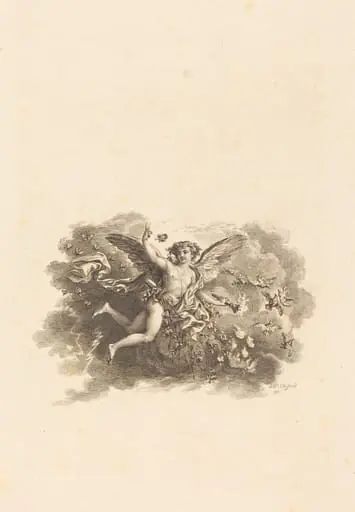 Fleuron for the Title Pages
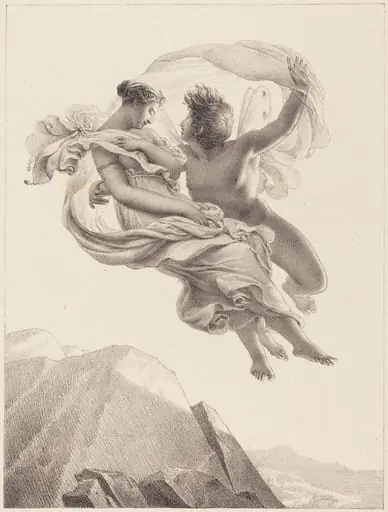 Zephyr and Psyche
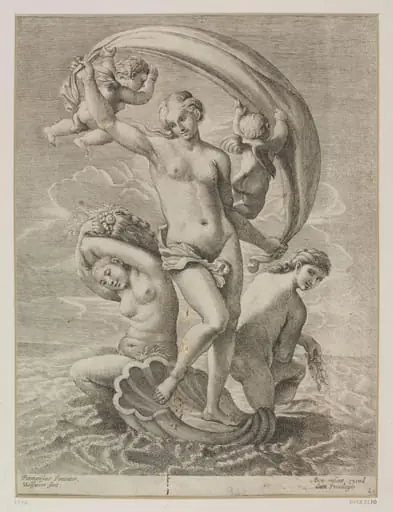 The Triumph of Galatea
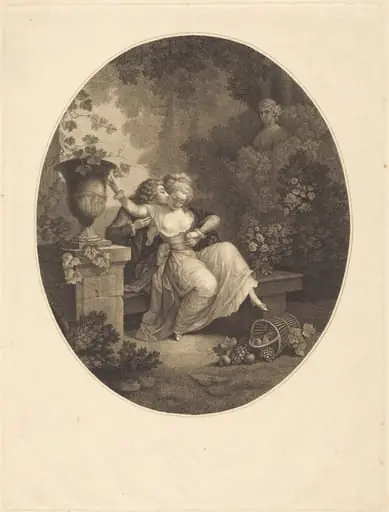 The Upset Basket
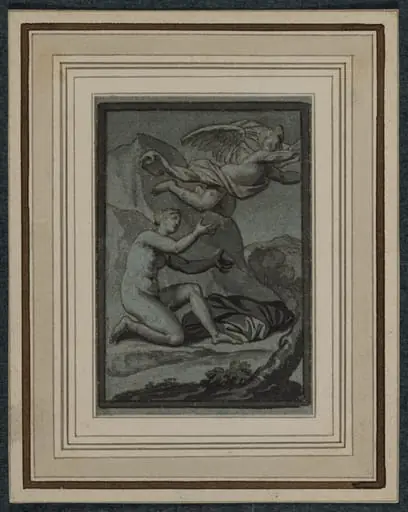 Mythological Scene
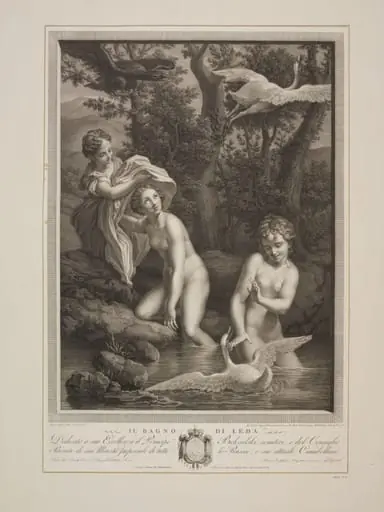 Leda Bathing
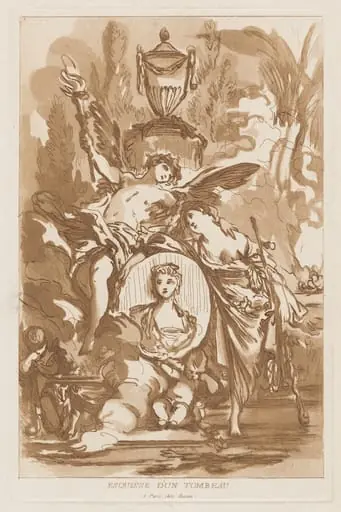 Esquisse d’un tombeau (Sketch for a Tomb)
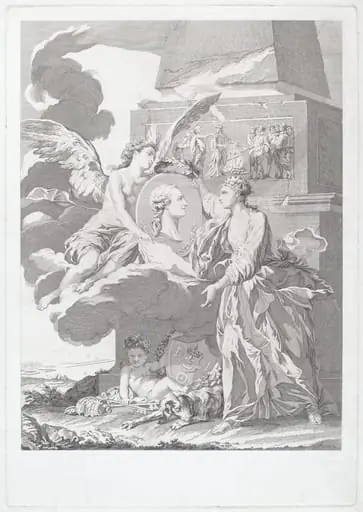 Allegorical Portrait of Pierre Buirette de Belloy
 Book of Fountains: No. 4