Artwork
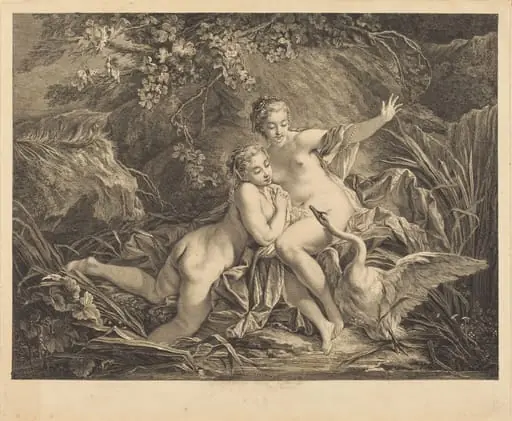
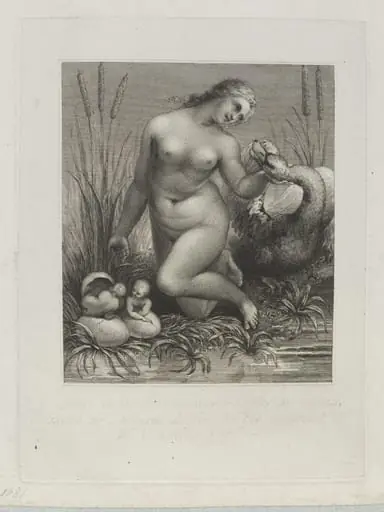
Leda Bathing
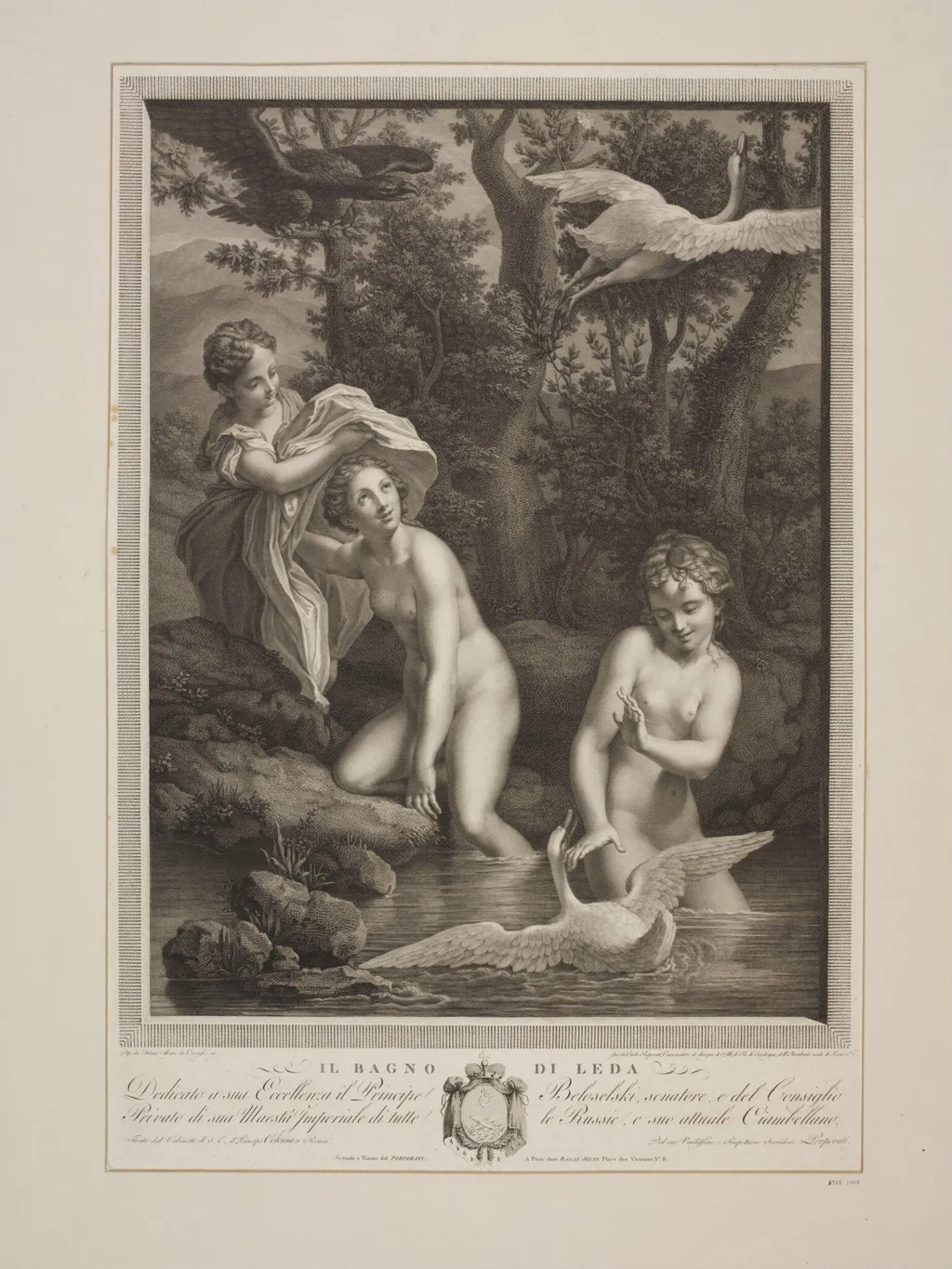
Leda Bathing is a print by Carlo Antonio Porporati. It dates from 1850 and is held in the collection of the Victoria and Albert Museum.
About this work
Overview
Carlo Antonio Porporati’s 1850 print, *Leda Bathing*, is a reproductive engraving based on a composition by the Renaissance artist Correggio.
Carlo Antonio Porporati’s 1850 print, *Leda Bathing*, is a reproductive engraving based on a composition by the Renaissance artist Correggio. Created on paper using intaglio techniques, the work translates a painted mythological scene into a monochromatic graphic format. Its production reflects 19th-century interest in disseminating classical themes through printmaking, making earlier artistic visions accessible beyond original canvases.
Subject & Meaning
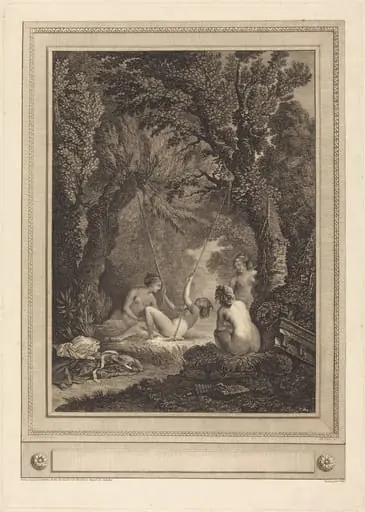
The scene depicts Leda, a figure from Greek myth, in a moment of intimacy with a swan—symbolizing Zeus in disguise. She is shown alongside a child, likely their offspring, and another figure, possibly a servant. The presence of the swan and the bathing setting alludes to divine transformation and erotic union. The quiet, enclosed composition invites contemplation rather than drama, emphasizing the myth’s tender, private dimension.
Technique & Style
Porporati employed fine line engraving to render soft gradations of tone, mimicking the chiaroscuro of Correggio’s original. The figures are delicately modeled with subtle shading, while the background trees and distant bird are suggested with minimal strokes. The monochrome palette enhances the ethereal mood, and the composition’s balance reflects classical ideals of harmony, even as the print’s texture remains distinctly graphic.
History & Provenance
The print was made in 1850 as part of a broader 19th-century practice of reproducing Renaissance masterpieces for collectors and institutions. Porporati, known for his reproductive engravings, worked within established artistic lineages. This particular impression is held in the Victoria and Albert Museum’s collection, where it contributes to the archive of how classical subjects were reinterpreted in the modern era through print.
Context
In mid-19th-century Europe, there was renewed scholarly and aesthetic interest in antiquity, fueling demand for prints after Old Master compositions. Porporati’s work fits within this trend, serving both educational and decorative purposes. The choice of Correggio’s Leda—already a celebrated subject—underscores the enduring appeal of mythological narratives in an age increasingly shaped by historical revivalism.
Legacy
Though not an original composition, Porporati’s print preserves and transmits Correggio’s vision to audiences who might never see the painting. It exemplifies how reproductive printmaking functioned as a bridge between eras, sustaining visual culture through mechanical reproduction. Today, it remains a document of 19th-century collecting habits and the transmission of Renaissance aesthetics across media.
Artist & collection
Artist
Carlo Antonio Porporati made prints in the late 1700s that borrow classical Italian mythology for intimate scenes.