Artwork
Hindu Stone Sculptures
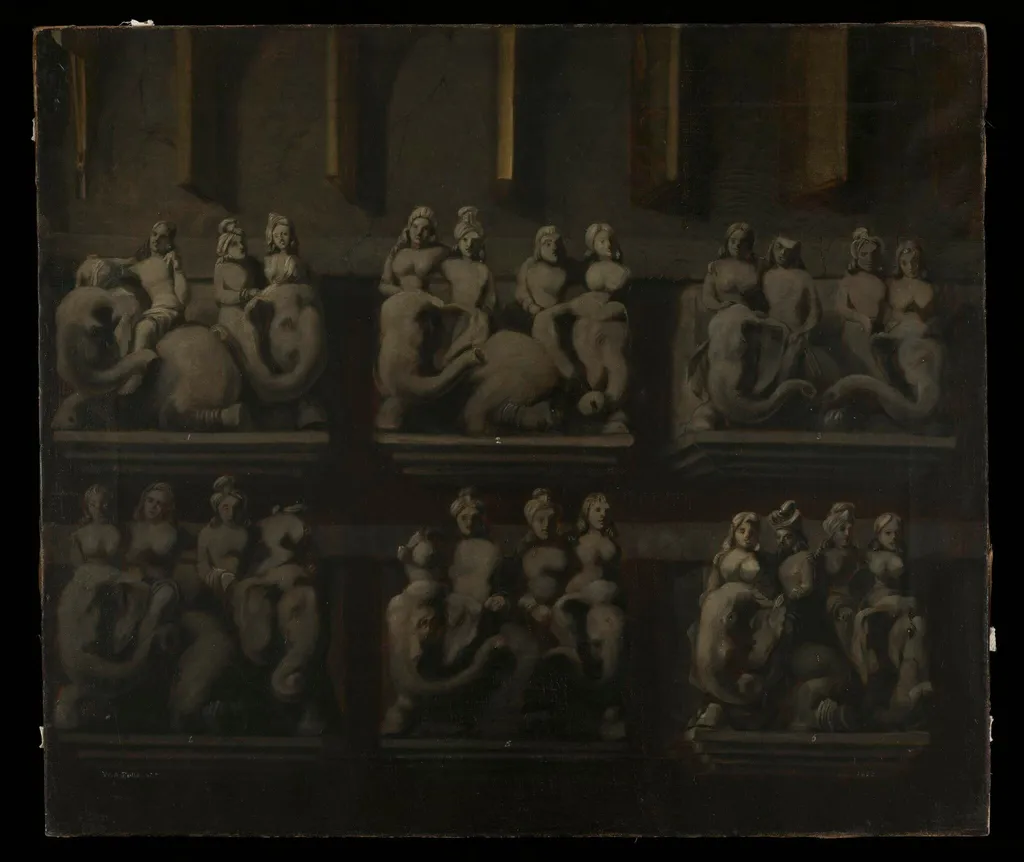
Hindu Stone Sculptures is an oil painting by the Impressionist artist W. A. Fulton. It dates from 1850 and is held in the collection of the Victoria and Albert Museum.
About this work
This is an oil painting of Hindu stone sculptures by W. A. Fulton from about 1850. It mixes Impressionism and Realism, common in that era.
The odd part? We have almost no facts. The artist’s name comes from a faded note on the back. The museum has no record of how the work got there.
Look up the Victoria and Albert Museum next.
Overview
An oil painting from around 1850 depicts a group of Hindu stone sculptures rendered in monochrome tones.
An oil painting from around 1850 depicts a group of Hindu stone sculptures rendered in monochrome tones. The work was transferred to the South Kensington Museum in 1879, now part of the Victoria and Albert Museum, though no documentation survives regarding its acquisition or the circumstances of its arrival. The artist, identified only by a faded inscription on the reverse as 'W.A. Fulton pixt.', remains otherwise unknown.
Subject & Meaning
The painting reproduces a collection of Hindu religious carvings, likely deities or mythological figures, rendered without color or context. The original museum record describes it simply as a copy of stone idols and related forms, suggesting its purpose was documentary rather than devotional. The absence of geographic or cultural details implies the artist or patron viewed these objects as curiosities rather than sacred symbols.
Technique & Style
Executed in oil on canvas, the work employs a restrained palette of black, white, and grey to mimic the tonal range of carved stone. The handling blends observational precision with loose brushwork, reflecting mid-19th-century tendencies to merge realism with emerging impressionistic approaches. The absence of background or setting focuses attention solely on the sculptural forms, emphasizing their physical presence over narrative.
History & Provenance
The painting entered the Indian Museum’s collection before being transferred to South Kensington in 1879. No accession records, donor information, or purchase details accompany the work. The sole trace of its origin is a handwritten note on the reverse, identifying the artist as W.A. Fulton. No other works by this individual are known, and no correspondence or exhibition history has been located to explain its creation or movement.
Context
During the mid-1800s, British collectors and institutions frequently commissioned or acquired copies of Indian religious art as ethnographic specimens. This painting aligns with that trend, serving as a visual record of sculptures collected during colonial administration. Its monochrome treatment reflects both technical limitations of reproduction and a prevailing aesthetic that prioritized formal study over cultural interpretation.
Legacy
The painting survives as a mute artifact of colonial-era documentation practices, preserving the appearance of Hindu sculptures now dispersed or lost. Its anonymity underscores the erasure of individual agency in the collection and reproduction of non-Western art. Today, it functions less as a work of art and more as a historical trace—evidence of how cultural objects were observed, recorded, and removed from their original contexts.
Artist & collection
Artist
W. A. Fulton painted Hindu Stone Sculptures in the mid-1800s, switching paintbrush for oil to recreate stone carvings in the gallery. The canvas shows figures in calm poses typical of Hindu temple art, with soft light…

 A View of a Room of Greek, Roman and Etruscan Antiquities (Salle no. 9) in the Louvre
 Untitled
 Dessus de porte with a presentation of two reclining women with garlands
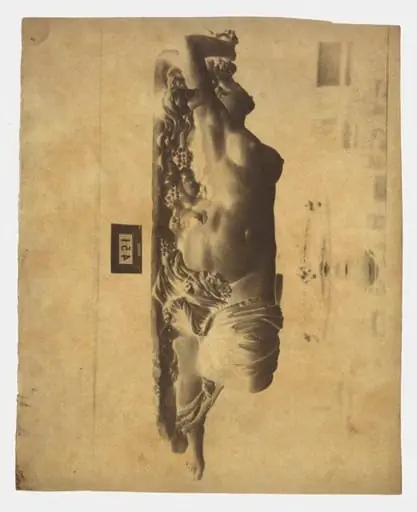 Statue of Reclining Female with Grapes, Great Exhibition 1851
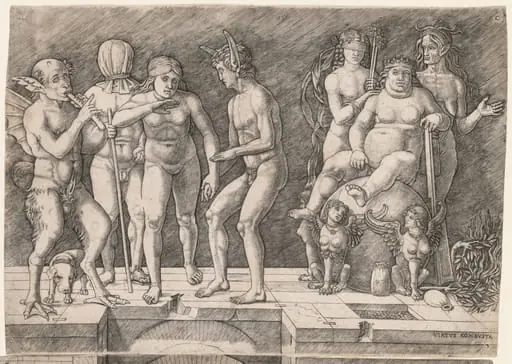 Allegory of the Fall of Ignorant Humanity: Virtus Combusta
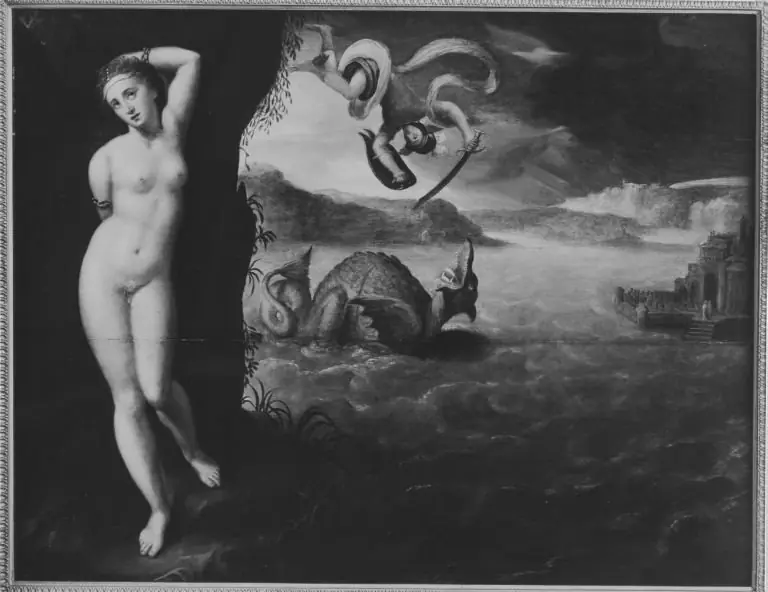 The Freeing of Andromeda
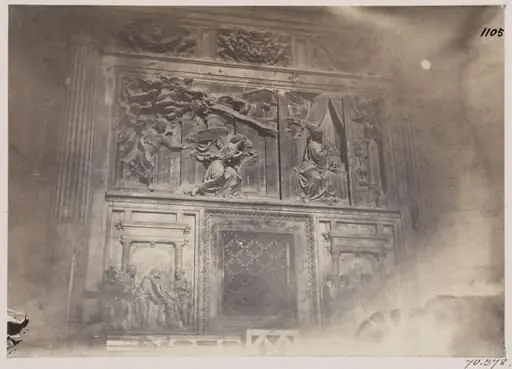 Out of Rome - House of the Blessed Virgin at Loreto. Sculpture of the Annunciation, A.D. 1520
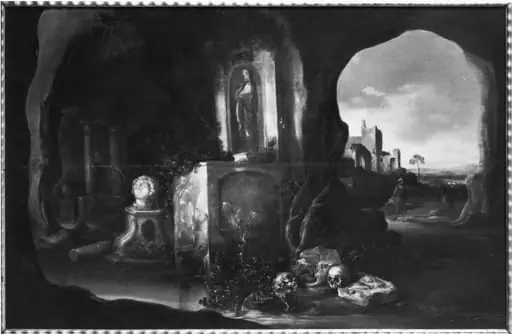 A Mountain Cave
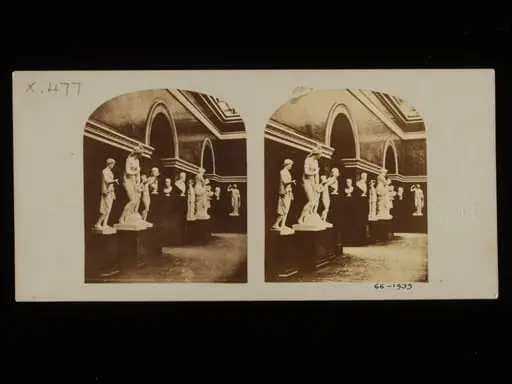 The Gallery of Greek Sculpture at Crystal Palace
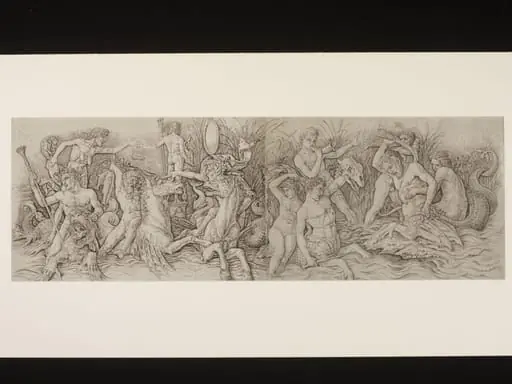 Battle of the Sea Gods
 Cross Panel with Vine in Center and Tritons' Couple
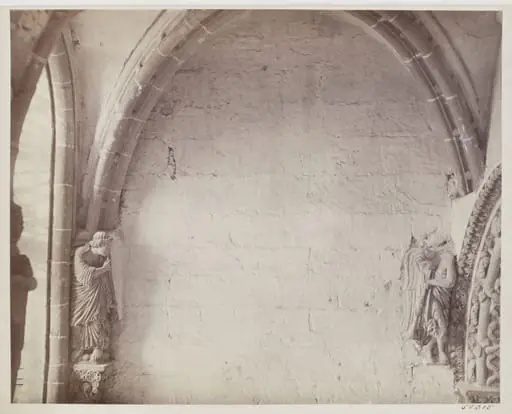 Cathedral, Santiago, Spain, Portico de la Gloria, Sculpture on North wall