Artwork
Allegory of the Fall of Ignorant Humanity: Virtus Combusta
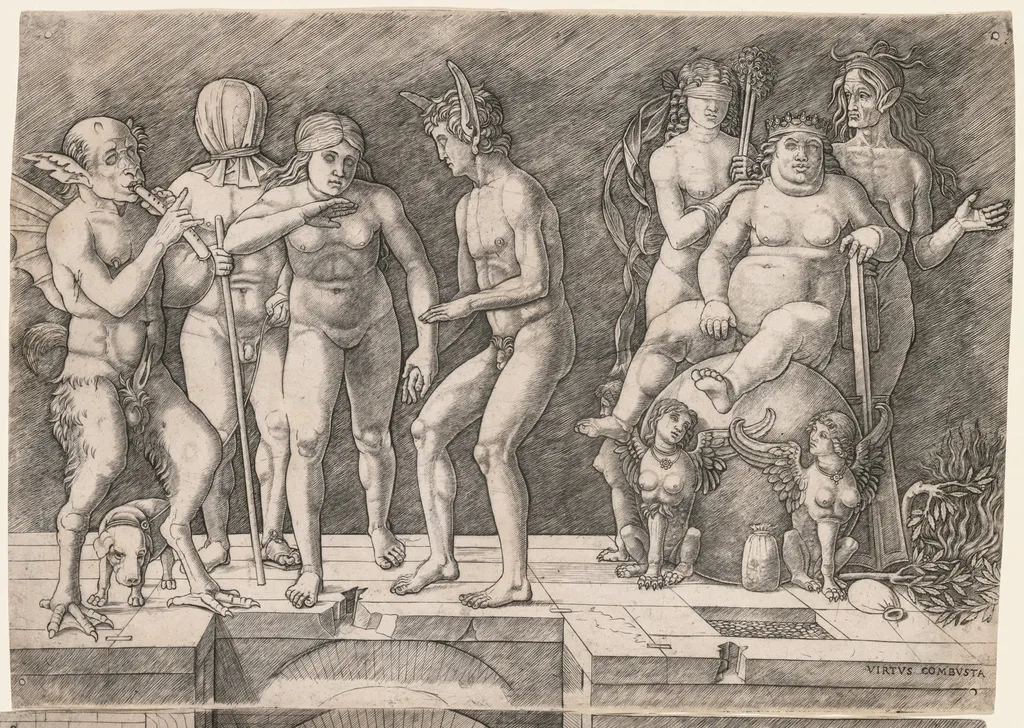
Allegory of the Fall of Ignorant Humanity: Virtus Combusta is a print by the Renaissance artist Giovanni Antonio da Brescia. It dates from 1502 and is held in the collection of the Cleveland Museum of Art.
About this work
Overview
Executed in engraving, it reflects the artist’s mature style after he transitioned from using initials to full signatures.
Created around 1502 by the Italian engraver Giovanni Antonio da Brescia, this print is an allegorical composition in the tradition of Northern Renaissance moral imagery. Executed in engraving, it reflects the artist’s mature style after he transitioned from using initials to full signatures. The work is part of the Cleveland Museum of Art’s collection and exemplifies the period’s interest in visualizing abstract ethical concepts through complex, symbolic scenes.
Subject & Meaning
The scene depicts a group of nude or semi-nude figures on a grand staircase, suggesting a descent or fall from grace. A woman brandishes a stick, another sits beside a man holding a staff, while winged putti hover near fruit and a vessel. A dog at the lower left and the overall disorder imply moral decay. The title, 'Virtus Combusta,' suggests virtue has been consumed or extinguished, framing the image as a warning against the consequences of ignorance and moral neglect.
Technique & Style
The engraving employs strong chiaroscuro, using dense cross-hatching and deep shadows to model the figures with sculptural weight. The background features a finely detailed, textile-like texture that contrasts with the solid forms of the bodies. The composition is densely packed, with figures arranged on multiple levels to create visual tension. The precision of the lines and the controlled contrast reflect the engraver’s technical mastery and his engagement with contemporary printmaking innovations.
History & Provenance
Giovanni Antonio da Brescia, active in northern Italy between 1490 and 1519, initially signed works with the monogram 'Z.A.' before adopting the fuller 'IO.AN.BX.' This print is among his later, more clearly attributed works. It entered the Cleveland Museum of Art’s collection through documented acquisitions, though its earlier ownership history prior to the 20th century remains largely unrecorded. Its survival in good condition underscores its value to collectors of Renaissance prints.
Context
Produced during the height of the Italian Renaissance, the print reflects broader cultural anxieties about moral decline and the loss of classical virtue. Similar allegories appeared in humanist literature and visual art, often influenced by medieval moralizing traditions. Engraving allowed such ideas to circulate widely among educated elites. Brescia’s work aligns with contemporaries like Mantegna and Dürer, who also used print to explore philosophical and ethical themes with visual complexity.
Legacy
Though not widely reproduced in modern scholarship, the print remains a significant example of early 16th-century Italian engraving. It illustrates how artists translated abstract moral concepts into intricate visual narratives, influencing later allegorical traditions in Northern Europe. Its technical rigor and symbolic density continue to inform studies of Renaissance print culture and the intersection of art with ethical discourse.
Artist & collection

Artist
Giovanni Antonio da Brescia was an Italian engraver of northern Italy, active in the approximate period 1490–1519, during the Italian Renaissance.

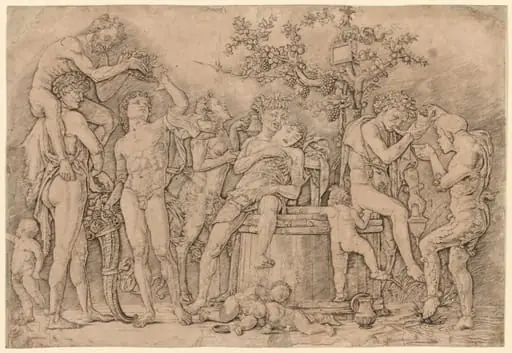 Bacchanal with a Wine Vat
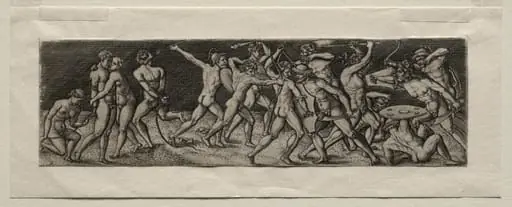 Fight between Eleven Warriors
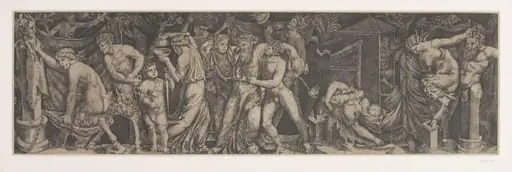 Untitled
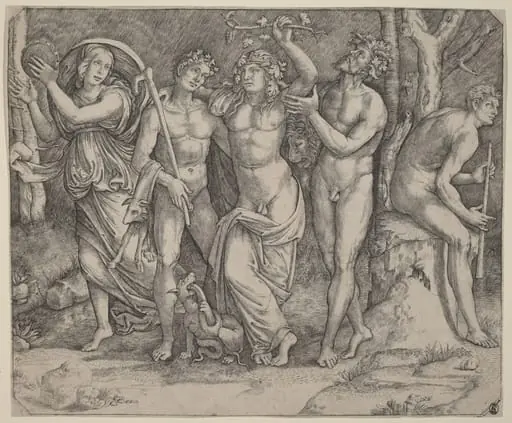 Bacchus and His Attendants
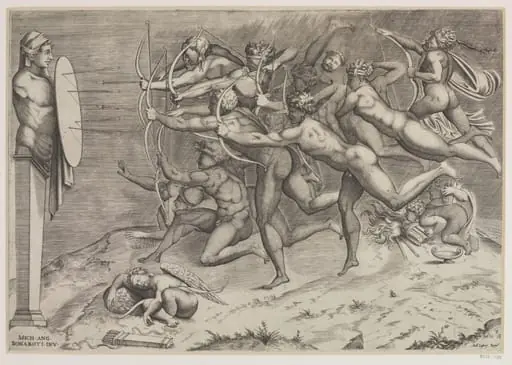 The Archers
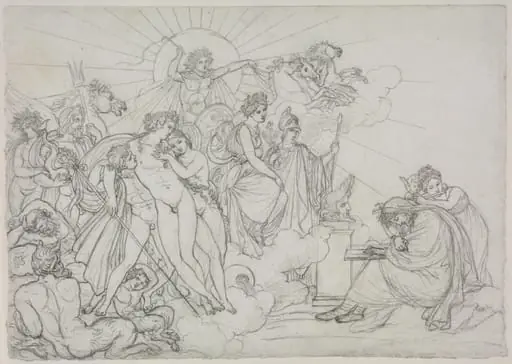 Invocation to the Divinities who preside over Agriculture from Virgil's "Georgics"
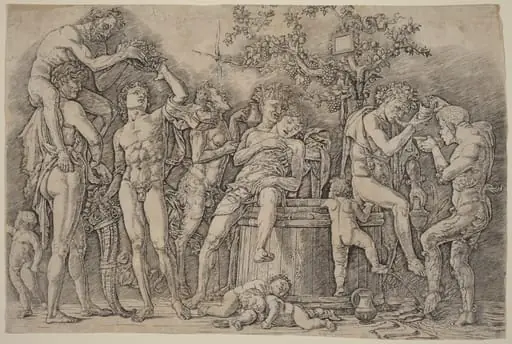 Bacchanal with a Wine Vat
 The Circle of the Thieves; Agnolo Brunelleschi Attacked by a Six-Footed Serpent
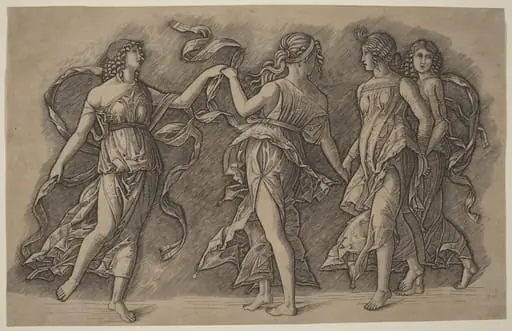
 Four Dancing Muses