Artwork
Madonna with the Infant Christ and the Infant Saint John
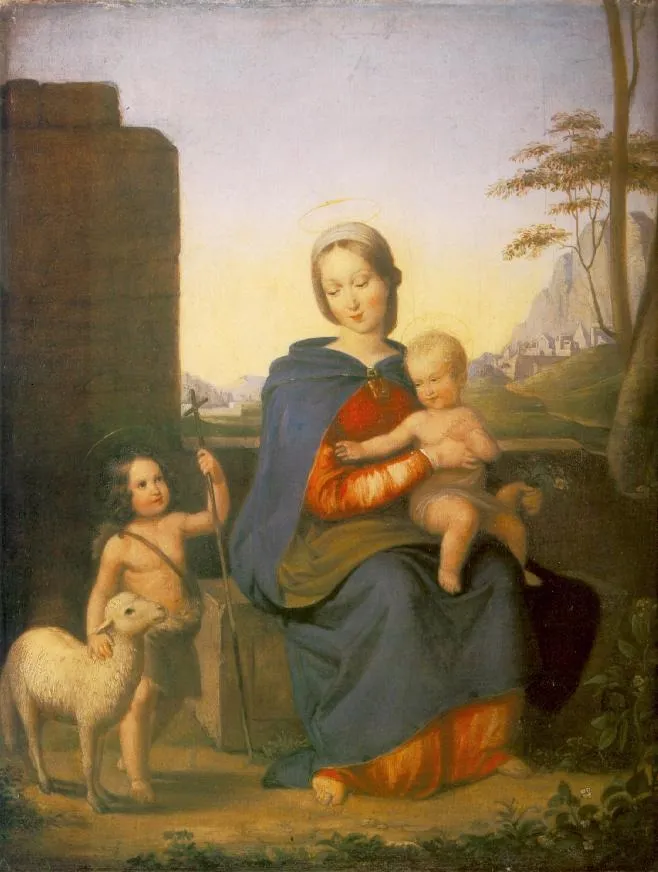
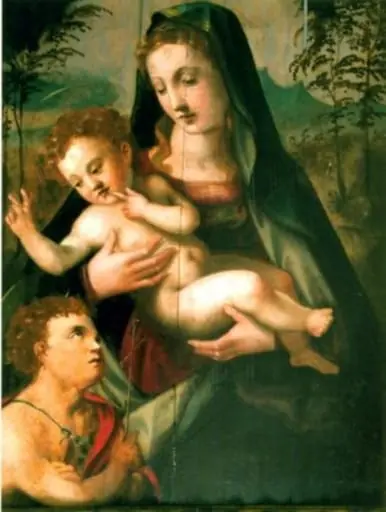
Madonna with the Infant Christ and the Infant Saint John is an oil painting by the Biedermeier artist Gábor Melegh. It dates from 1827 and is held in the collection of the Hungarian National Gallery.
About this work
Overview
Painted in 1827 by Hungarian artist Gábor Melegh, this oil on canvas work presents the Virgin Mary with the Christ Child and the young Saint John the Baptist.
Painted in 1827 by Hungarian artist Gábor Melegh, this oil on canvas work presents the Virgin Mary with the Christ Child and the young Saint John the Baptist. It resides in the Hungarian National Gallery, reflecting the artist’s engagement with traditional religious iconography during the early 19th century. The composition follows established devotional models while incorporating localized stylistic elements.
Subject & Meaning
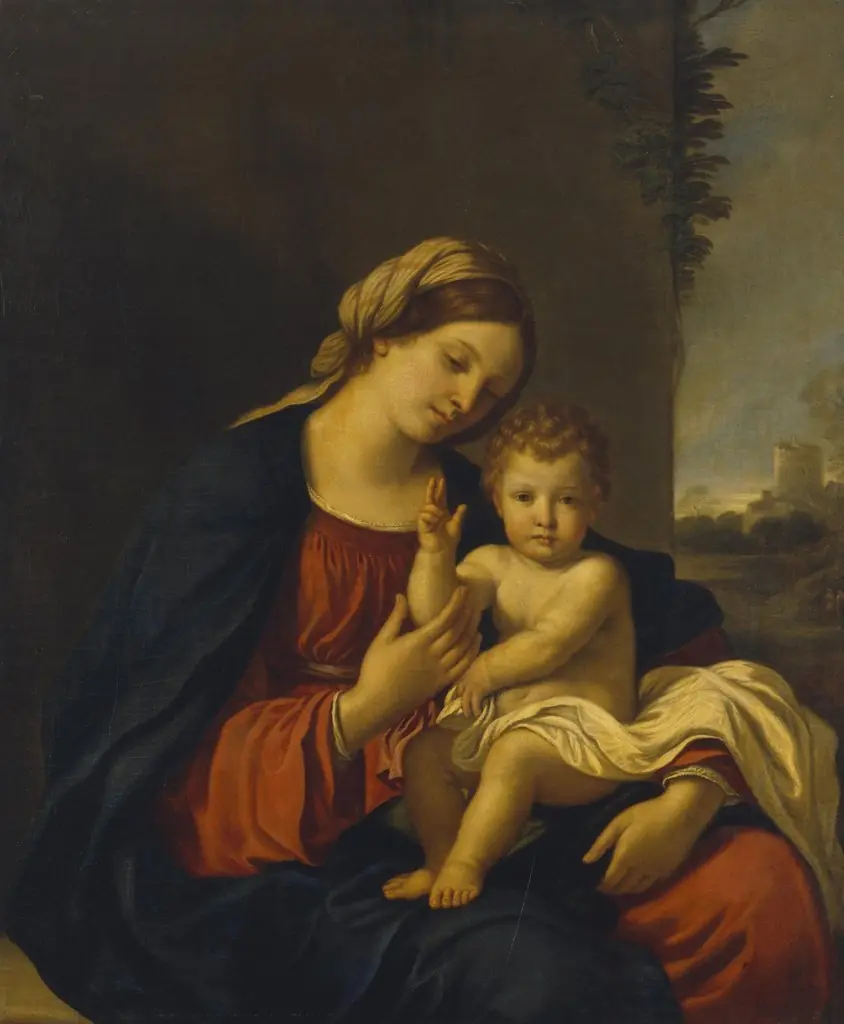
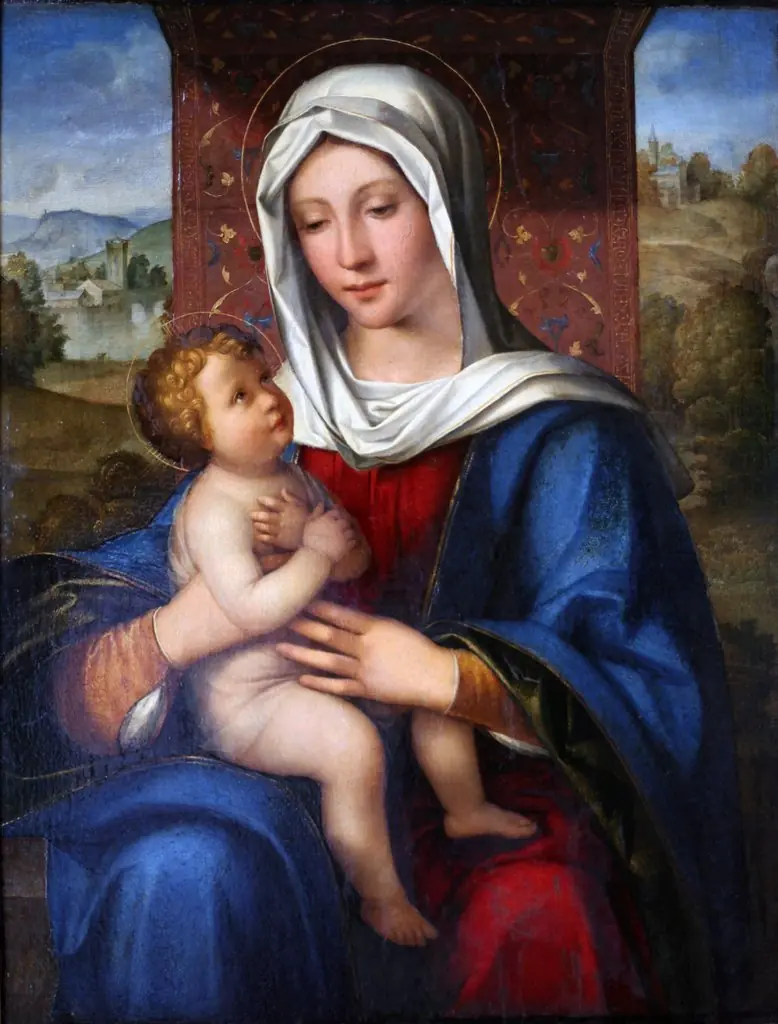
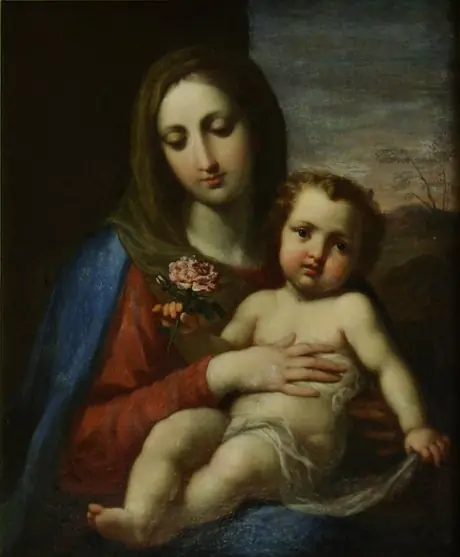
The Virgin Mary, depicted in a blue mantle over a red garment, holds the nude Christ Child, while the infant John, also naked, presents a small wooden cross. A lamb, symbolizing Christ’s future sacrifice, rests near John. The grouping evokes theological themes of divine destiny and familial piety, common in Marian devotion. The quiet interaction between the figures emphasizes tenderness over drama.
Technique & Style
Melegh employs soft, blended brushwork to render the figures with gentle modeling, avoiding sharp contours. The palette is restrained, with muted blues and reds contrasting against a pale, luminous sky. The landscape background, featuring trees and a distant hamlet, is rendered with loose, atmospheric strokes, grounding the sacred scene in a quiet, earthly setting without overwhelming it.
History & Provenance
Created in 1827, the painting entered the collection of the Hungarian National Gallery, where it remains today. Little is documented about its early ownership or commission, suggesting it may have been intended for private devotion or local ecclesiastical use. Its preservation within a national institution reflects its recognition as a representative work of Hungarian religious art from the period.
Context
In early 19th-century Hungary, religious art continued to serve devotional and educational roles amid rising nationalist sentiment. Melegh, trained in academic traditions, adapted classical compositions to local tastes. This painting aligns with broader Central European trends that favored serene, intimate portrayals of sacred figures, balancing piety with emerging Romantic sensibilities in landscape and emotion.
Legacy
Though not widely known outside Hungary, the painting contributes to the understanding of regional religious art during a period of cultural consolidation. Melegh’s restrained approach, blending academic training with local aesthetic preferences, offers insight into how traditional iconography was maintained and subtly transformed in smaller artistic communities of the time.
Artist & collection