Artwork
Untitled
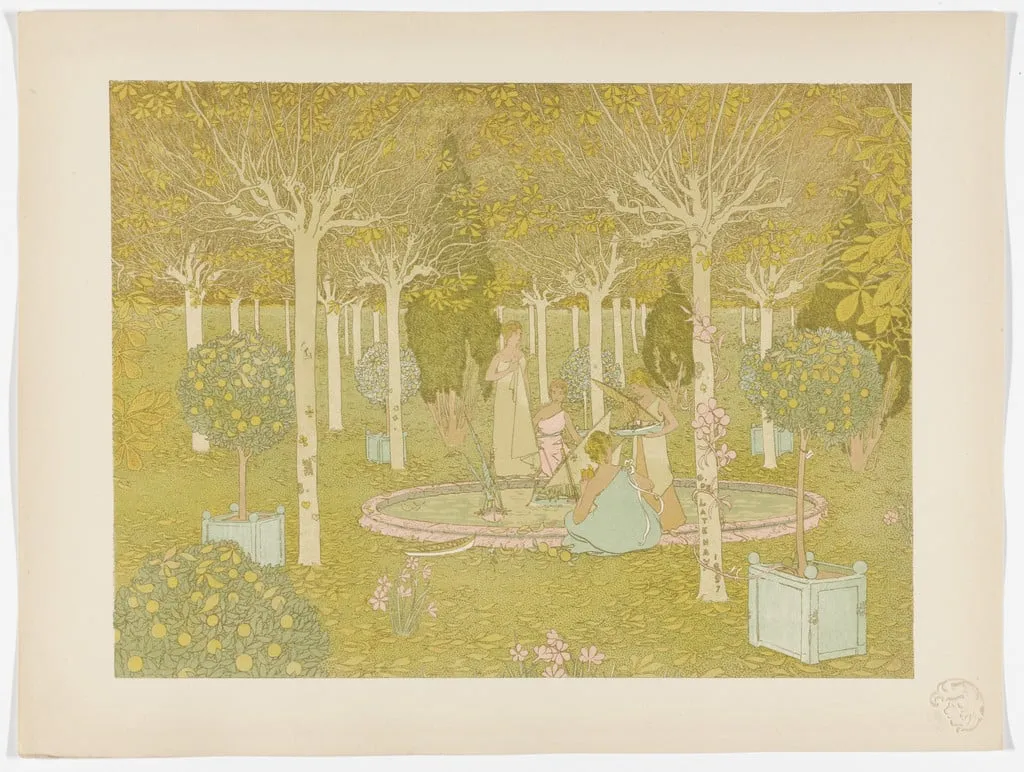
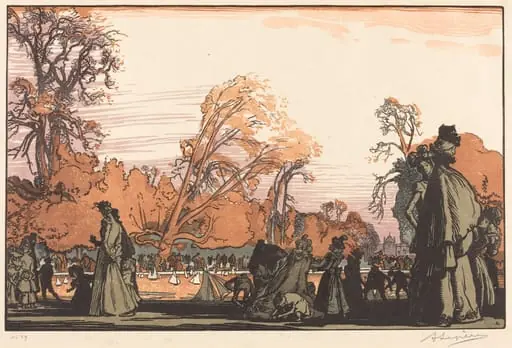
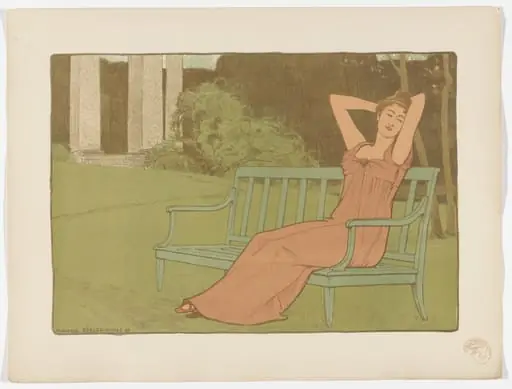
Untitled is an ink print by the Impressionist artist Gaston de Latenay. It dates from 1897 and is held in the collection of the Museum of Modern Art.
About this work
Artists like de Latenay made lithographs—drawings on stone that could be printed—to share their work with more people.
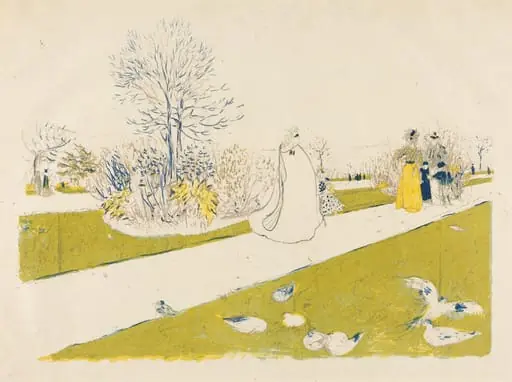
You see a quiet park at dusk: bare trees, a lamppost, and a single bench under soft light. The scene feels still, almost empty.
This print was part of a French art magazine in 1897. Artists like de Latenay made lithographs—drawings on stone that could be printed—to share their work with more people. The technique gave the image a soft, grainy look, like a memory.
If you like this quiet mood, look up lithography to see how artists turned stone into art.
Overview
Created in 1897, this untitled lithograph by G. de Latenay depicts a tranquil park scene at twilight. A solitary bench sits beneath a lamppost, while leaf‑less trees frame the composition. The subdued lighting and sparse setting convey a sense of stillness, inviting viewers to contemplate the quiet moments of an evening in an urban green space.
Subject & Meaning
The work presents an empty park at dusk, emphasizing solitude and the passage of time. The lone bench and dim lamplight suggest a pause in daily activity, evoking contemplation or a fleeting encounter. By stripping the environment of figures, de Latenay focuses attention on atmosphere and the subtle interplay of light and shadow.
Technique & Style
Executed as a lithograph, the image was drawn directly onto a limestone surface, then transferred to paper through a printing process. This method yields a soft, grainy texture that resembles a memory or photograph, reinforcing the work’s quiet mood. The tonal range is limited, relying on delicate gradations to model the evening light.
History & Provenance
The print appeared in a French art periodical the year it was made, part of a broader effort by late‑19th‑century artists to disseminate images through affordable reproductions. It later entered the collection of the Museum of Modern Art, where it remains catalogued as an example of turn‑of‑the‑century lithographic practice.
Context
During the 1890s, lithography experienced a revival in France as a means of reaching a wider audience beyond the traditional gallery. Artists like de Latenay employed the medium to explore everyday scenes with a poetic sensibility, aligning with contemporary interests in urban leisure and the fleeting qualities of light.
Artist & collection