Artwork
Tourelle, Rue de la Tixeranderie
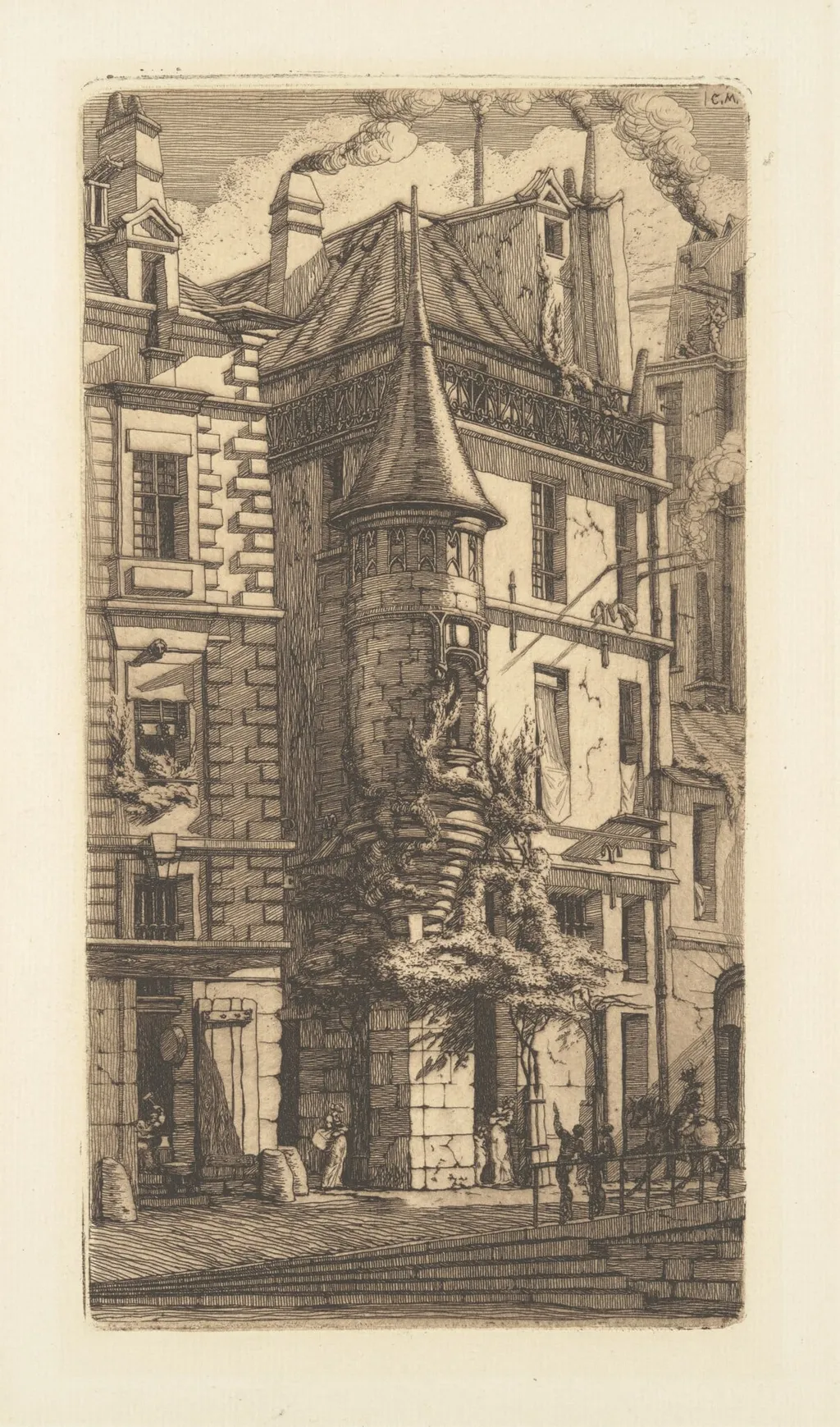
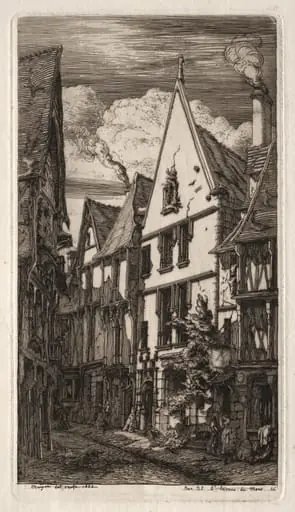
Tourelle, Rue de la Tixeranderie is an ink print by the Impressionist artist Charles Meryon. It dates from 1852 and is held in the collection of the National Gallery of Art.
About this work
Overview
Charles Meryon’s etching 'Tourelle, Rue de la Tixeranderie' captures a residential structure on the banks of the Seine, shortly before its demolition in 1852. Part of a larger series documenting Parisian architecture under threat from urban redevelopment, the work reflects a quiet urgency to preserve the city’s disappearing fabric through precise graphic detail.
Subject & Meaning
The subject is a modest, timber-framed house in a narrow street near the river, its gabled roof and uneven masonry suggesting centuries of use. Meryon’s focus on such unremarkable dwellings underscores the loss of everyday urban life amid Haussmann’s sweeping modernization. The image becomes a record of the ordinary, rendered with dignity in the face of erasure.
Technique & Style
Meryon employed fine, controlled etching lines to render texture and shadow, emphasizing the weight of stone, the grain of wood, and the play of light on wet cobblestones. His use of brown ink on laid paper enhances the atmospheric quietude of the scene. The composition, drawn from a low riverbank perspective, draws the viewer into the intimate scale of the forgotten street.
History & Provenance
Created in 1852, the print was made during the early phase of Haussmann’s renovation of Paris, when entire neighborhoods were being cleared. Meryon, deeply attuned to architectural change, produced over eighty such views between 1850 and 1855. The work entered institutional collections in the late 19th century, notably preserved in the National Gallery of Art, Washington.
Context
Meryon’s project unfolded against a backdrop of rapid urban transformation. While Haussmann’s planners prioritized wide boulevards and sanitation, Meryon turned his lens to the alleys, courtyards, and turrets slated for removal. His prints offered no political statement, but their meticulous attention gave voice to structures otherwise destined for oblivion.
Legacy
Though the house depicted no longer stands, Meryon’s etching endures as a primary visual archive of pre-modern Paris. His approach influenced later documentary artists and historians seeking to map the city’s lost topography. The work remains a quiet testament to the value of observing the mundane before it vanishes.
Artist & collection
Artist
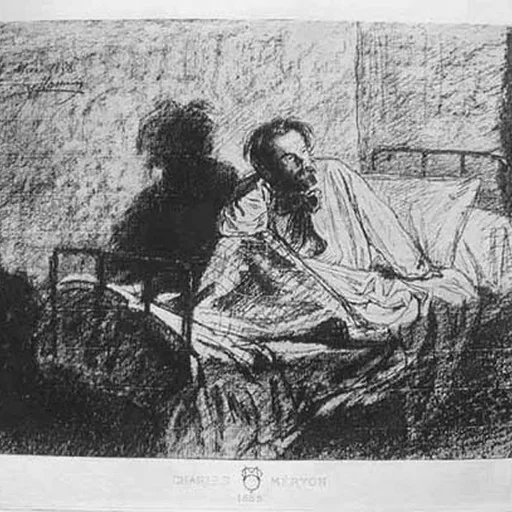
Charles Meryon (sometimes Méryon, 23 November 1821 – 14 February 1868) was a French artist who worked almost entirely in etching, as he had colour blindness.

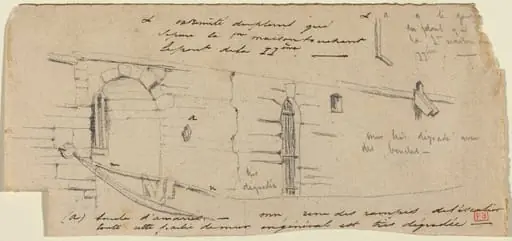
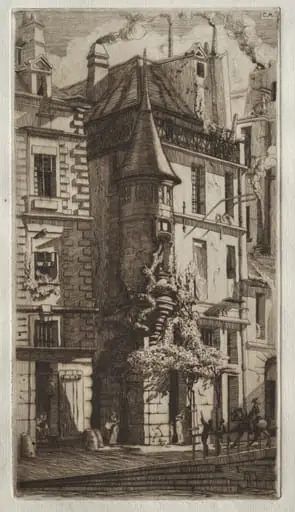 Tourelle de la rue de la Tixéranderie
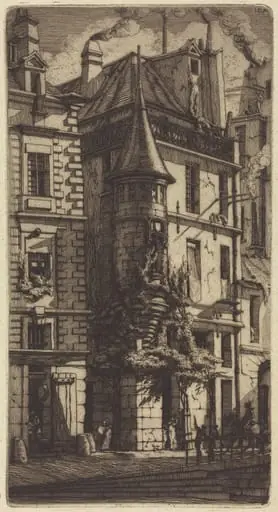 Tourelle de la Rue de la Tixéranderie, Paris (House with a Turret, Weavers' Street, Paris)
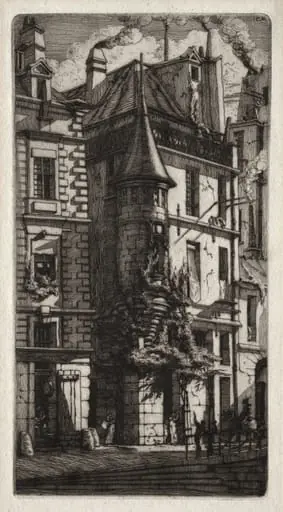 Etchings of Paris: House with a Turret, Weavers' Street
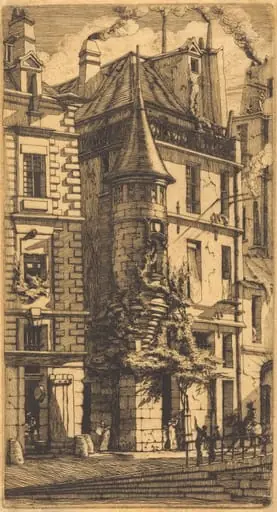 Tourelle de la Rue de la Tixéranderie, Paris (House with a Turret, Weavers' Street, Paris)
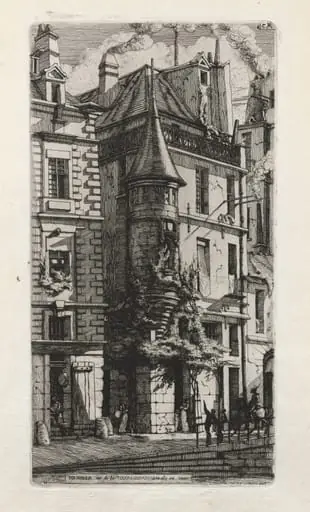 House with a Turret, rue de la Tixéranderie, Paris
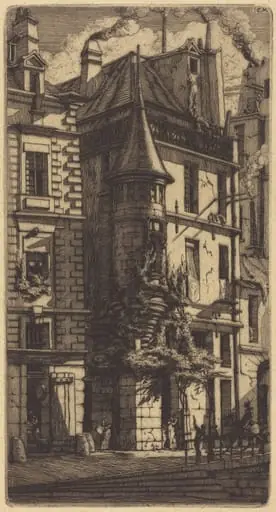 Tourelle de la Rue de la Tixéranderie, Paris (House with a Turret, Weavers' Street, Paris)
 Etchings of Paris: à Bourges