Artwork
Hålvik
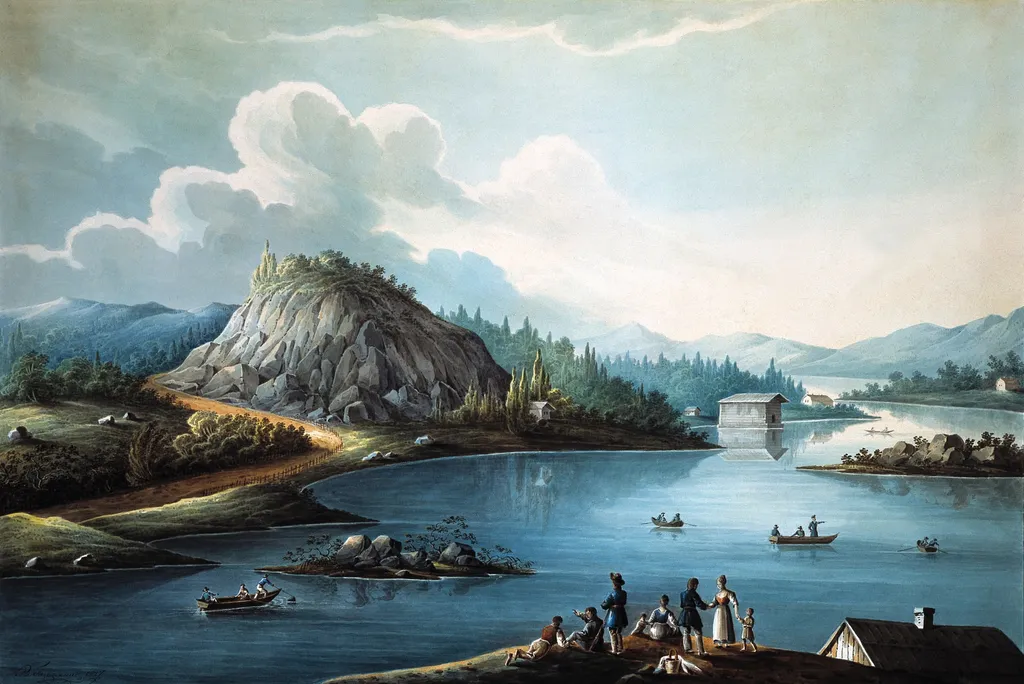
Hålvik is a drawing by Valerian Emeljanovits Galjamin. It is held in the collection of the Helsinki City Museum. This drawing depicts a tranquil lakeside scene with a prominent rocky hill at its center.
About this work
Overview
The composition emphasizes stillness, with soft clouds overhead and calm water mirroring surrounding trees and structures.
This drawing depicts a tranquil lakeside scene with a prominent rocky hill at its center. Figures in modest attire are engaged in quiet activities—rowing boats or resting along the shore. The composition emphasizes stillness, with soft clouds overhead and calm water mirroring surrounding trees and structures. The artist employs delicate, flowing lines to suggest light and form, creating an atmosphere of serene solitude.
Subject & Meaning
The scene presents everyday rural life without dramatic action, focusing on harmony between people and nature. The absence of narrative tension suggests contemplation rather than event. The figures appear integrated into the landscape, their small scale reinforcing the quiet dominance of the natural environment. The mood is one of peaceful coexistence, not celebration or labor.
Technique & Style
The artist uses smooth, controlled lines to define surfaces, particularly where light touches rock and water. Shadows are built through fine cross-hatching, allowing subtle gradations without heavy ink or tone. This method creates a sense of depth and texture while preserving the drawing’s lightness. The overall approach favors restraint, avoiding bold contrasts in favor of atmospheric nuance.
History & Provenance
The work is titled Hålvik, suggesting a specific Norwegian location, though no documented provenance or artist attribution is available. It is cataloged as a standalone drawing, not part of a known series or published collection. Its origin remains unverified, with no record of exhibition or ownership prior to its current classification.
Context
Created during a period when landscape drawing was gaining value as an independent art form, this piece reflects a broader European interest in quiet, observational scenes. It aligns with regional traditions of Nordic topographical sketches, where natural features were recorded with sensitivity rather than idealization. The absence of architectural grandeur points to a focus on local, unembellished environments.
Legacy
Though not widely exhibited or reproduced, the drawing serves as an example of intimate, non-dramatic landscape drawing from its time. Its technique reflects a quiet discipline in line work, influencing later studies of light and form in regional art. It remains a quiet testament to the value of stillness in visual representation.
Artist & collection
Artist
Valerian Emeljanovits Galjamin
Valerian Emeljanovits Galjamin drew city corners and shorefronts—black pencil on paper, not paint.

 Helsinki nähtynä Kluuvinlahden yli
 View of Krakow
 Stormsin eli Degervikin kruununvirkatalo Kirkkonummella
 Summer: Fishermen Netting
 Lake George and the Village of Caldwell
 Prospekt fra Dronninggård over Furesøen. I forgrunden øen Chevallier med det kinesiske lysthus
 The Sweet Waters of Europe, Constantinople
 Prospekt fra Dronninggård over Furesøen. I forgrunden øen Chevallier med det kinesiske lysthus
 The Lake of Nemi
 Rainsford's Island, Boston Harbor
 Mountain and Lake