Artwork
Perseus
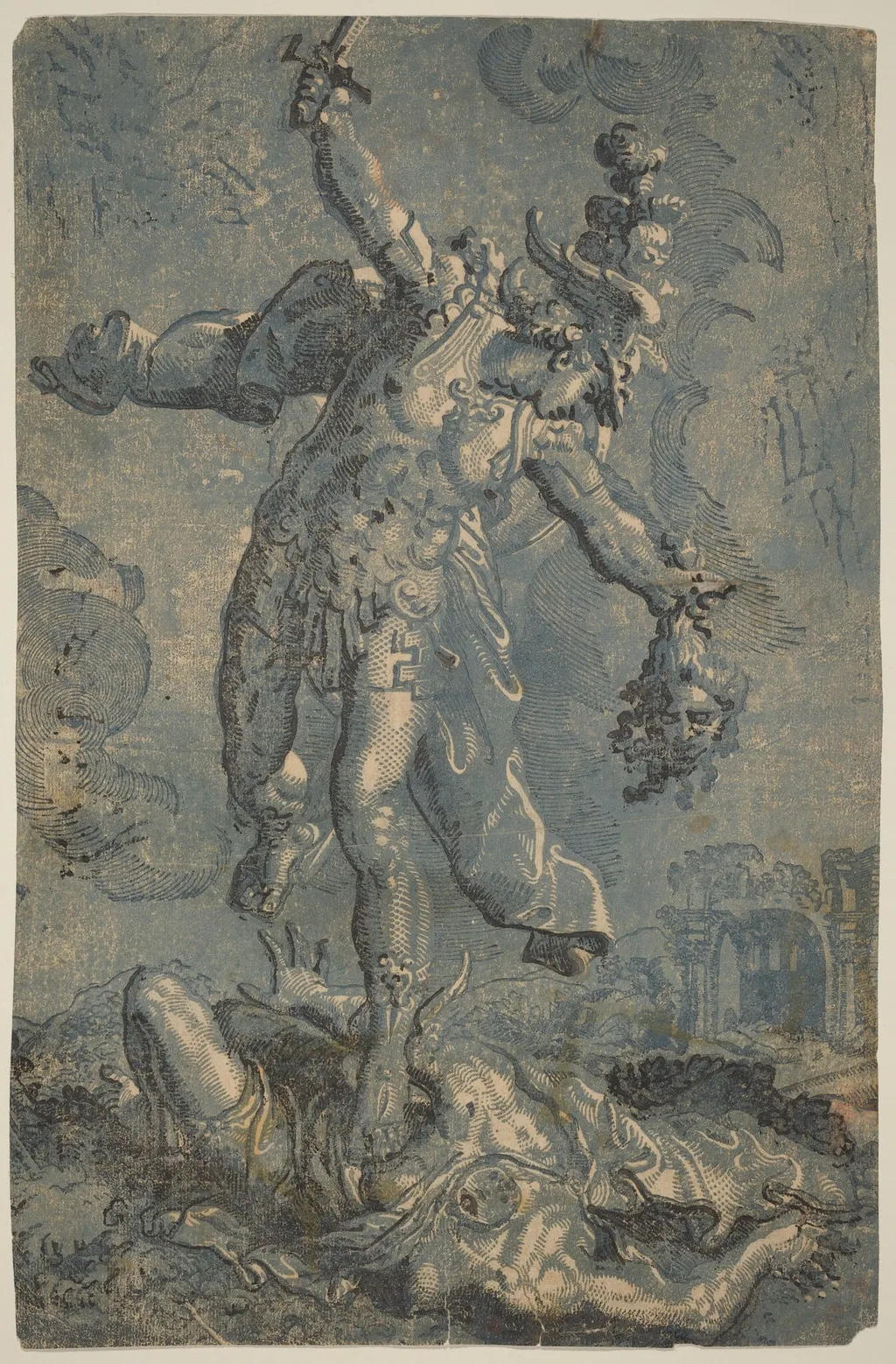
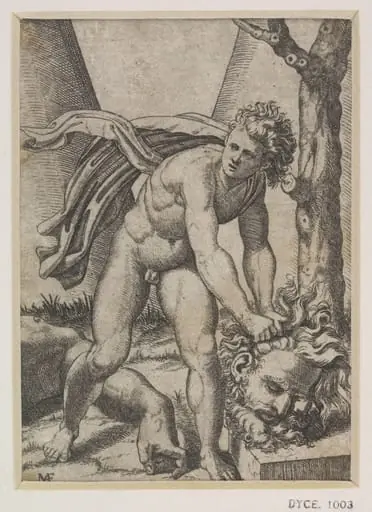
Perseus is an ink print by the Renaissance artist Giovanni Gallo. It dates from 1575 and is held in the collection of the National Gallery of Art.
About this work
Overview
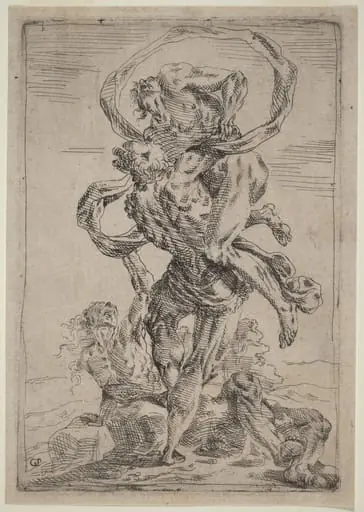
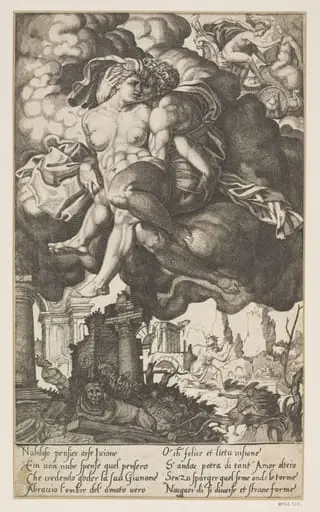
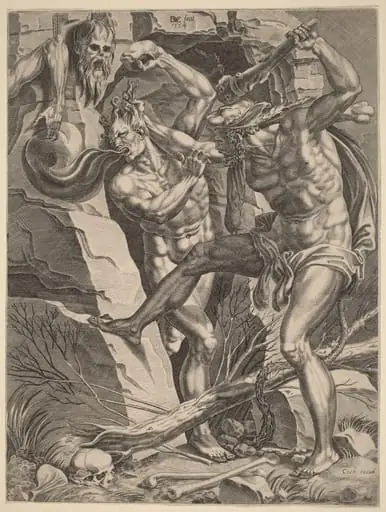
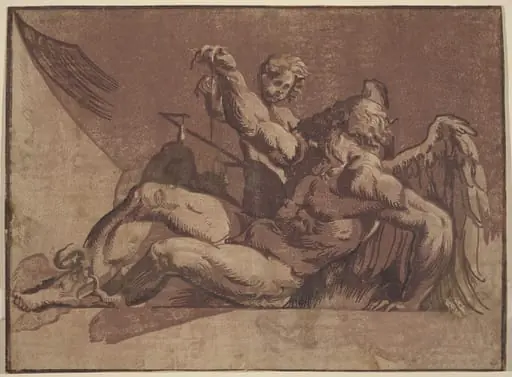
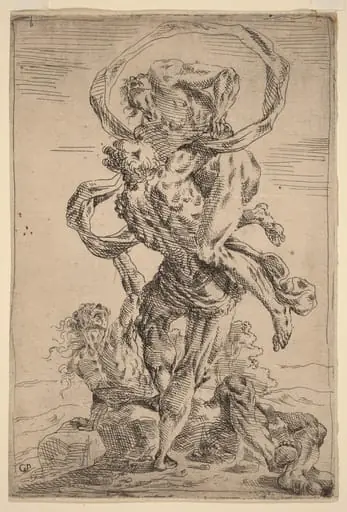
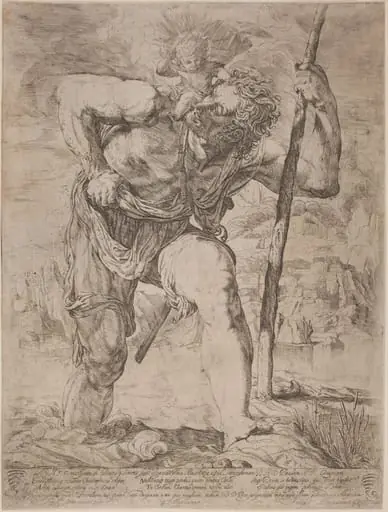
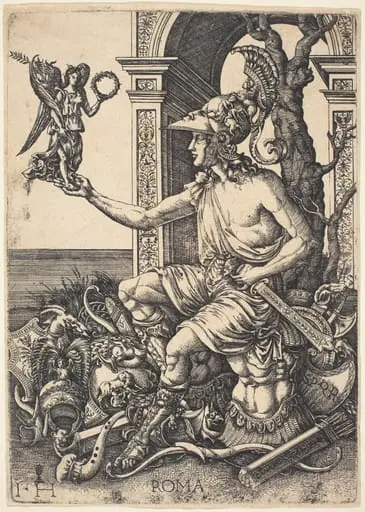
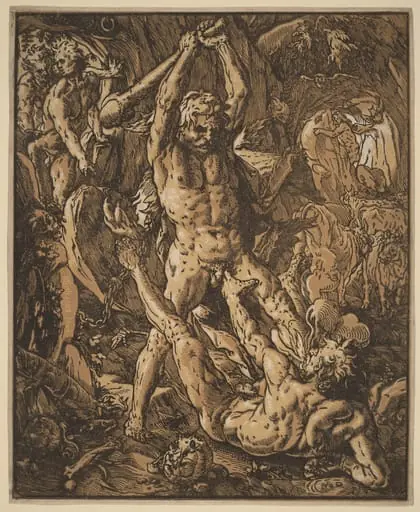
Giovanni Gallo’s 1575 chiaroscuro woodcut, titled Perseus, presents a dynamic mythological tableau on laid paper. Rendered in black and a striking blue hue, the image captures a moment of violent triumph, employing stark light‑dark contrasts to emphasize the central figure’s motion and the surrounding chaos.
Subject & Meaning
The composition centers on a heroic figure, presumed to be Perseus, caught mid‑stride while brandishing a sword and clutching a severed head by its hair. Winged and monstrous beings recoil in terror, suggesting the defeat of a formidable foe and the restoration of order through heroic violence.
Technique & Style
Executed as a chiaroscuro woodcut, the work utilizes two blocks—one for black outlines and a second for blue shading—to achieve depth through tonal variation. The sharp chiaroscuro highlights the hero’s face and the gruesome trophy, while the blue adds a cool counterpoint that delineates space amid swirling clouds and jagged rock formations.
History & Provenance
Created in 1575, the print is attributed to the Italian printmaker Giovanni Gallo, known for his contributions to the early modern chiaroscuro tradition. The piece survives on laid paper, a common support for high‑quality prints of the period, and is documented in several European collections of Renaissance graphic art.
Context
Perseus belongs to a broader Renaissance fascination with classical mythology, where artists reinterpreted ancient narratives through contemporary visual vocabularies. Gallo’s use of chiaroscuro aligns with the period’s experimental approaches to light and shadow, reflecting the influence of earlier masters such as Ugo da Carpi while advancing the expressive potential of woodcut printing.
Artist & collection