Artwork
Hercules Killing Cacus
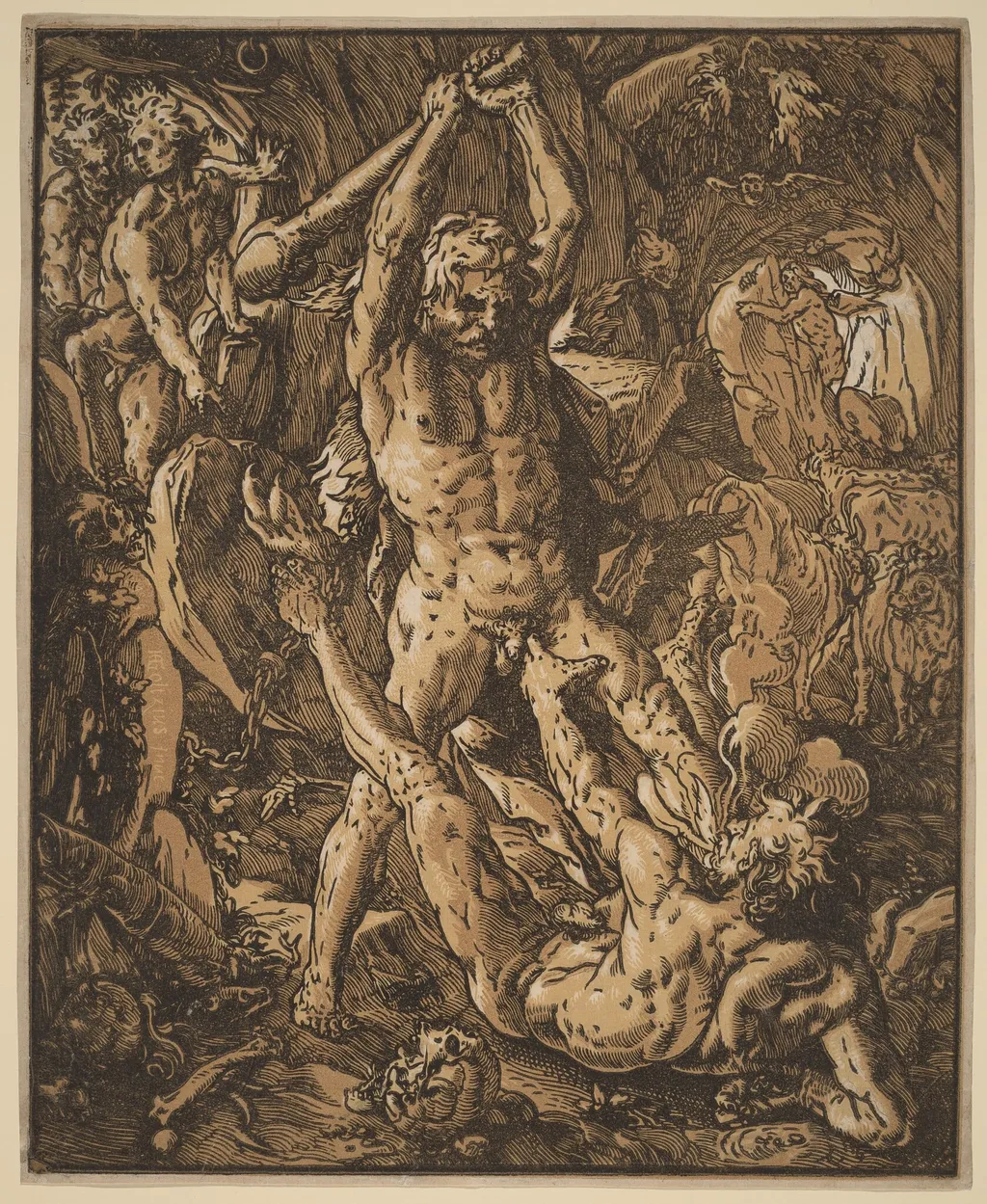
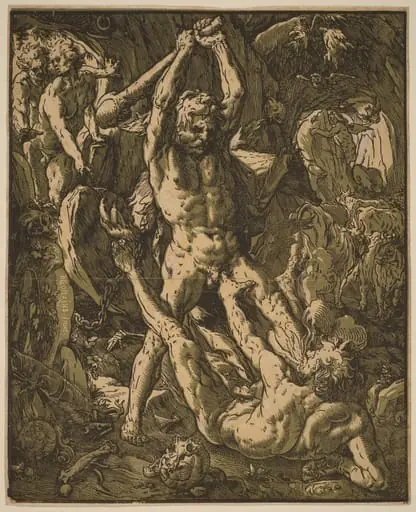
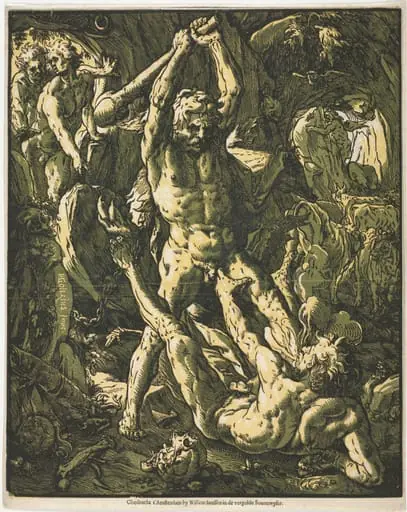
Hercules Killing Cacus is an ink print by the Renaissance artist Hendrik Goltzius. It dates from 1588 and is held in the collection of the National Gallery of Art.
About this work
Overview
Hendrick Goltzius’s print *Hercules Killing Cacus* was produced in 1588. Executed as a chiaroscuro woodcut, the image employs two tonal layers—sepia and black—on laid paper, creating a stark contrast between figures and background. The composition captures a moment of violent confrontation, rendered with the precise line work characteristic of Goltzius’s mature period.
Subject & Meaning
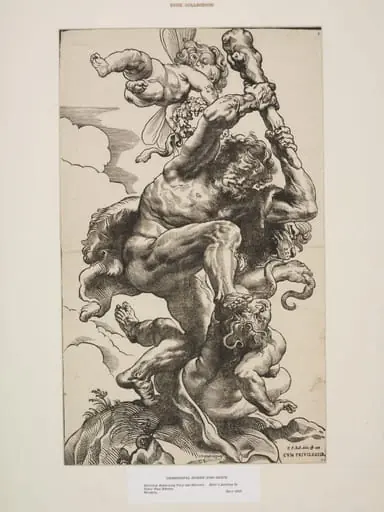
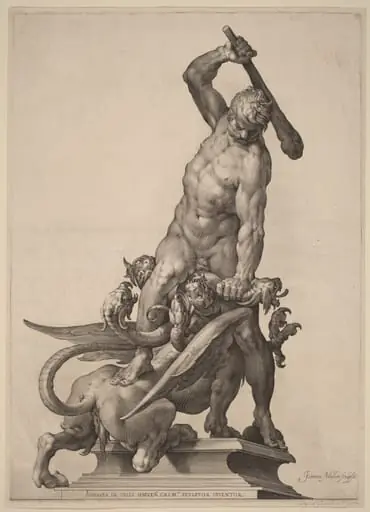
The scene illustrates the myth of Hercules confronting the monstrous Cacus, a narrative drawn from classical literature. Hercules, shown in a powerful, muscular stance, dominates the chaotic tangle of serpents and bodies, symbolizing the triumph of heroic order over barbaric chaos. Peripheral figures observe the struggle, emphasizing the public nature of the hero’s deed.
Technique & Style
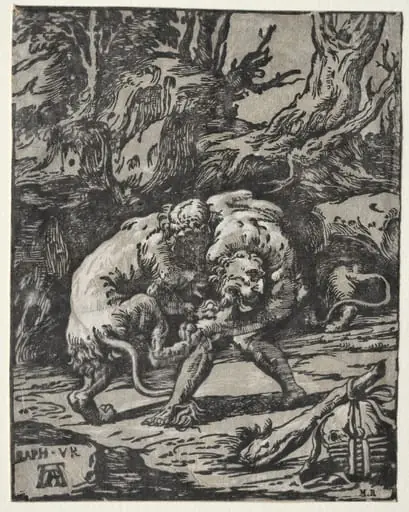
Goltzius applied the chiaroscuro woodcut method, carving separate blocks for the dark brown and black tones. By limiting the palette to two shades, he achieved a dramatic depth that accentuates the muscular anatomy and the tangled forms. The work reflects the Northern Mannerist tendency toward intricate composition and exaggerated movement, while also anticipating Baroque dynamism.
History & Provenance
Created during Goltzius’s most productive phase, the print was likely circulated among collectors of the Dutch Republic in the late 16th century. Its survival on laid paper suggests careful handling, and it has since entered the holdings of several European museums, where it serves as a representative example of early chiaroscuro woodcut practice.
Artist & collection
Artist
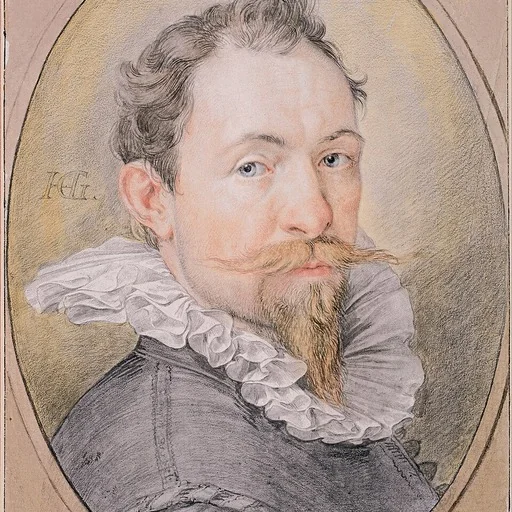
Hendrick Goltzius (German: , Dutch: ; né Goltz; January or February 1558 – 1 January 1617) was a German-born Dutch printmaker, draftsman, and painter.