Artwork
Hercules and Antaeus
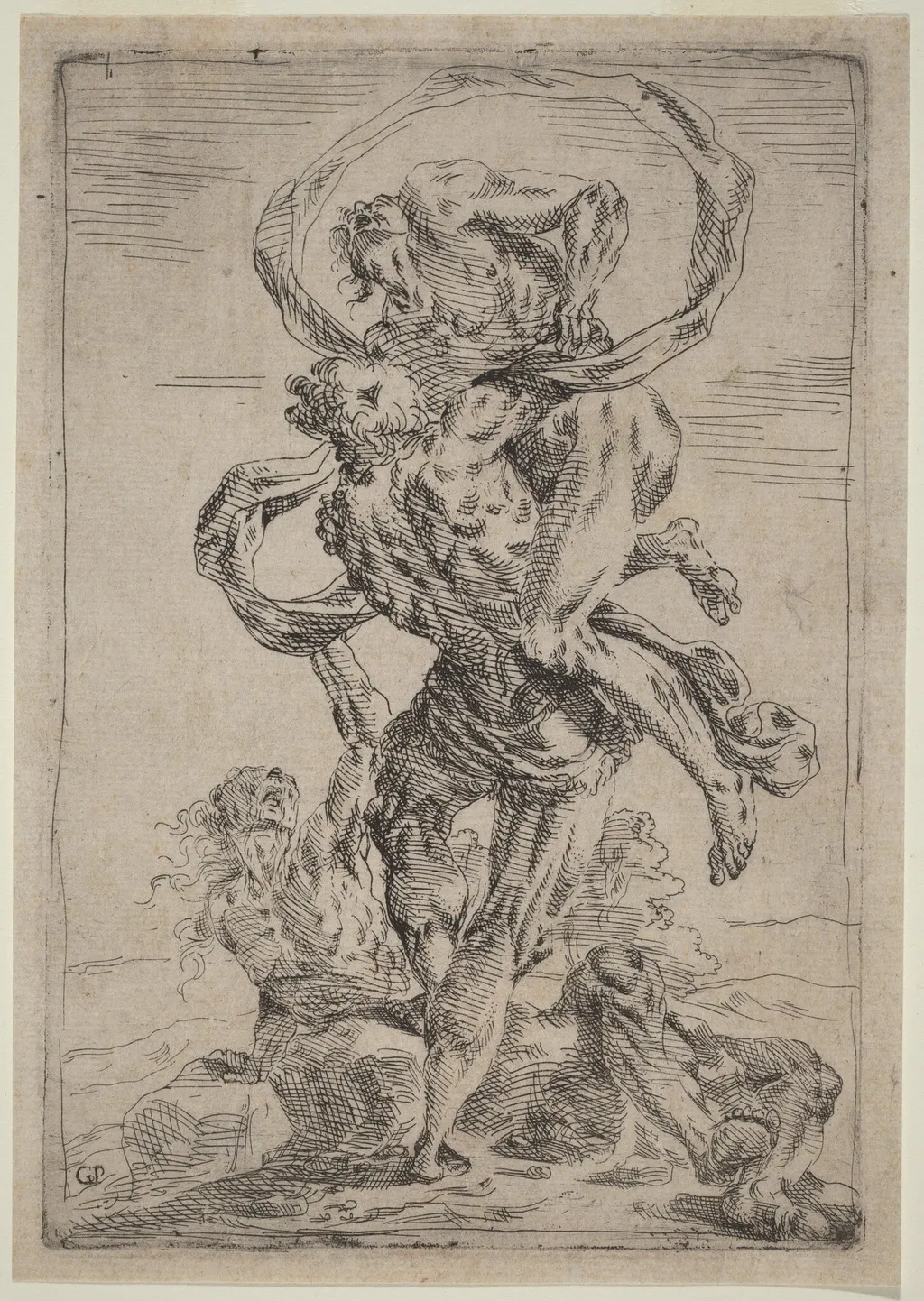
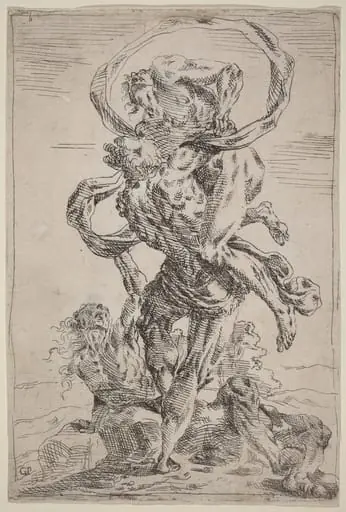
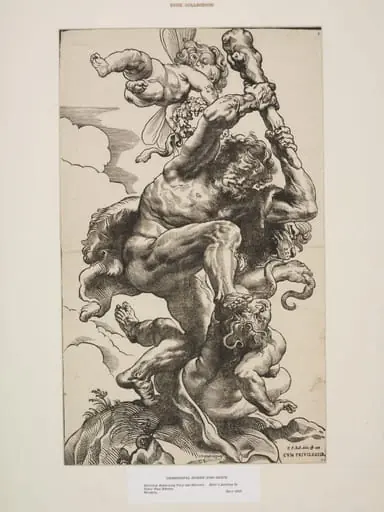
Hercules and Antaeus is an ink print by the Baroque artist Giovanni Pietro Possenti. It dates from 1638 and is held in the collection of the National Gallery of Art.
About this work
Overview
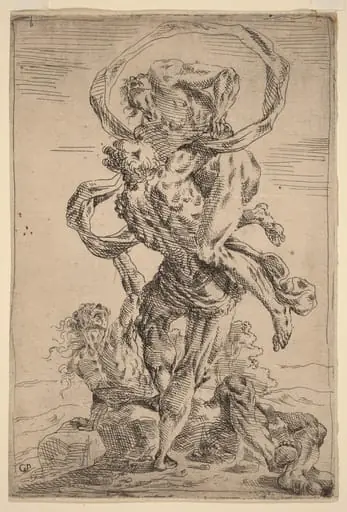
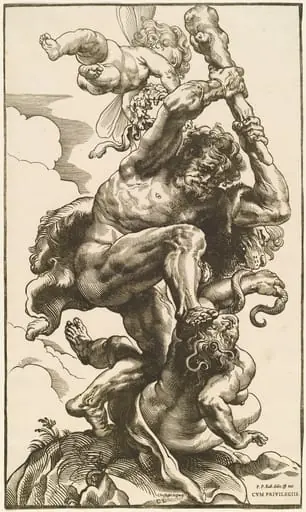
Created in 1638, this etching by Giovanni Pietro Possenti depicts a moment from Greek myth: Hercules grappling with Antaeus.
Created in 1638, this etching by Giovanni Pietro Possenti depicts a moment from Greek myth: Hercules grappling with Antaeus. Executed in ink on paper, the work belongs to the printmaking tradition of early Baroque Italy. Its dynamic composition and expressive line work reflect the period’s interest in physical tension and dramatic narrative, rendered through the technical precision of etching on metal plates.
Subject & Meaning
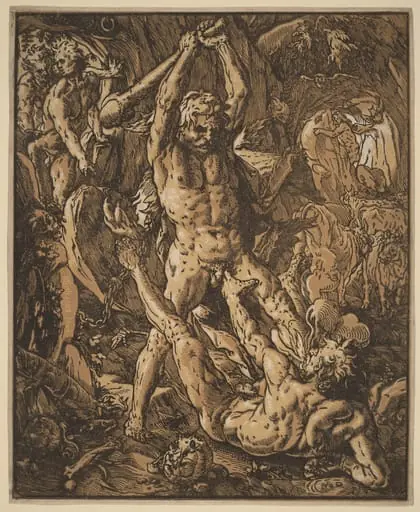
The scene illustrates Hercules’ defeat of Antaeus, a giant who drew strength from contact with the earth. By lifting him off the ground, Hercules breaks this divine connection, leading to Antaeus’ demise. The composition emphasizes struggle and dependency: Antaeus clings like a vine, his limbs entwined, while Hercules’ posture suggests both force and control, embodying the myth’s theme of overcoming natural power through cunning.
Technique & Style
Possenti employed etching to achieve a raw, energetic texture. Fine, incised lines create the muscular forms, while areas of dense ink buildup produce shadowed, almost chaotic regions. The scratchy, rapid strokes convey motion and urgency, avoiding smooth finishes. This deliberate roughness heightens the sense of physical exertion, distinguishing the work from more polished contemporary prints and emphasizing the immediacy of the struggle.
History & Provenance
The etching was produced during Possenti’s active years in Rome, a center for printmaking and classical revival. While specific early ownership records are sparse, the work aligns with the tastes of collectors interested in mythological themes and expressive draftsmanship. It likely circulated among artists and connoisseurs as a study in movement and anatomical tension, rather than as a standalone decorative piece.
Context
In mid-17th-century Italy, mythological subjects were frequently explored in prints as vehicles for artistic display and intellectual engagement. Possenti’s work responds to broader trends in Mannerist and early Baroque art, where emotional intensity and physical dynamism replaced classical harmony. Etching allowed artists to capture fleeting gestures, making it ideal for scenes of conflict and transformation.
Legacy
Though not widely known today, this etching exemplifies how Baroque printmakers used technical means to convey psychological and physical drama. Possenti’s approach influenced later artists seeking to express motion through ink’s variability. The work remains a quiet testament to the enduring appeal of myth as a framework for exploring human and divine struggle through the tactile medium of print.
Artist & collection