Artwork
Lepo
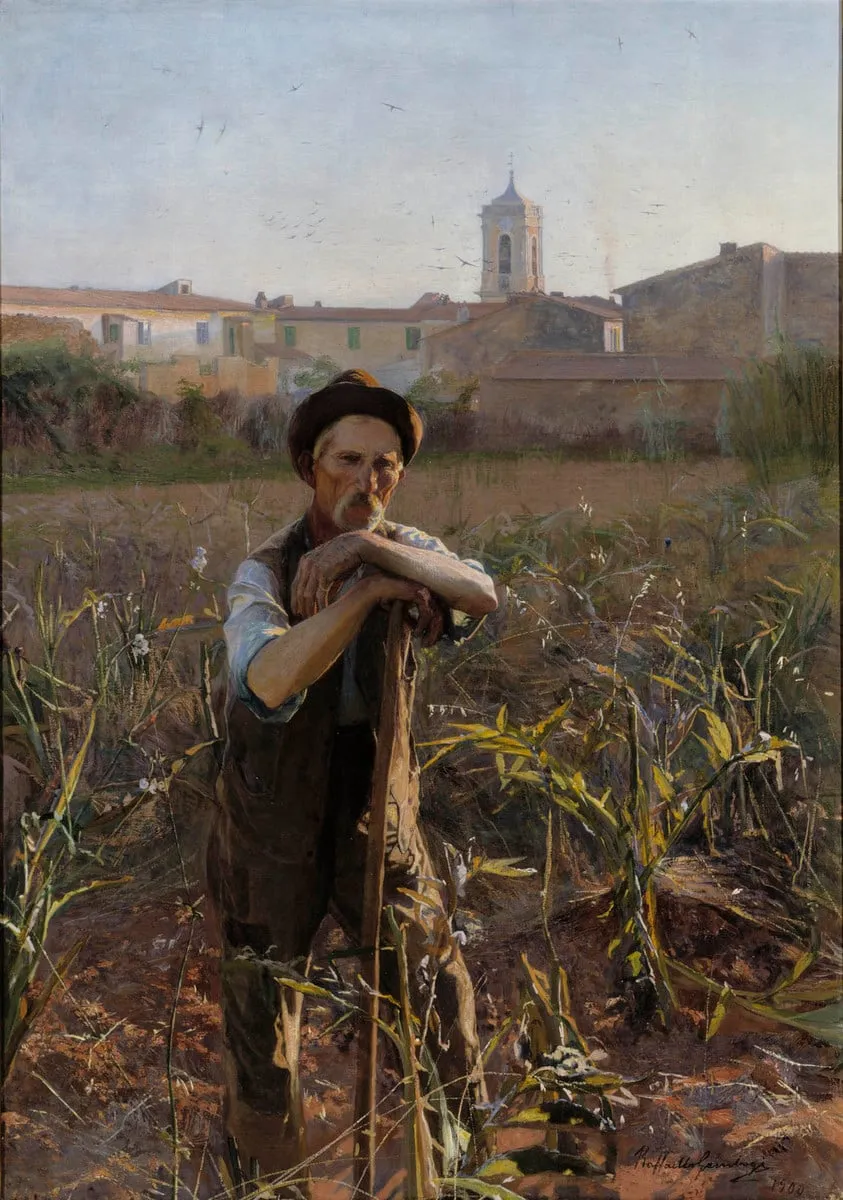
Lepo is an unspecified painting by Raffaello Gambogi. It dates from 1918 and is held in the collection of the Finnish National Gallery.
About this work
Overview
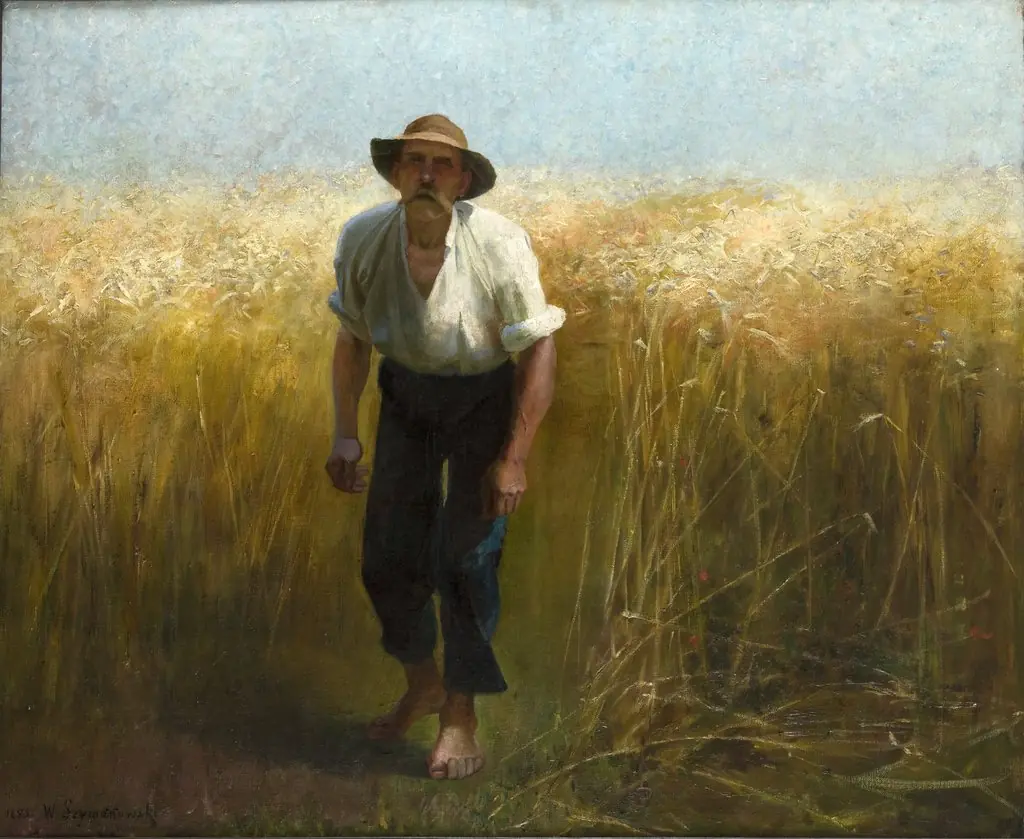
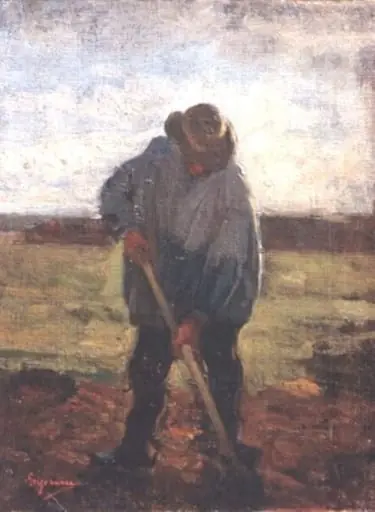
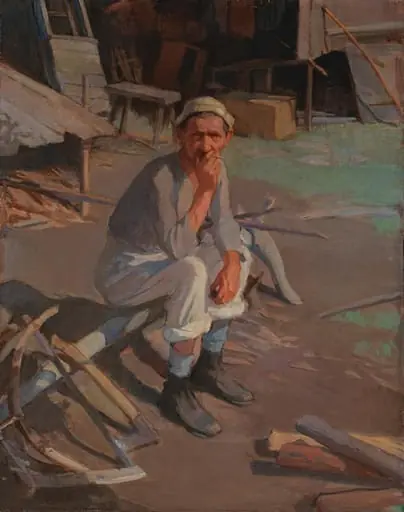
Painted around 1918 by Raffaello Gambogi, this work depicts a solitary figure in a rural landscape. The man stands amid tall, dry vegetation under a muted sky, his posture calm and grounded. The scene lacks dramatic action, instead emphasizing quiet solitude and the weight of daily life. The composition draws attention to the textures of the environment and the figure’s worn attire.
Subject & Meaning
The figure, dressed in simple, weathered clothing and holding a staff and pipe, suggests a laborer or peasant at rest. His stillness contrasts with the wind-swept plants around him, hinting at endurance amid hardship. The distant village and church tower imply a connection to community and tradition, though he remains apart, isolated within the landscape.
Technique & Style
Gambogi applied paint with deliberate texture, using thick strokes to render the dry grasses and fabric folds. Light falls gently across the scene, creating subtle contrasts between sunlit areas and shadowed recesses. The palette is restrained—earthy tones dominate, with the man’s striped shirt offering a muted contrast. The brushwork emphasizes materiality over idealization.
History & Provenance
Created during the postwar period, the painting reflects Gambogi’s continued interest in rural Italian life, a theme present in his earlier works. It was likely painted in Tuscany, where he spent much of his career. The work remained in private hands for decades before entering public collection, with no major exhibitions recorded during its early years.
Context
In early 20th-century Italy, artists like Gambogi turned away from grand historical narratives toward intimate portrayals of rural existence. This piece aligns with a broader regional realism, influenced by the Macchiaioli and later by the quiet modernism of peasant life. It avoids sentimentality, presenting its subject with unembellished observation.
Legacy
Though not widely exhibited, the painting contributes to Gambogi’s reputation as a chronicler of rural Italy’s quiet dignity. Its restrained technique and focus on texture influenced later regional painters seeking authenticity over romanticism. Today, it stands as a modest but resonant example of early modern Italian realism.
Artist & collection

Artist
Raffaello Gambogi was an Italian painter, mainly of urban landscapes and genre scenes.