Artwork
Adoration of the Shepherds
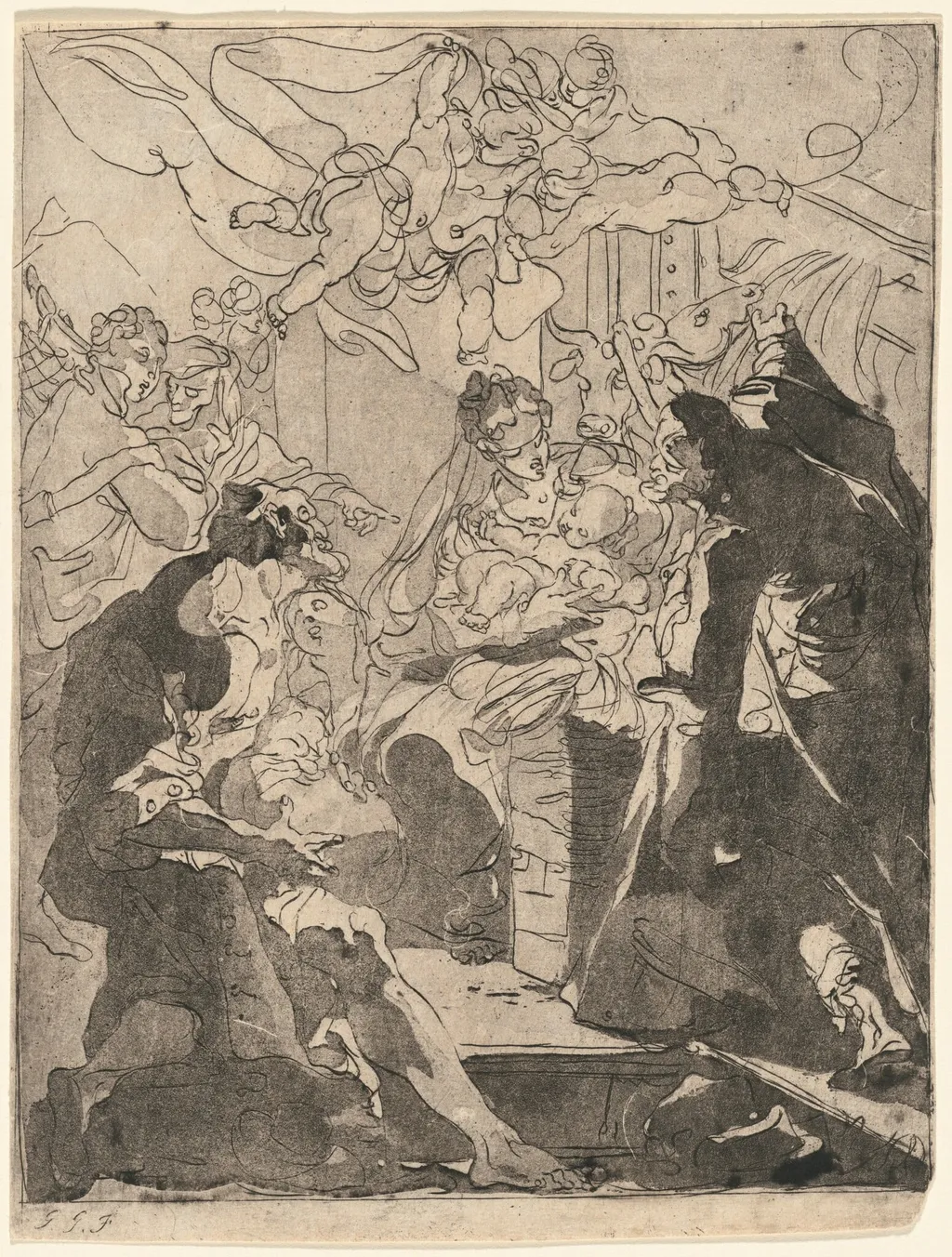
Adoration of the Shepherds is an ink print by the Romanticist artist Gaetano Gandolfi. It dates from 1784 and is held in the collection of the National Gallery of Art.
About this work
Overview
The piece resides in the National Gallery of Art, Washington, D.
Created around 1784 by the Bolognese artist Gaetano Gandolfi, this print combines etching and aquatint on laid paper to render a quiet nocturnal scene from the Nativity. As a skilled draftsman active in late Baroque Italy, Gandolfi specialized in religious imagery, and this work exemplifies his mastery of tonal gradation in printmaking. The piece resides in the National Gallery of Art, Washington, D.C., among other works from his prolific output.
Subject & Meaning
The scene captures the moment shepherds arrive to witness the newborn Christ, as described in the Gospel of Luke. Mary kneels beside the infant, wrapped in cloth, while Joseph stands nearby. Two shepherds enter from the right, one cradling a lamb—a symbol of sacrifice and humility. The glowing halo around the child underscores his divine nature, contrasting with the subdued human figures and dark surroundings.
Technique & Style
Gandolfi employed aquatint to achieve subtle shifts in tone, creating deep, velvety shadows that enhance the sense of night. Etching defined the delicate contours of figures and drapery, resulting in a soft, atmospheric effect rather than sharp lines. The limited palette of ink on paper emphasizes light as a spiritual element, with the Christ child’s halo emerging as the only radiant form in the composition.
History & Provenance
The print was produced during Gandolfi’s mature period in Bologna, a center of artistic innovation in 18th-century Italy. Though primarily known for frescoes and oil paintings, he also produced a significant body of prints for private collectors and religious institutions. This etching entered the National Gallery of Art’s collection through established acquisition channels, reflecting its recognized place in European printmaking.
Context
In late 18th-century Italy, religious themes remained central to artistic production despite Enlightenment influences. Gandolfi’s work aligned with the devotional traditions of the Bolognese school, which emphasized emotional restraint and naturalism. His prints circulated among educated patrons and clergy, serving both as objects of contemplation and as studies for larger commissions.
Legacy
Gandolfi’s prints, including this one, demonstrate how traditional religious subjects were reinterpreted through emerging graphic techniques. His use of aquatint influenced later Italian printmakers seeking atmospheric depth without sacrificing clarity. Though less widely known than his paintings, his etchings remain important for understanding the transition from Baroque to early Neoclassical aesthetics in print.
Artist & collection
Artist
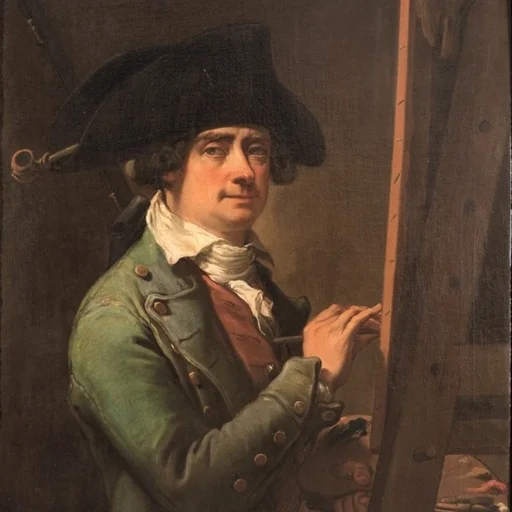
Gaetano Gandolfi (31 August 1734 – 20 June 1802) was an Italian painter, draughtsman and sculptor of the late Baroque period, mainly active in and around Bologna.

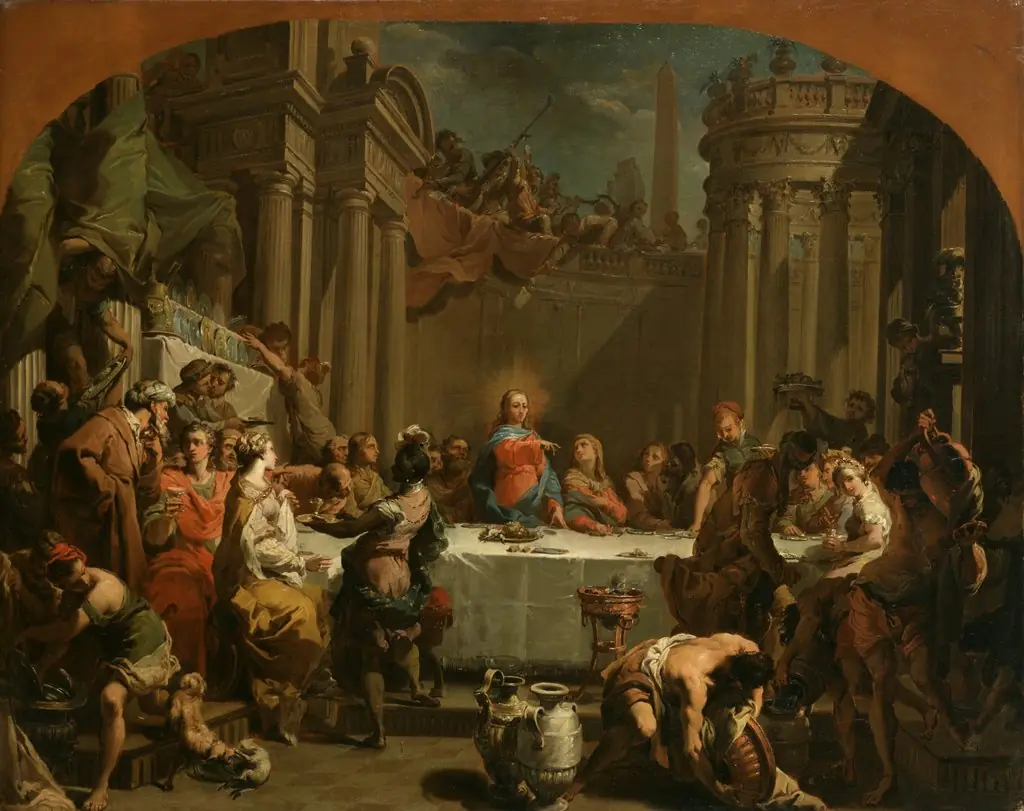
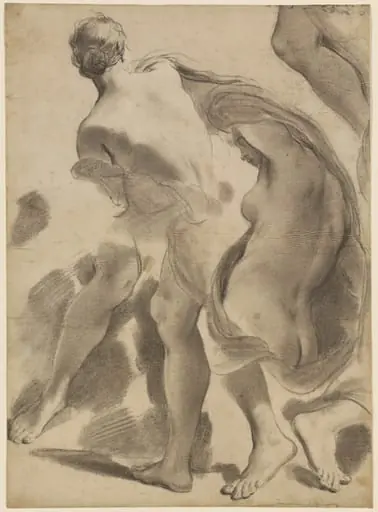
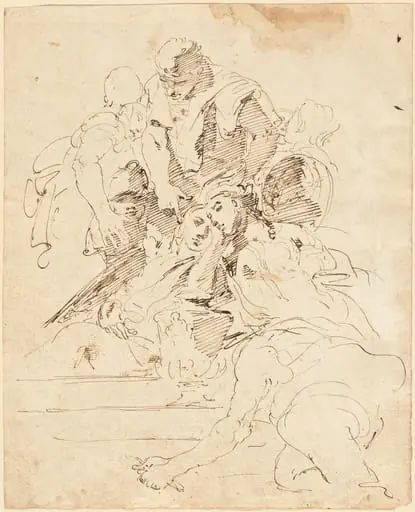 Classical Figures Gathered around an Urn
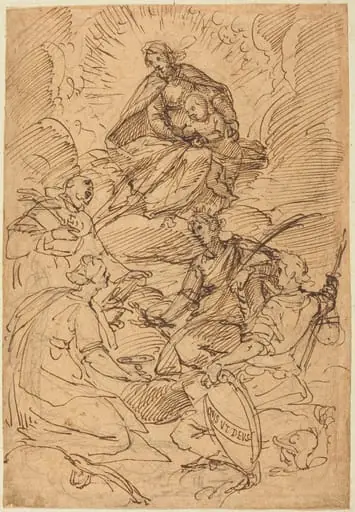 The Madonna and Child in Glory Adored by Saints
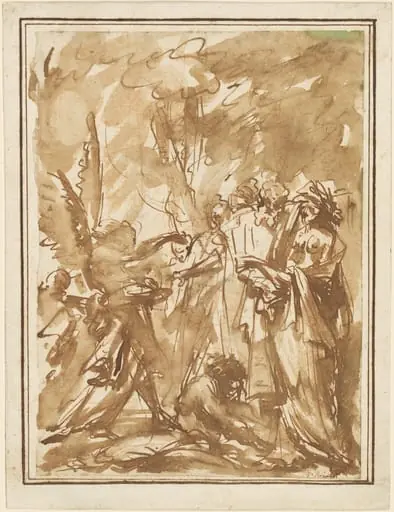 Scherzo with Antique Figures
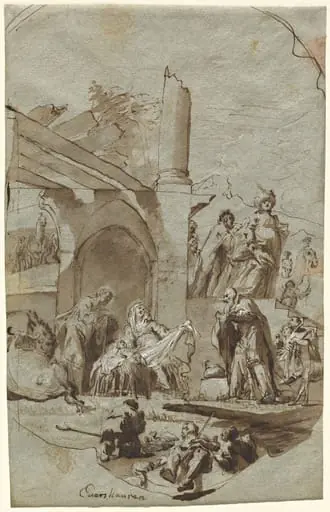 The Adoration of the Magi
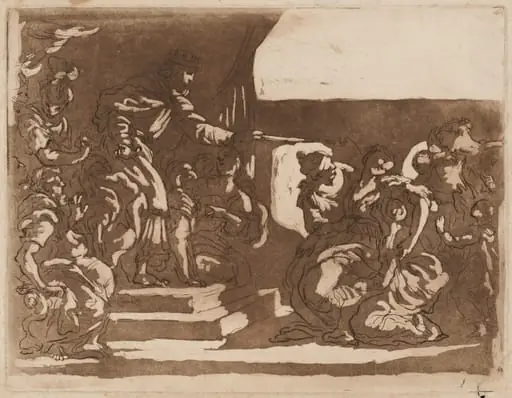 Esther before Ahasuerus
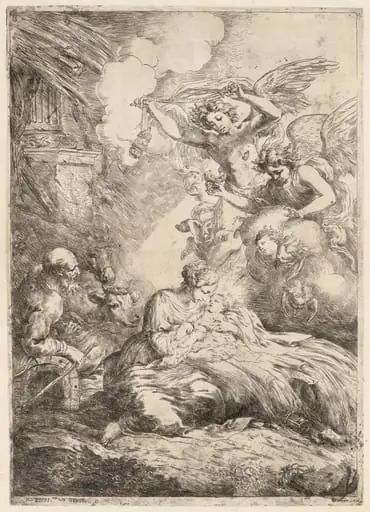 The Nativity
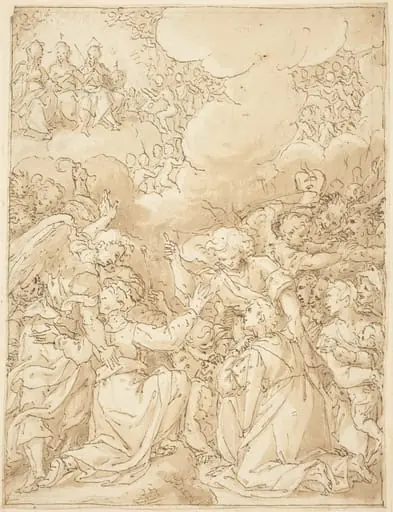 The Last Judgment
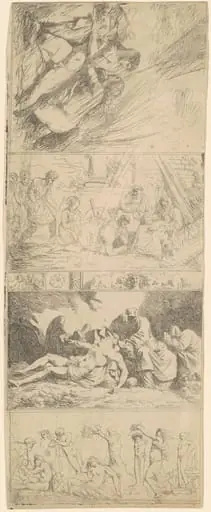 Four Religious and Secular Compositions
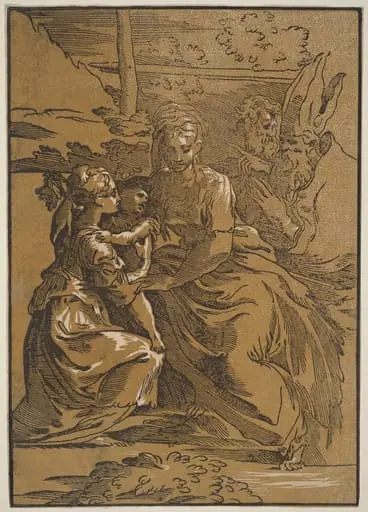 The Holy Family with Two Saints
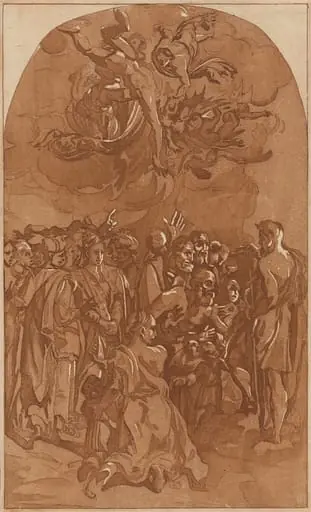 Saint John Preaching
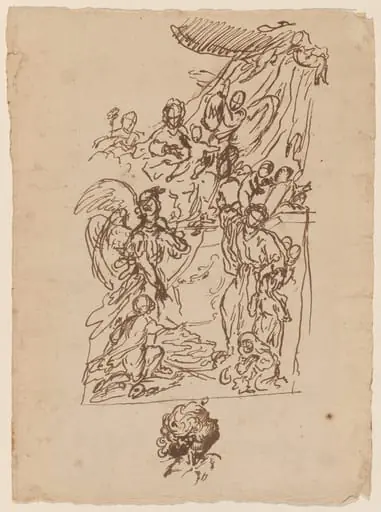 The Madonna and Child Seated on a Dais with Tobias and the Angel and a Saint Presenting Two Children
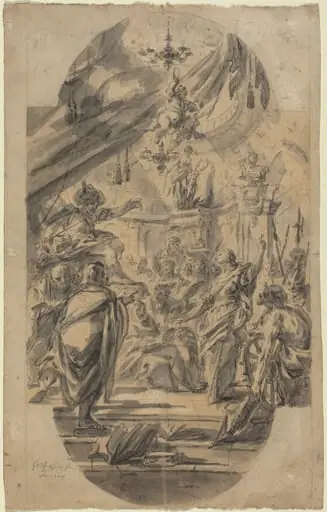 The Disputation of Saint Catherine of Alexandria