Artwork
Avanco del Tempio della Concordia
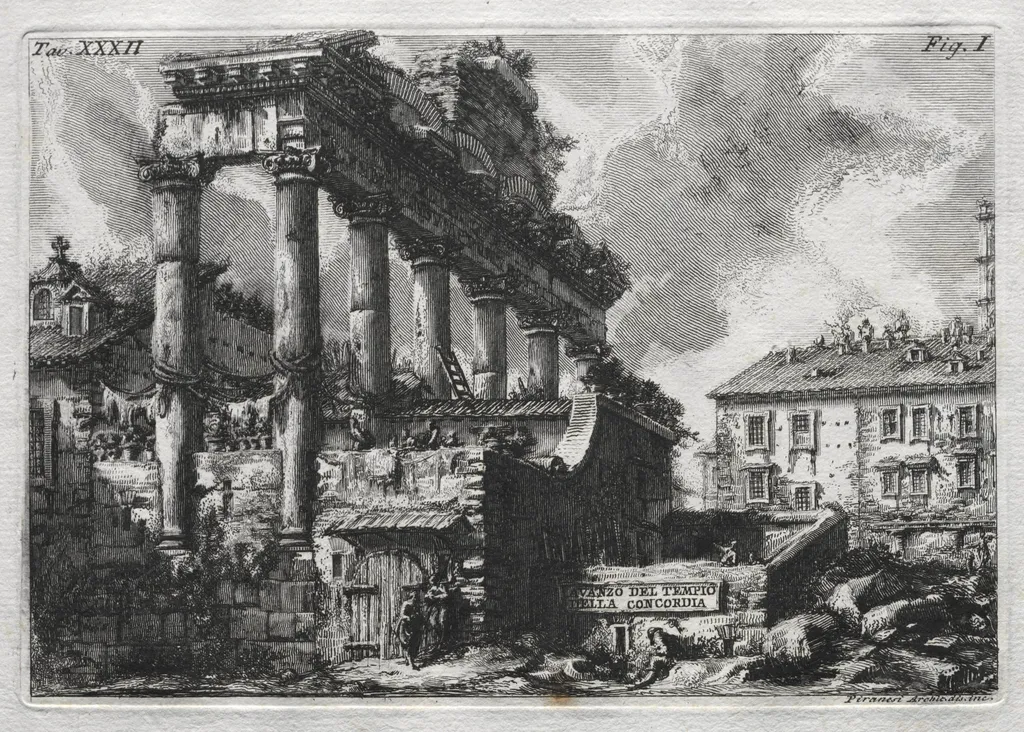
Avanco del Tempio della Concordia is a print by the Romanticist artist Giovanni Battista Piranesi. It dates from 1756 and is held in the collection of the Cleveland Museum of Art.
About this work
Overview
Created in 1756, this etching by Giovanni Battista Piranesi depicts the ruins of the Temple of Concord in Agrigento, Sicily.
Created in 1756, this etching by Giovanni Battista Piranesi depicts the ruins of the Temple of Concord in Agrigento, Sicily. The work is part of a series documenting ancient Roman and Greek architecture in varying states of decay. It is currently held in the collection of The Cleveland Museum of Art, where it serves as an example of Piranesi’s fascination with architectural ruin as a subject worthy of detailed observation.
Subject & Meaning
The scene portrays the remnants of a classical temple, its columns fractured and walls eroded, with vegetation asserting itself through the stonework. A small boat and a cart suggest human presence amid abandonment, while the inscribed sign identifies the site. The image conveys a quiet tension between nature’s reclamation and the enduring weight of human history, without overt sentimentality.
Technique & Style
Piranesi employed sharp, incised lines and deep chiaroscuro to emphasize texture and depth. The contrast between the dark, shadowed ruins and the lighter sky enhances the sense of mass and decay. The meticulous rendering of cracks, moss, and weathered surfaces reflects his training as an architect and his interest in the physical presence of ancient structures, rendered with precision rather than idealization.
History & Provenance
The print was produced during Piranesi’s early years in Rome, when he was documenting antiquities for scholars and travelers. It likely originated as part of a larger project to record Sicilian ruins, though few of these were published in his lifetime. The work entered The Cleveland Museum of Art’s collection through established acquisition channels in the 20th century, preserving its historical and artistic context.
Context
In the mid-18th century, interest in classical antiquity surged among European intellectuals and artists. Piranesi’s etchings responded to this trend by presenting ruins not as mere relics but as complex, living remnants of civilization. His focus on decay and vegetation aligned with emerging Romantic sensibilities, even as his technique remained rooted in topographical accuracy.
Legacy
Piranesi’s renderings of ruins influenced generations of architects and artists, shaping how the ancient world was visually imagined. This print, like others in his oeuvre, helped establish the ruin as a legitimate subject for artistic study. Its enduring presence in museum collections underscores its role in the documentation and reinterpretation of classical heritage.
Artist & collection

Artist
Giovanni Battista (or Giambattista) Piranesi (Italian pronunciation: ; also known as simply Piranesi; 4 October 1720 – 9 November 1778) was an Italian classical archaeologist, architect, and artist, famous for his…

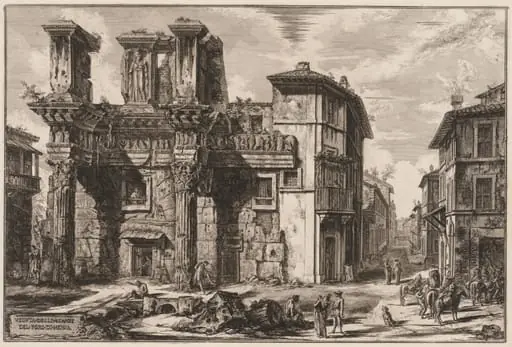 Views of Rome: Forum of Nerva
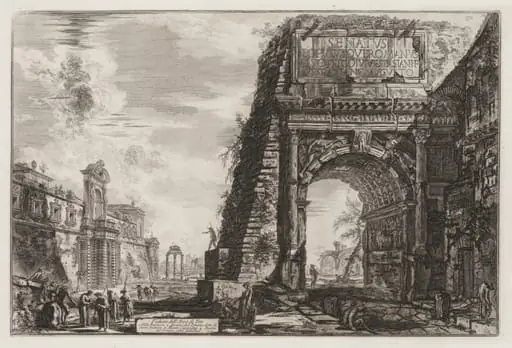 Views of Rome: The Arch or Titus
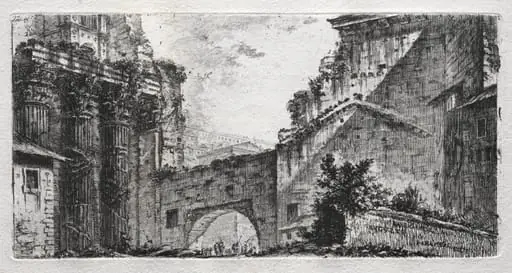 Foro di Augusto
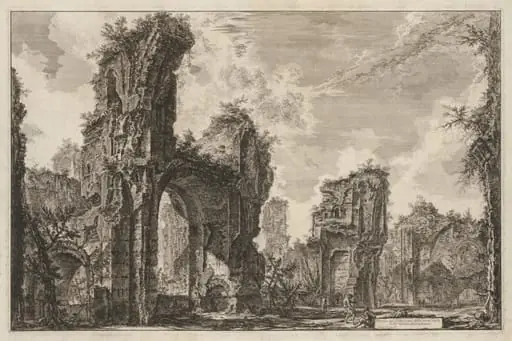 Views of Rome: Rovine del Sisto o sia della gran sala delle Terme Antoniniane
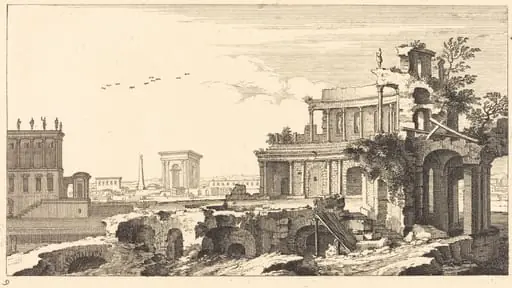 Landscape with Classical Ruins
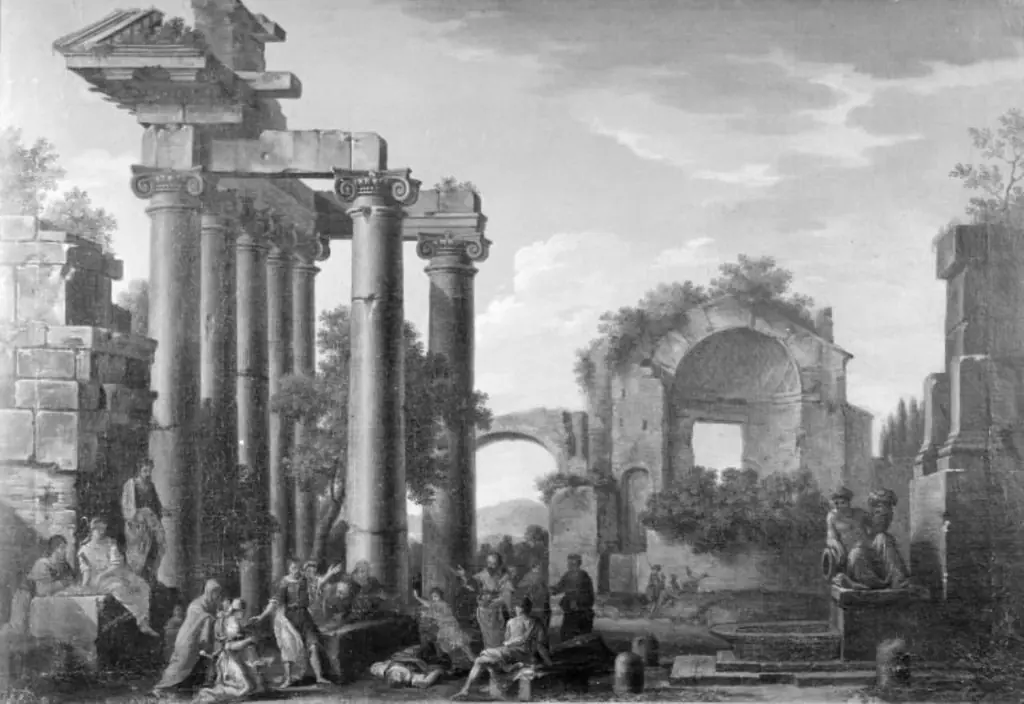 Ruiner af et græsk-romersk tempel med mange figurer
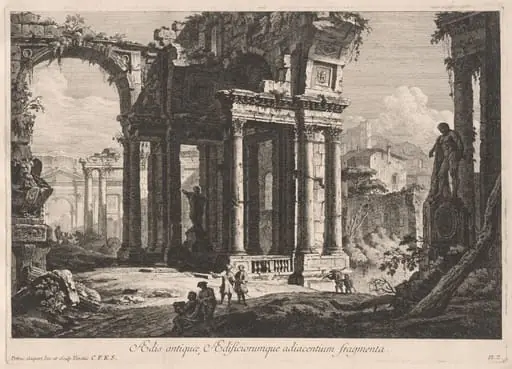 AEdis antiquae, AEdificiorumque adiacentium fragmenta
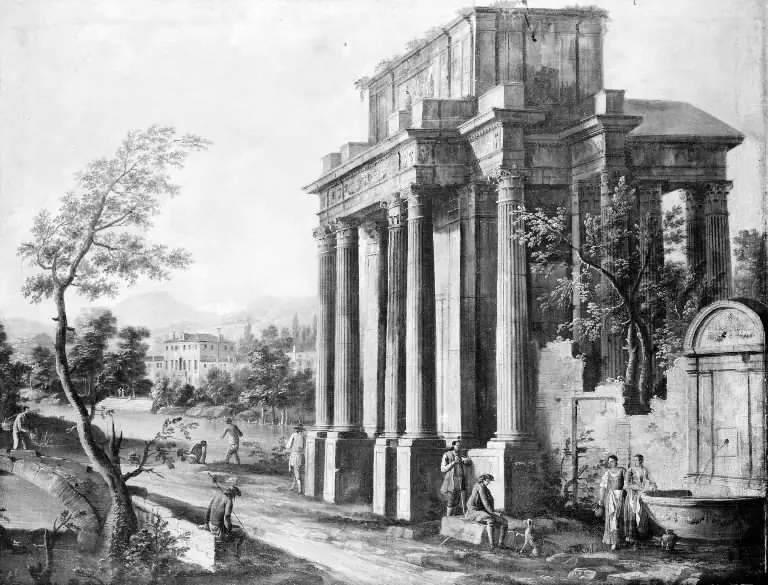 Architectural Study with Columns and a Fountain
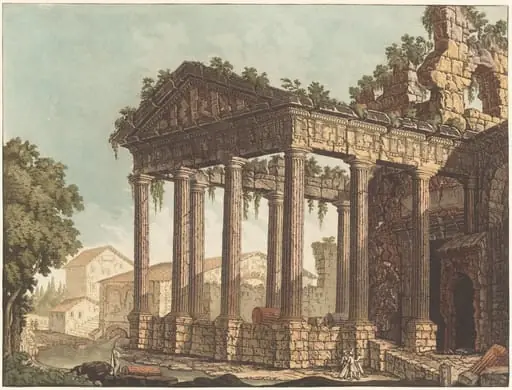 The Temple of Hercules at Cori