Artwork
Vintemille
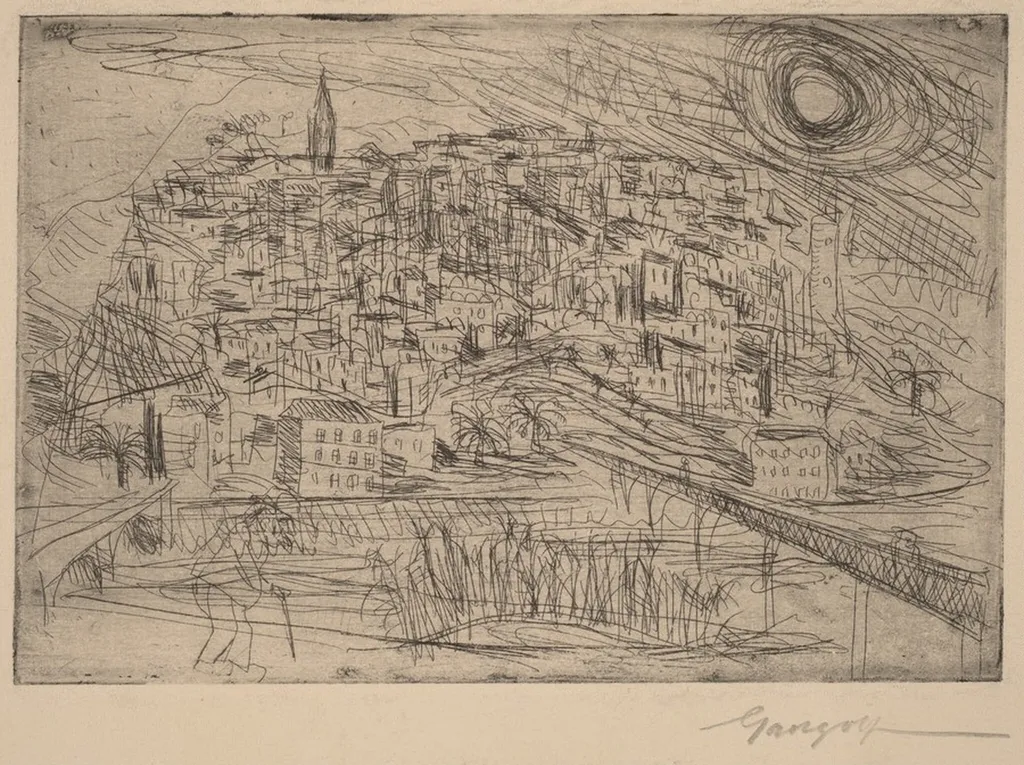
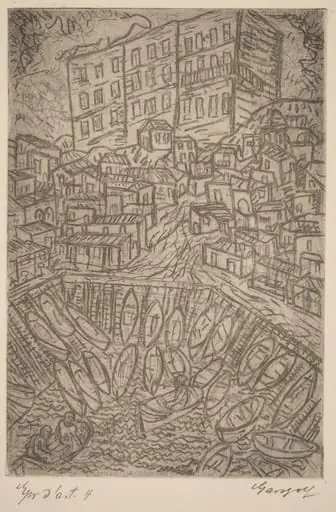
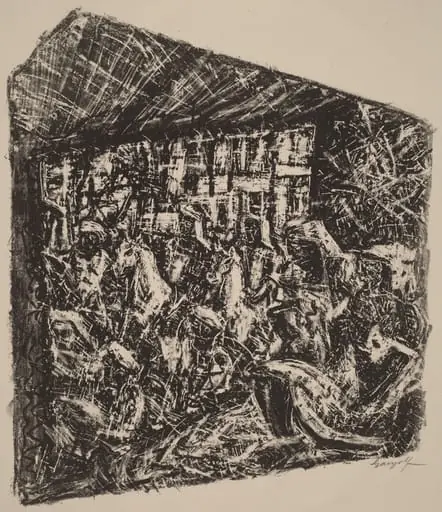
Vintemille is an ink print by the Impressionist artist Paul Gangolf. It dates from 1912 and is held in the collection of the National Gallery of Art.
About this work
Overview
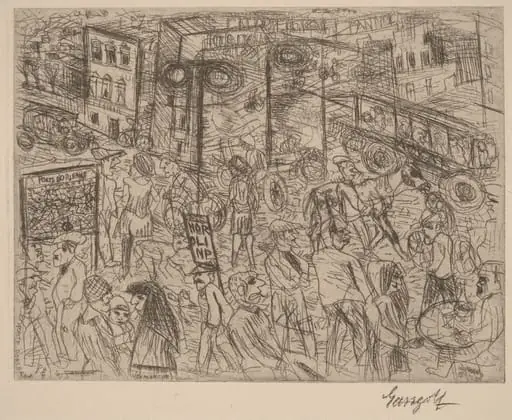
Vintemille is an early twentieth‑century print by Paul Gangolf, executed in 1912. Rendered as an etching, the work captures a bustling urban environment, densely populated with architecture, streets and figures. A prominent church spire rises at the composition’s centre, while a tram or train courses along the lower edge, suggesting movement within the cityscape.
Subject & Meaning
The image presents a snapshot of metropolitan life, emphasizing the density and dynamism of a modern city. The crowded streets, hurried figures, and the juxtaposition of sacred architecture with industrial transport hint at the coexistence of tradition and progress, reflecting the social and spatial transformations of the period.
Technique & Style
Gangolf employed the traditional etching process, incising lines into a metal plate with acid and then layering ink to achieve depth. The marks are loose and rapid, conveying immediacy; the overlapping strokes and varied line weights create a sense of motion and liveliness, reminiscent of a quick sketch rather than a polished rendering.
History & Provenance
Created in 1912, Vintemille belongs to the artist’s early printmaking output, a time when etching experienced renewed interest among European illustrators. While specific ownership details are scarce, the work has been documented in catalogues of Gangolf’s prints and appears in collections that focus on early twentieth‑century urban imagery.
Artist & collection

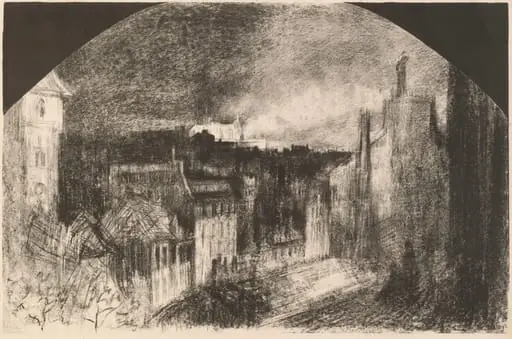 Montmartre le 14 Juillet (Bastille Day in Montmartre)
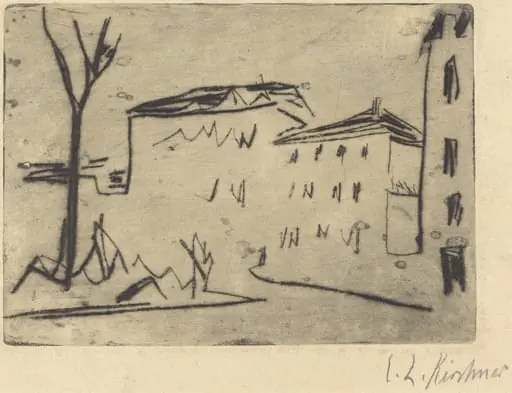 Street Corner in Dresden (Strassenecke Dresden)
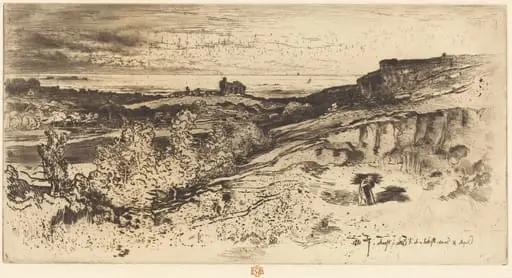 La Chapelle Saint-Michel à l'Estre
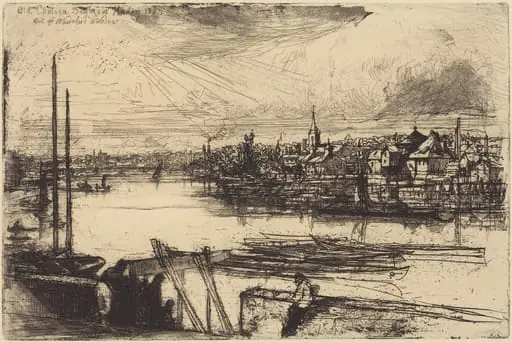 Old Chelsea, Out of Whistler's Window (Battersea Reach)
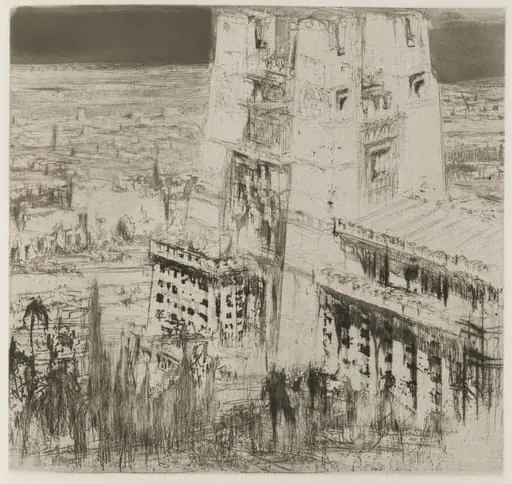 Herodias: Page 7, The sun made the cliffs of white marble glitter, and the golden rays on its roof
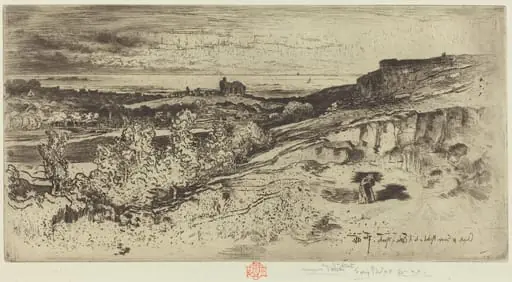 La Chapelle Saint-Michel à l'Estre (The Chapel Saint-Michel at l'Estre)
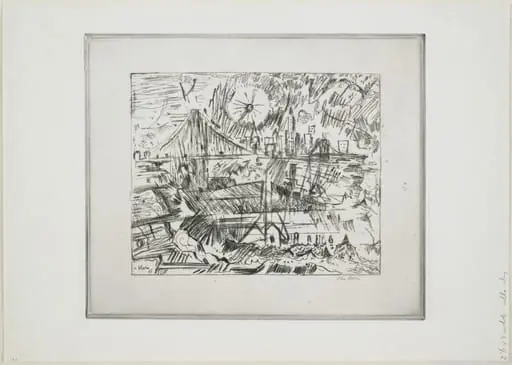 Untitled
 St. Martin's Bridge, Toledo
 Porte d'Orleans
 San Gimignano
 Untitled