Artwork
Herodias: Page 7, The sun made the cliffs of white marble glitter, and the golden rays on its roof
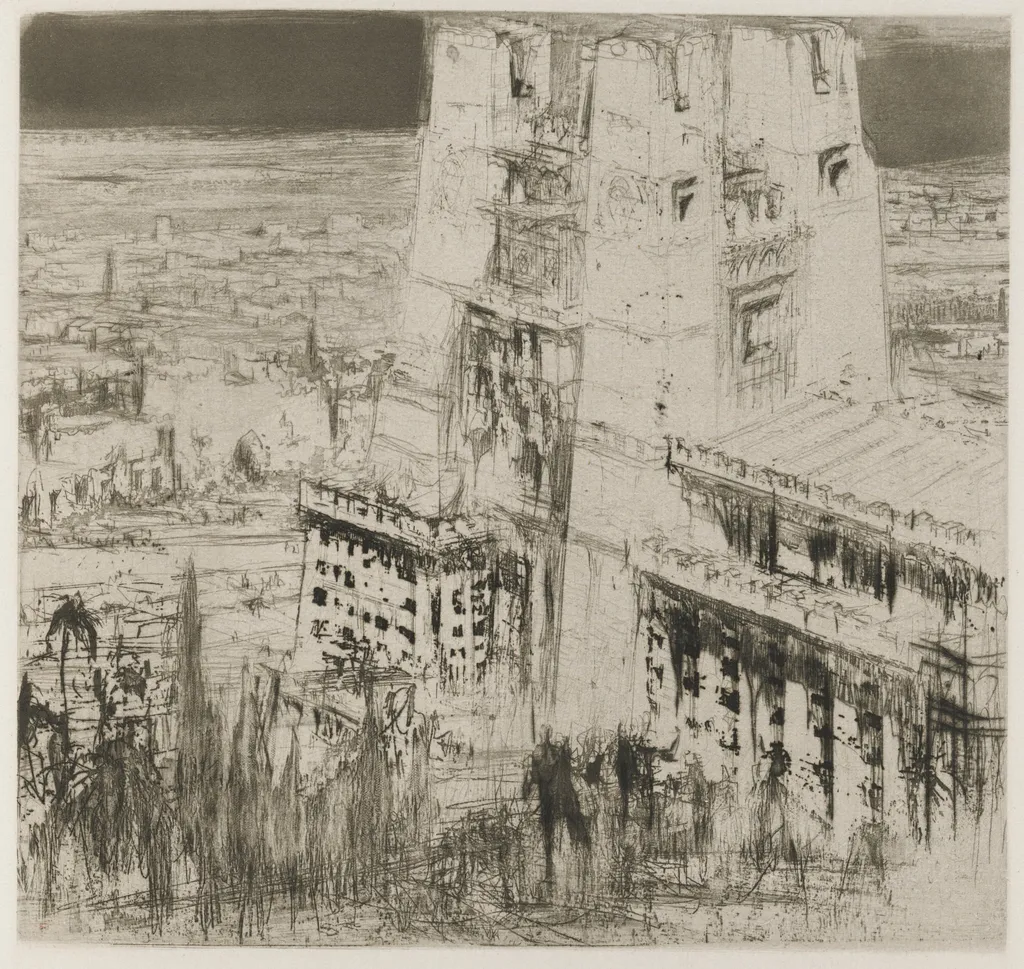
Herodias: Page 7, The sun made the cliffs of white marble glitter, and the golden rays on its roof is a print by William Walcot. It dates from 1928 and is held in the collection of the Cleveland Museum of Art.
About this work
Overview
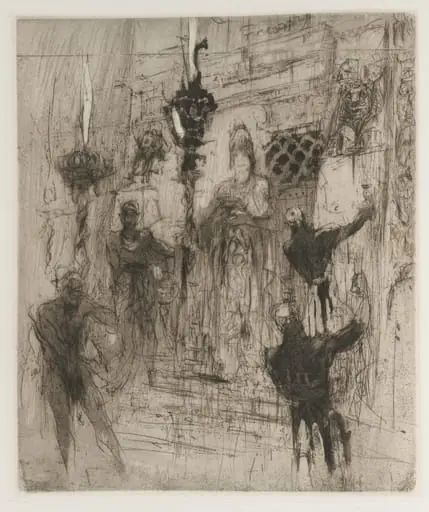
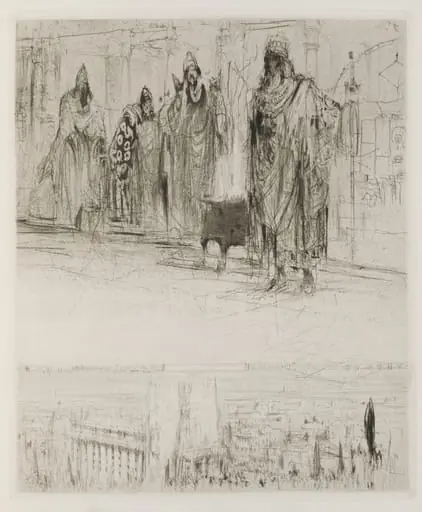
Created in 1928 by William Walcot, this print is part of a series illustrating scenes from the biblical story of Herodias. It captures a moment of quiet daylight in an ancient city, where sunlight interacts with architectural forms. The work is held in the collection of The Cleveland Museum of Art and reflects Walcot’s interest in architectural precision and atmospheric light.
Subject & Meaning
The scene depicts a monumental white marble structure, likely representing Herod’s palace, surrounded by smaller buildings and natural elements.
The scene depicts a monumental white marble structure, likely representing Herod’s palace, surrounded by smaller buildings and natural elements. The presence of trees and vegetation contrasts with the rigid geometry of the architecture, suggesting a tension between human construction and the natural world. The title references the biblical narrative, implying a moment of stillness before impending drama.
Technique & Style
Walcot employed fine-line etching and careful tonal gradation to render the play of sunlight on marble surfaces. The sharp contrast between illuminated areas and shaded recesses creates a sense of volume and spatial depth. The composition emphasizes horizontal planes—rooftops, terraces, and tree lines—enhancing the calm, measured rhythm of the scene.
History & Provenance
The print was produced as part of a limited illustrated series on Herodias, published in the late 1920s. Walcot, known for his architectural drawings, used this project to explore historical settings through precise draftsmanship. It entered The Cleveland Museum of Art’s collection in the mid-20th century, where it remains as an example of early 20th-century narrative printmaking.
Context
Walcot’s work emerged during a period when artists revisited classical and biblical themes with modern techniques. His focus on architectural detail aligned with contemporary interests in archaeology and historical reconstruction. Unlike overtly dramatic depictions of Herodias, this print emphasizes atmosphere over action, reflecting a quieter, more contemplative approach to storytelling.
Legacy
Though not widely exhibited, Walcot’s Herodias series is recognized for its technical refinement and restrained emotional tone. The print exemplifies how early 20th-century illustrators blended traditional subject matter with modern graphic sensibilities. Its presence in a major museum collection underscores its value as a document of interwar artistic engagement with ancient narratives.
Artist & collection

Artist
William Walcot RE was a Russian-Scottish architect, graphic artist and etcher, notable as a architect of refined Art Nouveau in Moscow, Russia.

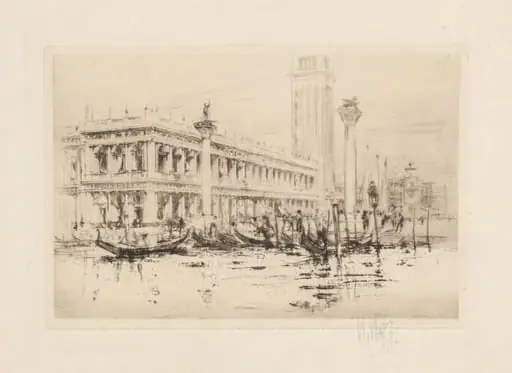 The Venice Set: The Library of St. Mark’s
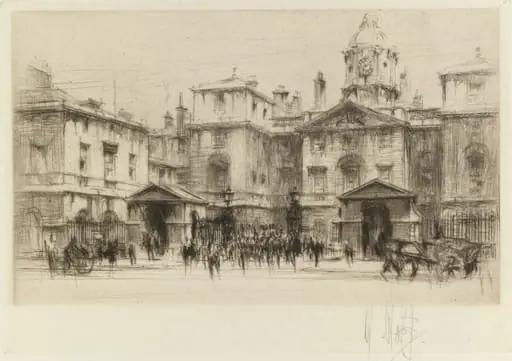 London Set: Horseguards
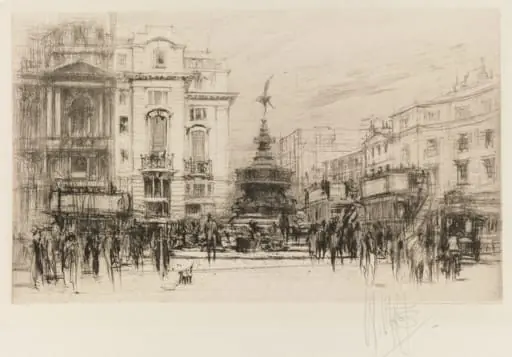 London Set: Piccadilly Circus (with Criterion Theatre)
 The Clyde from the series The Arteries of Great Britain
 Downtown Manhattan from the East River, with the Woolworth Building
 Herodias
 Herodias: Page 13, The tetrarch was awaited by several Galileans, the master of scribes, the chief of the land steward, the manager of the salt mines, and a Jew from Babylon commanding his troops on horse
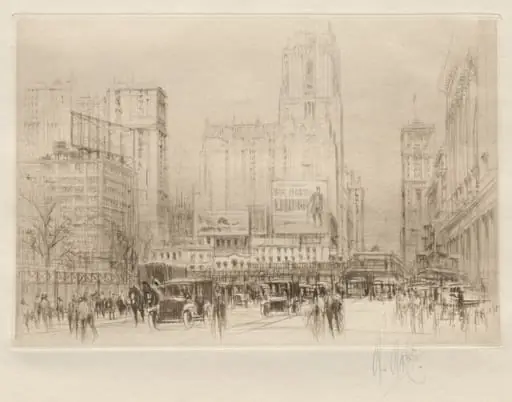 Forty-second Street NY
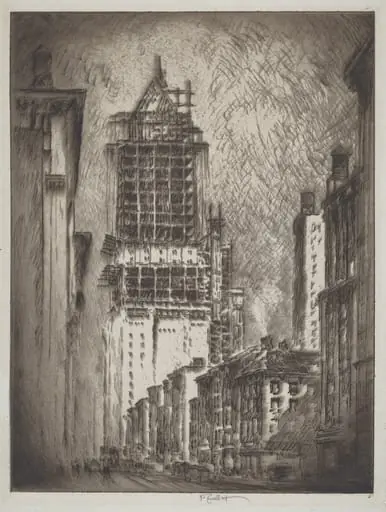 Lodgings for Gents
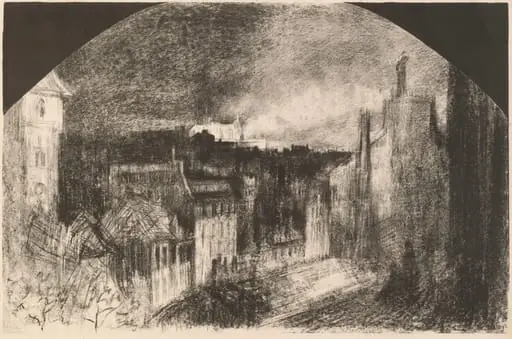 Montmartre le 14 Juillet (Bastille Day in Montmartre)
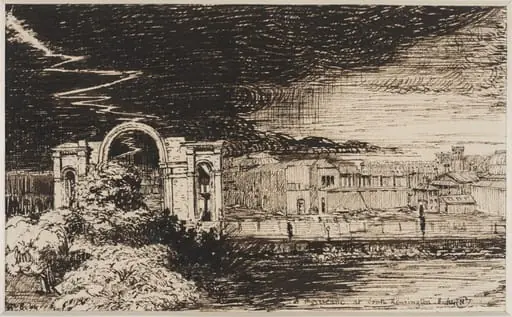 A hurricane at South Kensington
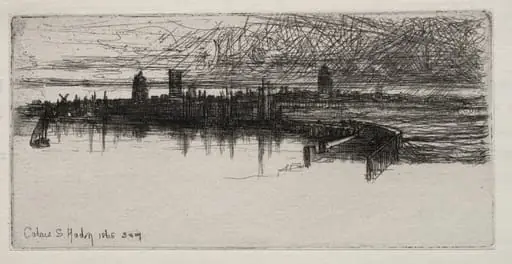 Little Calais Pier, 1865, 3 A.M.
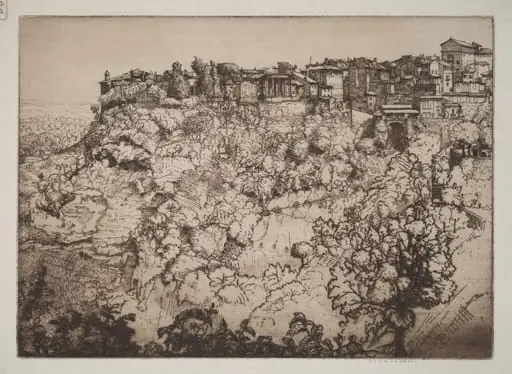 Tivoli
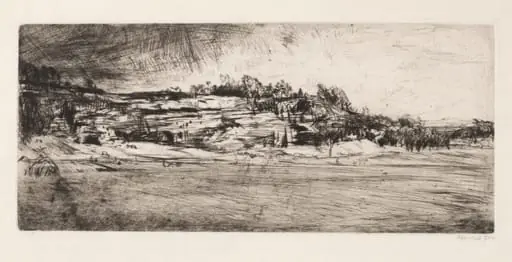 Spring at Cardross
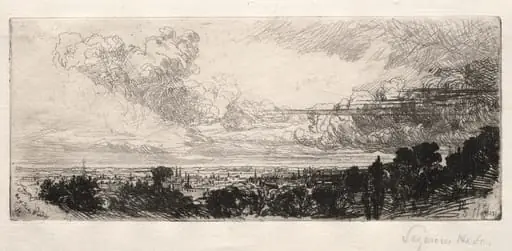 Out of Study Window
 Herodias: Page 3, The citadel of Machaerus rose from the eastern side of the Dead Sea, on a peak of basalt, having the shape of a cone
 Old Chelsea, Out of Whistler's Window (Battersea Reach)
 Amalfi
 The Facade of the Parthenon, Sunset
 Out of Study Window