Artwork
Pentecostes
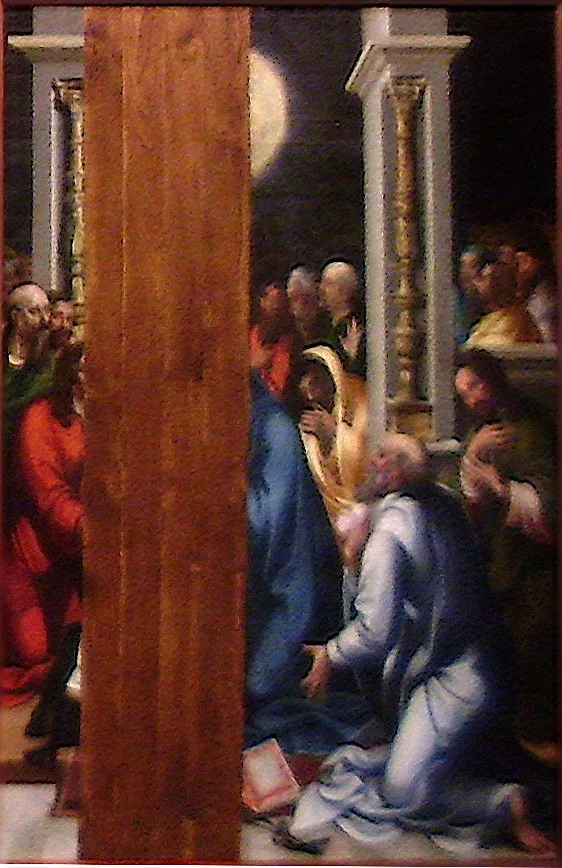
Pentecostes is an oil painting by the Mannerist artist Garcia Fernandes. It dates from 1537 and is held in the collection of the National Museum of Ancient Art.
About this work
Overview
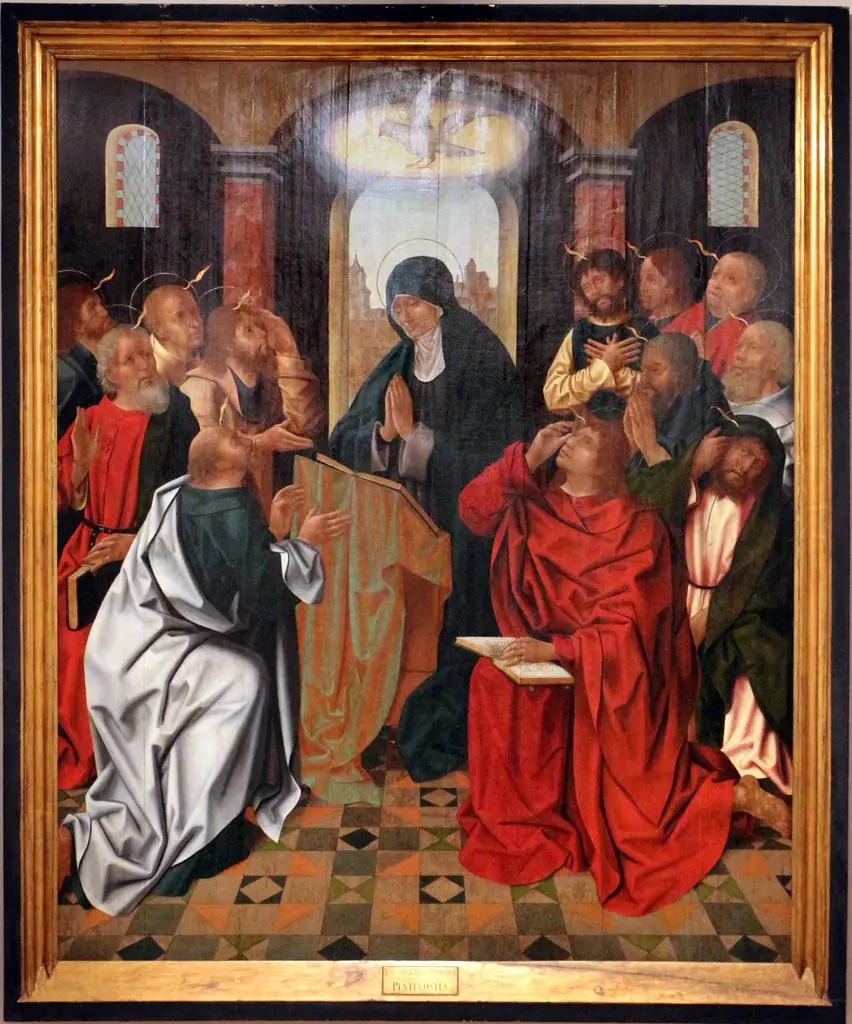
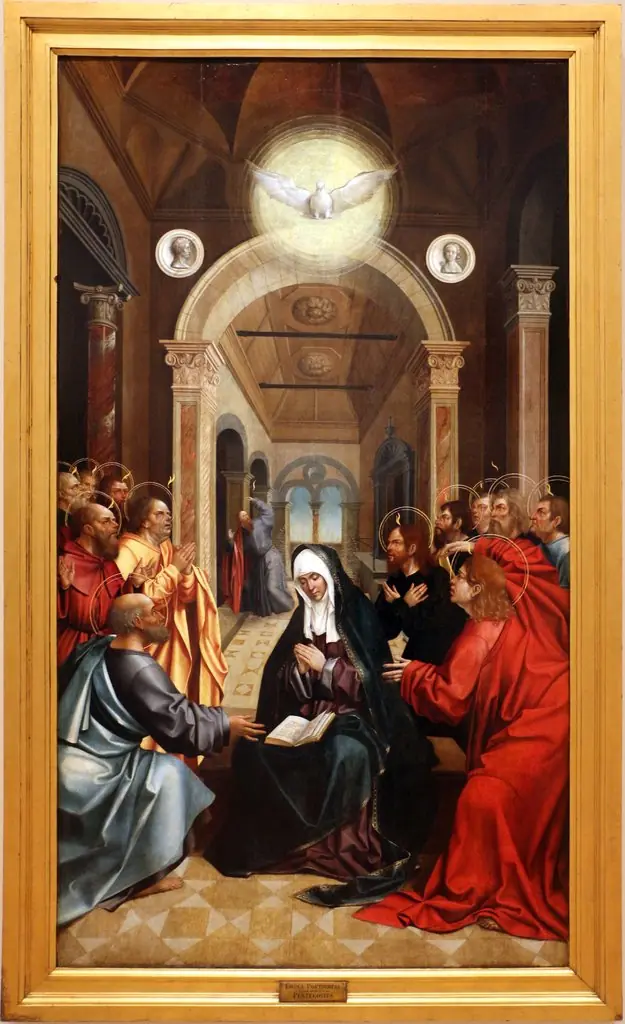
Painted in 1537 by Portuguese artist Garcia Fernandes, *Pentecostes* is an oil-on-panel work depicting the descent of the Holy Spirit upon the apostles.
Painted in 1537 by Portuguese artist Garcia Fernandes, *Pentecostes* is an oil-on-panel work depicting the descent of the Holy Spirit upon the apostles. Created during the height of the Portuguese Renaissance, it reflects the influence of Mannerist aesthetics and was likely intended for devotional use in a religious setting. The painting is now held in the National Museum of Ancient Art in Lisbon, where it remains one of the few surviving major works by the artist.
Subject & Meaning
The scene illustrates the biblical event of Pentecost, when the apostles received divine inspiration through tongues of fire. Figures are arranged around a central figure, traditionally understood as the Virgin Mary, who is shown in blue, a color associated with divine grace. Their upward gazes and still postures convey a moment of sacred revelation, emphasizing spiritual transformation over narrative action. The composition invites contemplation rather than drama, aligning with monastic devotional practices of the time.
Technique & Style
Fernandes employs chiaroscuro to model forms with subtle gradations of light and shadow, enhancing the three-dimensionality of the figures. The dark, unmodeled background isolates the group, directing attention to the luminous source above. White architectural elements frame the scene, grounding the divine event in a structured, earthly space. The figures’ elongated proportions and stylized gestures reflect Mannerist tendencies, departing from naturalism toward expressive, refined elegance.
History & Provenance
Fernandes trained under Jorge Afonso, the leading court painter in Lisbon, and later contributed to altarpieces in Coimbra and Lamego. *Pentecostes* was likely commissioned for a religious institution, possibly a monastery, given its devotional tone and scale. It entered the collection of the National Museum of Ancient Art in the 19th century, following the dissolution of religious orders in Portugal. Its survival is notable, as many works from this period were lost or destroyed.
Context
In mid-16th-century Portugal, religious art served both liturgical and didactic functions. The Catholic Church, responding to the Reformation, emphasized imagery that reinforced doctrine and encouraged piety. Fernandes’s work aligns with this climate, using clarity and solemnity to communicate theological concepts. His training in Lisbon placed him within a network of artists influenced by Flemish and Italian traditions, though his style remains distinctly regional in its restraint and spatial organization.
Legacy
Though Fernandes’s oeuvre is limited, *Pentecostes* stands as a key example of Portuguese Mannerism in religious painting. It reveals how local artists adapted broader European styles to suit domestic devotional needs. The work’s preservation offers insight into the visual culture of post-Reformation Portugal and the role of art in sustaining spiritual life during a period of ecclesiastical reform and political change.
Artist & collection
Artist
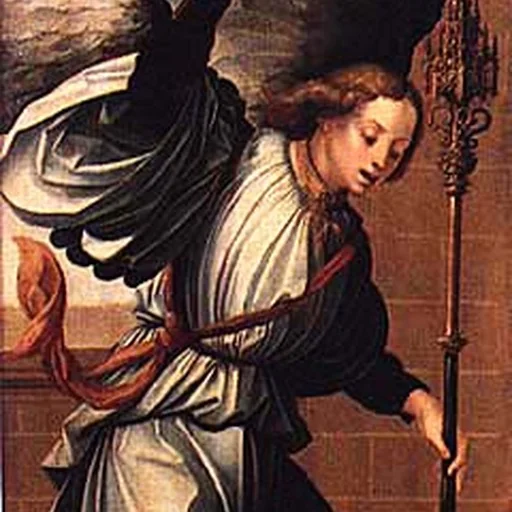
Garcia Fernandes (died c. 1565) was a Portuguese Renaissance painter. Like many painters of the time, Garcia Fernandes was a pupil in the Lisbon workshop of Jorge Afonso, who was the court painter of King Manuel I. In…