Artwork
Paisaje con cascada
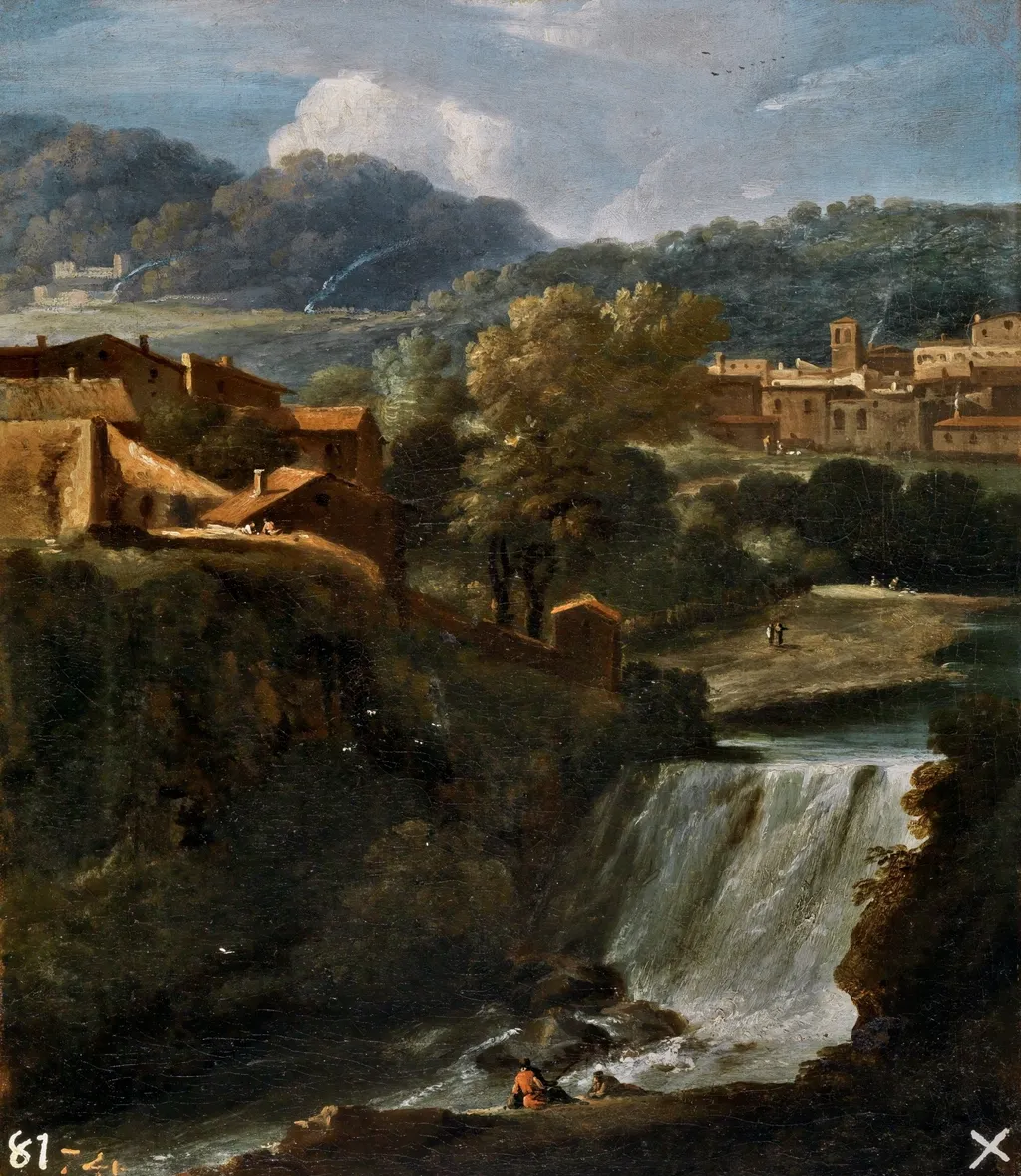
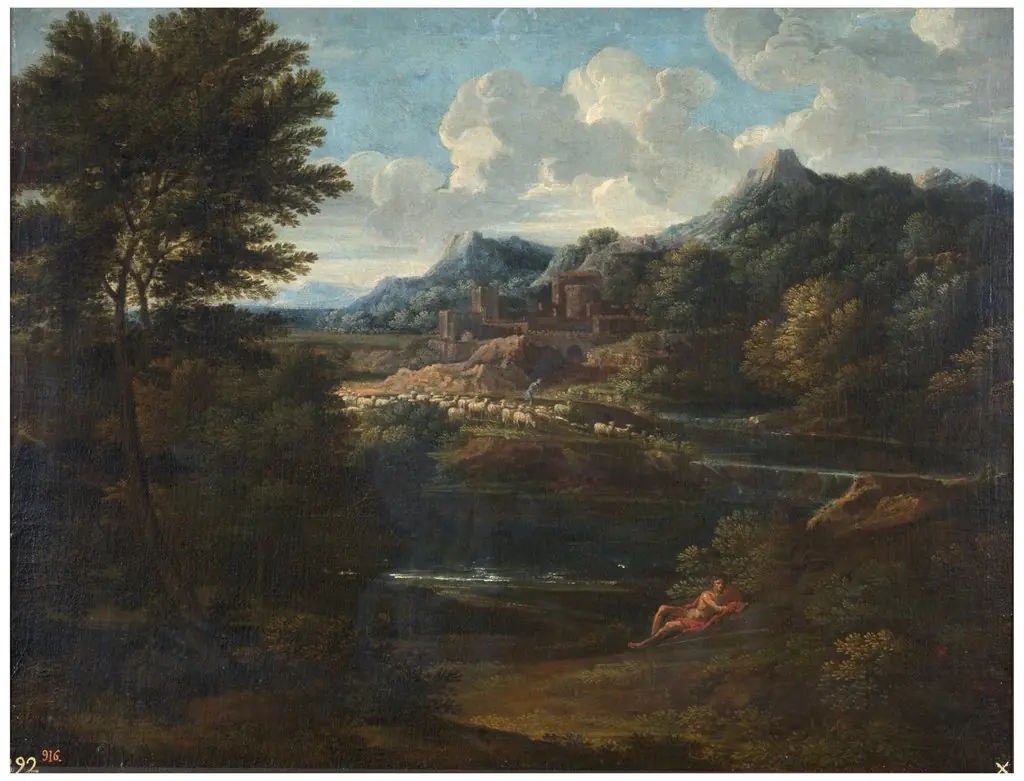
Paisaje con cascada is an oil painting by the French Classical Baroque artist Gaspard Dughet. It dates from 1650 and is held in the collection of the Museo del Prado.
About this work
Overview
Painted around 1650, this oil-on-canvas landscape is attributed to Gaspard Dughet, an Italian painter of French origin known for his atmospheric views.
Painted around 1650, this oil-on-canvas landscape is attributed to Gaspard Dughet, an Italian painter of French origin known for his atmospheric views. It resides in the Museo del Prado in Madrid, where it exemplifies the classical landscape tradition of the mid-17th century. The work presents a quiet, harmonious natural setting, emphasizing balance and subtle narrative elements within the scenery.
Subject & Meaning
The scene centers on a waterfall descending a rugged cliff, framed by dense foliage and distant hills. A solitary figure rests in the foreground, suggesting contemplation or rest, while a small village with a church appears nestled in the background. These elements together evoke a sense of peaceful coexistence between nature and human habitation, reflecting ideals of rural serenity common in Baroque landscape painting.
Technique & Style
Dughet employs broad, deliberate brushwork to render textures in rock, foliage, and sky, creating a tactile sense of the environment. Light filters softly through the clouds, casting gentle shadows that enhance spatial depth. The palette is restrained, dominated by earth tones and muted greens, with a pale blue sky providing contrast. His handling of atmosphere suggests influence from the Roman countryside and the tradition of Claude Lorrain.
History & Provenance
The painting entered the collection of the Museo del Prado in the 19th century, likely as part of royal Spanish acquisitions. Its attribution to Dughet has been consistently supported by stylistic analysis and archival records. While its exact early ownership is unclear, it aligns with the tastes of European collectors who favored idealized landscapes during the Baroque period.
Context
Dughet worked in Rome during a time when landscape painting was gaining prestige as an independent genre. Influenced by the classical ideals of the Carracci and the naturalism of Northern European artists, he helped shape a style that balanced idealization with observed detail. This painting reflects the broader trend among Roman artists to elevate nature as a subject worthy of serious artistic attention.
Legacy
Though less widely known than some contemporaries, Dughet’s landscapes contributed to the development of the classical tradition in European painting. His integration of human presence within nature, subtle lighting, and structured composition influenced later generations of landscape painters, particularly those working in the 18th-century academic style.
Own this work as a print
Artist & collection

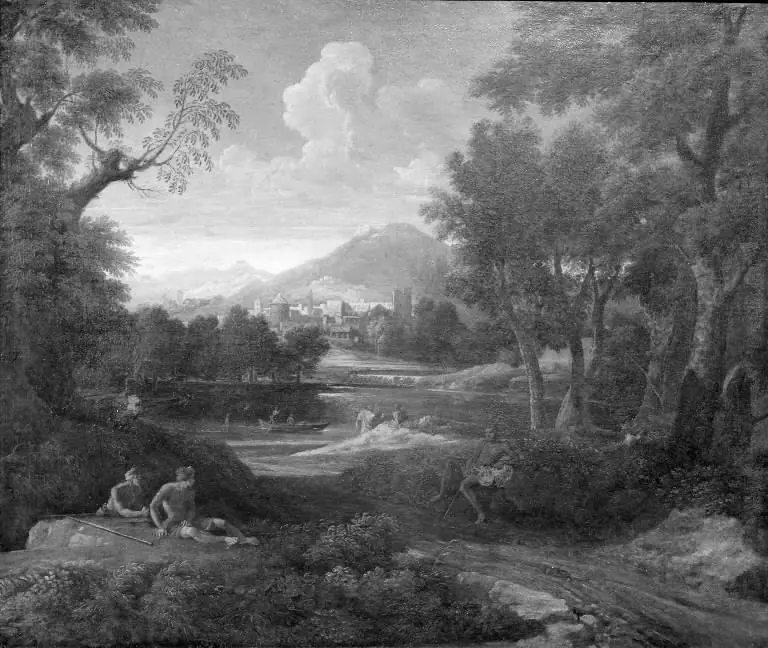
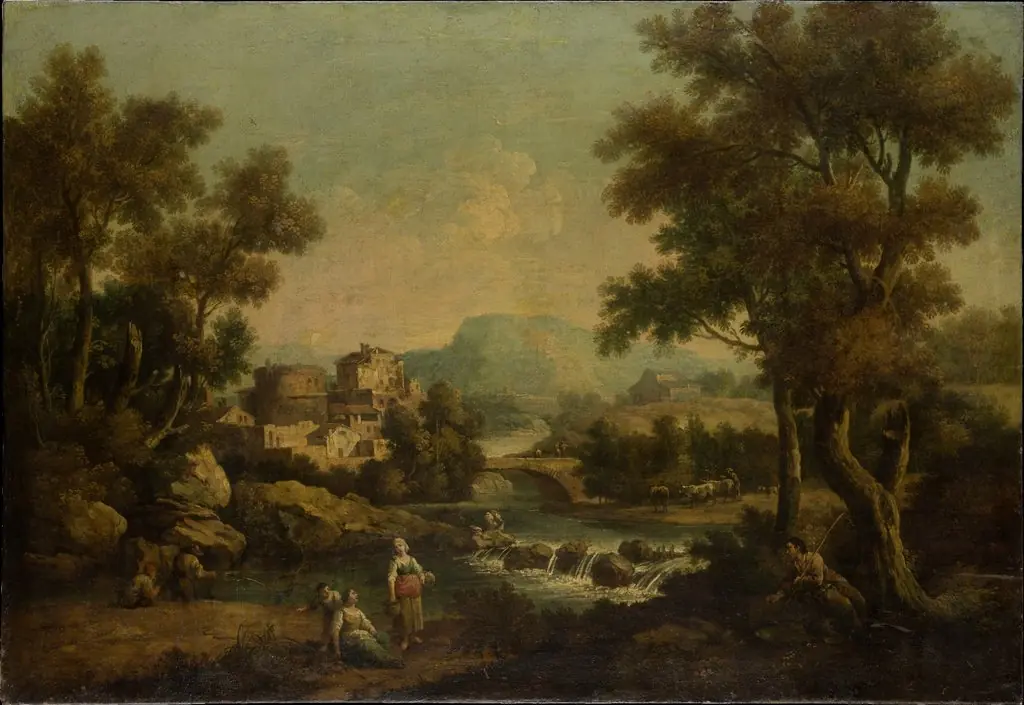 Italian Landscape with a Mountain Stream
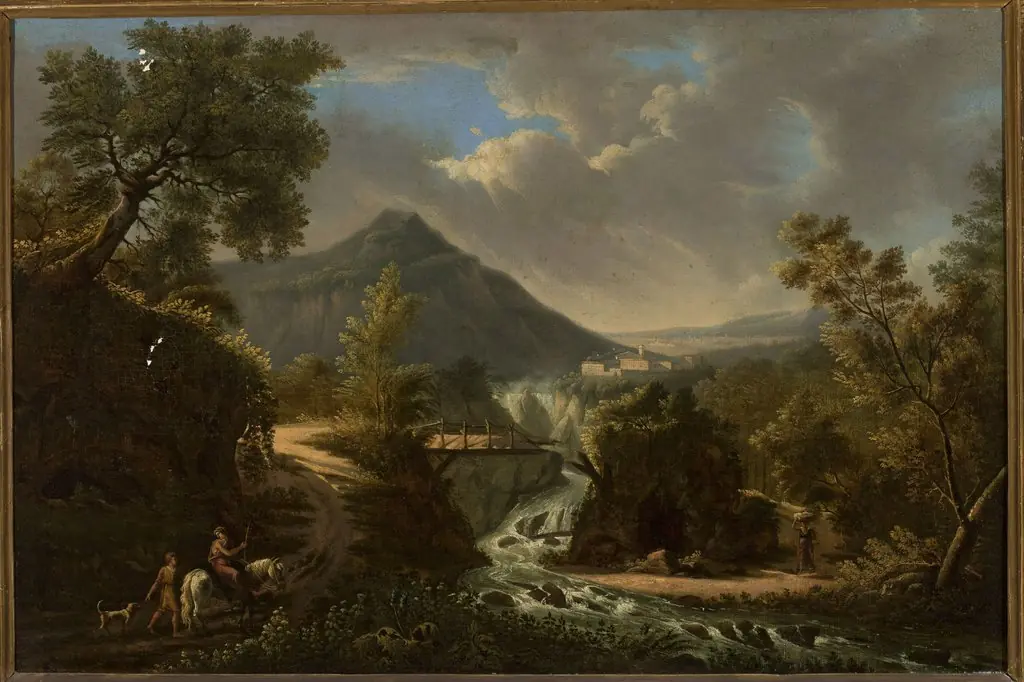 Italian landscape with a river and staffage
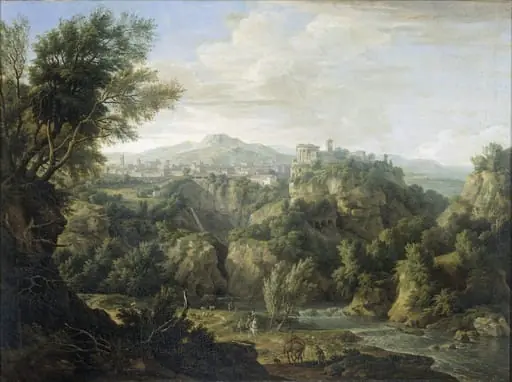 View of Tivoli
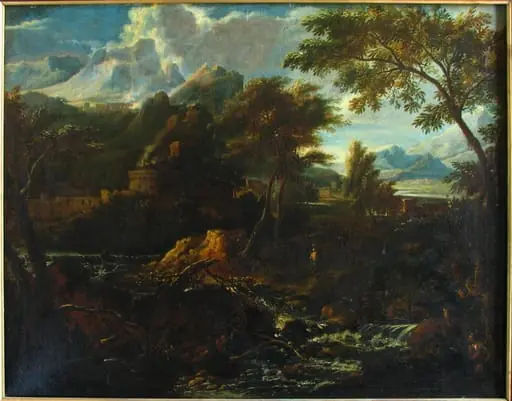 Peisaj cu râu și ruine; pandant: Peisaj cu clădiri vechi
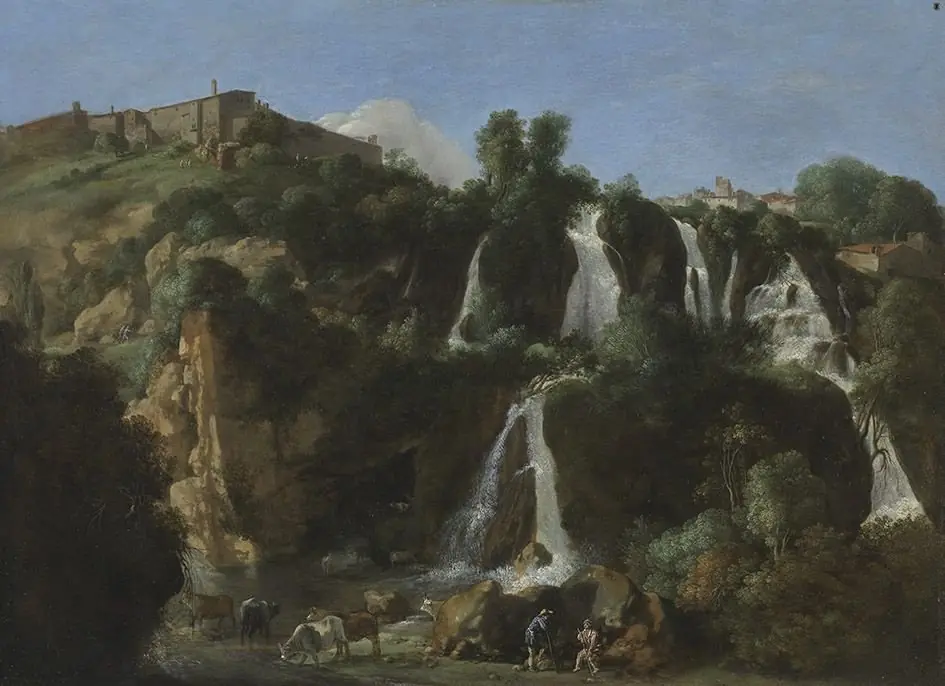 The Tivoli waterfalls
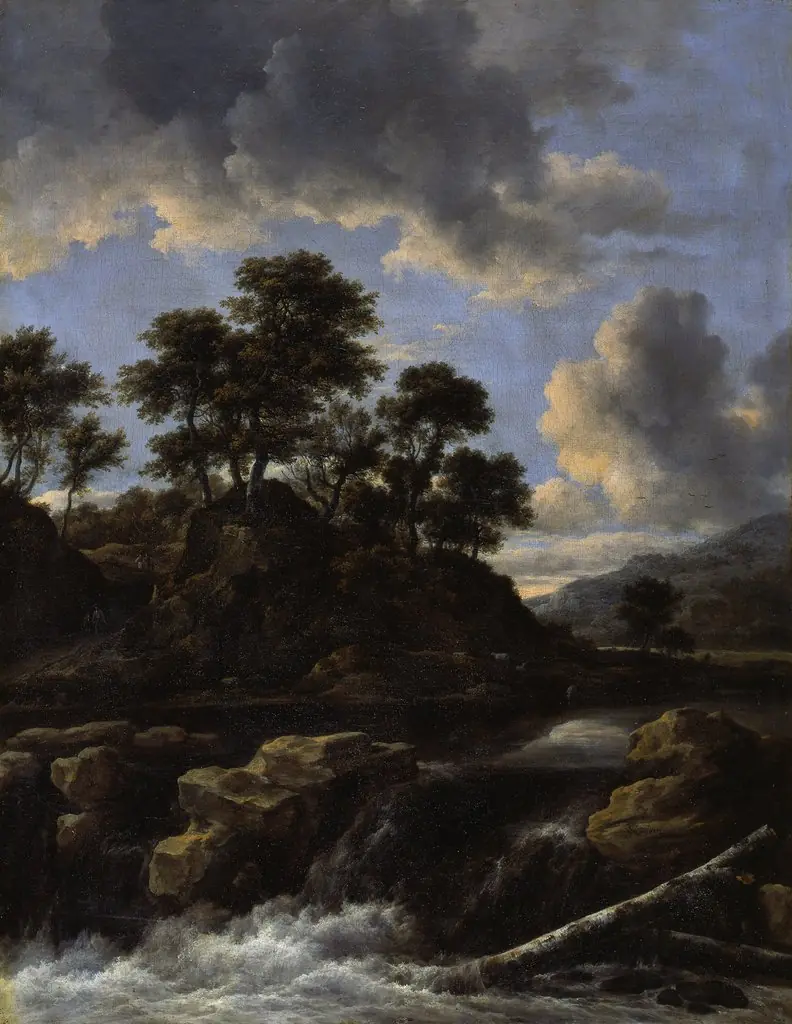 Waterfall at sunset
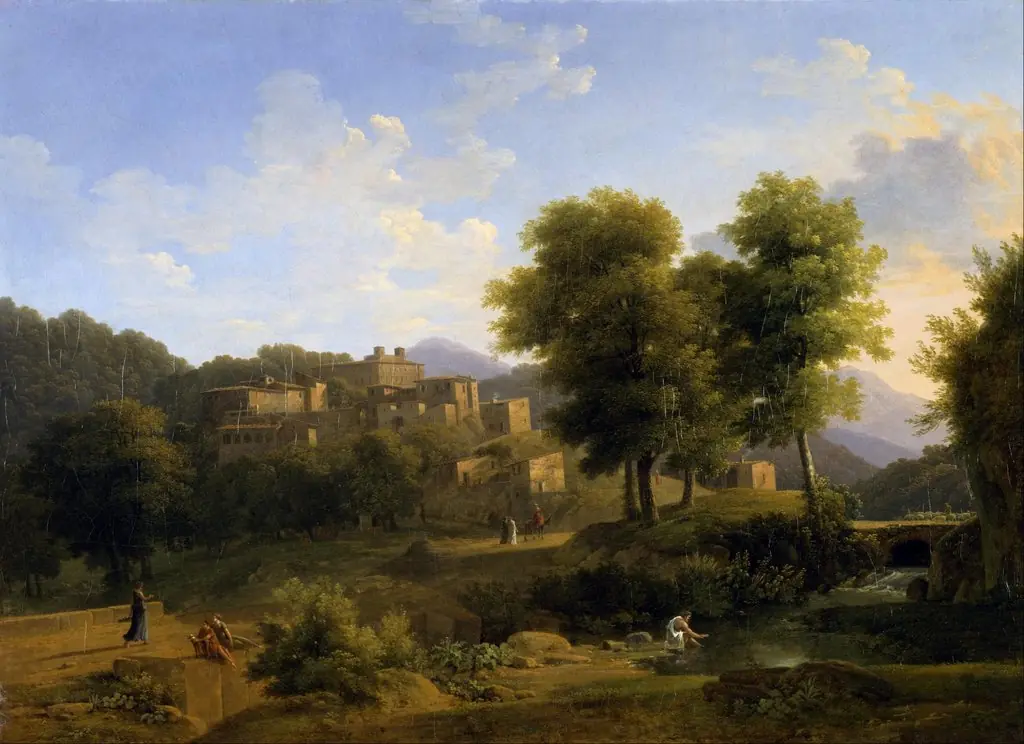 View of a Town in the Sabine Hills
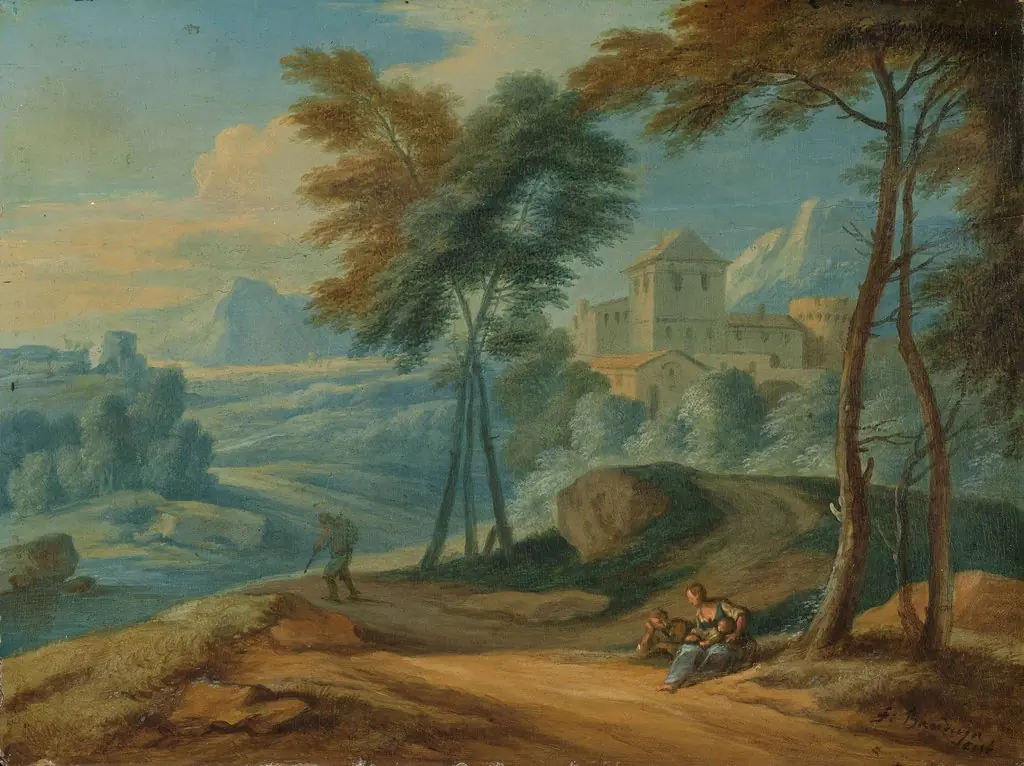 Mountainous landscape
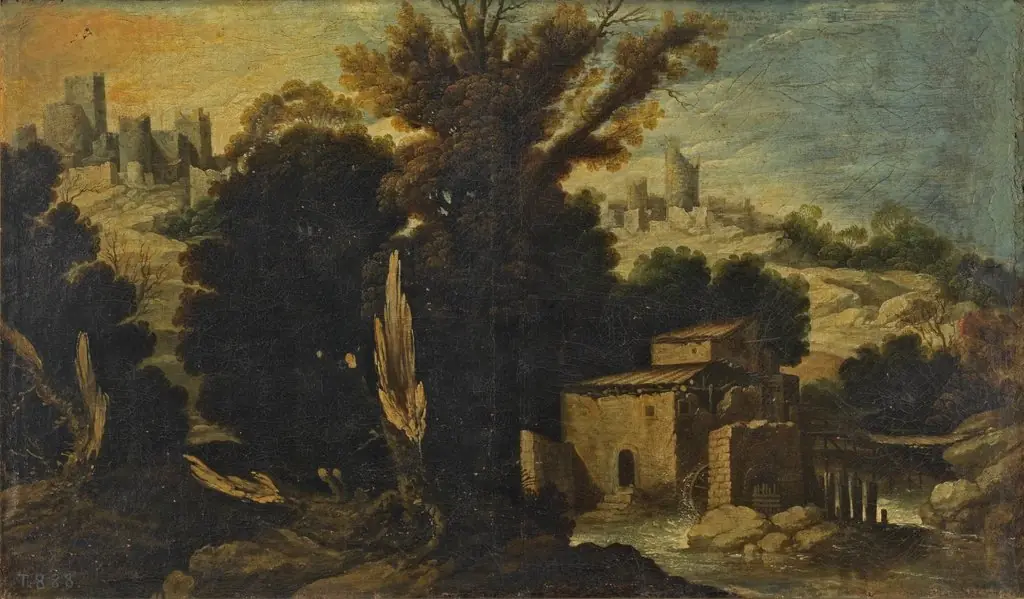 Paisaje
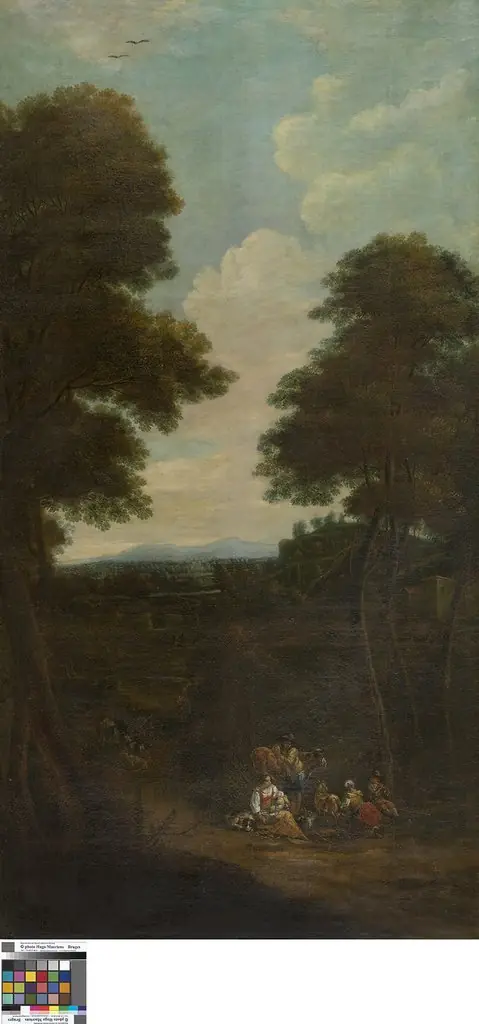 Landschap
 Wooded Italianate Landscape with Figures
 Paisaje con pastor