Artwork
Fanny Elssler in La Voliere
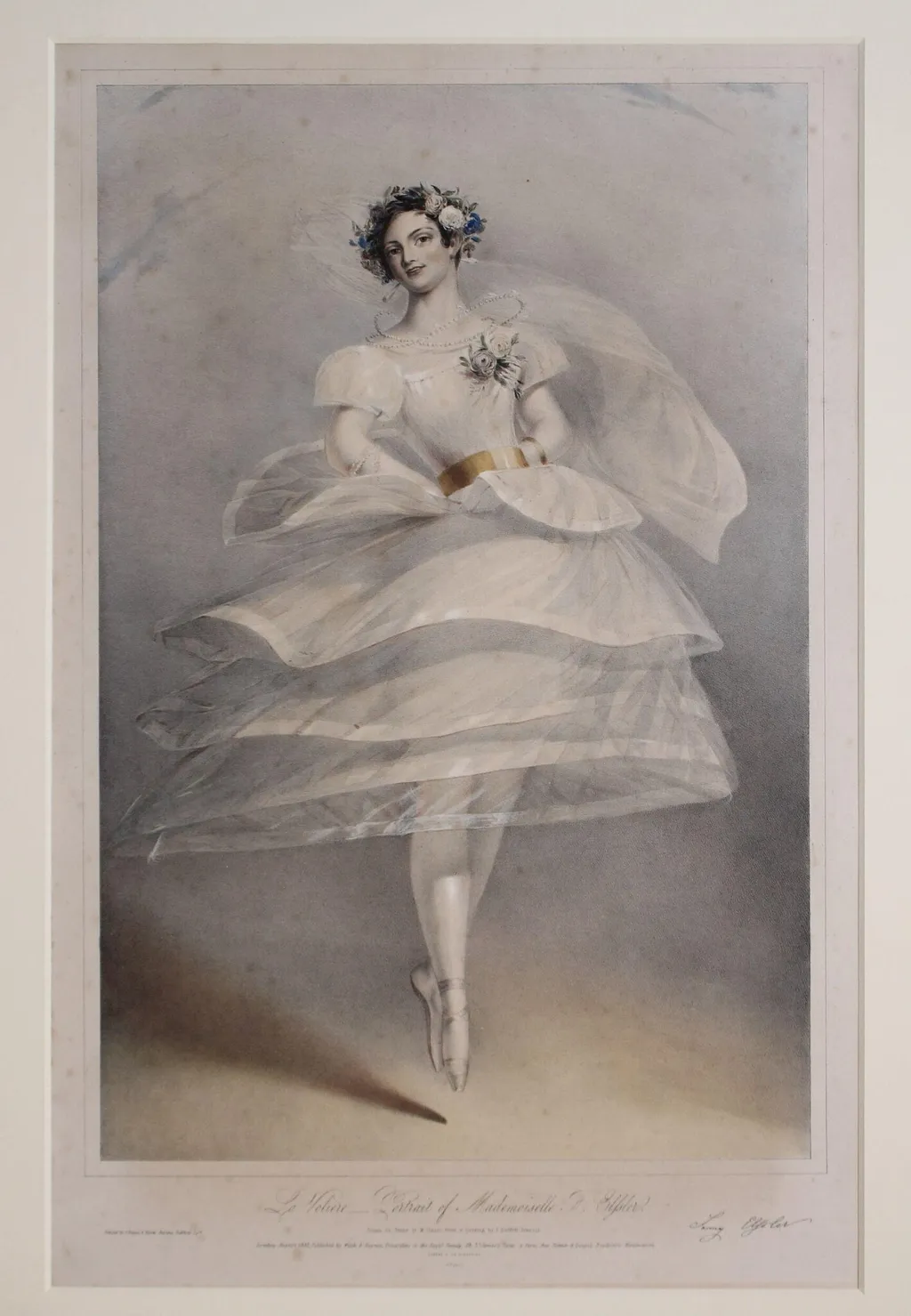
Fanny Elssler in La Voliere is a print by the Romanticist artist Gauci, M.. It dates from 1838 and is held in the collection of the Victoria and Albert Museum.
About this work
Overview
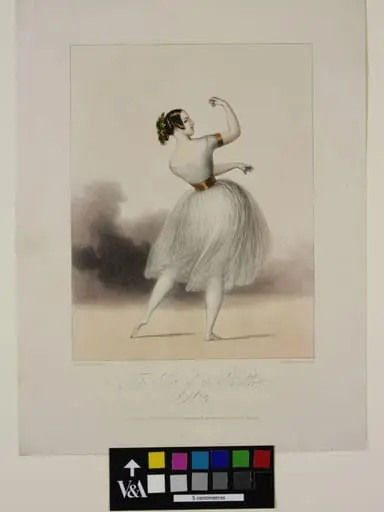
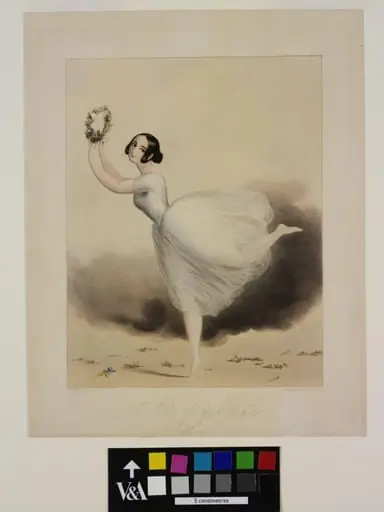
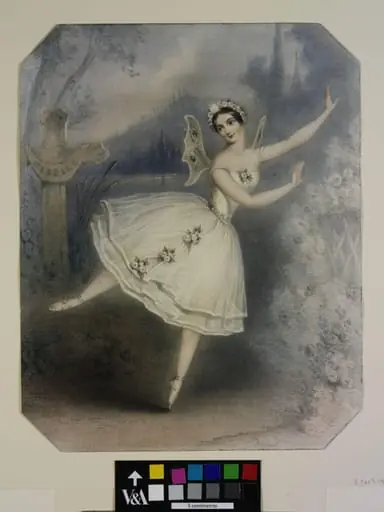
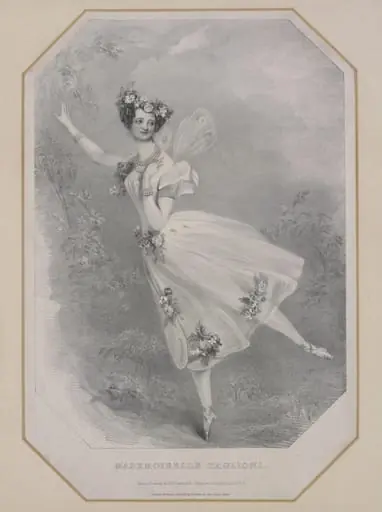
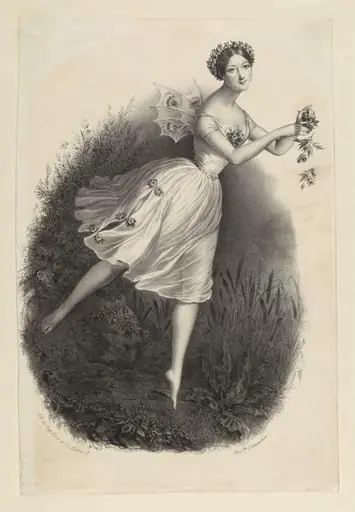
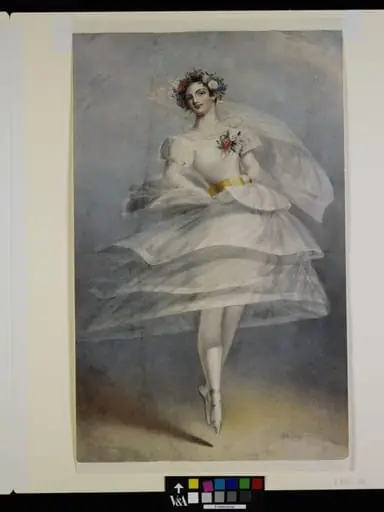
This lithograph captures Fanny Elssler in motion during her performance of La Volière, a ballet that showcased her technical precision and expressive flair.
This lithograph captures Fanny Elssler in motion during her performance of La Volière, a ballet that showcased her technical precision and expressive flair. Rendered as a proof, the print bears the signatures of the artist, printer, and publisher, affirming its status as a documented record of the performance. The composition isolates the dancer against a softly blurred background, emphasizing her dynamic pose and elaborate costume with minimal distraction.
Subject & Meaning
Fanny Elssler, one of the most celebrated ballerinas of the Romantic era, is depicted mid-leap, embodying the era’s ideal of ethereal movement. Her pose—balanced on one foot, the other extended behind—conveys both control and weightlessness. The floral headdress and corsage, rendered in cool blues and greens, evoke nature and fragility, aligning with Romanticism’s fascination with the sublime and the transient.
Technique & Style
The artist employs subtle chiaroscuro to model the layers of tulle, suggesting volume and motion through gradations of light and shadow. Soft, feathery lines define the skirt’s flaring tiers, while delicate hatching renders the pearl necklaces and bracelets as fleeting traces in motion. The background is deliberately muted, enhancing the three-dimensionality of the figure and the illusion of airborne movement.
History & Provenance
Created as a proof, this print was likely produced for private circulation or as a preparatory impression before wider publication. It originates from a period when lithography became a favored medium for documenting theatrical performances. The inclusion of production credits confirms its role as a documented artifact, preserving the visual identity of Elssler’s celebrated stage persona.
Context
In the 1830s and 1840s, ballet shifted from courtly spectacle to a more emotionally charged art form, with dancers like Elssler becoming cultural icons. Lithographs of performers in action were rare; most depicted static poses or full-stage scenes. This print stands out for its intimate focus on movement, reflecting growing public fascination with the dancer’s individual artistry beyond the narrative of the ballet itself.
Legacy
The print remains a significant visual record of Romantic ballet’s aesthetic and the rise of the dancer as a public figure. Its emphasis on motion and detail influenced later theatrical portraiture, setting a precedent for capturing ephemeral performance in static media. As one of the few lithographs of its kind, it offers insight into how dance was visually codified and consumed by audiences beyond the theater.
Artist & collection