Artwork
Carolina Rosati (facsimile signature)
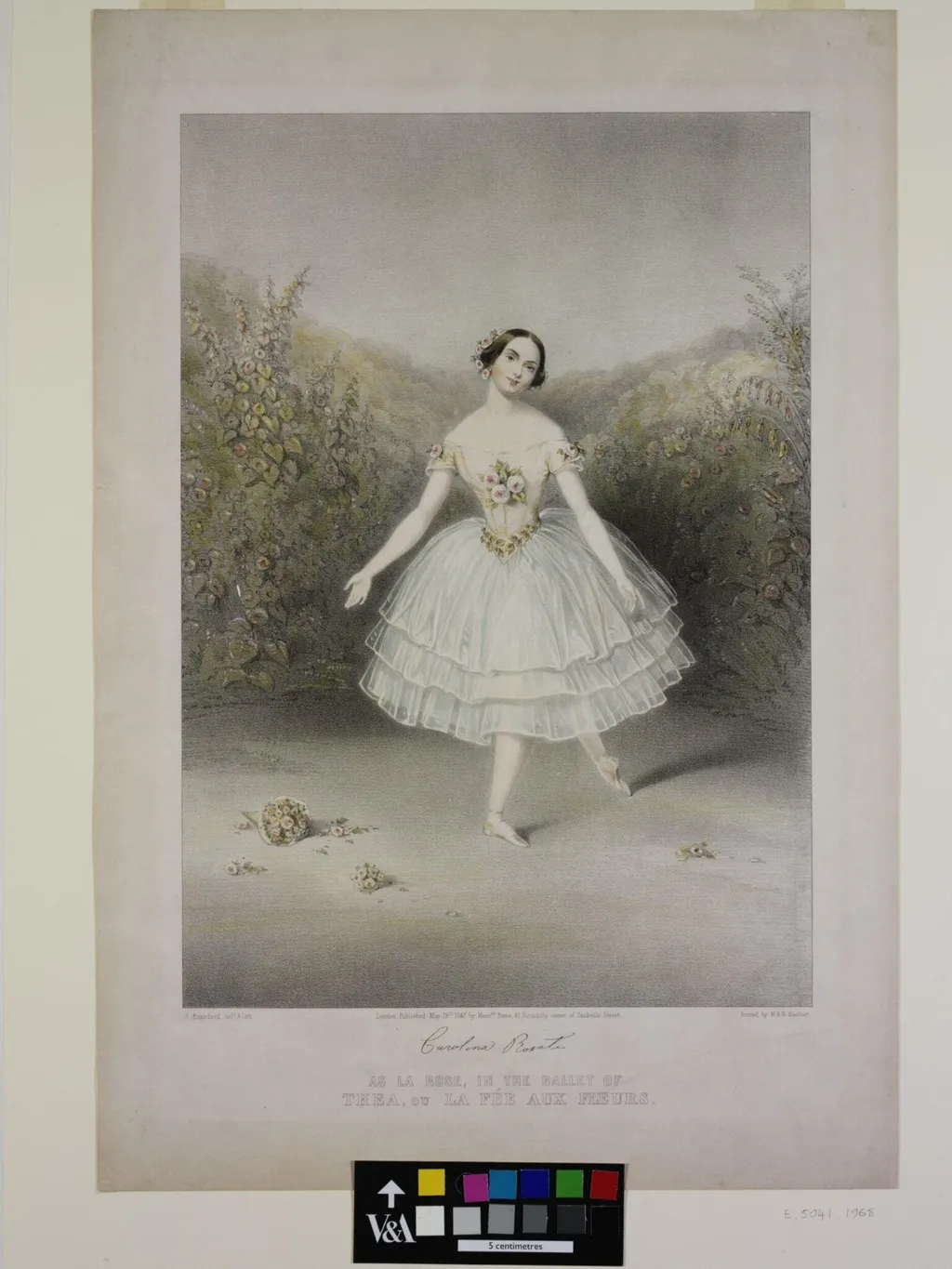
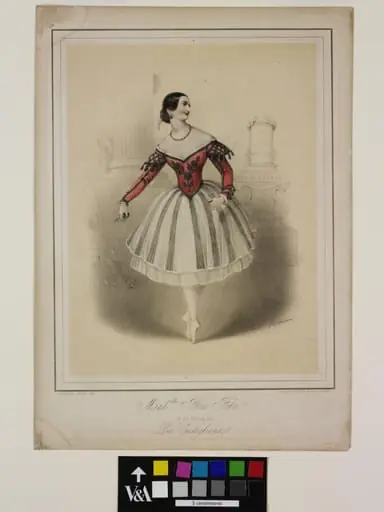
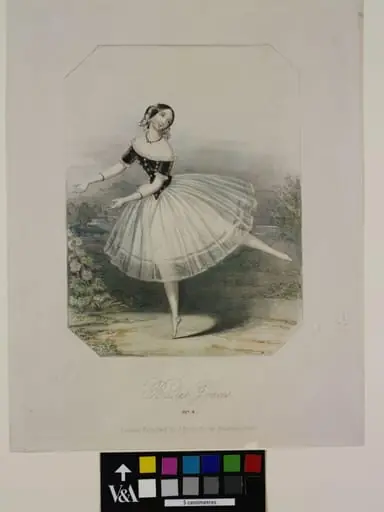
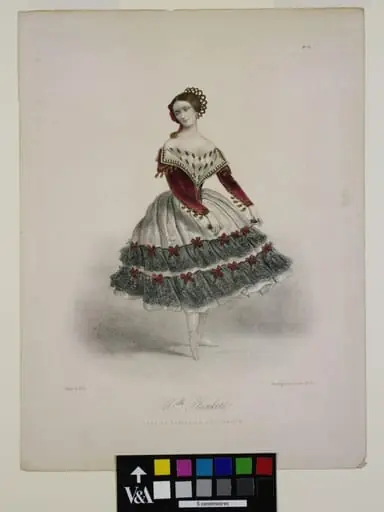
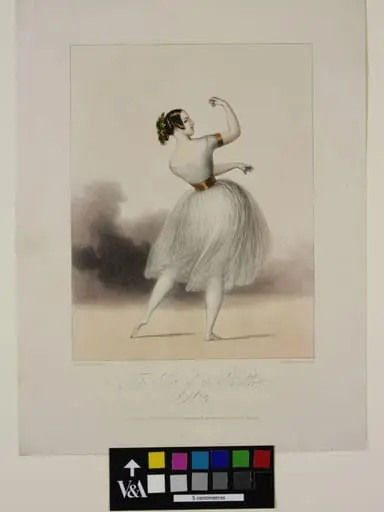
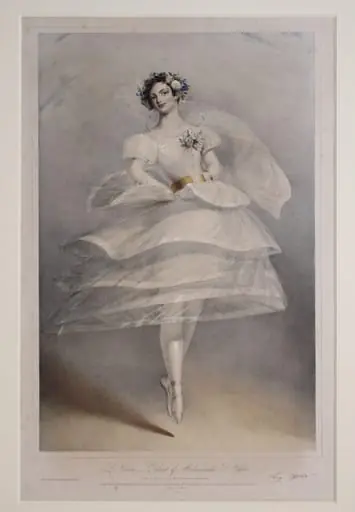
Carolina Rosati (facsimile signature) is a print by the Romanticist artist J Brandard. It dates from 19 and is held in the collection of the Victoria and Albert Museum.
About this work
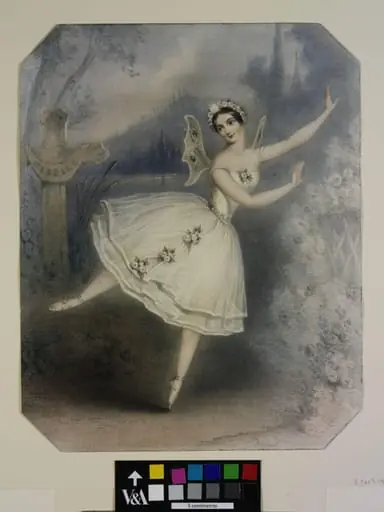
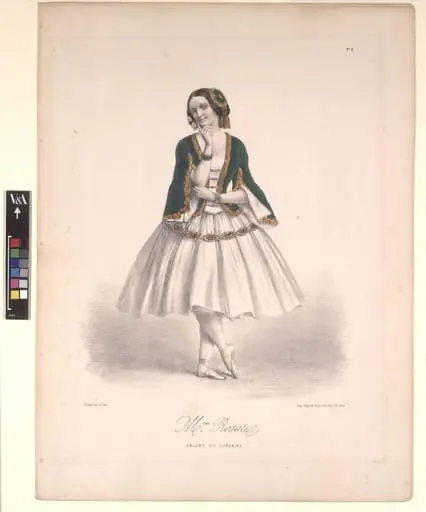
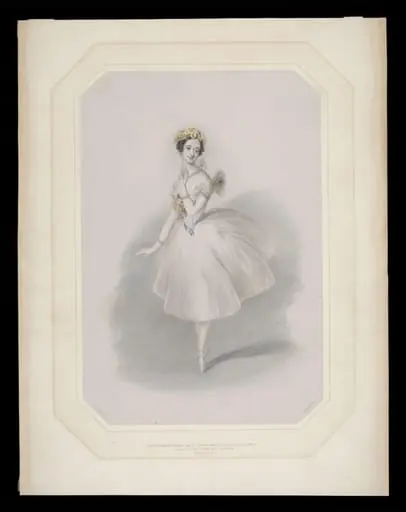
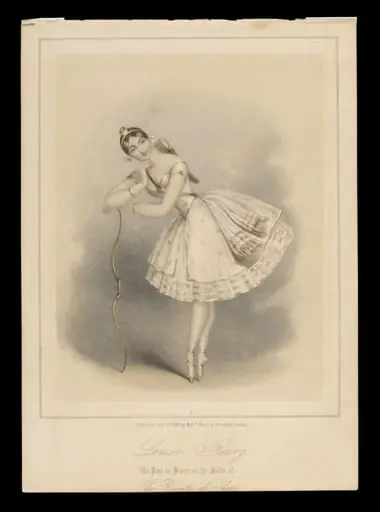
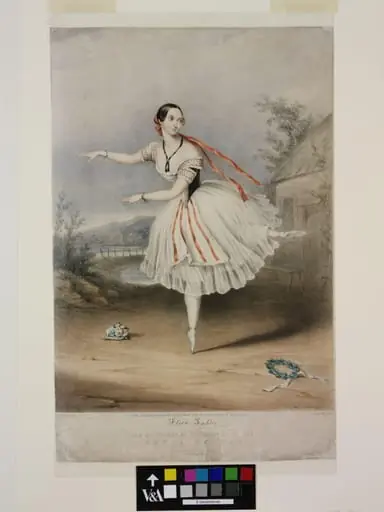
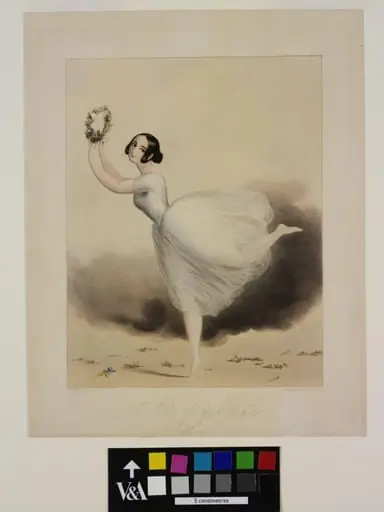
This print shows Carolina Rosati in a ballet costume for Théa, a fairy-themed show she danced in London in 1847.
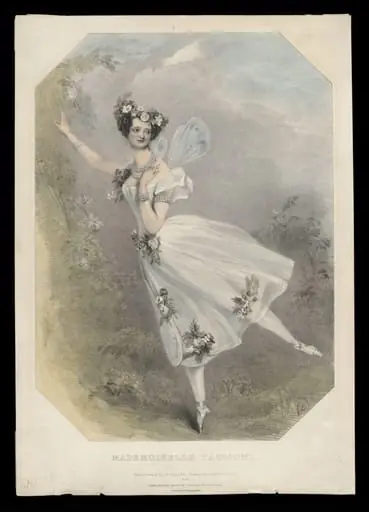
Her career peaked in the 1850s, but ballet’s popularity had already dropped since the 1830s, when stars like Taglioni ruled the stage. Still, she earned more than any Paris Opera dancer before or after her.
Look up Brandard, J next.
Overview
The lithograph depicts the Italian ballerina Carolina Rosati performing in Paul Taglioni’s ballet Théa, staged at London’s Her Majesty’s Theatre in 1847. In the image Rosati is shown in a graceful, supplicating pose, surrounded by bouquets tossed by an appreciative audience.
Subject & Meaning
Théa, subtitled The Fairy of the Flowers, presents a fantastical Baghdad where the heroine, played by Rosati, envies Prince Hassan’s affection for the garden’s blossoms. With the aid of the Fairy of the Flowers, she disguises herself as a rose, prompting the prince to declare his love for her amid a dream‑like, flower‑filled tableau.
Technique & Style
The work is a lithographic print, a popular 19th‑century method for reproducing theatrical scenes. The artist rendered Rosati’s costume and the surrounding floral motifs with fine line work and delicate shading, emphasizing the ethereal quality of the ballet’s fairy theme.
History & Provenance
Carolina Rosati was a leading dramatic dancer of the mid‑1800s, appearing in major European capitals including Paris, London and St. Petersburg. Although her peak years fell in the 1850s, the lithograph dates from her 1847 London engagement, a period when ballet’s public appeal was already waning from its earlier zenith.
Context
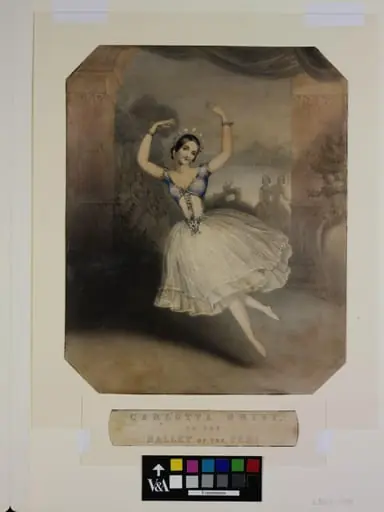
Rosati’s career unfolded after the era of ballet icons such as Marie Taglioni, Fanny Elssler and Carlotta Grisi, whose fame had helped sustain the art form’s popularity in the 1830s. By the 1850s, audience interest had declined, yet Rosati achieved the distinction of being the highest‑paid dancer at the Paris Opera, underscoring her exceptional status despite broader trends.
Artist & collection
Artist
If you’ve seen old ballet posters with swirling tutus and sharp lettering, you’ve seen John Brandard’s work.