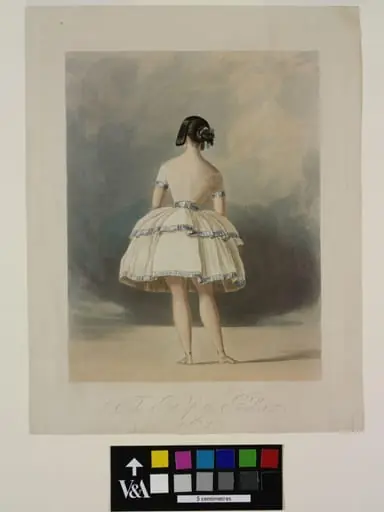
Artwork
Ballet Graces
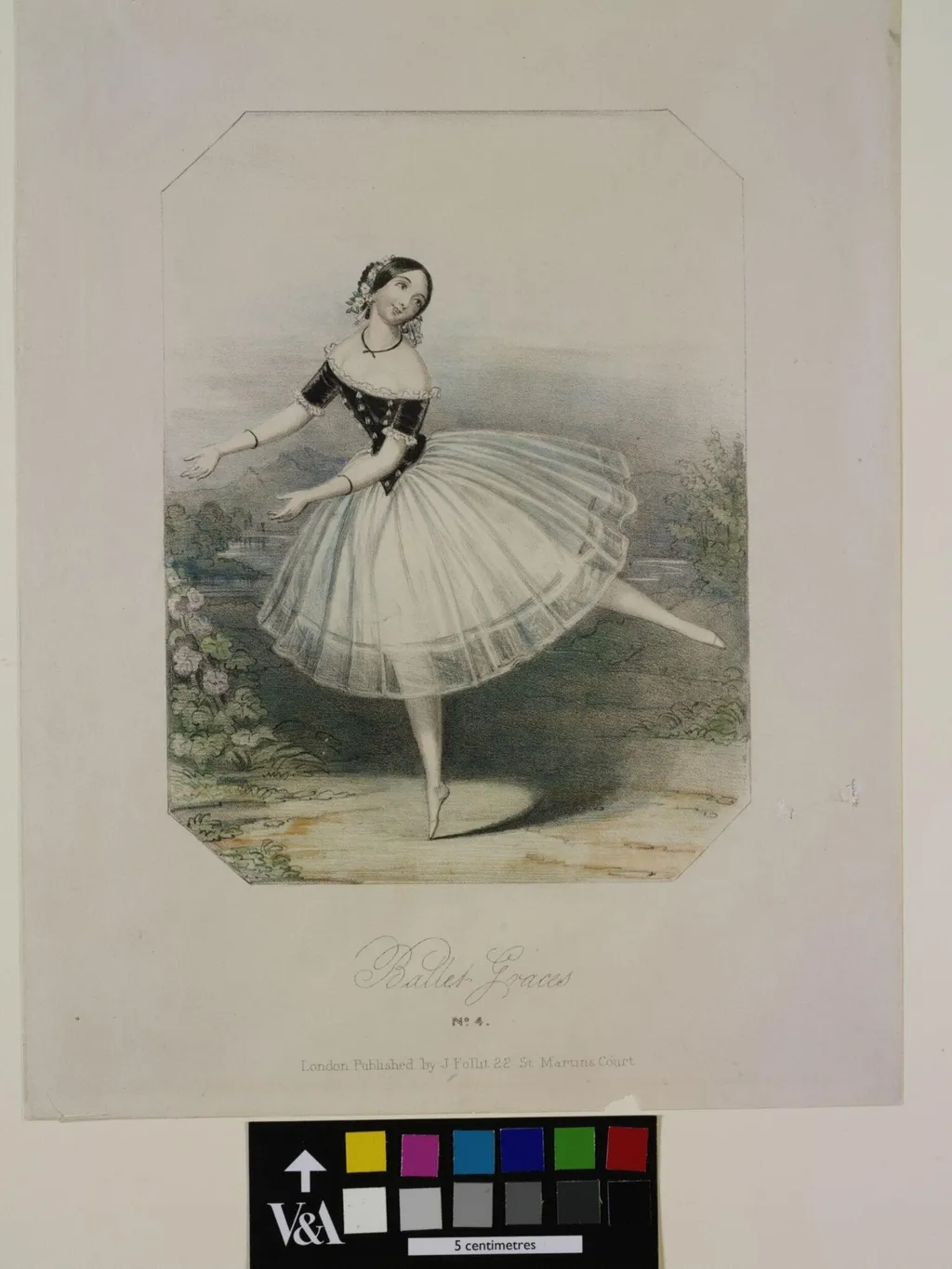
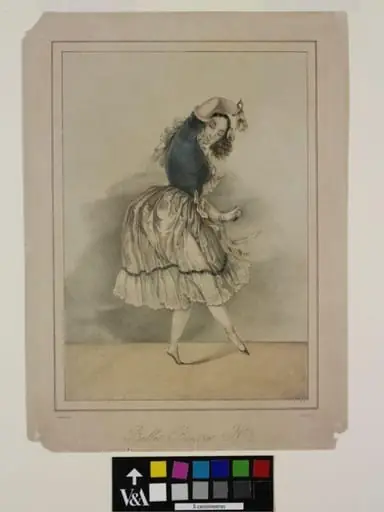
Ballet Graces is a print by J. Follit. It dates from 1850 and is held in the collection of the Victoria and Albert Museum.
About this work
Overview
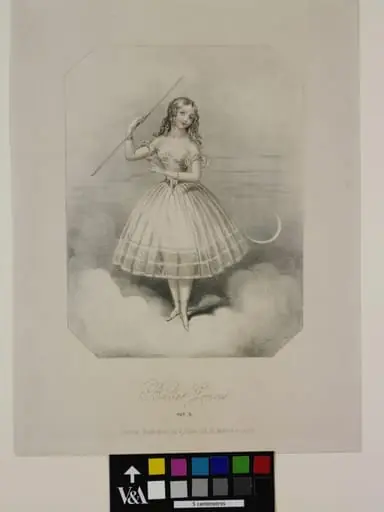
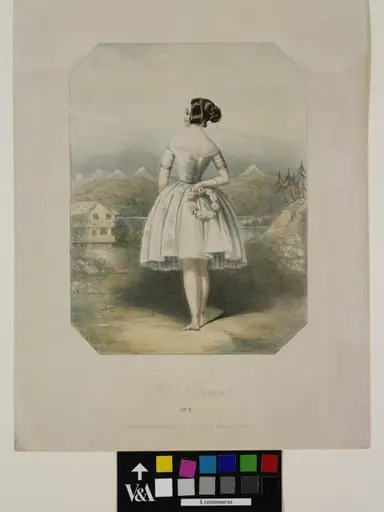
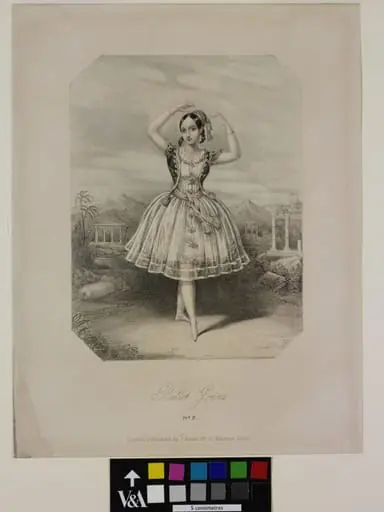
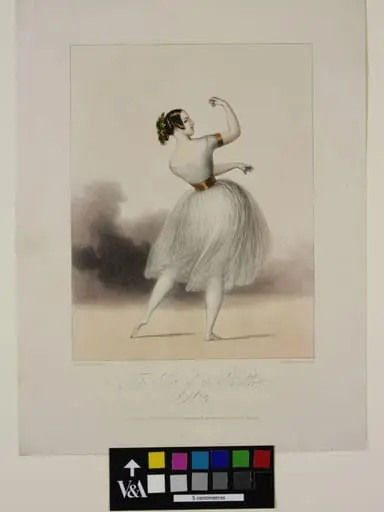
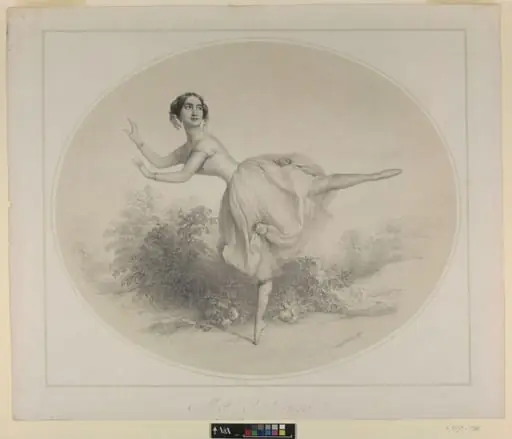
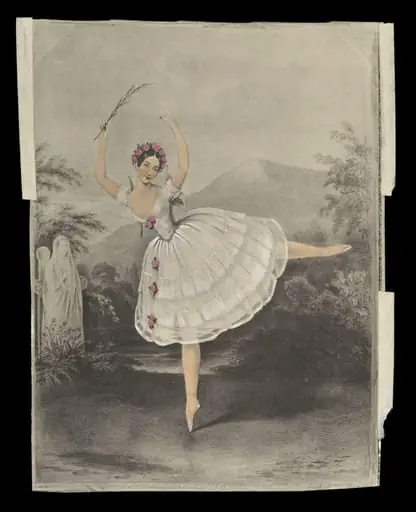
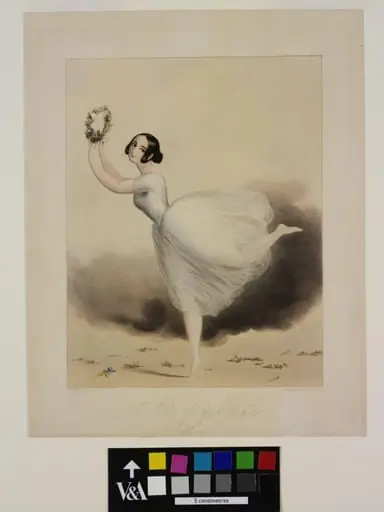
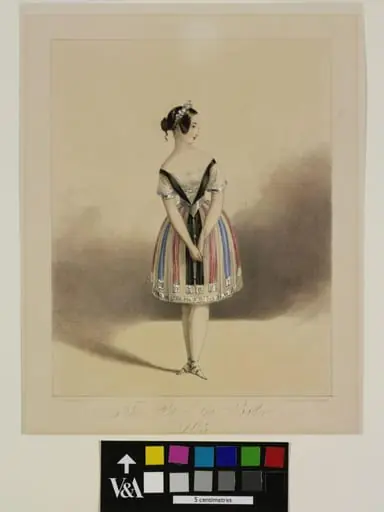
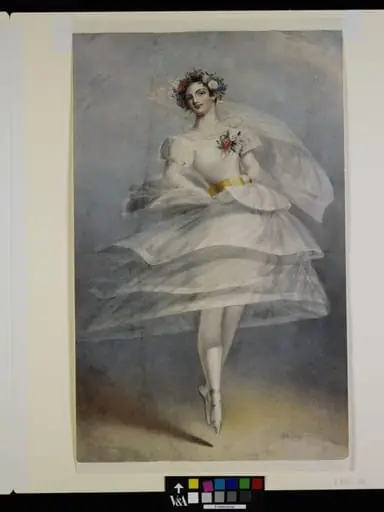
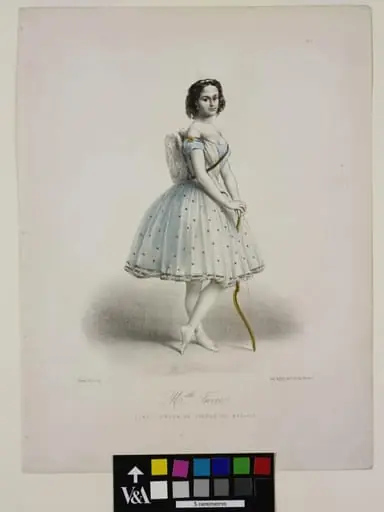
Ballet Graces / No 4 is a mid‑nineteenth‑century print belonging to a series that depicts generic ballet dancers. The figures are not identified individuals and were likely not drawn from live models; instead they embody the conventional silhouette of a dancer as understood at the time.
Subject & Meaning
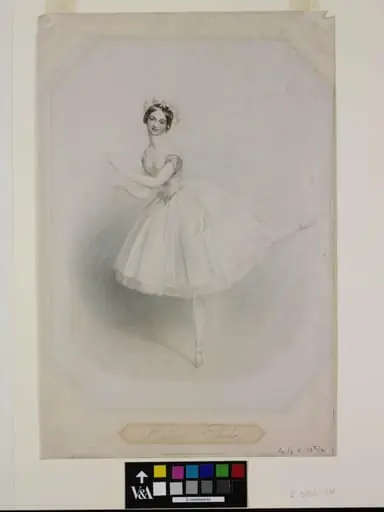
The composition presents a solitary dancer in the characteristic pose of the era, emphasizing the stylised costume rather than personal narrative. The image conveys an idealised vision of ballet, reinforcing contemporary notions of grace and femininity through its iconic attire.
Technique & Style
Executed as a print, the work employs fine line work to delineate the dancer’s tightly pulled hair, low‑cut bodice and the multi‑layered, bell‑shaped skirt made of tarlatan and a sheer overlay. The crisp, simplified forms contributed to a visual shorthand that quickly identified the figure as a ballet performer.
Context
The series helped cement a standardized visual vocabulary for ballet dancers that persisted beyond the 1840s. By distilling costume elements into a recognizable template, such prints influenced public perception of ballet and continue to shape modern representations of the art form.
Artist & collection
Artist
Mid-19th-century prints of ballet dancers in graceful poses, titled Ballet Graces, line up in numbered sheets.