Artwork
Leda (Cover)
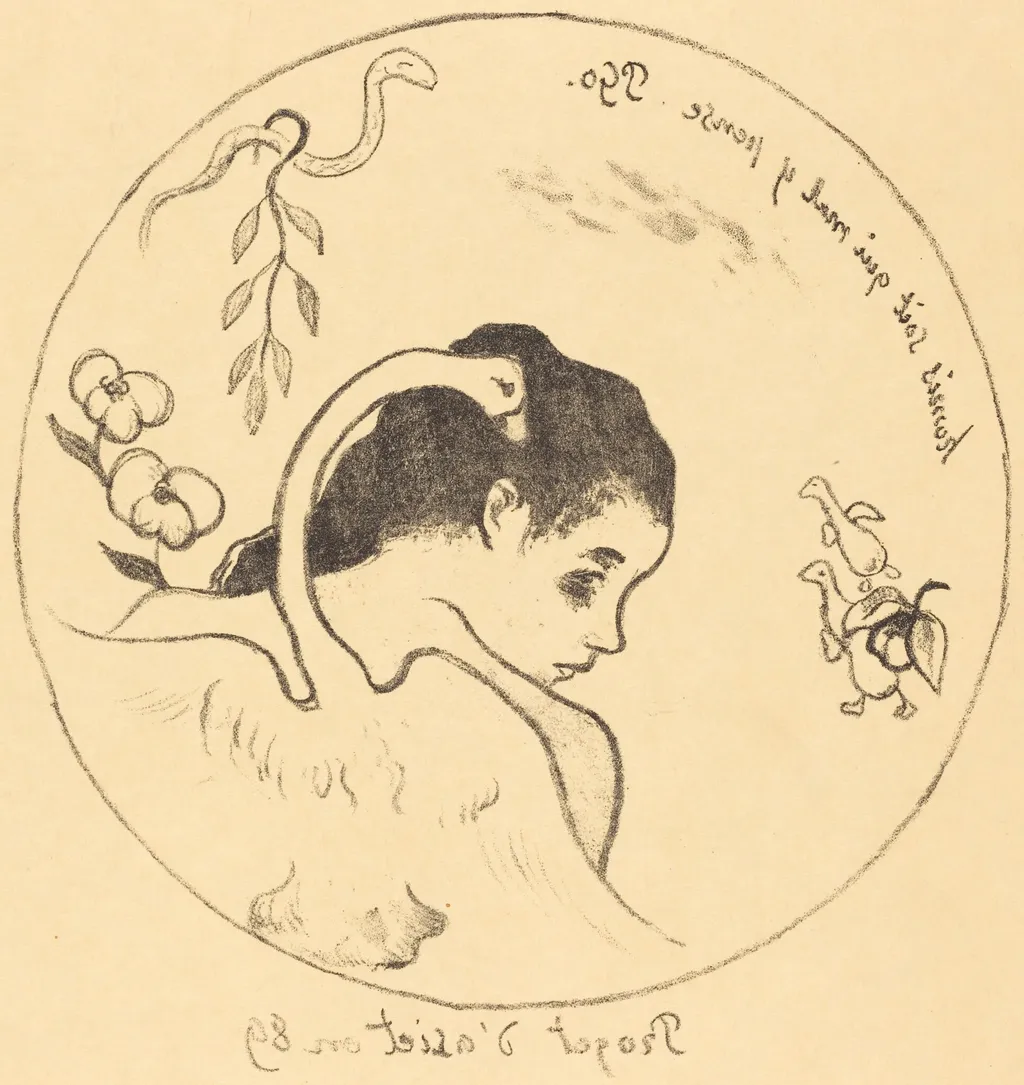
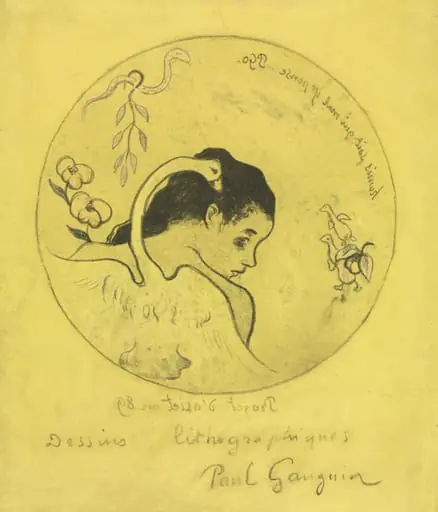
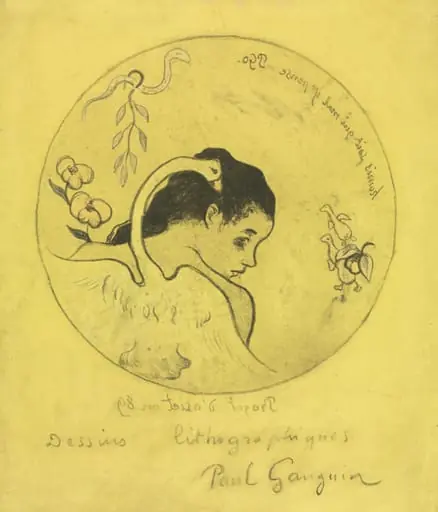
Leda (Cover) is an ink print by the Impressionist artist Paul Gauguin. It dates from 1889 and is held in the collection of the National Gallery of Art.
About this work
Overview
The work belongs to a series of experimental prints made as he moved away from Impressionist naturalism toward more symbolic and stylized forms.
Paul Gauguin produced this lithograph in 1889 using zinc stone and imitation Japan paper, reflecting his deepening interest in printmaking during his time in Brittany. The work belongs to a series of experimental prints made as he moved away from Impressionist naturalism toward more symbolic and stylized forms. Its modest scale and material choices suggest a personal, intimate mode of expression rather than a public exhibition piece.
Subject & Meaning
The figure is a profiled woman, her serene expression evoking mythological or archetypal femininity, possibly referencing Leda from Greek myth. Surrounding her head are a bird, a lizard, and a flowering branch—elements that suggest nature’s cyclical forces or spiritual symbolism. The absence of narrative detail invites contemplation rather than storytelling, aligning with Symbolist ideals that favored suggestion over literal representation.
Technique & Style
Gauguin employed loose, sketch-like lines characteristic of Synthetism, reducing form to essential contours without shading or perspective. The lithographic process allowed for direct, hand-drawn marks on stone, preserving the immediacy of his gesture. The handwritten inscriptions around the border echo the informal, personal tone of the image, reinforcing its status as a private meditation rather than a polished composition.
History & Provenance
Created during Gauguin’s stay in Pont-Aven, this print emerged from his collaboration with other artists exploring non-Western and primitive aesthetics. It was likely produced in small, private editions, circulated among peers rather than sold commercially. Its use of imitation Japanese paper reflects his fascination with ukiyo-e prints, though the work remains rooted in European Symbolist concerns.
Context
In 1889, Gauguin was distancing himself from Parisian art circles, seeking spiritual and aesthetic renewal in rural Brittany. His prints from this period often combined myth, nature, and personal symbolism, responding to broader fin-de-siècle interests in mysticism and alternative spiritualities. The lithograph’s simplicity contrasts with the elaborate compositions of academic art, signaling a deliberate rejection of conventional norms.
Legacy
Though not widely exhibited in Gauguin’s lifetime, this print exemplifies his influence on modern printmaking’s shift toward expressive line and symbolic content. Later artists, particularly Expressionists and Nabis, drew from his integration of drawing and printing, valuing the handmade mark over mechanical reproduction. The work remains a quiet testament to his pursuit of art as inner vision.
Artist & collection
Artist
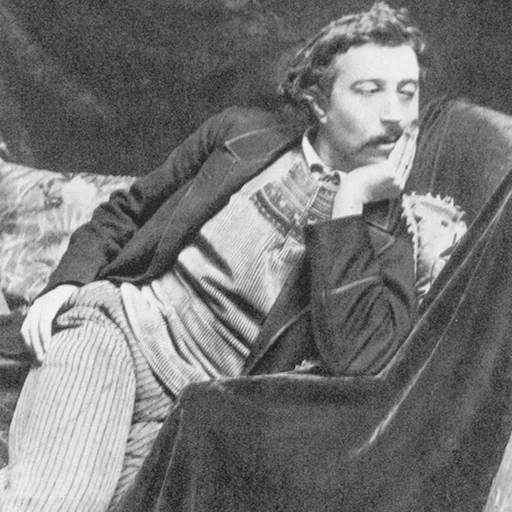
Eugène Henri Paul Gauguin (; French: ; 7 June 1848 – 8 May 1903) was a French painter, sculptor, printmaker, ceramist, and writer, whose work has been primarily associated with the Post-Impressionist and Symbolist movements.

 Volpini Suite
 La vierge et l'enfant (The Virgin and Child)
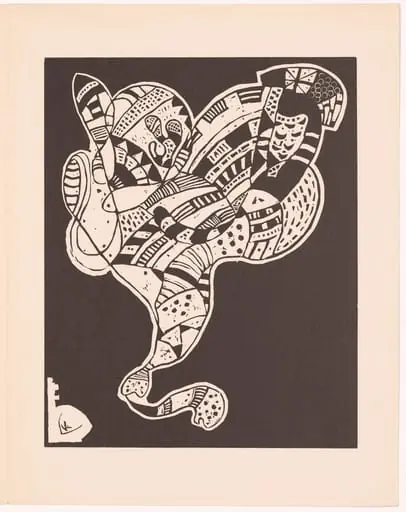 Untitled
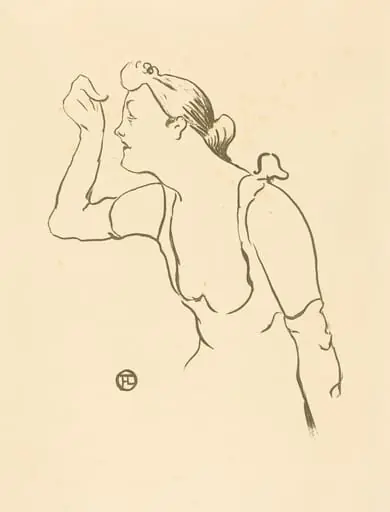 Paula Brébion
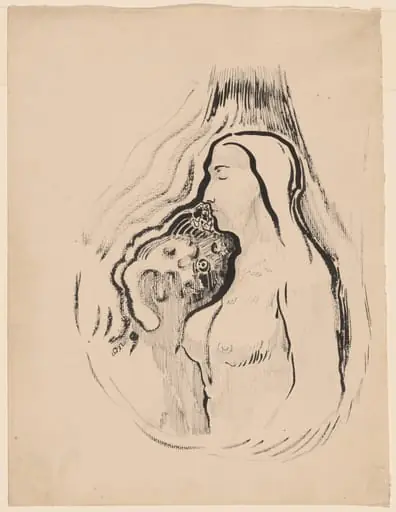 The Shadow (L'Ombre)
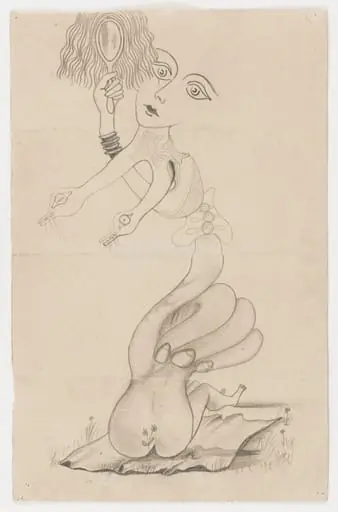 Untitled
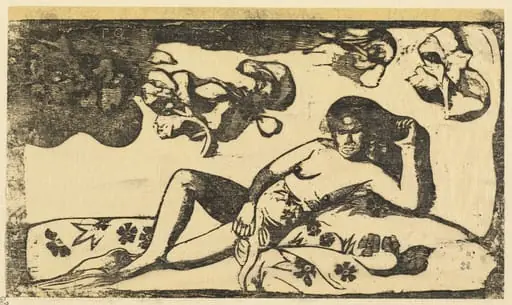 Te Arii Vahine (Lady of Royal Blood)
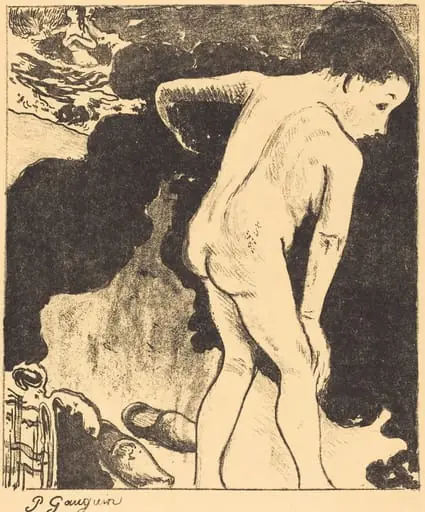 Breton Bathers (Baigneuses Bretonnes)
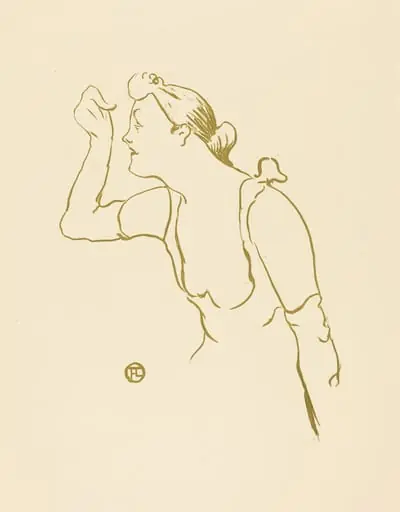 Paula Brébion
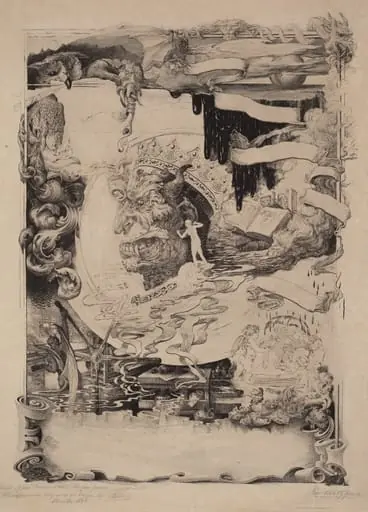 The Bookplate of the Printer's Devil
 Choral
 Volpini Suite: Design for a Plate: Leda and the Swan (Projet d'Assiette: Léda et le Cygne)