Artwork
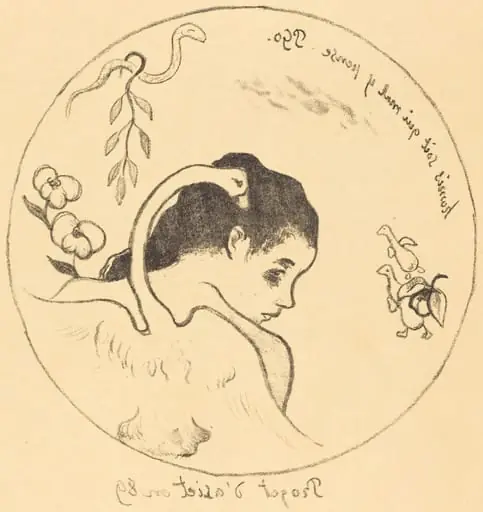
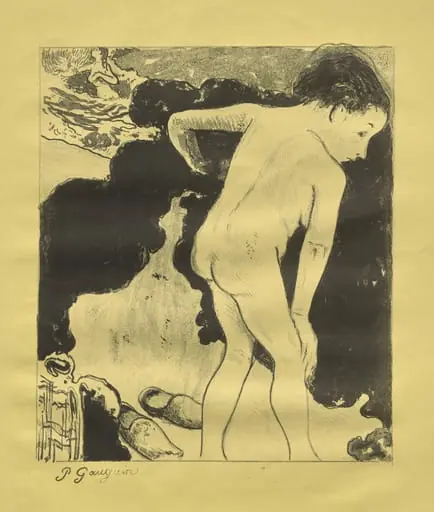
Volpini Suite: Design for a Plate: Leda and the Swan (Projet d'Assiette: Léda et le Cygne)
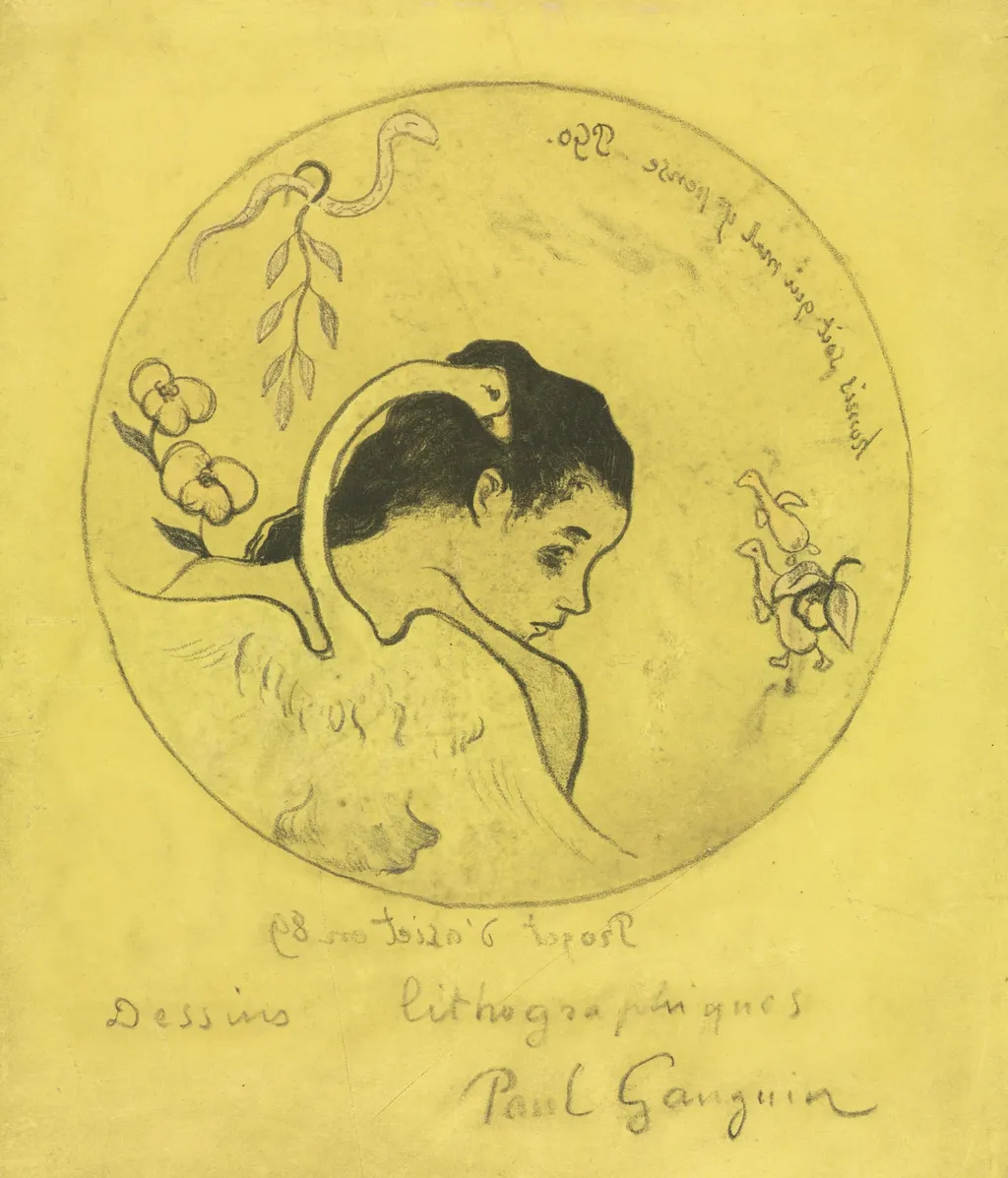
Volpini Suite: Design for a Plate: Leda and the Swan (Projet d'Assiette: Léda et le Cygne) is a print by the Impressionist artist Paul Gauguin. It dates from 1889 and is held in the collection of the Cleveland Museum of Art.
About this work
Overview
Created in 1889, the work belongs to Paul Gauguin’s Volpini Suite, a collection of zincographic prints produced for a contemporary exhibition. It presents a stylised rendition of the myth of Leda and the Swan, rendered in the artist’s characteristic synthetic approach that emphasizes flat areas of colour and simplified forms.
Subject & Meaning
The image shows a female profile, her dark, wavy hair framing a serene face. Adjacent to her are a long‑necked bird and a small reptilian figure, while a curving branch laden with leaves and blossoms arches behind her. The composition merges the classical narrative with everyday natural elements, a hallmark of Gauguin’s symbolic reinterpretations.
Technique & Style
Executed as a zincograph, the print employs loose, gestural lines and gentle shading to suggest volume without detailed modeling. The flattened planes and bold outlines reflect Gauguin’s Synthetist style, which sought to convey emotional resonance through simplified color and form rather than realistic representation.
History & Provenance
The plate was part of the Volpini Suite, assembled for an 1889 exhibition that showcased Gauguin’s experimental printmaking. Although the suite received limited attention during the artist’s lifetime, the prints later entered collections that recognised their role in the transition from Impressionism to early modernist practices.
Context
During the late 1880s Gauguin turned away from the fleeting light of Impressionism toward a more symbolic language, often drawing on mythological subjects to explore timeless themes. This work exemplifies that shift, pairing a classical story with a pared‑down visual vocabulary that anticipates later modernist tendencies.
Artist & collection
Artist
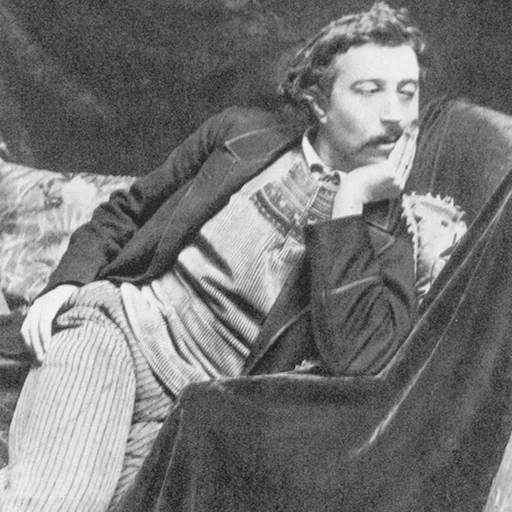
Eugène Henri Paul Gauguin (; French: ; 7 June 1848 – 8 May 1903) was a French painter, sculptor, printmaker, ceramist, and writer, whose work has been primarily associated with the Post-Impressionist and Symbolist movements.