Artwork
Te Po (The Long Night)
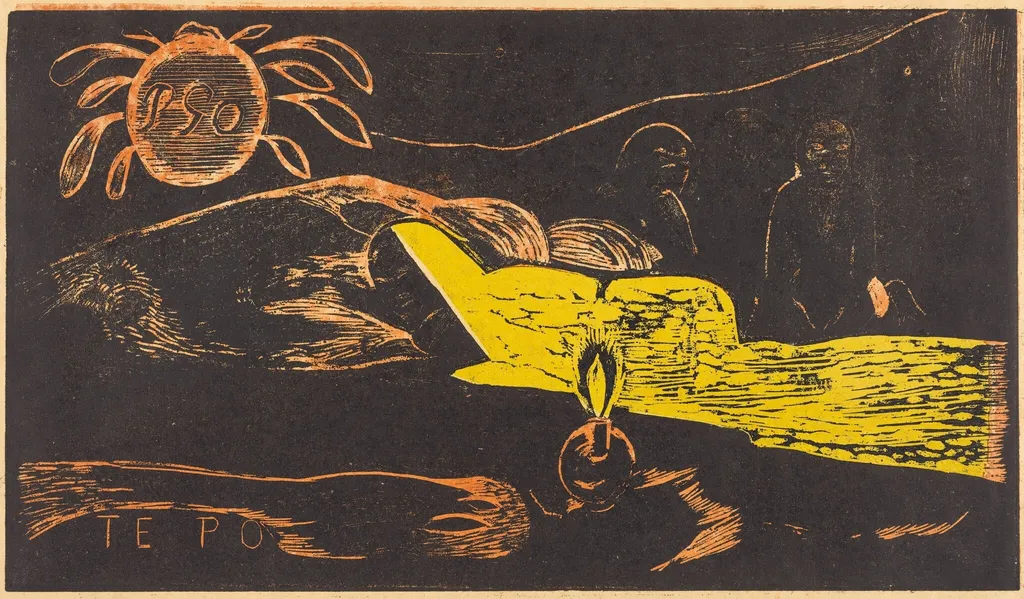
Te Po (The Long Night) is an ink print by the Impressionist artist Paul Gauguin. It dates from 1894 and is held in the collection of the National Gallery of Art.
About this work
Overview
Created in 1894, *Te Po (The Long Night)* is a color woodcut by Paul Gauguin, reflecting his deepening interest in printmaking during his time in Tahiti.
Created in 1894, *Te Po (The Long Night)* is a color woodcut by Paul Gauguin, reflecting his deepening interest in printmaking during his time in Tahiti. Unlike his paintings, this work emphasizes flat planes of color and simplified forms, aligning with his broader move away from Western naturalism. The technique involved carving multiple blocks for each hue, then layering impressions to build the final image.
Subject & Meaning
The scene depicts two figures reclining on a pale beach beneath a luminous, face-like orb—possibly the moon or sun—floating above. One figure holds a lantern, its glow illuminating the sand, while the surrounding waves and clouds are rendered as rhythmic, abstract lines. The title, meaning 'the long night' in Māori, suggests a contemplative, perhaps spiritual, atmosphere, evoking themes of rest, mystery, and the passage of time.
Technique & Style
Gauguin employed the woodcut method with multiple blocks, each carved for a specific color—black, yellow, and orange—layered to create bold, unmodulated tones. The forms are reduced to essential shapes, with sharp outlines and minimal detail, rejecting perspective in favor of symbolic composition. The contrast between the dark sky and radiant beach enhances the print’s emotional weight, characteristic of his Symbolist leanings.
History & Provenance
Made during Gauguin’s second stay in Tahiti, *Te Po* emerged from a period when he increasingly turned to printmaking as a means of artistic experimentation. Few impressions were pulled, and the work remained largely within his personal circle until later acquisition by collectors and institutions. Its survival reflects Gauguin’s dedication to print as a serious medium, not merely a sideline.
Context
In the mid-1890s, Gauguin sought to distance himself from European artistic norms, embracing Polynesian culture and mythology as sources of inspiration. His woodcuts, including *Te Po*, were influenced by indigenous carvings and Japanese prints, both in form and philosophy. This work is part of a small group of prints where he fused local symbolism with personal spiritual inquiry.
Legacy
Though less known than his paintings, *Te Po* exemplifies Gauguin’s innovative role in modern printmaking. His use of color woodcut influenced later artists exploring non-Western aesthetics and expressive abstraction. The work stands as a quiet but significant contribution to the evolution of print as a vehicle for symbolic, rather than documentary, expression in the late 19th century.
Artist & collection
Artist
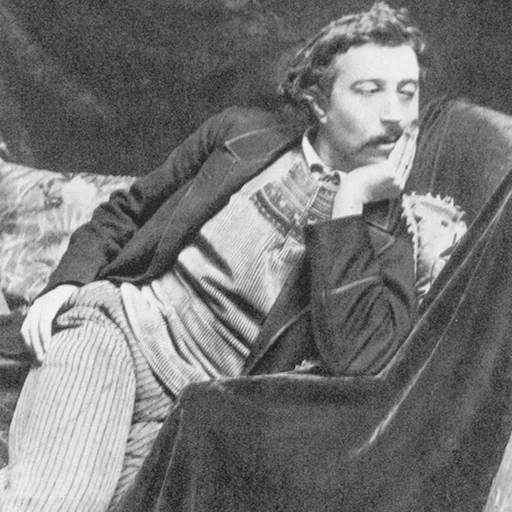
Eugène Henri Paul Gauguin (; French: ; 7 June 1848 – 8 May 1903) was a French painter, sculptor, printmaker, ceramist, and writer, whose work has been primarily associated with the Post-Impressionist and Symbolist movements.

![Mahna no Varua Ino (The Demon Speaks) [verso], by Paul Gauguin](https://artifactworldgallery.com/img/paul-gauguin--mahna-no-varua-ino-the-demon-speaks-verso--4d5371963e3166cc-w320.webp) Mahna no Varua Ino (The Demon Speaks) [verso]
Mahna no Varua Ino (The Demon Speaks) [verso]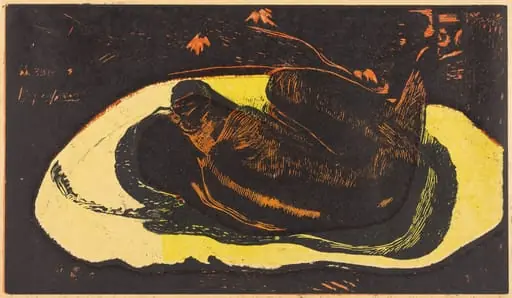 Manao Tupapau (She is Haunted by a Spirit)
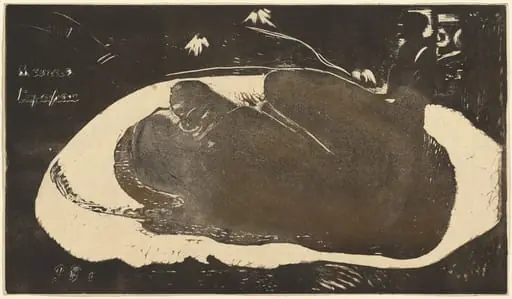 Manao Tupapau (She is Haunted by a Spirit)
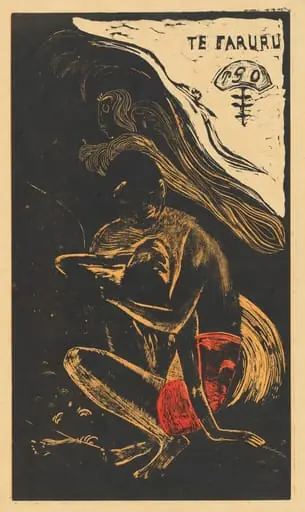 Te Faruru (They are Making Love Here)
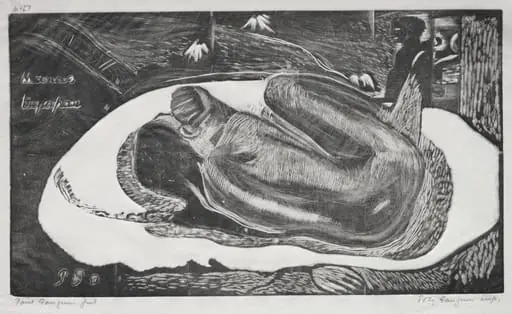 Noa Noa: Manao Yupapau ( Watched by the Spirts of the Dead)
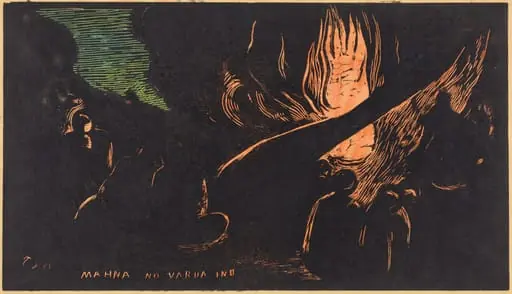 Mahna no Varua Ino (The Devil Speaks)
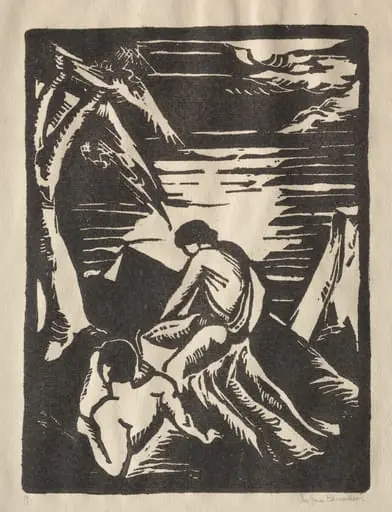 Orestes and Pylades
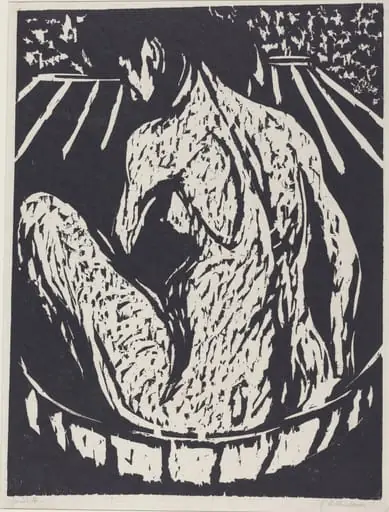 Female Nude
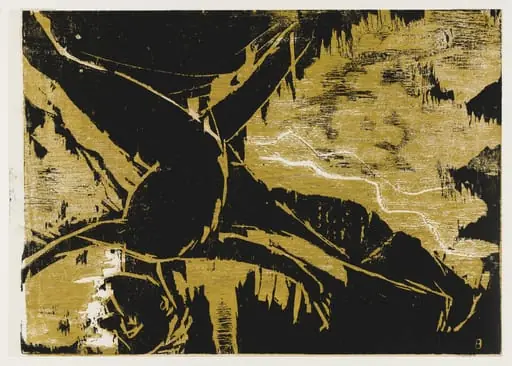 Untitled