Artwork
Te Faruru (They are Making Love Here)
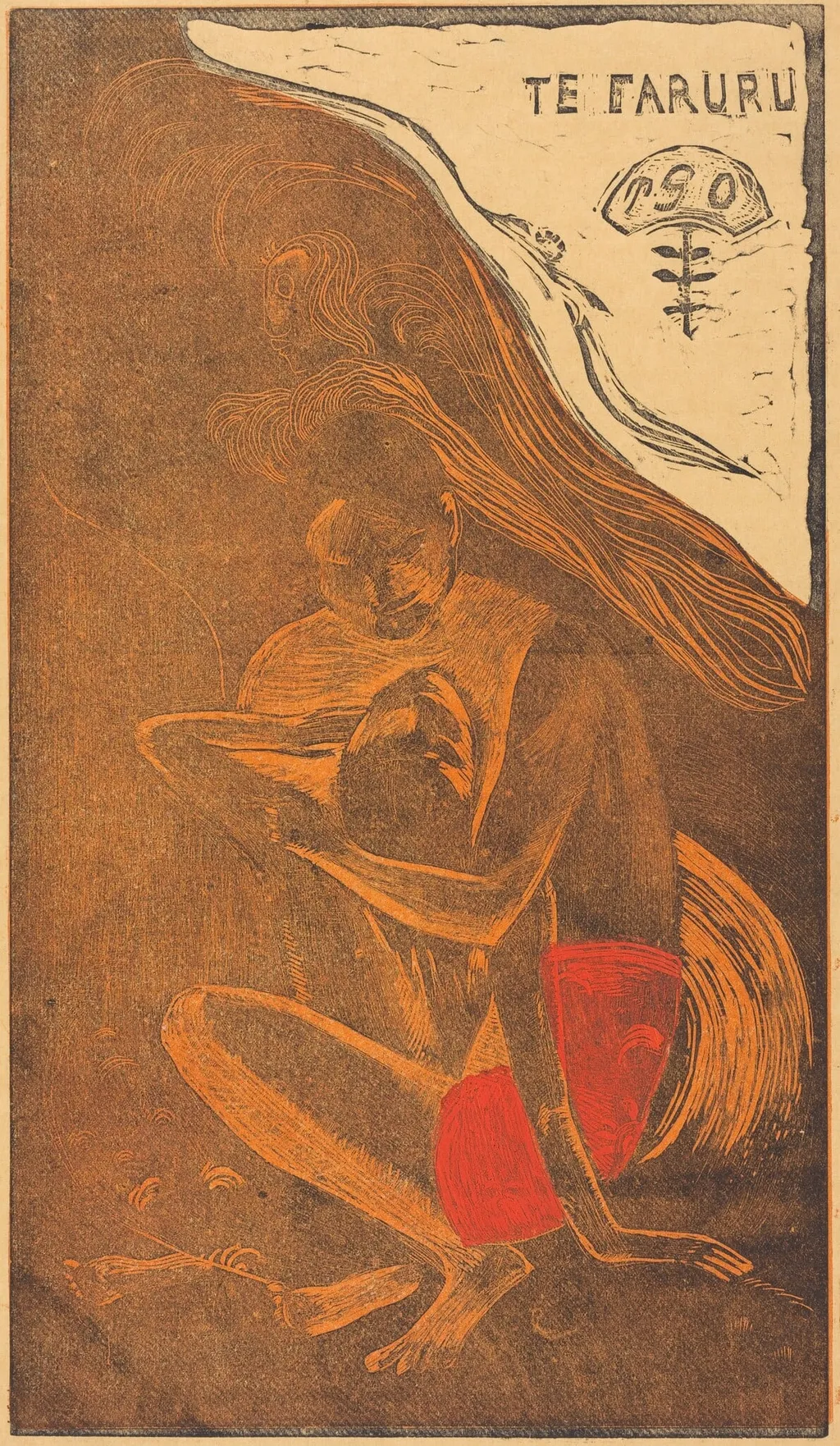
Te Faruru (They are Making Love Here) is an ink print by the Impressionist artist Paul Gauguin. It dates from 1894 and is held in the collection of the National Gallery of Art.
About this work
Overview
The work reflects his interest in non-Western aesthetics and the integration of text and image as part of a symbolic visual language.
Created in 1894, *Te Faruru (They are Making Love Here)* is a color woodcut by Paul Gauguin, produced during his time in Tahiti. It belongs to a series of prints in which he explored the expressive potential of wood engraving, moving beyond painting to engage with tactile, hand-carved processes. The work reflects his interest in non-Western aesthetics and the integration of text and image as part of a symbolic visual language.
Subject & Meaning
The scene portrays an intimate embrace between a kneeling woman and a standing man, their bodies entwined in a pose that suggests both tenderness and ritual. The woman’s flowing hair and red loincloth, paired with the man’s bare torso, evoke a sense of primal connection. The inscription 'TE FARURU' and a symbolic mark in the background hint at Polynesian linguistic or spiritual references, though their precise meaning remains ambiguous, leaving room for interpretation rooted in Gauguin’s idealized vision of indigenous life.
Technique & Style
Gauguin employed a color woodcut technique, carving multiple blocks to layer hues and bold outlines. The forms are simplified, with strong contours and flat planes of color—hallmarks of Synthetism. The flowing hair of the woman is rendered as a sweeping, almost abstract band, contrasting with the rigid geometry of the background text. The limited palette, dominated by red, white, and earth tones, enhances the work’s symbolic rather than naturalistic intent.
History & Provenance
Made during Gauguin’s second stay in Tahiti, the print was part of his effort to produce affordable, reproducible art that could circulate beyond the European elite. Few impressions were made, and the work remained largely within his personal circle until later acquisition by institutions. Its survival in limited numbers reflects its experimental nature and the artist’s shifting priorities toward print as a vehicle for cultural expression rather than commercial success.
Context
Gauguin’s engagement with woodcutting in Tahiti coincided with his rejection of European artistic norms and his search for an alternative spiritual and aesthetic foundation. He drew inspiration from Oceanic carvings, Japanese prints, and medieval wood engravings, blending them into a hybrid style. *Te Faruru* emerges from this context—not as ethnographic documentation, but as a subjective meditation on desire, identity, and the myth of the 'primitive.'
Legacy
The print contributed to the broader recognition of woodcut as a serious medium in modern art, influencing later Expressionists and printmakers who valued its directness and symbolic power. While Gauguin’s romanticized depictions of Pacific cultures have been critically reassessed, *Te Faruru* endures as a technical experiment and a visual statement on the intersection of the sensual and the sacred in his oeuvre.
Artist & collection
Artist
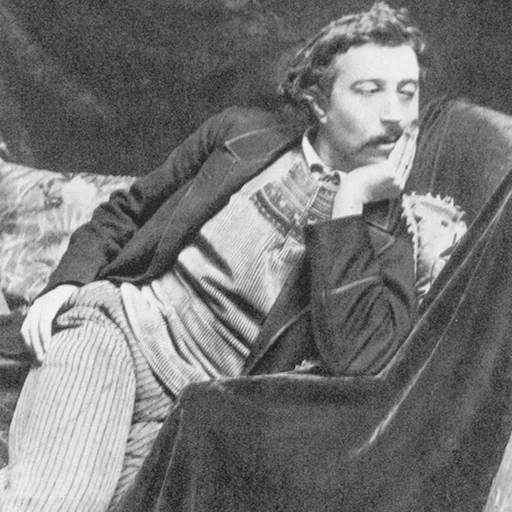
Eugène Henri Paul Gauguin (; French: ; 7 June 1848 – 8 May 1903) was a French painter, sculptor, printmaker, ceramist, and writer, whose work has been primarily associated with the Post-Impressionist and Symbolist movements.

![Two Tahitians Gathering Fruit [recto], by Paul Gauguin](https://artifactworldgallery.com/img/paul-gauguin--two-tahitians-gathering-fruit-recto--d91bd5dada747528-w320.webp) Two Tahitians Gathering Fruit [recto]
Two Tahitians Gathering Fruit [recto] Mother and Child
![Mahna no Varua Ino (The Demon Speaks) [verso], by Paul Gauguin](https://artifactworldgallery.com/img/paul-gauguin--mahna-no-varua-ino-the-demon-speaks-verso--4d5371963e3166cc-w320.webp) Mahna no Varua Ino (The Demon Speaks) [verso]
Mahna no Varua Ino (The Demon Speaks) [verso] Noa Noa: Noa Noa (Fragrant Scent)
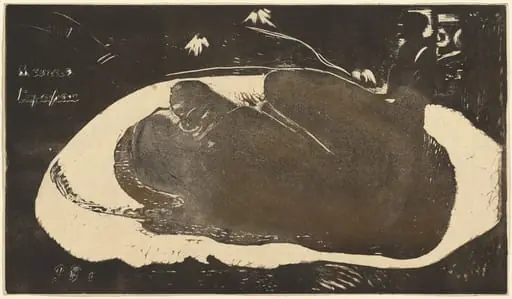 Manao Tupapau (She is Haunted by a Spirit)
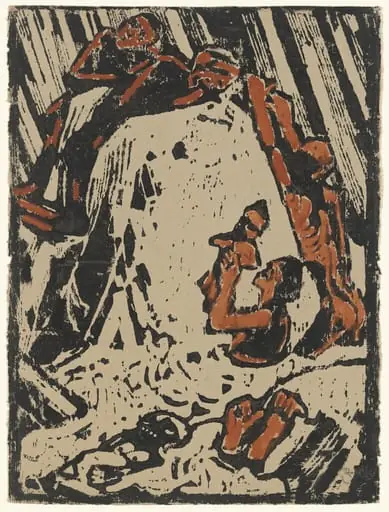 Flood (Sintflut)
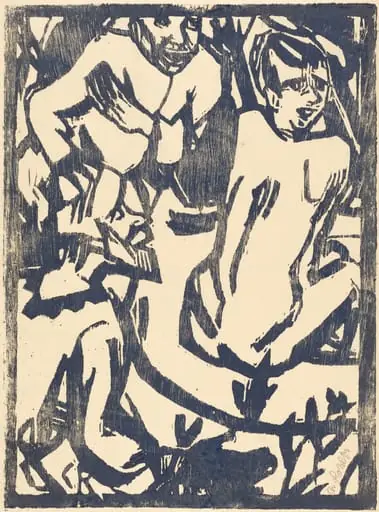 Susanna and the Elders
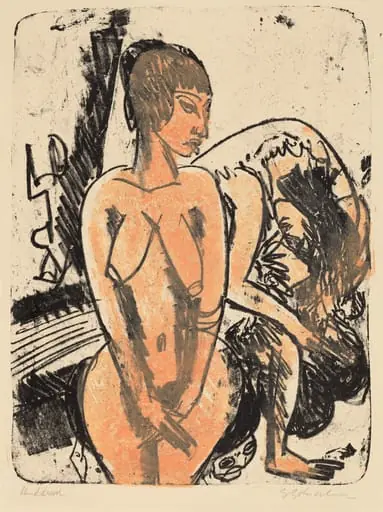 Two Women (Zwei Frauen)
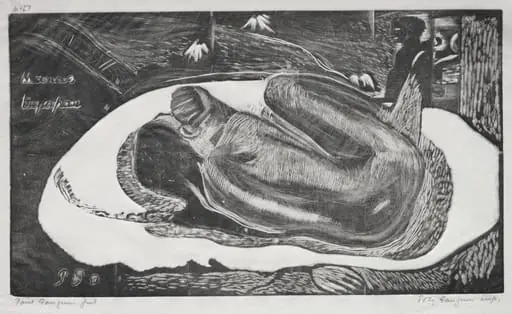 Noa Noa: Manao Yupapau ( Watched by the Spirts of the Dead)
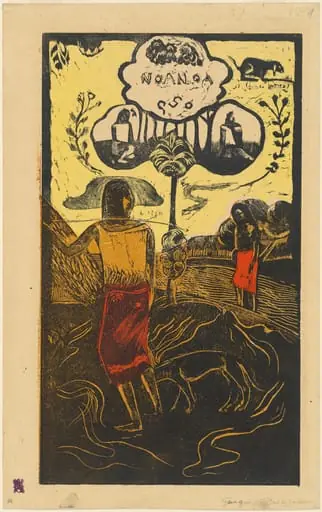 Noa Noa (Fragrant, Fragrant)