Artwork
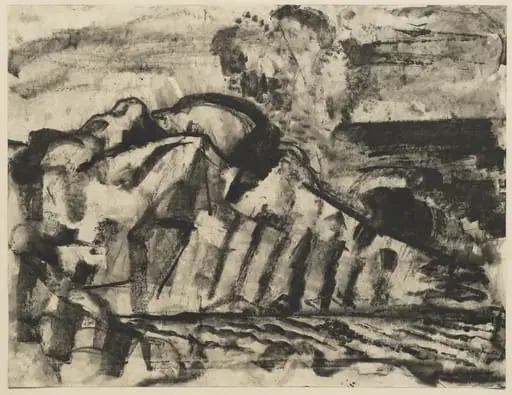
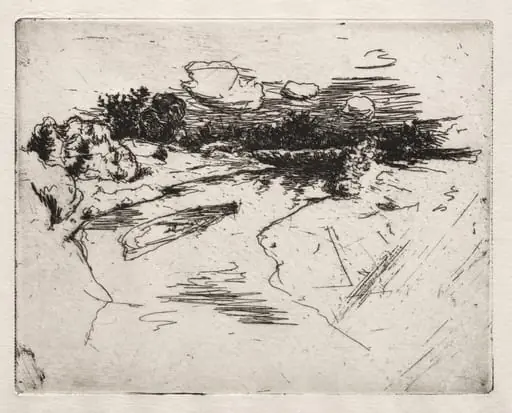
Tahitian Shore [recto]
![Tahitian Shore [recto], by Paul Gauguin, 1900](https://artifactworldgallery.com/img/paul-gauguin--tahitian-shore-recto--d19dfa11db6e6101-w1024.webp)
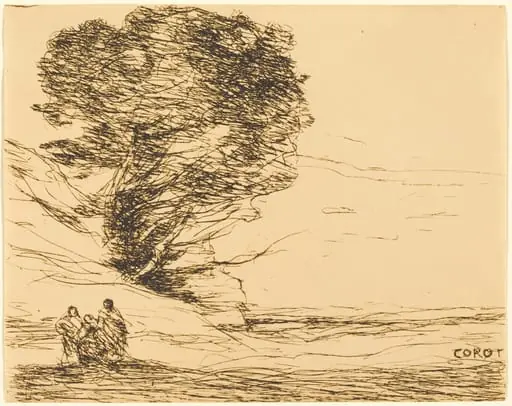
Tahitian Shore [recto] is a print by Paul Gauguin. It dates from 1900 and is held in the collection of the National Gallery of Art.
About this work
Overview
Created around the turn of the twentieth century, this work by Paul Gauguin is a traced monotype executed in warm black and brown pigments on an off‑white wove paper. The piece records a tranquil shoreline in Tahiti, rendered with swift, gestural lines that suggest a fleeting observation rather than a detailed study.
Subject & Meaning
The image depicts a modest beachscape: a few palm silhouettes frame a small gathering of figures near the water’s edge, while the sea lies calm and the land recedes in a gentle curve. The composition conveys a sense of quiet repose, inviting contemplation of the everyday life and natural setting of Gauguin’s Pacific residence.
Technique & Style
Gauguin employed the monotype process, tracing the design onto paper and then applying ink in a limited palette of black and brown. The resulting marks are loose and fluid, with soft shading that creates a warm, slightly muted atmosphere. The work reflects his later synthetist approach, favoring simplified forms and symbolic resonance over the fleeting effects of Impressionism.
History & Provenance
Produced in the final phase of Gauguin’s career, the piece aligns with his intensive period of printmaking after settling in Tahiti. While specific ownership records are scarce, the work is catalogued among his late monotypes, illustrating his ongoing experimentation with print media alongside painting and sculpture.
Own this work as a print
Artist & collection
Artist
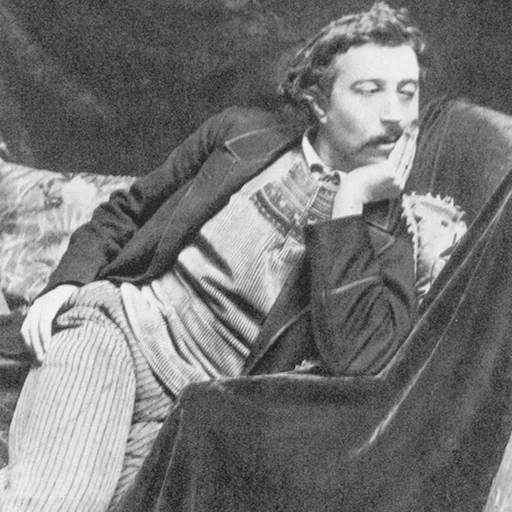
Eugène Henri Paul Gauguin (; French: ; 7 June 1848 – 8 May 1903) was a French painter, sculptor, printmaker, ceramist, and writer, whose work has been primarily associated with the Post-Impressionist and Symbolist movements.

![Landscape [Paesaggio], by Carlo Paolo Agazzi](https://artifactworldgallery.com/img/carlo-paolo-agazzi--landscape-paesaggio--e606f4ada87d2052-w320.webp)