Artwork
Two Figures and a Bench; Three Studies of Men's Heads and One of a Hand [recto]
![Two Figures and a Bench; Three Studies of Men's Heads and One of a Hand [recto], by Paul Gauguin, ink, 1886](https://artifactworldgallery.com/img/paul-gauguin--two-figures-and-a-bench-three-studies-of-men-s-heads-and-one--b308c9e6d9f9cfa9-w1024.webp)
Two Figures and a Bench; Three Studies of Men's Heads and One of a Hand [recto] is an ink drawing by the Impressionist artist Paul Gauguin. It dates from 1886 and is held in the collection of the National Gallery of Art.
About this work
Overview
This 1886 drawing by Paul Gauguin combines disparate sketches on a single sheet of wove paper, executed in graphite, crayon, and pen and brown ink.
Subject & Meaning
The work features a diverse array of subjects, including two figures and a bench, three men's heads, and a hand, alongside a handwritten notation referencing 'rue S'Catherine Bord', possibly a location significant to the artist.
Technique & Style
Gauguin's use of mixed media and loose, gestural lines reflects his experimental approach to art, characteristic of Post-Impressionism and his distinct Synthetist style, which prioritized expressive and symbolic content.
History & Provenance
Created in 1886, this drawing exemplifies Gauguin's early exploration of innovative techniques that would later establish him as a pivotal figure in late 19th-century art.
Artist & collection
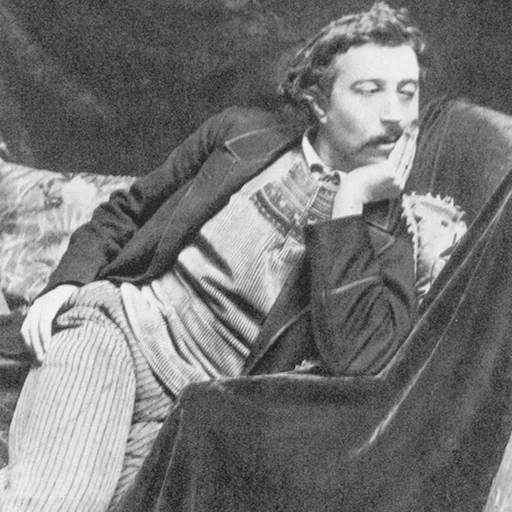
Artist
Eugène Henri Paul Gauguin (; French: ; 7 June 1848 – 8 May 1903) was a French painter, sculptor, printmaker, ceramist, and writer, whose work has been primarily associated with the Post-Impressionist and Symbolist movements.

![Four Heads and Two Figures [verso], by Paul Gauguin](https://artifactworldgallery.com/img/paul-gauguin--four-heads-and-two-figures-verso--c2dab012b6be4f36-w320.webp) Four Heads and Two Figures [verso]
Four Heads and Two Figures [verso]![Eye and Part of Face; A Breton Woman and Two Men [recto], by Paul Gauguin](https://artifactworldgallery.com/img/paul-gauguin--eye-and-part-of-face-a-breton-woman-and-two-men-recto--81c9125f35b9b9e6-w320.webp) Eye and Part of Face; A Breton Woman and Two Men [recto]
Eye and Part of Face; A Breton Woman and Two Men [recto]![Soldiers; Four Soldiers and a Seated Figure [verso], by Paul Gauguin](https://artifactworldgallery.com/img/paul-gauguin--soldiers-four-soldiers-and-a-seated-figure-verso--03eb26713f1552e4-w320.webp) Soldiers; Four Soldiers and a Seated Figure [verso]
Soldiers; Four Soldiers and a Seated Figure [verso]![Group of Human Forms; A Man Seated [recto], by Paul Gauguin](https://artifactworldgallery.com/img/paul-gauguin--group-of-human-forms-a-man-seated-recto--4584f2f2117fc923-w320.webp) Group of Human Forms; A Man Seated [recto]
Group of Human Forms; A Man Seated [recto]![Boy's Face; Two Sheep [verso], by Paul Gauguin](https://artifactworldgallery.com/img/paul-gauguin--boy-s-face-two-sheep-verso--dc41a7e795977a82-w320.webp) Boy's Face; Two Sheep [verso]
Boy's Face; Two Sheep [verso]![Five Studies of Soldiers and a Woman's Face; Two Figures [recto], by Paul Gauguin](https://artifactworldgallery.com/img/paul-gauguin--five-studies-of-soldiers-and-a-woman-s-face-two-figures-rect--9d09632e7e517067-w320.webp) Five Studies of Soldiers and a Woman's Face; Two Figures [recto]
Five Studies of Soldiers and a Woman's Face; Two Figures [recto]![A Man Leaning on a Wall with Five Other Studies; Two Bearded Men Wearing Hats, and Five Other Studies [recto], by Paul Gauguin](https://artifactworldgallery.com/img/paul-gauguin--a-man-leaning-on-a-wall-with-five-other-studies-two-bearded--2df262058c2bfe48-w320.webp) A Man Leaning on a Wall with Five Other Studies; Two Bearded Men Wearing Hats, and Five Other Studies [recto]
A Man Leaning on a Wall with Five Other Studies; Two Bearded Men Wearing Hats, and Five Other Studies [recto]