Artwork
Two Studies of a Child's Head; Two Studies of a Child's Head, a Woman in Profile, and a Man Wrestling an Animal [recto]
![Two Studies of a Child's Head; Two Studies of a Child's Head, a Woman in Profile, and a Man Wrestling an Animal [recto], by Paul Gauguin, ink, 1886](https://artifactworldgallery.com/img/paul-gauguin--two-studies-of-a-child-s-head-two-studies-of-a-child-s-head--6667f6008af9d50c-w1024.webp)
Two Studies of a Child's Head; Two Studies of a Child's Head, a Woman in Profile, and a Man Wrestling an Animal [recto] is an ink drawing by the Impressionist artist Paul Gauguin. It dates from 1886 and is held in the collection of the National Gallery of Art.
About this work
Overview
This 1886 drawing by Paul Gauguin consists of multiple figure studies executed in pen and brown ink on wove paper.
This 1886 drawing by Paul Gauguin consists of multiple figure studies executed in pen and brown ink on wove paper. It originates from his Post-Impressionist phase and reflects his interest in capturing human forms with immediacy. The sheet combines several unrelated sketches—children’s heads, a woman’s profile, and a wrestling scene—arranged loosely across the page, suggesting a spontaneous recording of observations rather than a planned composition.
Subject & Meaning
The drawing presents four distinct figures: two studies of a child’s head in varying angles, a profile of a woman, and a small, dynamic scene of a man grappling with an animal. These fragments may reflect Gauguin’s fascination with raw, unidealized human and natural forms. The child’s faces, rendered with minimal detail, suggest intimacy and fleeting observation, while the wrestling motif hints at primal struggle, possibly symbolizing broader themes of human versus nature.
Technique & Style
Gauguin employed swift, fluid pen strokes to define contours and suggest volume without shading. Lines are layered and sometimes overlapping, creating texture in hair and musculature through rhythm rather than precision. The ink’s fluidity allows for spontaneity—hair becomes a swirl of strokes, faces emerge from minimal contours. This approach aligns with Synthetism, prioritizing emotional resonance over naturalistic detail, reducing form to essential marks.
History & Provenance
The drawing was produced in 1886 during Gauguin’s early experimentation beyond Impressionism, likely in France before his travels to Brittany and later Tahiti. It appears to be a page from a sketchbook, part of a series of studies made during a period when he was developing his distinctive style. Its survival as a single sheet suggests it was preserved early, possibly by a collector or peer familiar with his working methods.
Context
Created amid Gauguin’s transition from bourgeois life to full-time artistry, this drawing reflects his growing interest in non-academic subjects and expressive line. Contemporary artists like Cézanne and Seurat were also redefining drawing, but Gauguin’s approach leaned toward emotional synthesis. The inclusion of a wrestling scene may echo Symbolist interests in myth and primal energy, aligning with broader late-19th-century quests for deeper meaning beyond surface reality.
Legacy
This sheet exemplifies Gauguin’s shift toward simplified, evocative forms that would influence modernist drawing. Its unpolished quality challenged academic norms, demonstrating that expressive power could reside in immediacy rather than finish. Later artists, particularly those in Expressionist and Primitivist circles, found inspiration in such sketches—valuing their rawness as a path to authentic representation beyond realism.
Artist & collection
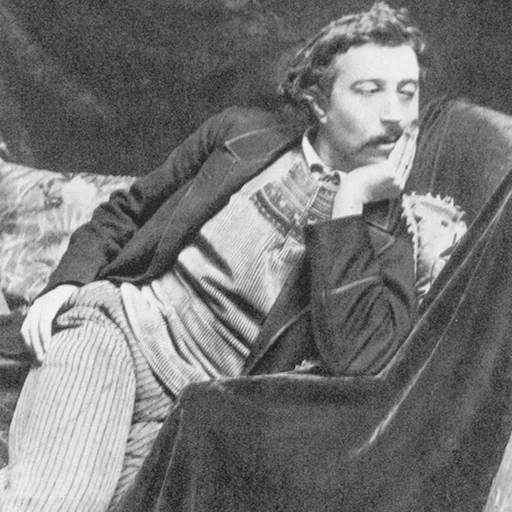
Artist
Eugène Henri Paul Gauguin (; French: ; 7 June 1848 – 8 May 1903) was a French painter, sculptor, printmaker, ceramist, and writer, whose work has been primarily associated with the Post-Impressionist and Symbolist movements.

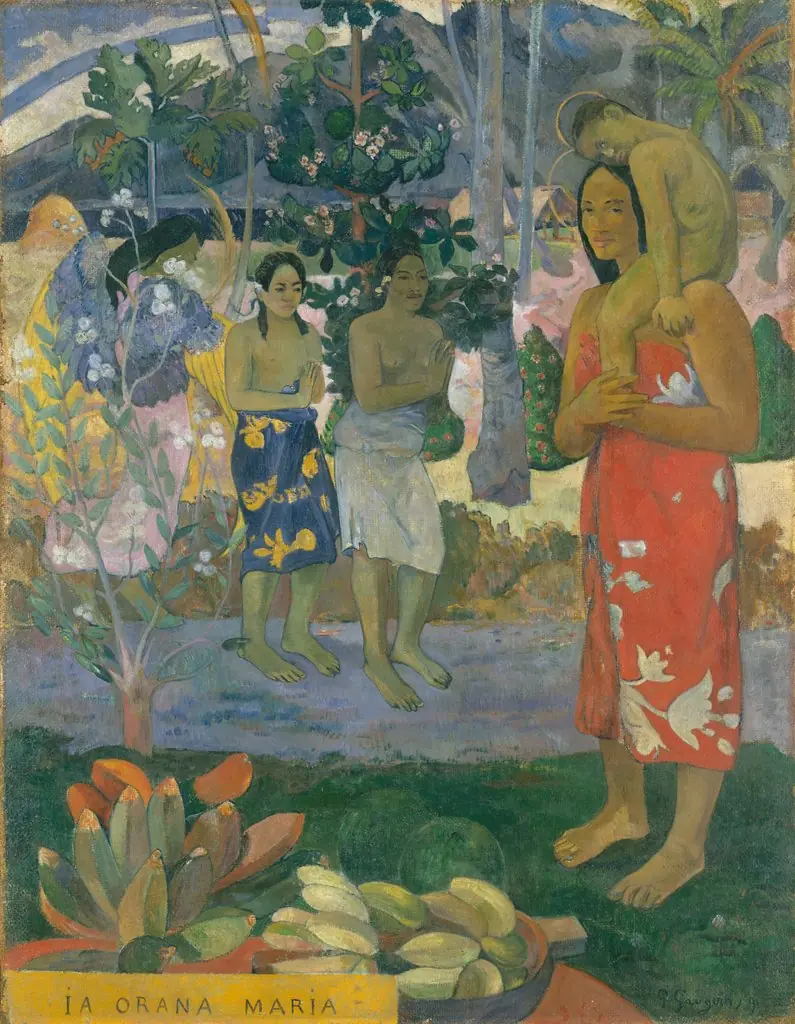
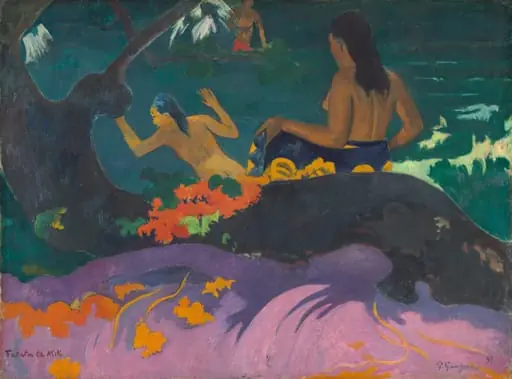
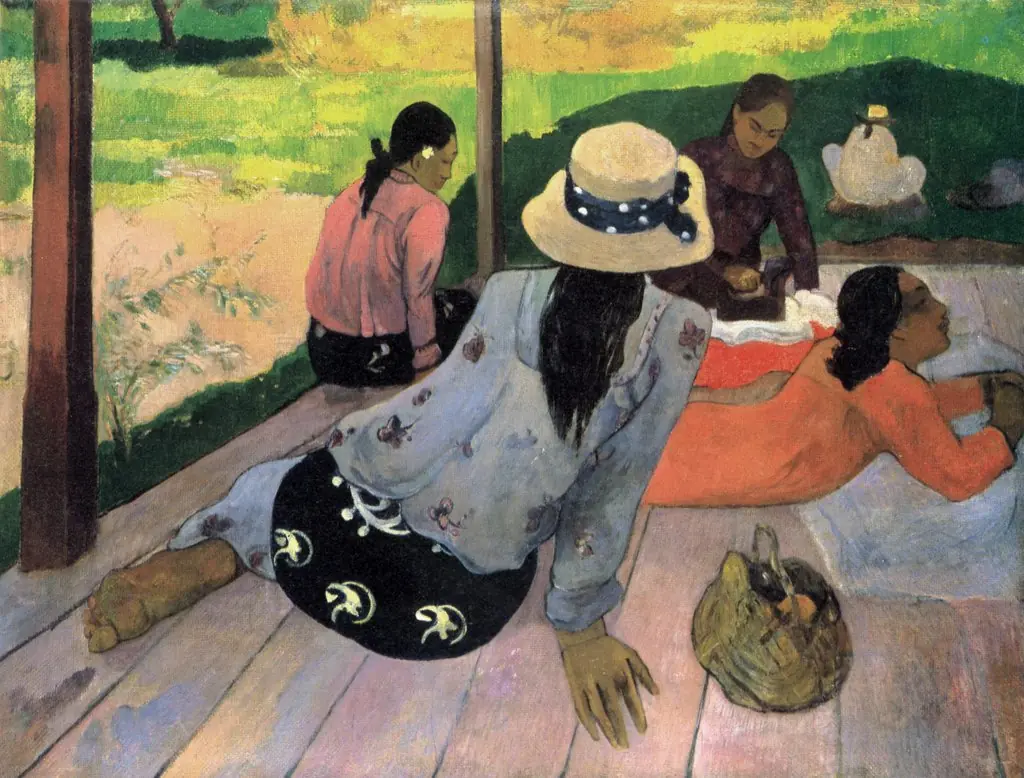
![Trees; Sketch of Breton Boy [verso], by Paul Gauguin](https://artifactworldgallery.com/img/paul-gauguin--trees-sketch-of-breton-boy-verso--ffac7faa10ac7e52-w320.webp) Trees; Sketch of Breton Boy [verso]
Trees; Sketch of Breton Boy [verso]![Five Studies of Heads; A Boy in Profile with Studies of Hands and Feet [verso], by Paul Gauguin](https://artifactworldgallery.com/img/paul-gauguin--five-studies-of-heads-a-boy-in-profile-with-studies-of-hands--71c9c87fde7c63ab-w320.webp) Five Studies of Heads; A Boy in Profile with Studies of Hands and Feet [verso]
Five Studies of Heads; A Boy in Profile with Studies of Hands and Feet [verso]![Eye and Part of Face; A Breton Woman and Two Men [recto], by Paul Gauguin](https://artifactworldgallery.com/img/paul-gauguin--eye-and-part-of-face-a-breton-woman-and-two-men-recto--81c9125f35b9b9e6-w320.webp) Eye and Part of Face; A Breton Woman and Two Men [recto]
Eye and Part of Face; A Breton Woman and Two Men [recto]![Profile of a Boy and Self-Portrait [recto], by Paul Gauguin](https://artifactworldgallery.com/img/paul-gauguin--profile-of-a-boy-and-self-portrait-recto--02ac582038ff6ec2-w320.webp) Profile of a Boy and Self-Portrait [recto]
Profile of a Boy and Self-Portrait [recto] Studies of Children at Play
![Heads of a Boy and a Man (Self-Portrait?) [verso], by Paul Gauguin](https://artifactworldgallery.com/img/paul-gauguin--heads-of-a-boy-and-a-man-self-portrait-verso--92a4d2aa3cb26bf0-w320.webp) Heads of a Boy and a Man (Self-Portrait?) [verso]
Heads of a Boy and a Man (Self-Portrait?) [verso]![Landscape with a Cottage; Profile of Boy, Profile of Man, Two Women in a Landscape, and Five Other Studies [verso], by Paul Gauguin](https://artifactworldgallery.com/img/paul-gauguin--landscape-with-a-cottage-profile-of-boy-profile-of-man-two-w--ddd62bebceef23ee-w320.webp) Landscape with a Cottage; Profile of Boy, Profile of Man, Two Women in a Landscape, and Five Other Studies [verso]
Landscape with a Cottage; Profile of Boy, Profile of Man, Two Women in a Landscape, and Five Other Studies [verso]