Artwork
Heads of a Boy and a Man (Self-Portrait?) [verso]
![Heads of a Boy and a Man (Self-Portrait?) [verso], by Paul Gauguin, ink, 1886](https://artifactworldgallery.com/img/paul-gauguin--heads-of-a-boy-and-a-man-self-portrait-verso--92a4d2aa3cb26bf0-w1024.webp)
Heads of a Boy and a Man (Self-Portrait?) [verso] is an ink drawing by the Impressionist artist Paul Gauguin. It dates from 1886 and is held in the collection of the National Gallery of Art.
About this work
Overview
Executed with fluid, spontaneous lines, the work is part of a series of intimate studies Gauguin made during a period of intense artistic experimentation.
Created in 1886, this ink drawing on wove paper by Paul Gauguin presents two overlapping heads in profile, both facing left. Executed with fluid, spontaneous lines, the work is part of a series of intimate studies Gauguin made during a period of intense artistic experimentation. Though labeled as a verso, its composition suggests deliberate composition rather than casual sketching. The medium—brown ink on paper—reflects his preference for accessible materials during his transitional phase between Impressionism and Symbolism.
Subject & Meaning
The drawing shows a mature male head above a younger one, possibly father and son, or an older and younger self. The ambiguity invites interpretation without definitive resolution. Gauguin often used familial or self-referential imagery to explore identity and generational continuity. The lack of clear distinction between the figures suggests psychological connection rather than literal representation, aligning with his Symbolist interest in inner states over external realism.
Technique & Style
Gauguin employed loose, rhythmic pen strokes to define form, avoiding contour precision in favor of expressive energy. The man’s features are more defined with layered hatching, while the boy’s face remains suggestive, rendered with lighter, broken lines. The warm brown ink enhances the tactile quality of the paper, emphasizing texture over detail. This economy of means reflects his broader shift away from naturalism toward emotional resonance through simplified, gestural mark-making.
History & Provenance
The drawing was produced during Gauguin’s time in France, shortly before his first trip to Brittany and later to Tahiti. It likely originated in his private studio, among numerous studies that informed his larger works. Its survival as a verso suggests it was not intended for public display, but retained for personal reference. The piece entered institutional collections in the 20th century, valued for its insight into his evolving visual language.
Context
In 1886, Gauguin was distancing himself from Impressionist conventions, seeking more symbolic and personal expression. This drawing aligns with contemporaneous works where he explored identity, memory, and primal themes. His use of ink on paper mirrored a broader trend among artists turning to drawing as a direct conduit for thought, unmediated by the demands of oil painting or exhibition.
Legacy
Though not widely exhibited, this drawing contributes to understanding Gauguin’s method of working through ideas on paper before committing to canvas or sculpture. Its raw immediacy influenced later modernists who valued the artist’s hand as a record of inner process. It remains a quiet but significant example of how drawing functioned as both preparation and independent expression in his oeuvre.
Artist & collection
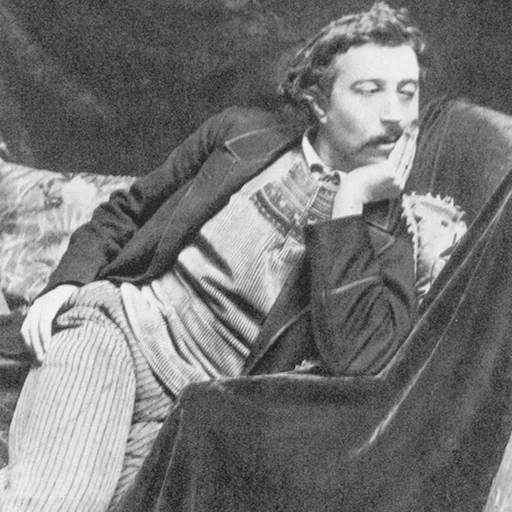
Artist
Eugène Henri Paul Gauguin (; French: ; 7 June 1848 – 8 May 1903) was a French painter, sculptor, printmaker, ceramist, and writer, whose work has been primarily associated with the Post-Impressionist and Symbolist movements.

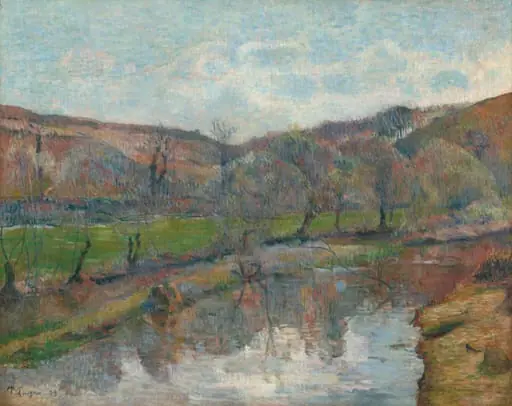
![Five Sheep; Head of a Woman and Head of a Bearded Man [recto], by Paul Gauguin](https://artifactworldgallery.com/img/paul-gauguin--five-sheep-head-of-a-woman-and-head-of-a-bearded-man-recto--b52e1d9f193e7f08-w320.webp) Five Sheep; Head of a Woman and Head of a Bearded Man [recto]
Five Sheep; Head of a Woman and Head of a Bearded Man [recto]![Two Studies of a Child's Head; Two Studies of a Child's Head, a Woman in Profile, and a Man Wrestling an Animal [recto], by Paul Gauguin](https://artifactworldgallery.com/img/paul-gauguin--two-studies-of-a-child-s-head-two-studies-of-a-child-s-head--6667f6008af9d50c-w320.webp) Two Studies of a Child's Head; Two Studies of a Child's Head, a Woman in Profile, and a Man Wrestling an Animal [recto]
Two Studies of a Child's Head; Two Studies of a Child's Head, a Woman in Profile, and a Man Wrestling an Animal [recto]![Two Heads; Studies of Sheep [recto], by Paul Gauguin](https://artifactworldgallery.com/img/paul-gauguin--two-heads-studies-of-sheep-recto--d045b25e15a504f5-w320.webp) Two Heads; Studies of Sheep [recto]
Two Heads; Studies of Sheep [recto]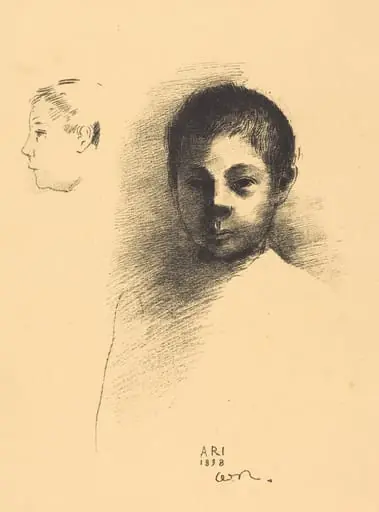 Ari
Ari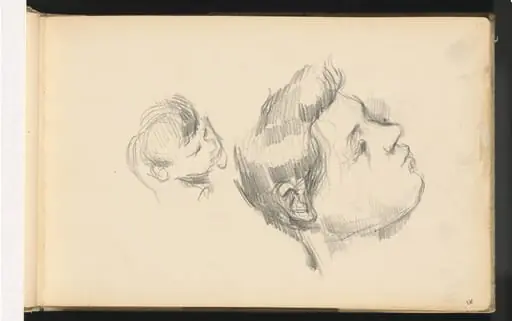 Two Heads
![Five Studies of Heads; A Boy in Profile with Studies of Hands and Feet [verso], by Paul Gauguin](https://artifactworldgallery.com/img/paul-gauguin--five-studies-of-heads-a-boy-in-profile-with-studies-of-hands--71c9c87fde7c63ab-w320.webp) Five Studies of Heads; A Boy in Profile with Studies of Hands and Feet [verso]
Five Studies of Heads; A Boy in Profile with Studies of Hands and Feet [verso]![Eye and Part of Face; A Breton Woman and Two Men [recto], by Paul Gauguin](https://artifactworldgallery.com/img/paul-gauguin--eye-and-part-of-face-a-breton-woman-and-two-men-recto--81c9125f35b9b9e6-w320.webp) Eye and Part of Face; A Breton Woman and Two Men [recto]
Eye and Part of Face; A Breton Woman and Two Men [recto]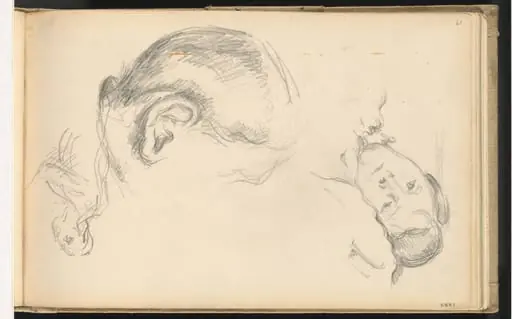 Three Heads, One of Madame Cezanne
![Two Cow's Heads [verso], by Paul Gauguin](https://artifactworldgallery.com/img/paul-gauguin--two-cow-s-heads-verso--d880ac31a237a947-w320.webp) Two Cow's Heads [verso]
Two Cow's Heads [verso] Petit portrait
 Studies of Jean
![Profile of a Boy and Self-Portrait [recto], by Paul Gauguin](https://artifactworldgallery.com/img/paul-gauguin--profile-of-a-boy-and-self-portrait-recto--02ac582038ff6ec2-w320.webp) Profile of a Boy and Self-Portrait [recto]
Profile of a Boy and Self-Portrait [recto]