Artwork
Studies of Children at Play
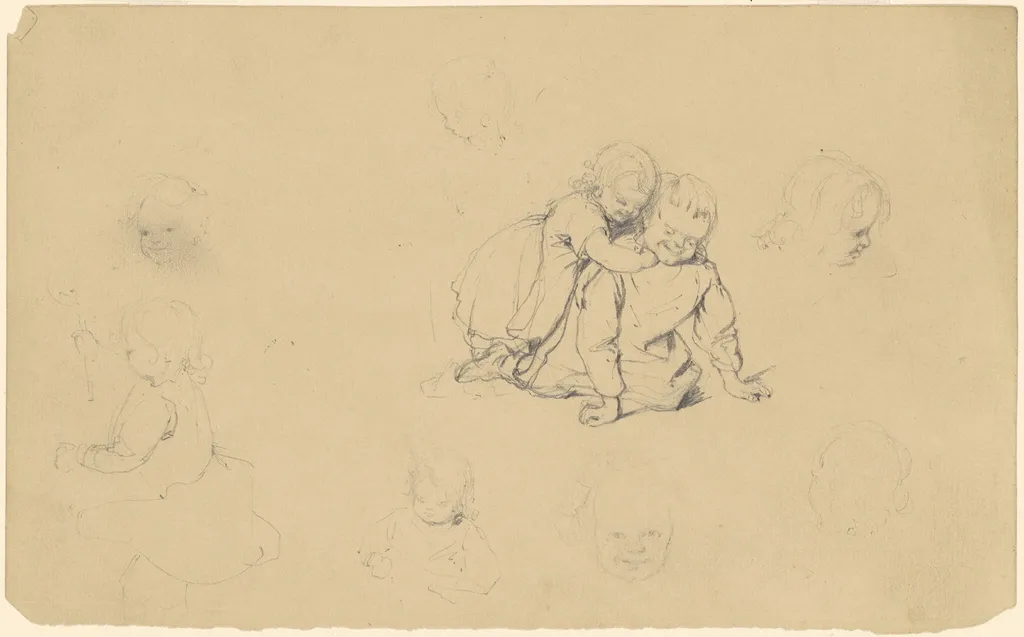
Studies of Children at Play is a graphite drawing by the Romanticist artist James Goodwyn Clonney. It dates from 1845 and is held in the collection of the National Gallery of Art. Created circa 1845, this graphite drawing on wove paper records a brief, intimate episode of childhood.
About this work
Overview
Created circa 1845, this graphite drawing on wove paper records a brief, intimate episode of childhood. Two youngsters are shown in a domestic setting: a boy seated on the ground, a girl kneeling behind him and embracing him from the side. The composition is compact, focusing tightly on the figures and their interaction, and is held in the collection of the National Gallery of Art in Washington.
Subject & Meaning
The work captures a moment of spontaneous play, emphasizing the tenderness and camaraderie between the children. While the scene lacks explicit narrative, the embrace suggests affection and mutual trust, offering a quiet glimpse into everyday life among rural youth. The drawing refrains from moralizing, instead presenting the simple pleasure of shared amusement.
Technique & Style
Executed in graphite, the artist employs delicate shading to model the forms and suggest the texture of the paper surface. The use of wove paper provides a smooth ground that enhances subtle tonal transitions. The drawing’s restrained line work and soft gradations align with mid‑nineteenth‑century Romantic sensibilities, favoring sentiment and the evocation of feeling over precise detail.
History & Provenance
The piece was produced by James Goodwyn Clonney, an English‑born artist who settled in the United States and became known for genre scenes. After changing hands through private collections, the drawing entered the National Gallery of Art’s holdings, where it is catalogued as an example of Clonney’s smaller‑scale studies.
Context
Its modest size and focus on a single episode are characteristic of the artist’s habit of producing intimate studies alongside larger genre paintings.
Clonney’s oeuvre frequently depicted rural American life, often embedding subtle social observations within domestic narratives. This drawing, however, concentrates solely on the universal experience of childhood play, reflecting a broader Romantic interest in innocence and the pastoral ideal. Its modest size and focus on a single episode are characteristic of the artist’s habit of producing intimate studies alongside larger genre paintings.
Artist & collection
Artist
James Goodwyn Clonney (28 December 1812, Liverpool (?) – 7 October 1867, Binghamton, NY) was an English-born American genre painter and lithographer.

![Two Studies of a Child's Head; Two Studies of a Child's Head, a Woman in Profile, and a Man Wrestling an Animal [recto], by Paul Gauguin](https://artifactworldgallery.com/img/paul-gauguin--two-studies-of-a-child-s-head-two-studies-of-a-child-s-head--6667f6008af9d50c-w320.webp) Two Studies of a Child's Head; Two Studies of a Child's Head, a Woman in Profile, and a Man Wrestling an Animal [recto]
Two Studies of a Child's Head; Two Studies of a Child's Head, a Woman in Profile, and a Man Wrestling an Animal [recto] Studies: Major Thomas Biddle and Thomas Wilcocks Sully
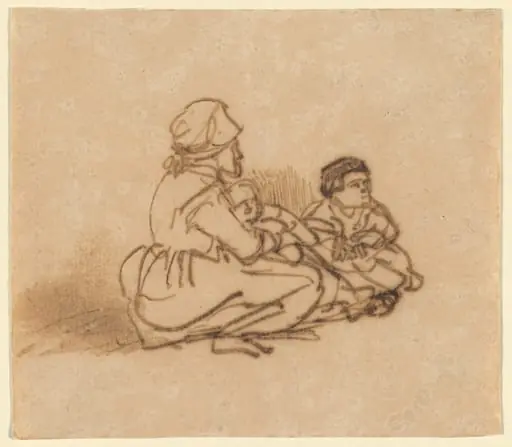 Woman Seated on the Ground with Two Children
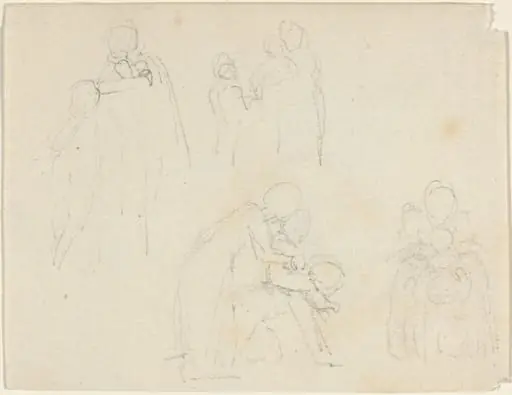 Four Groups of Figures
![Two Heads; Studies of Sheep [recto], by Paul Gauguin](https://artifactworldgallery.com/img/paul-gauguin--two-heads-studies-of-sheep-recto--d045b25e15a504f5-w320.webp) Two Heads; Studies of Sheep [recto]
Two Heads; Studies of Sheep [recto]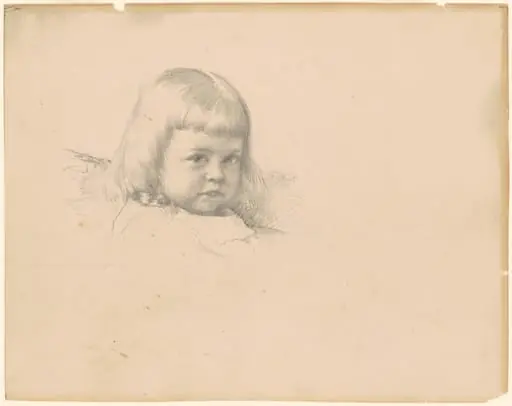 Study for "Portrait of Esther Haydin"
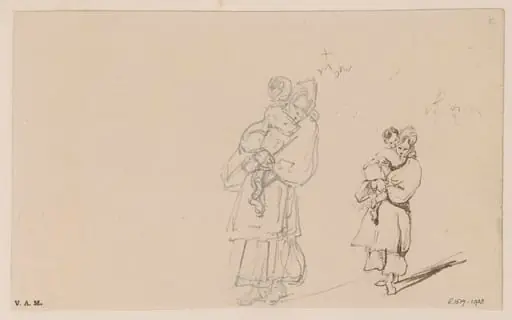 Two drawings of a boatwoman holding a child
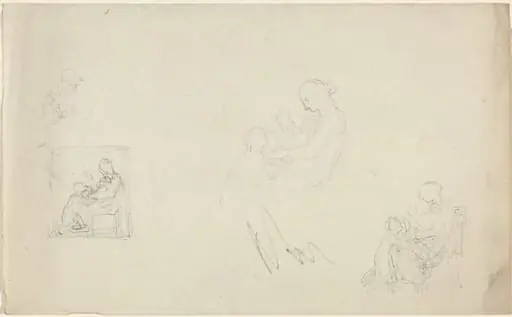 Four Studies of a Seated Woman with Children at Her Feet (Sketches for the Monument to Lady FitzHarris?)
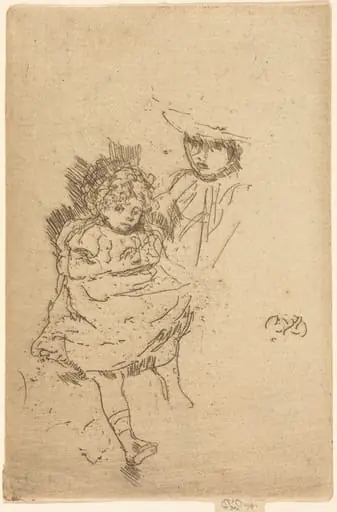 Gipsy Baby
![Study of a Mother and Child [verso], by David, Sir Wilkie](https://artifactworldgallery.com/img/david-sir-wilkie--study-of-a-mother-and-child-verso--91f999f529326586-w320.webp) Study of a Mother and Child [verso]
Study of a Mother and Child [verso]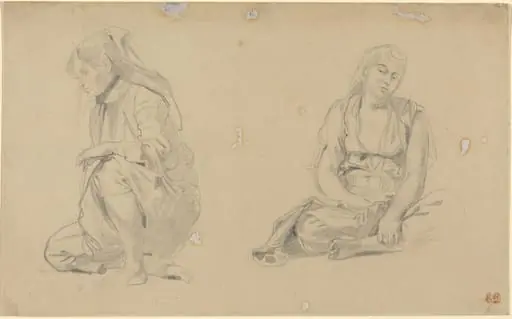 Women of Algiers