Artwork
Nativity
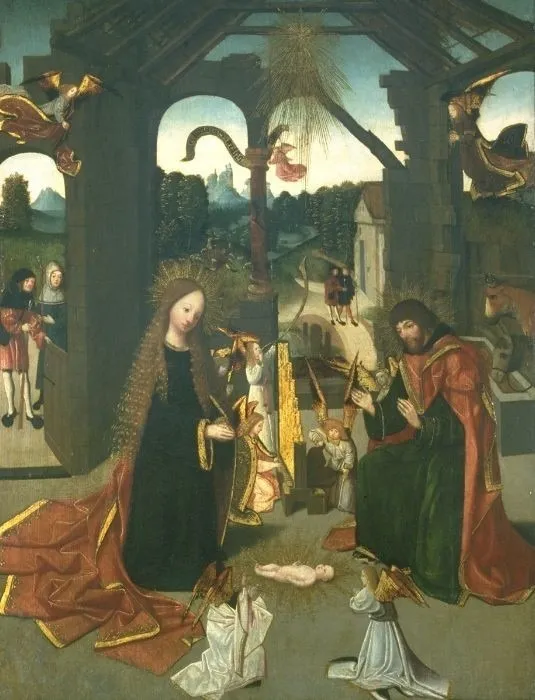
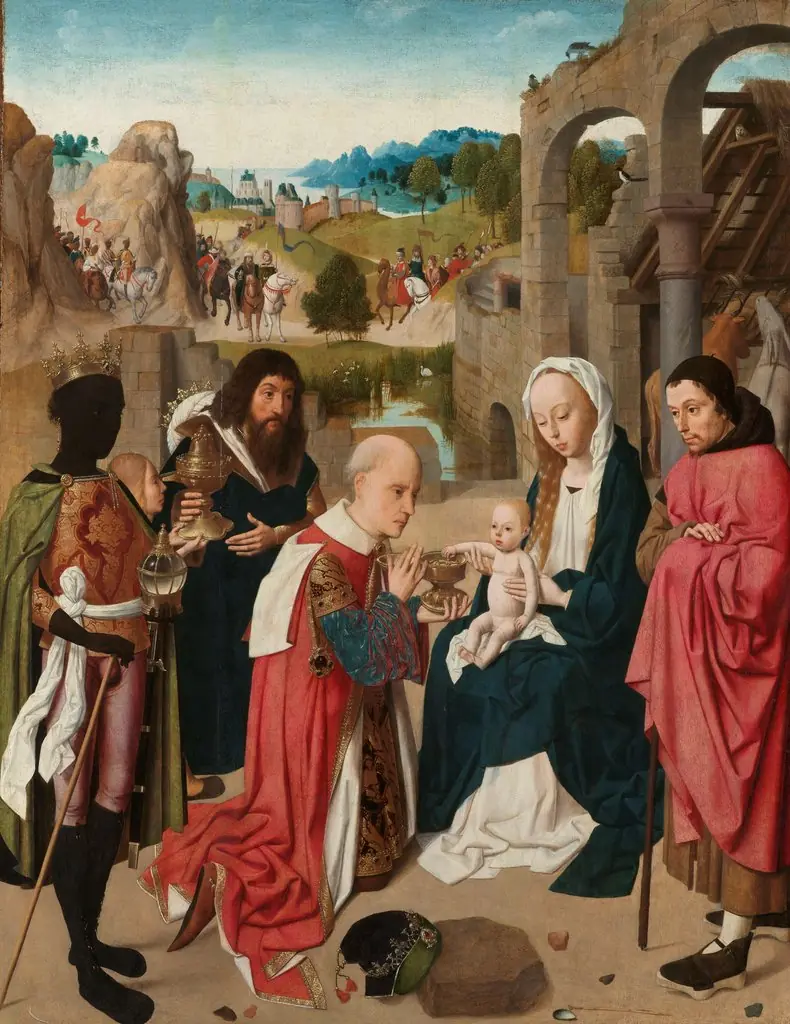
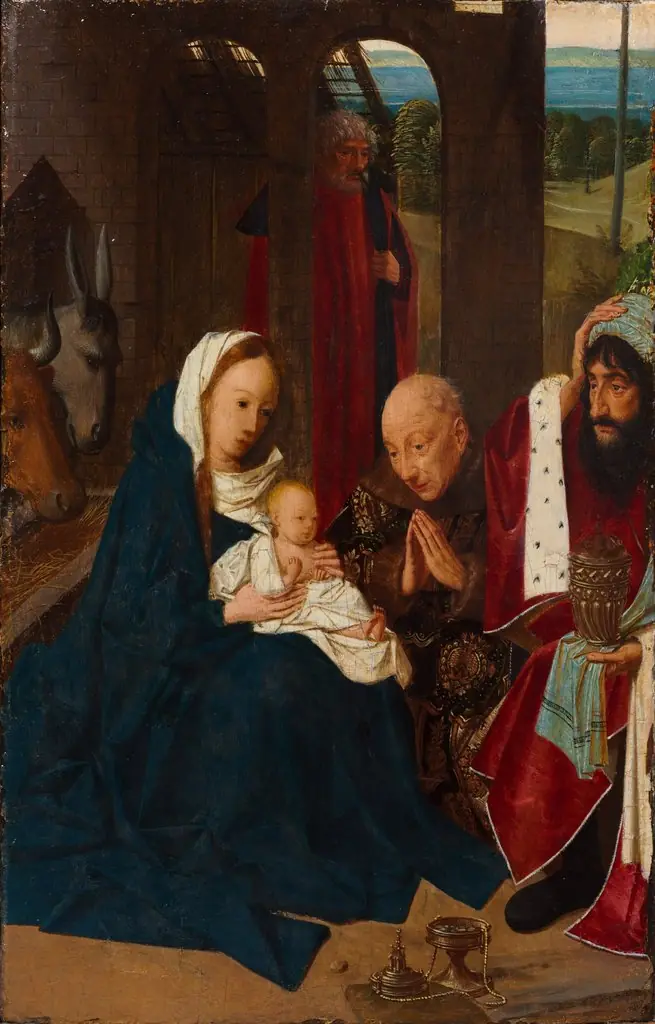
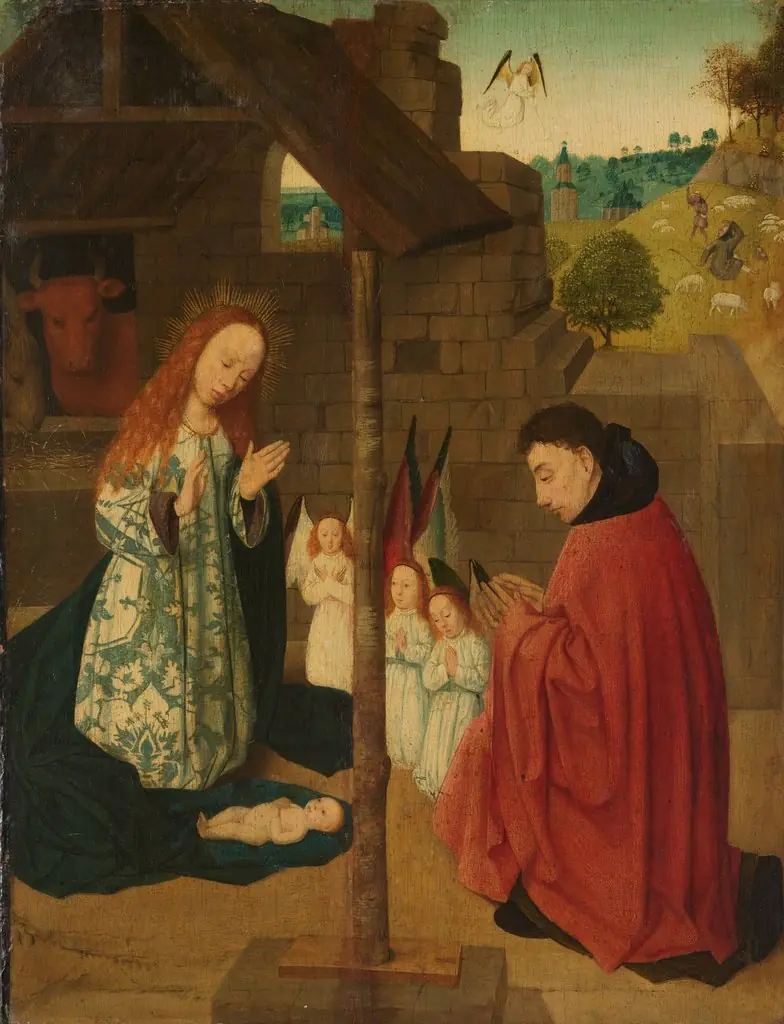
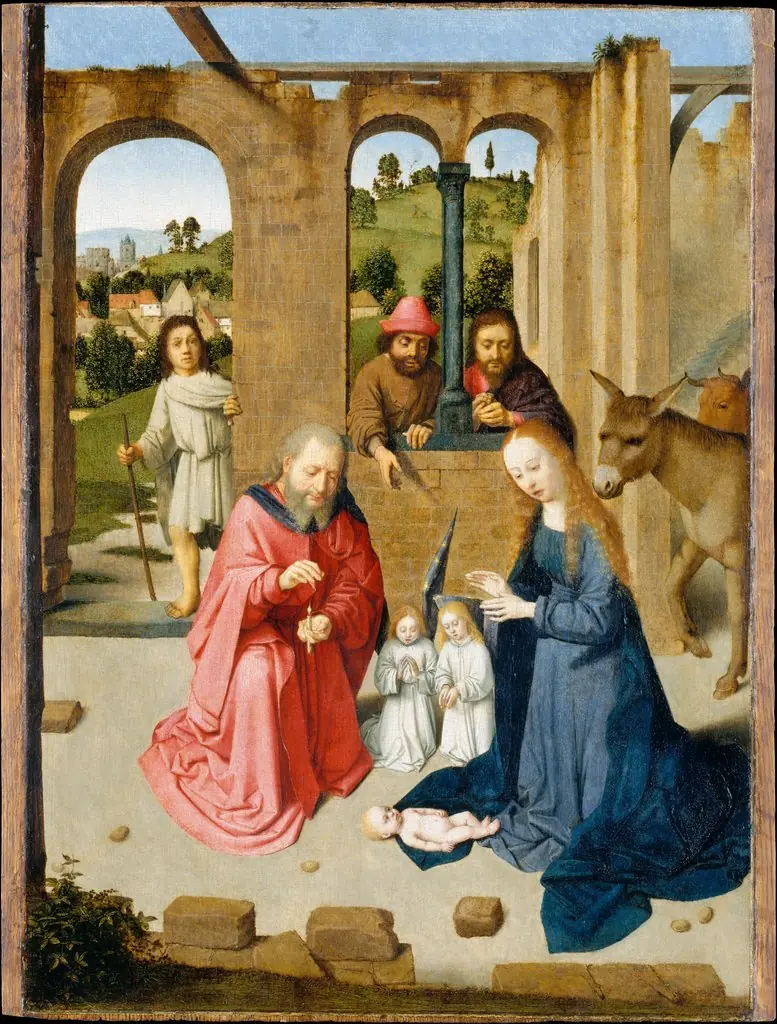
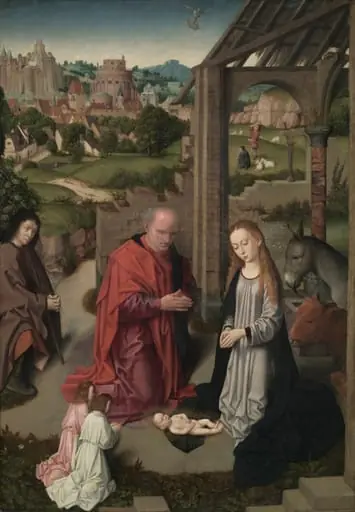
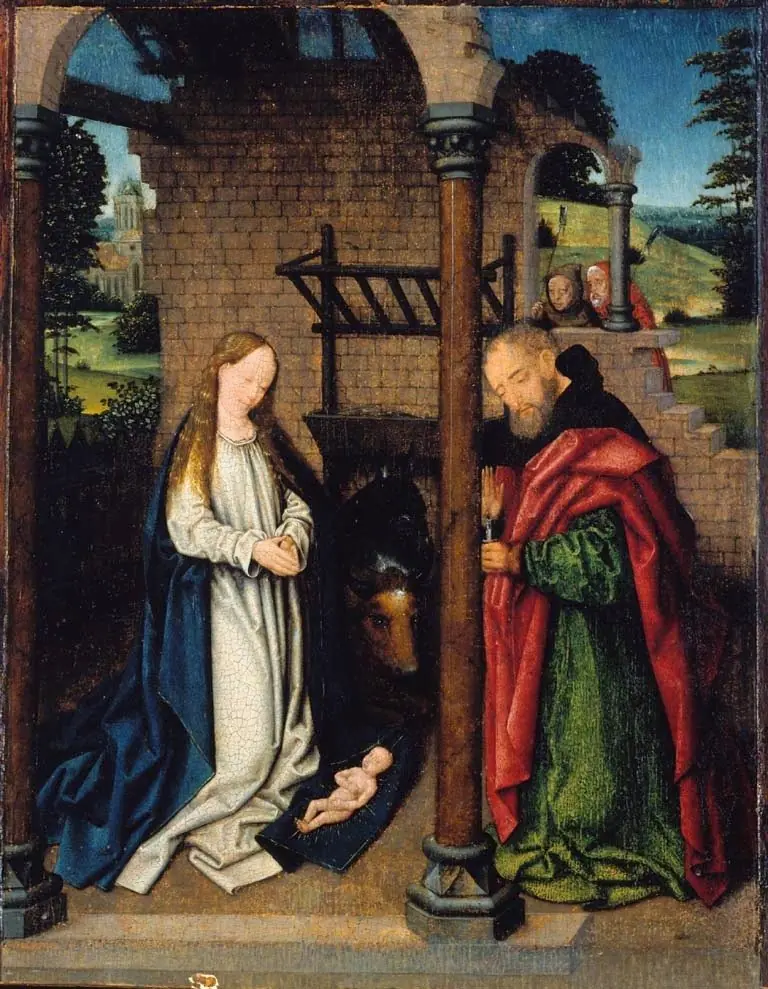
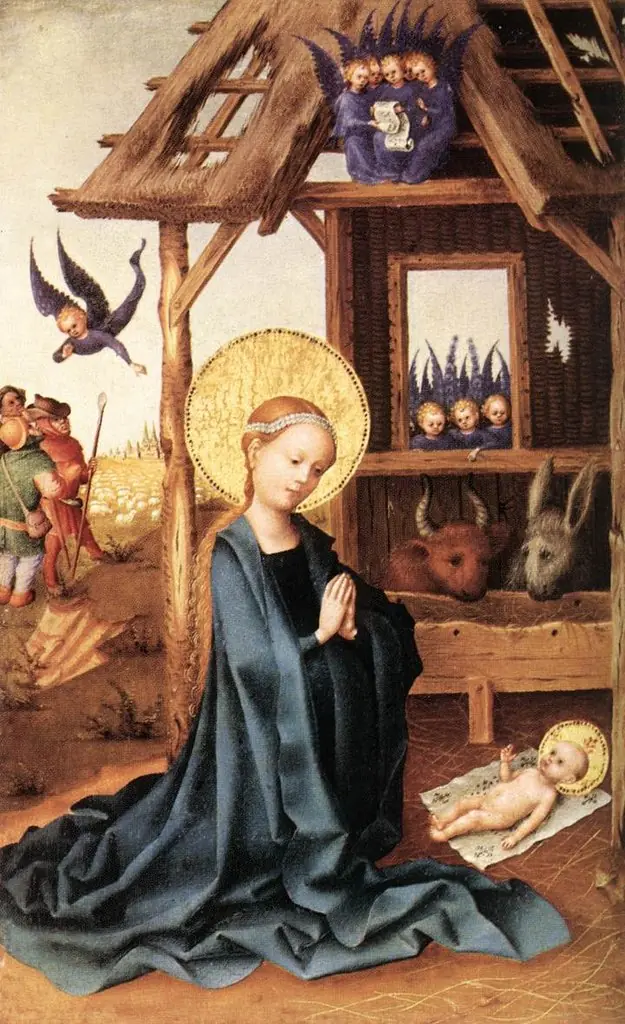
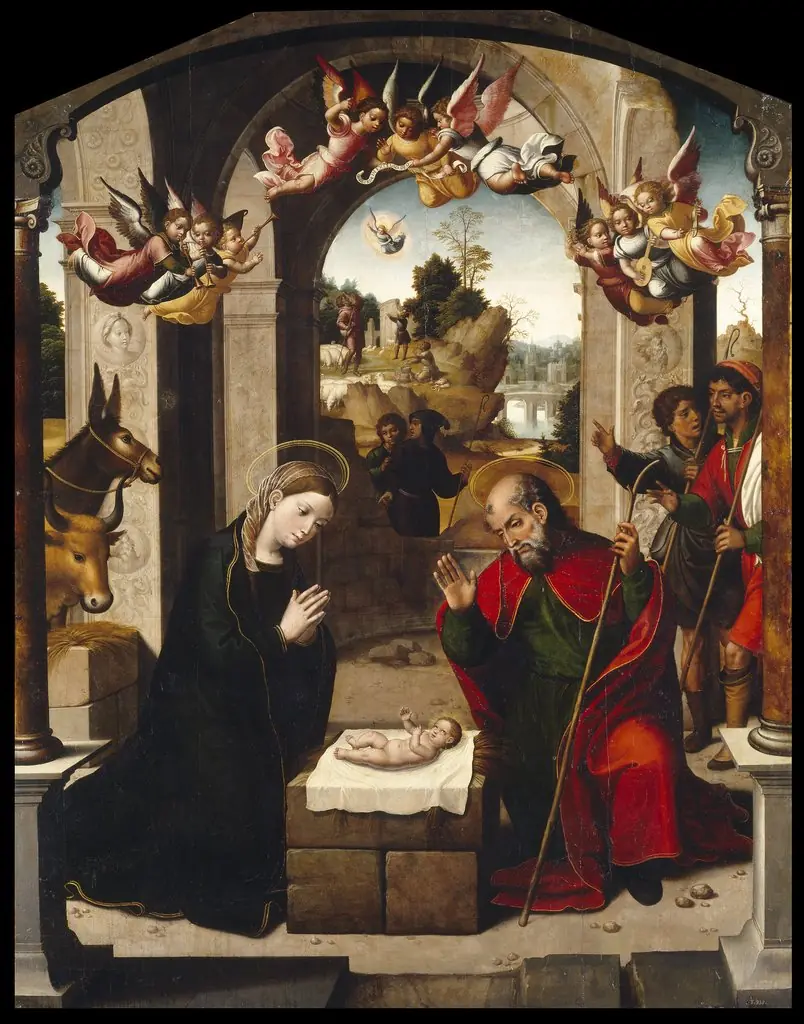
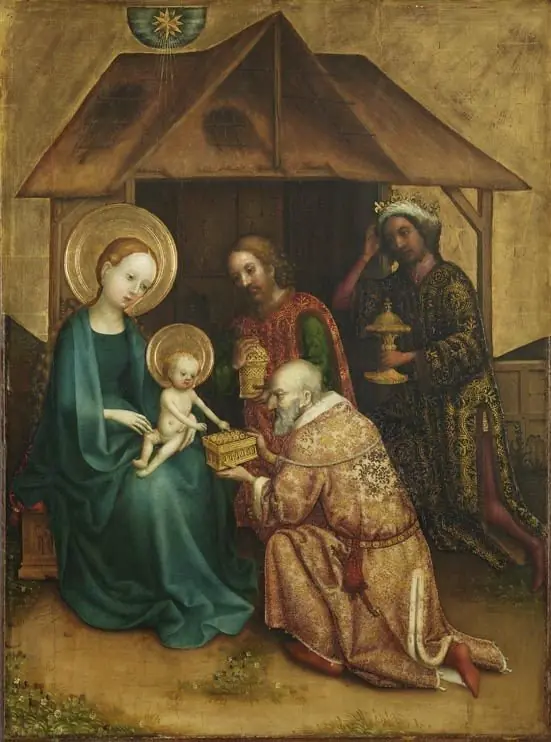
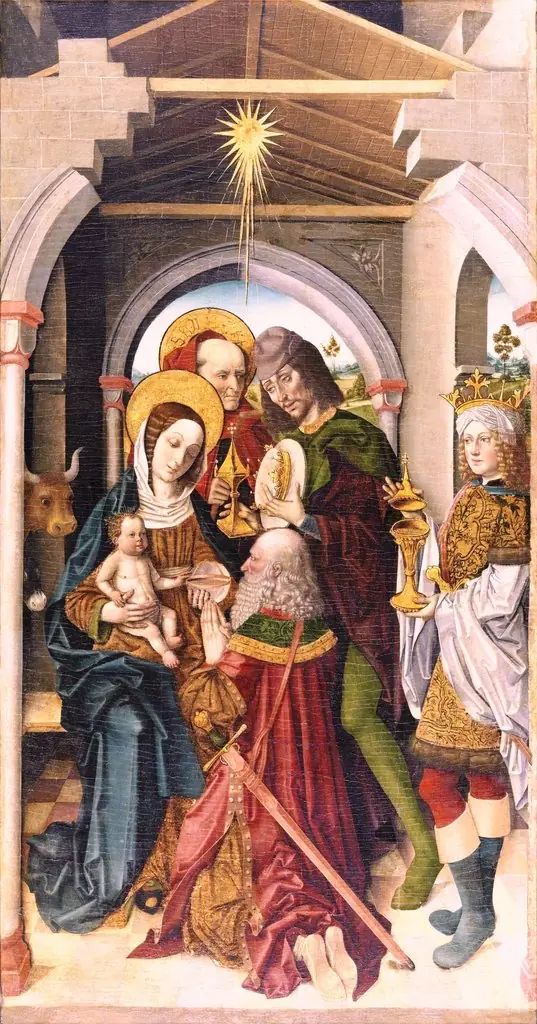
Nativity is a paint painting by the Northern Renaissance artist Geertgen tot Sint Jans. It is held in the collection of the Gemäldegalerie Berlin.
About this work
Overview
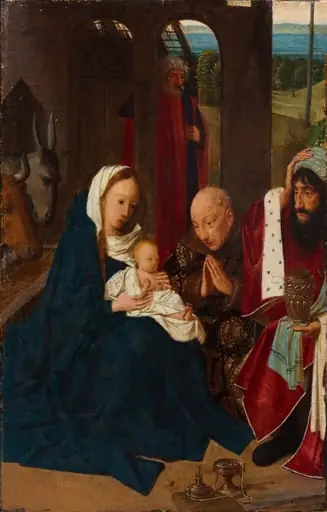
Painted around 1500 by Geertgen tot Sint Jans, this oil-on-panel work captures the Nativity within the tradition of Early Netherlandish devotional art.
Painted around 1500 by Geertgen tot Sint Jans, this oil-on-panel work captures the Nativity within the tradition of Early Netherlandish devotional art. Created in the northern Low Countries, it reflects the region’s emerging mastery of oil technique. The painting resides today in the Gemäldegalerie, Berlin, as one of the few surviving works attributed to an artist whose life is poorly documented, with no records surviving from his lifetime.
Subject & Meaning
The scene centers on the infant Christ lying in a manger, attended by the Virgin Mary and Joseph, both kneeling in quiet adoration. The humble stable, with its rough stone walls and thatched roof, underscores the theological emphasis on Christ’s earthly modesty. No angels or shepherds appear, focusing attention solely on the sacred intimacy of the moment, reinforcing a contemplative, inward spirituality characteristic of late 15th-century Northern piety.
Technique & Style
Geertgen employed oil paint with refined layering to achieve subtle transitions of light and texture. Warm hues define the figures, contrasting with the cool, muted tones of the background, enhancing spatial depth. The brushwork is precise yet restrained, avoiding dramatic gesture in favor of stillness. The rendering of materials—wood, fabric, stone—is rendered with quiet realism, contributing to the painting’s meditative atmosphere without ornamental excess.
History & Provenance
No contemporary records of Geertgen’s life or this painting’s early ownership exist. The first written mention of the artist appeared over a century after his death, in 1604. The painting entered the Berlin collection in the 19th century, likely through the acquisition of private German holdings. Its attribution to Geertgen rests on stylistic comparison with his few authenticated works, as no documentary trail links it directly to his studio.
Context
Created during the Northern Renaissance, the painting aligns with devotional trends favoring intimate, emotionally restrained religious imagery. Unlike Italian contemporaries who emphasized grandeur, Northern artists like Geertgen prioritized quiet reverence and tactile detail. His work reflects the influence of earlier masters such as van Eyck and van der Weyden, adapted into a personal style that emphasized spiritual stillness over narrative spectacle.
Legacy
Geertgen tot Sint Jans left a small but influential body of work, and this Nativity remains a key example of early Northern oil painting’s capacity for emotional subtlety. Though his name faded after his death, 19th-century scholars revived interest in his restrained aesthetic. The painting continues to be studied for its quiet composition and technical finesse, representing a distinct branch of Renaissance spirituality rooted in humility and observation.
Artist & collection
Artist
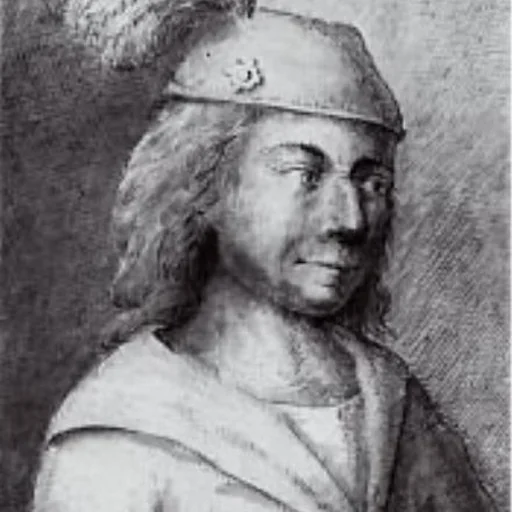
Geertgen tot Sint Jans (c. 1465 – c. 1495), also known as Geertgen van Haarlem, Gerrit van Haarlem, Gerrit Gerritsz, Gheertgen, Geerrit, Gheerrit, or any other diminutive form of Gerald, was an Early Netherlandish…