Artwork
Untitled
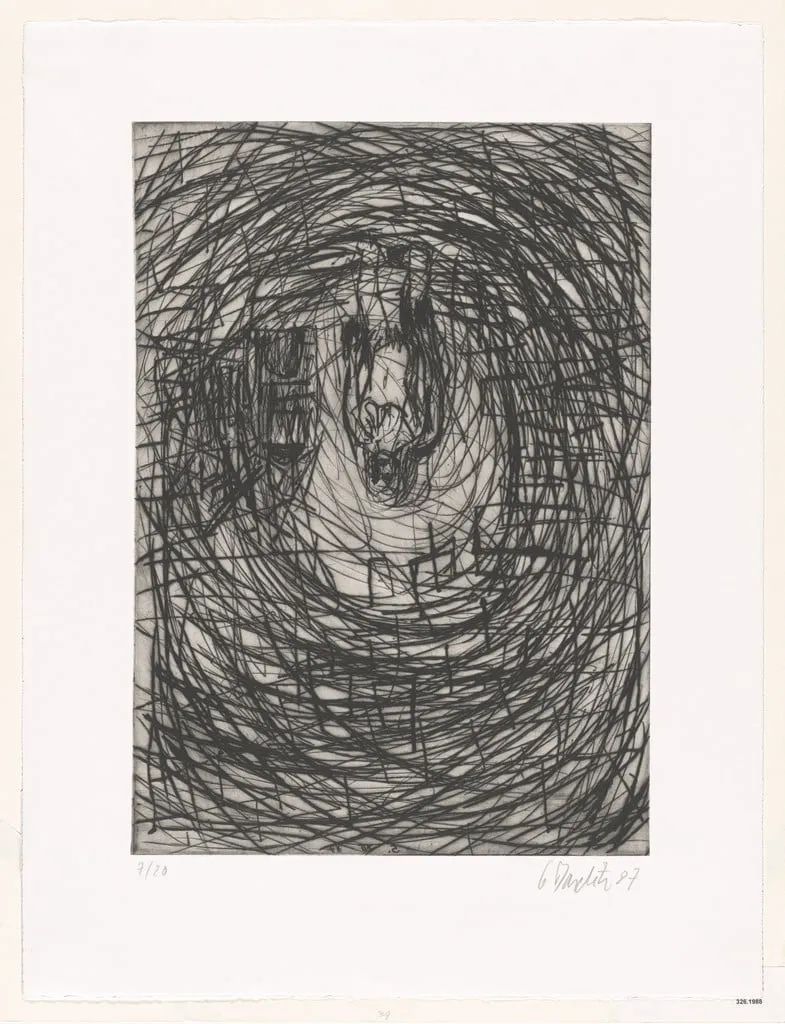
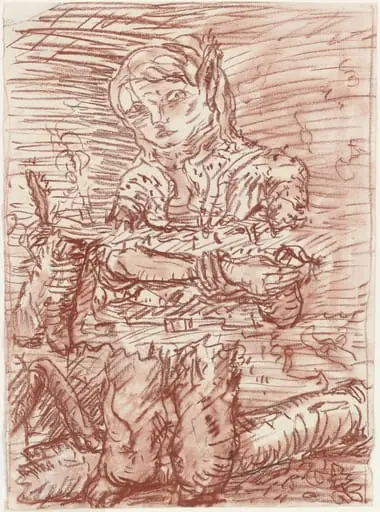
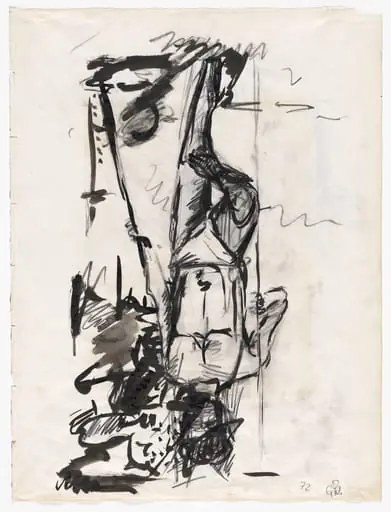
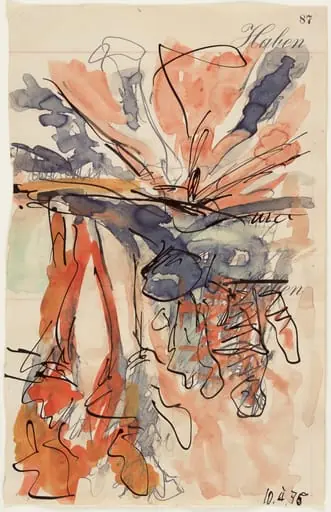
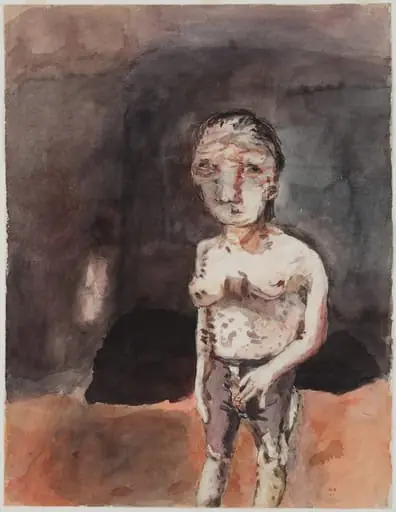
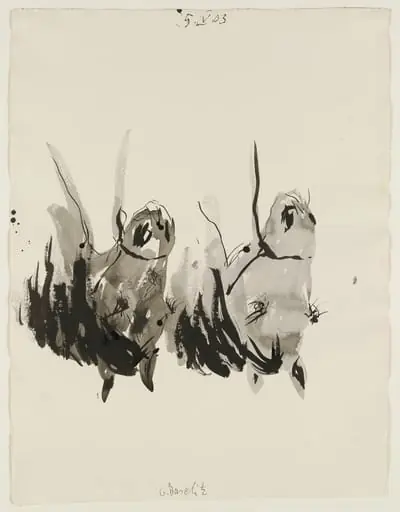
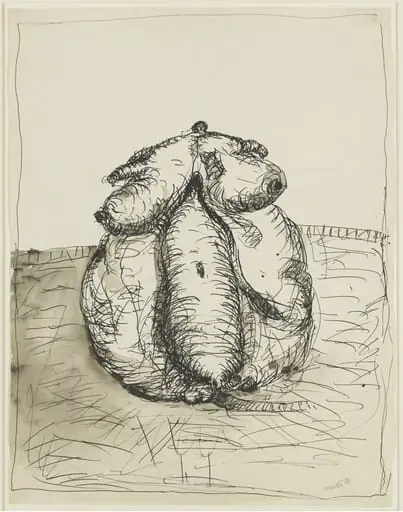
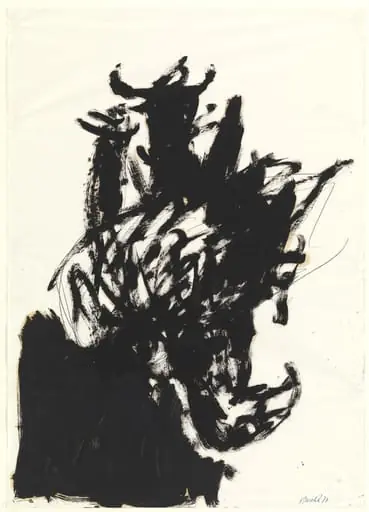
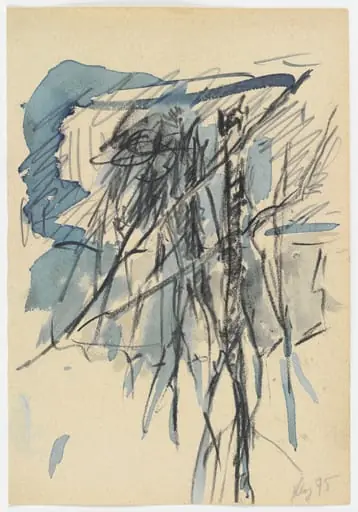
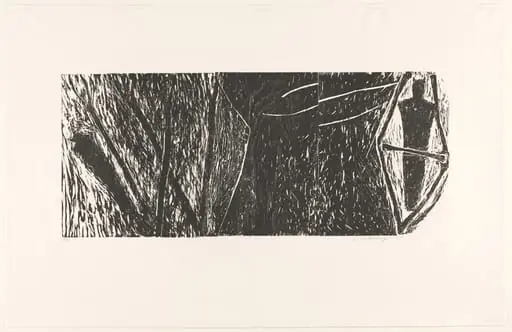
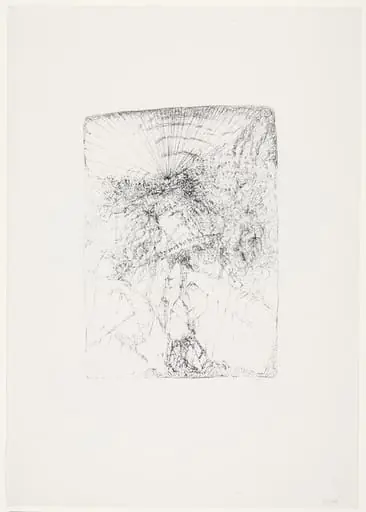
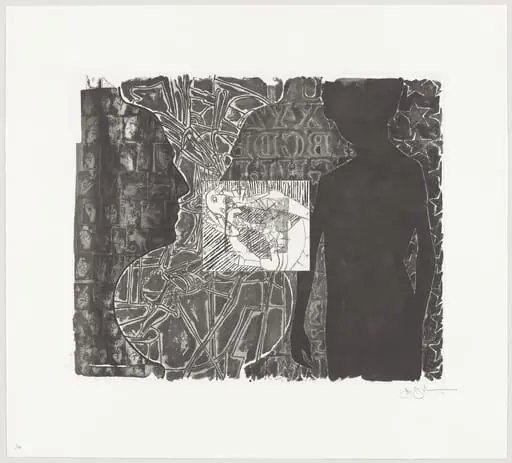
Untitled is an ink print by Georg Baselitz. It dates from 1987 and is held in the collection of the Museum of Modern Art.
About this work
Overview
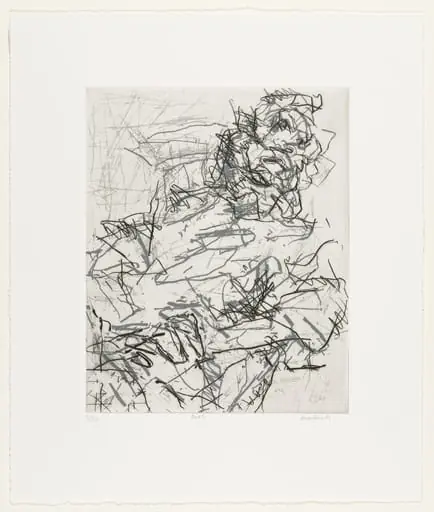
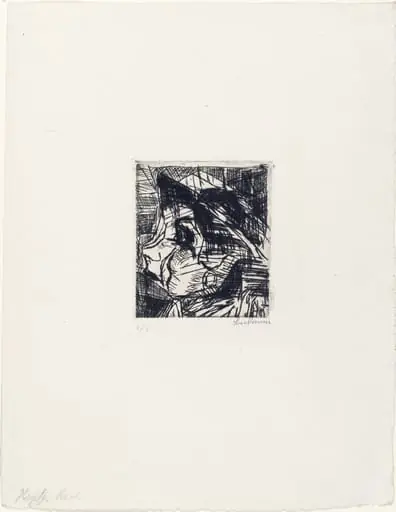
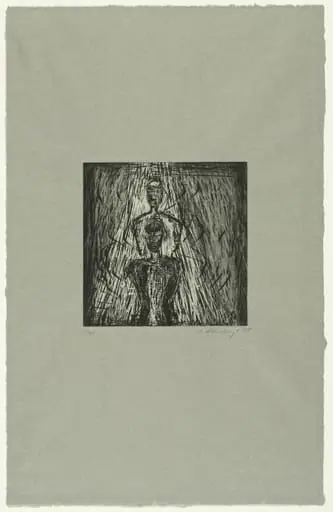
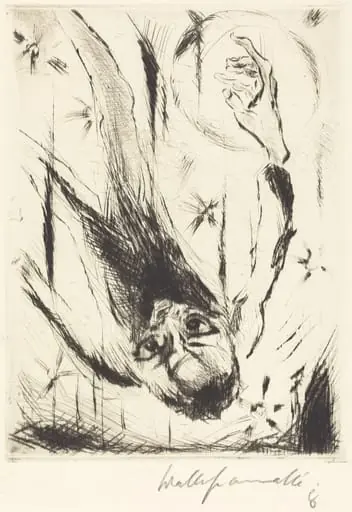
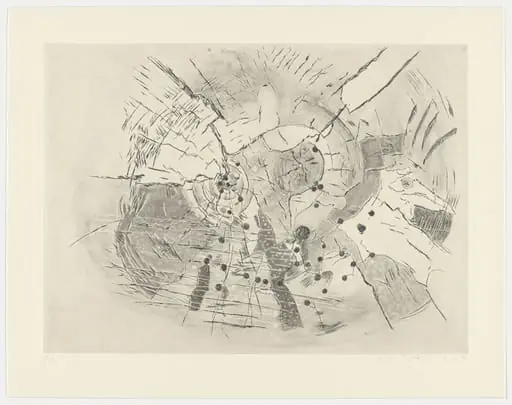
Created in 1987, this drypoint print by Georg Baselitz is part of The Museum of Modern Art’s collection. Unlike traditional prints, drypoint relies on incising lines directly into a metal plate with a sharp tool, capturing the raw texture of the artist’s hand. The resulting image is monochromatic, built entirely from layered, irregular strokes that convey urgency and physicality.
Subject & Meaning
The work lacks a representational figure or scene, instead presenting an abstract vortex of intersecting lines. The spiral form suggests internal motion or psychological turbulence, consistent with Baselitz’s interest in emotional expression over narrative clarity. The absence of identifiable subject matter invites contemplation of form as a vessel for inner states rather than external reality.
Technique & Style
Baselitz employed drypoint to generate dense, tactile surfaces by scratching fine, uneven lines into a copper plate. The burr created by the tool holds ink unevenly, producing rich, fuzzy edges and variable line weights. Overlapping strokes build depth without shading, emphasizing the materiality of the medium and the artist’s direct, gestural engagement with the plate.
History & Provenance
The print was made during a period when Baselitz was intensively exploring printmaking alongside his painting. It entered The Museum of Modern Art’s collection shortly after its creation, reflecting institutional recognition of his contributions to postwar print culture. No prior ownership records are publicly documented beyond its acquisition by the museum.
Context
In the late 1980s, Baselitz continued to challenge conventions of figuration and composition, even in non-representational works. His prints from this era often echo the visceral energy of his paintings, rejecting polished aesthetics in favor of raw, unmediated mark-making. This piece aligns with broader European postwar tendencies toward expressive abstraction and material experimentation.
Legacy
This work exemplifies Baselitz’s enduring interest in the physical act of making as a conduit for emotional expression. Its inclusion in MoMA’s collection underscores its significance within the canon of late 20th-century printmaking. The piece continues to inform discussions on the limits of abstraction and the role of process in contemporary art.
Artist & collection

Artist
Georg Baselitz was a German-Austrian painter, sculptor and graphic artist. In the 1960s he became well known for his figurative, expressive paintings. In 1969 he began painting his subjects upside down in an effort to…