Artwork
Self-Portrait
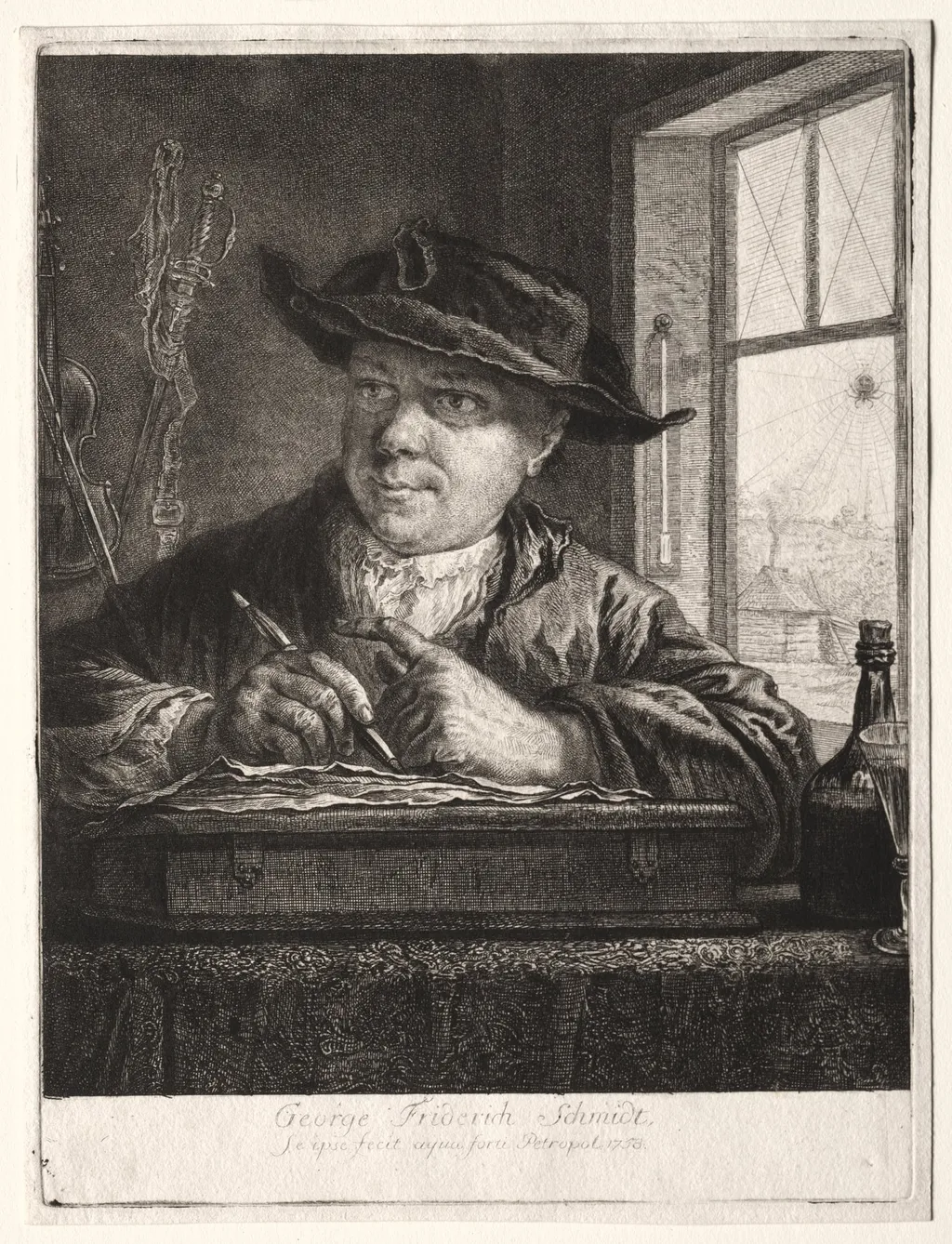
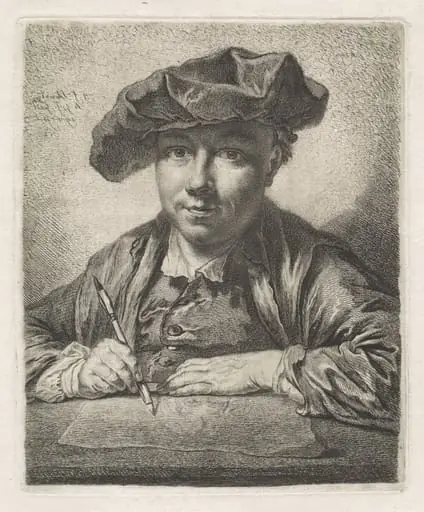
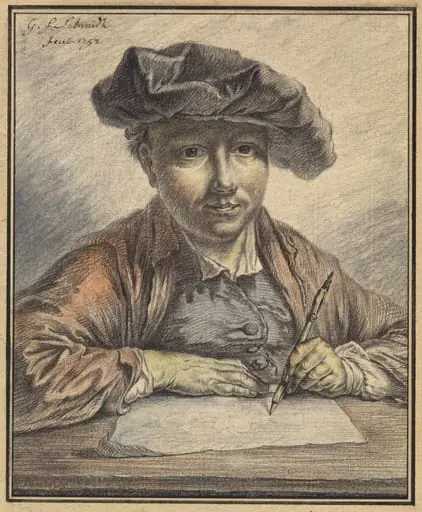
Self-Portrait is a print by Georg Friedrich Schmidt. It dates from 1753 and is held in the collection of the Cleveland Museum of Art.
About this work
Overview
The image is held in the collection of The Cleveland Museum of Art and exemplifies the precision of 18th-century printmaking.
Created around 1753, this black-and-white print is the work of German engraver Georg Friedrich Schmidt. It depicts the artist in his studio, captured mid-task with quiet intensity. The image is held in the collection of The Cleveland Museum of Art and exemplifies the precision of 18th-century printmaking. Schmidt’s signature appears at the base, anchoring the work as a personal statement rather than a commissioned portrait.
Subject & Meaning
The figure is Schmidt himself, portrayed not as an idealized nobleman but as a working artisan. His tired gaze and unadorned attire suggest introspection rather than vanity. The tools, half-empty bottle, and rolled document imply a moment of pause in labor, hinting at the solitary nature of artistic creation. The sword leaning nearby may reference his military service or symbolize personal resolve, adding subtle narrative depth.
Technique & Style
Schmidt employed fine line engraving to render texture and volume with remarkable control. The interplay of light and shadow—chiaroscuro—models his face, collar, and clothing with a sculptural quality, enhancing realism. The contrast between the dark hat and the illuminated desk creates spatial depth. Every element, from the grain of the wood to the sheen of the bottle, is rendered with meticulous attention, reflecting the engraver’s technical mastery.
History & Provenance
The print was likely produced during Schmidt’s time in Berlin, where he worked as a court engraver. It remained in private hands until entering the Cleveland Museum of Art’s collection, where it is now preserved as part of their European prints and drawings holdings. Its survival in good condition underscores its value to collectors of 18th-century graphic art.
Context
In mid-18th-century Europe, artists increasingly used self-portraits to assert professional identity. Schmidt’s image aligns with this trend, distinguishing itself through its unembellished realism and domestic setting. Unlike grand royal portraits, this work reflects the quiet dignity of the artisan class, resonating with Enlightenment ideals of individual labor and self-reliance.
Legacy
Though not widely known today, Schmidt’s self-portrait stands as a thoughtful example of printmaking’s capacity for personal expression. It influenced later artists who sought to portray the artist’s inner life through controlled, intimate imagery. The work remains a reference point for understanding how engravers navigated identity, profession, and medium in pre-industrial Europe.
Artist & collection

Artist
Georg Friedrich Schmidt was a German engraver, etcher and pastel painter, in the Rococo style.

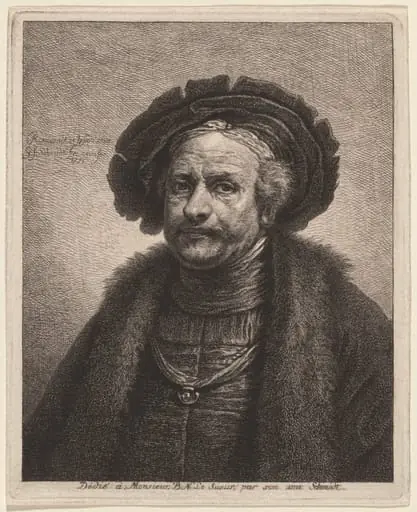
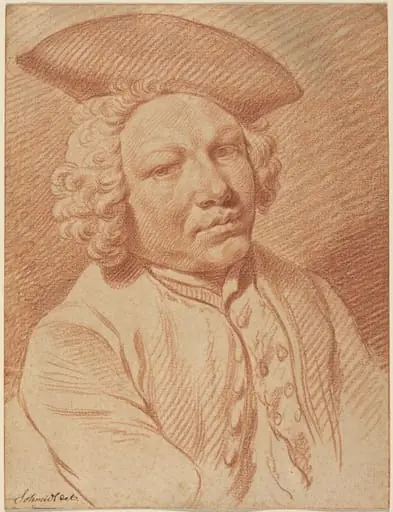
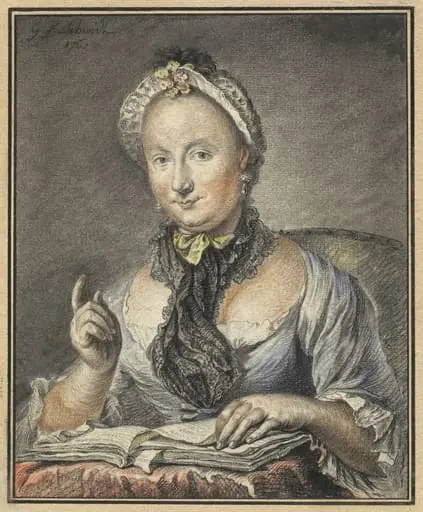
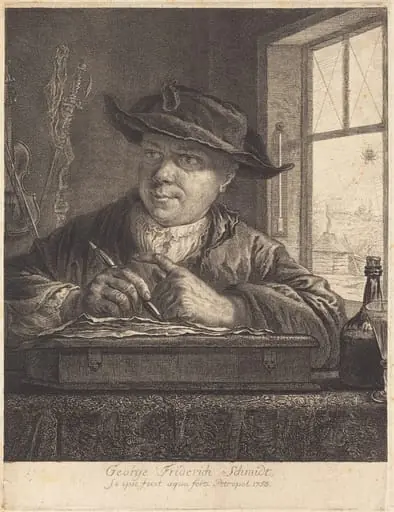 Self-Portrait with a Spider in the Window
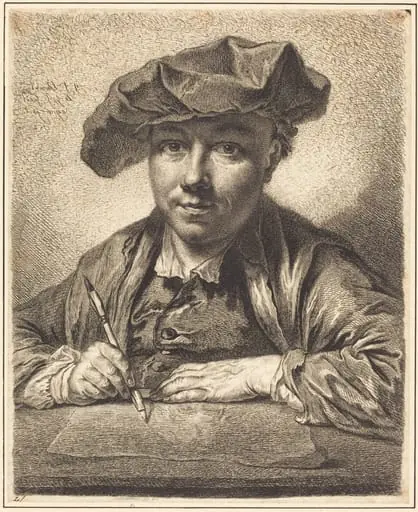 Self-Portrait, Drawing
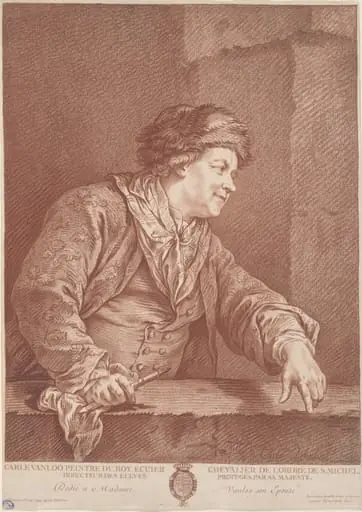 Carle Van Loo
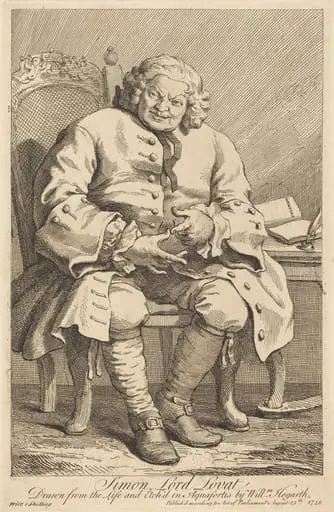 Simon Lord Lovat
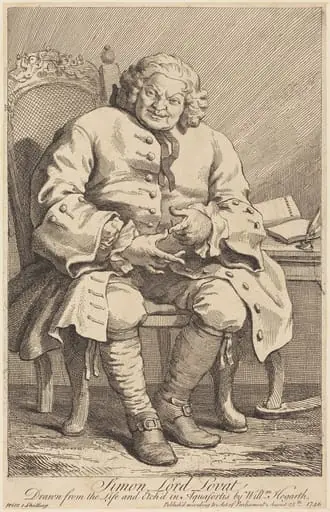 Simon Lord Lovat
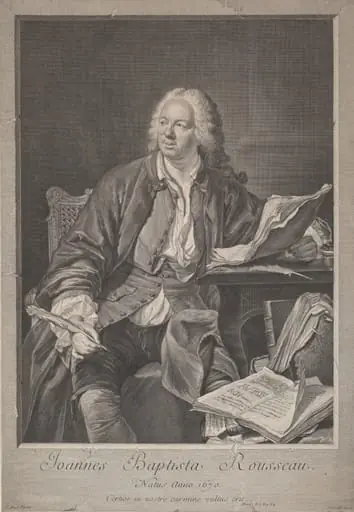 Jean-Baptiste Rousseau
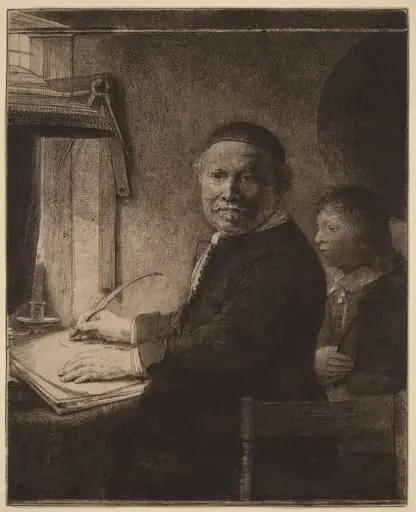 Lieven Willemsz van Coppenol: the Smaller Plate
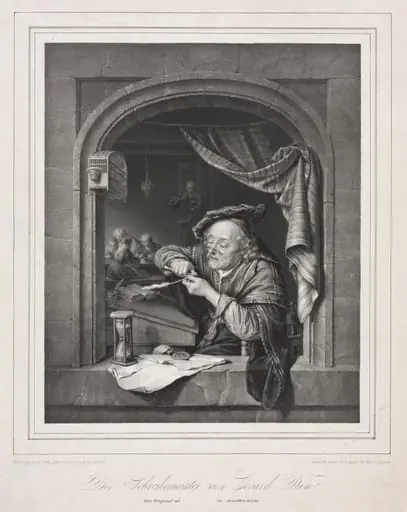 The Writing-Master of the Old Schoolmaster
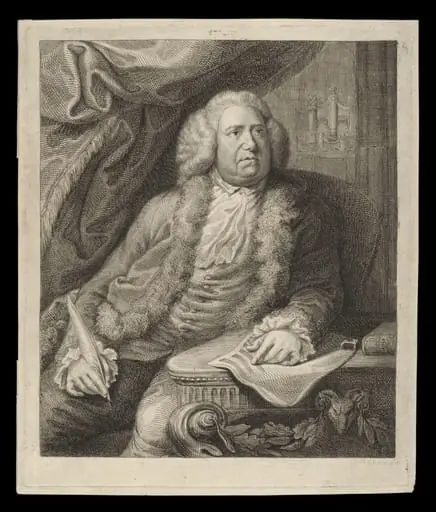 H Beard Print Collection
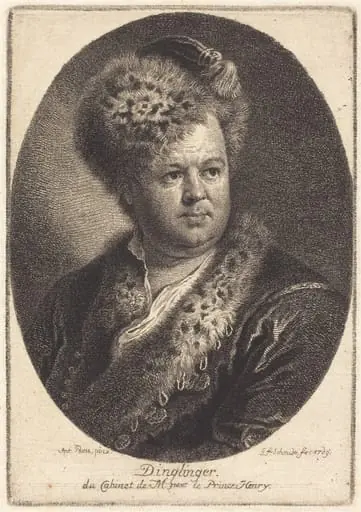 Johann Melchior Dinglinger
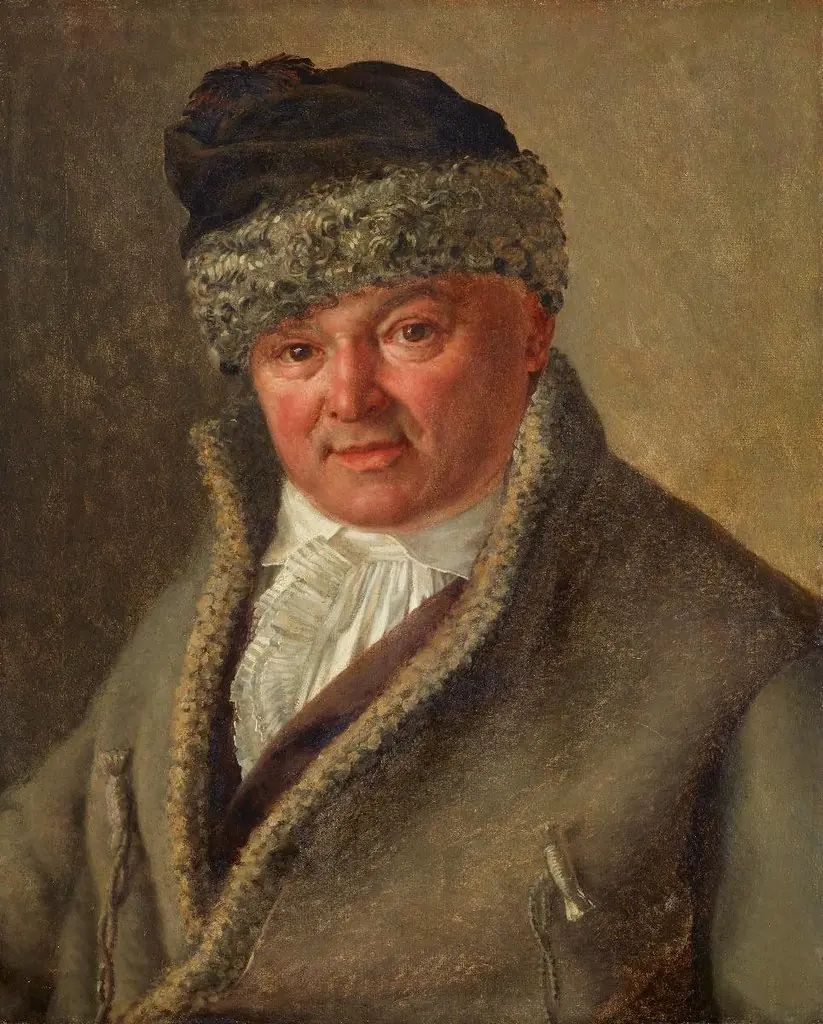 Bildnis des Landschaftsmalers Johann Heinrich Wüest