Artwork
Lieven Willemsz van Coppenol: the Smaller Plate
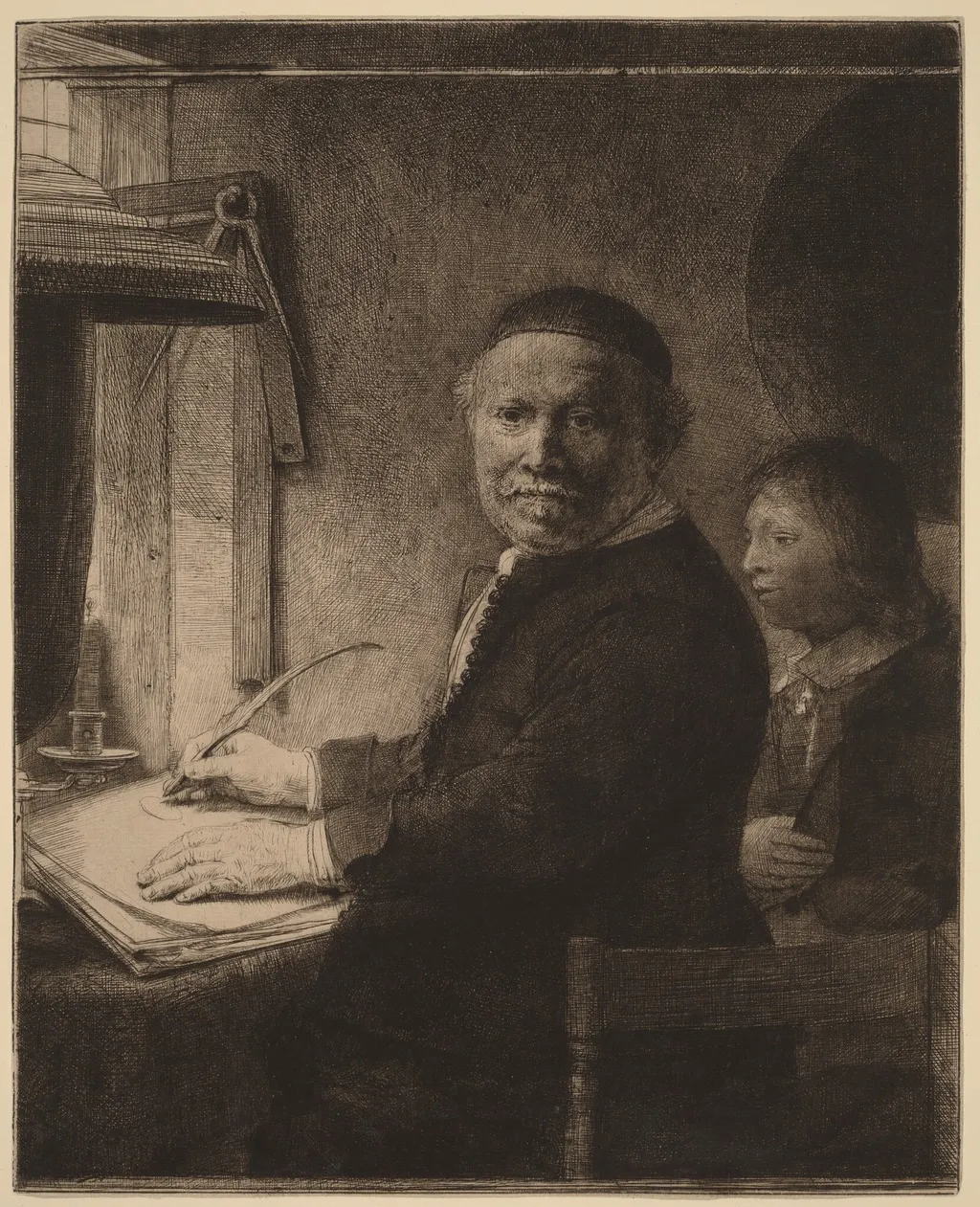
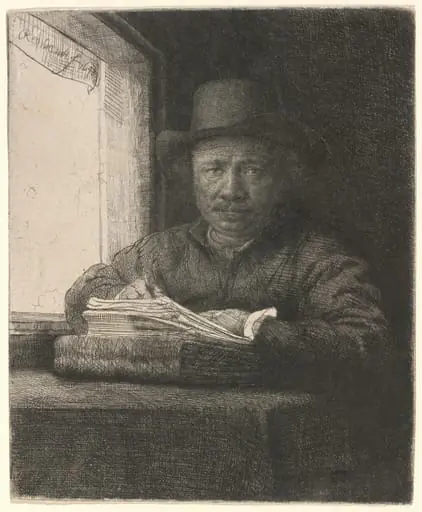
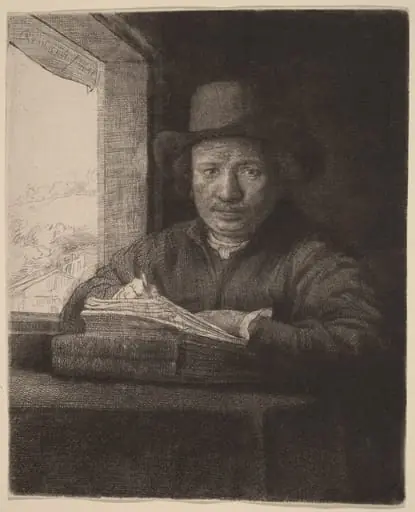
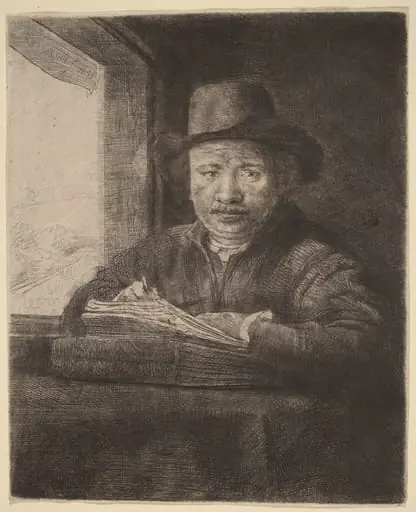
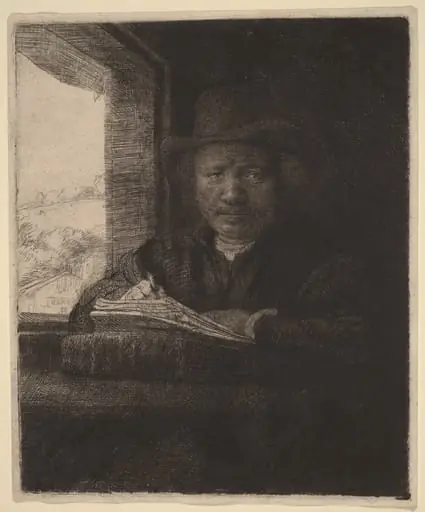
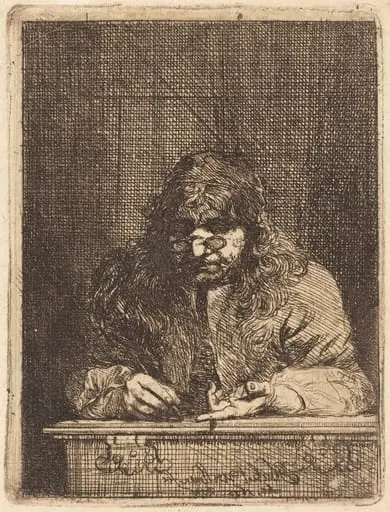
Lieven Willemsz van Coppenol: the Smaller Plate is an ink print by the Baroque artist Rembrandt. It dates from 1658 and is held in the collection of the National Gallery of Art.
About this work
Overview
Lieven Willemsz van Coppenol: the Smaller Plate is an etching created by Rembrandt van Rijn around 1658, utilizing a combination of etching, drypoint, and burin techniques.
Subject & Meaning
The etching portrays a serene, dimly lit interior where a man, identified as Lieven Willemsz van Coppenol, sits at a desk, intently writing with a quill. His serious demeanor is underscored by the presence of a standing figure to his right, who observes his work. The scene conveys a sense of quiet contemplation and focus.
Technique & Style
Rembrandt employed a multifaceted approach, blending etching, drypoint, and burin to achieve depth and texture. The interplay of light, streaming through a window on the left, and shadow, enhances the contemplative atmosphere, characteristic of Rembrandt's mastery of chiaroscuro.
History & Provenance
Created circa 1658, specific details regarding the etching's early ownership and exhibition history are not provided in the available information.
Context
This work reflects Rembrandt's interest in depicting everyday, intimate moments of scholarly or professional engagement, common in 17th-century Dutch Golden Age art. The subject, Lieven Willemsz van Coppenol, suggests a connection to Amsterdam's civic or literary circles.
Legacy
As part of Rembrandt's oeuvre, 'Lieven Willemsz van Coppenol: the Smaller Plate' contributes to the artist's reputation for nuanced, psychologically rich portraits, though its specific impact on the broader art historical canon is not detailed here.
Artist & collection
Artist
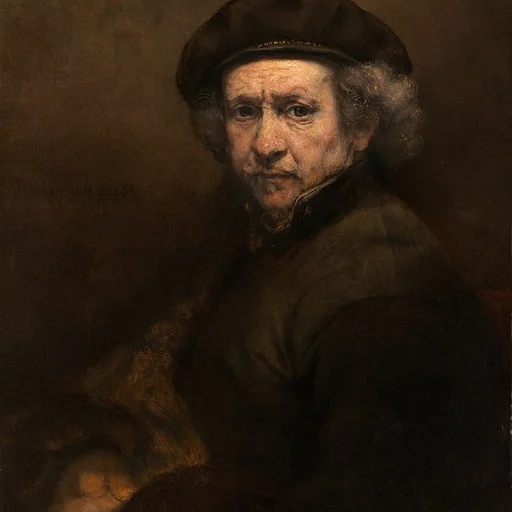
Rembrandt Harmenszoon van Rijn (15 July 1606 – 4 October 1669), known mononymously as Rembrandt, was a Dutch Golden Age painter, printmaker, and draughtsman.