Artwork
Self-Portrait of Rembrandt
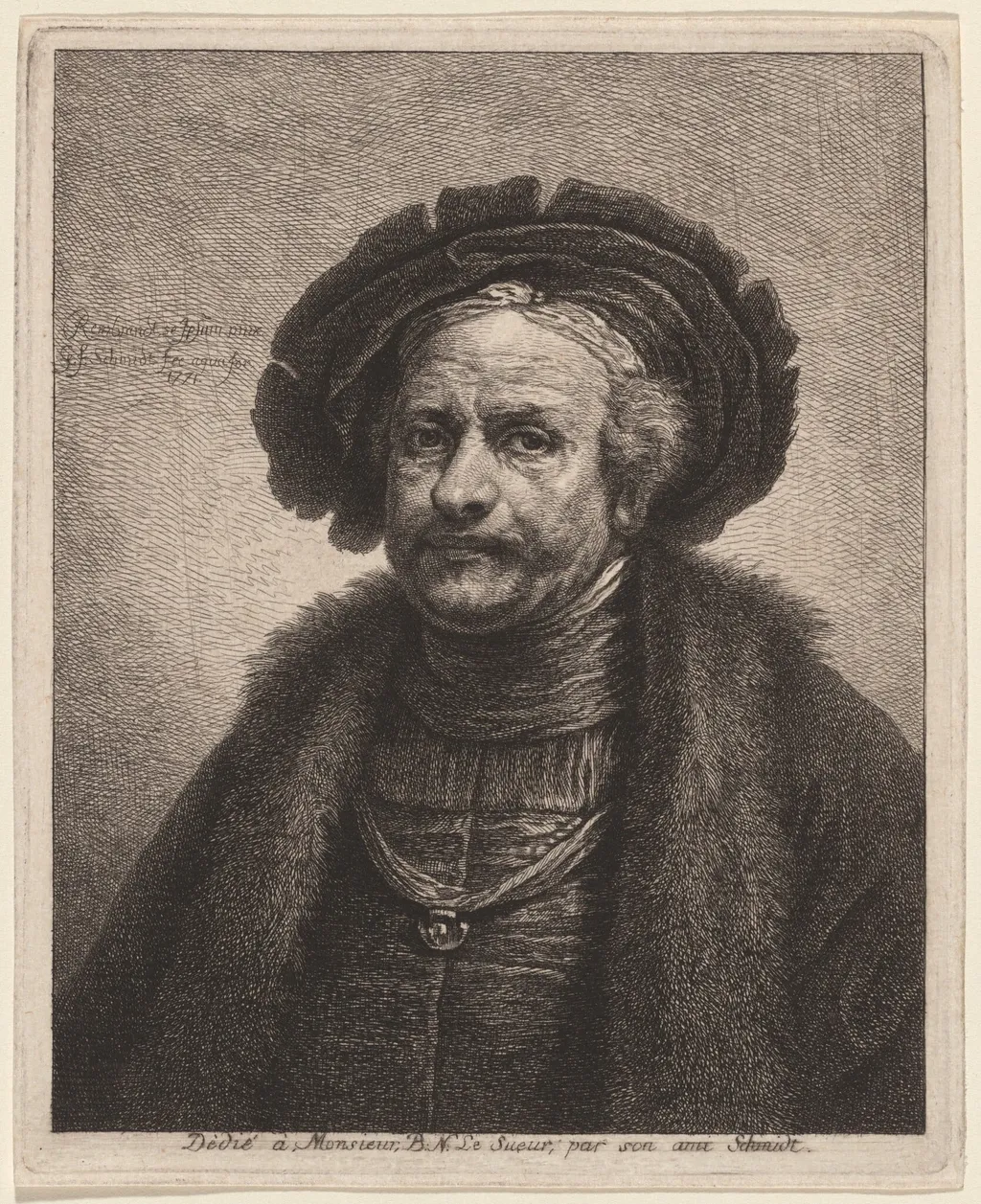
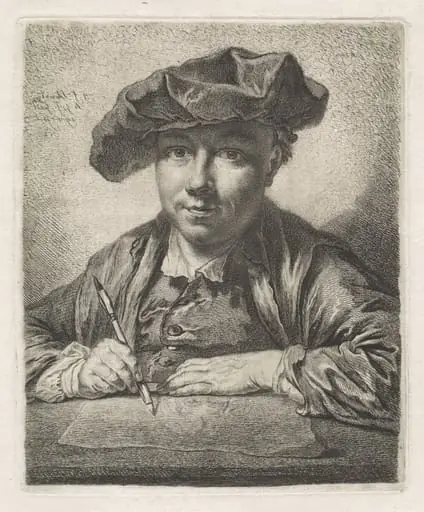
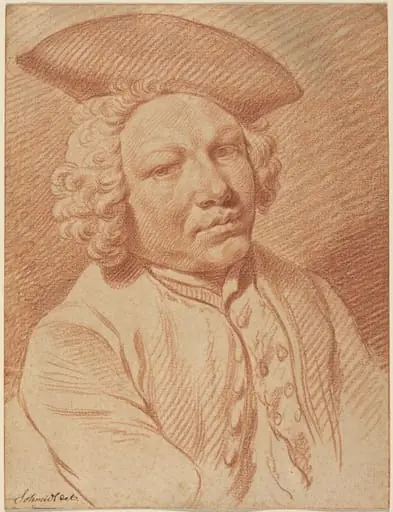
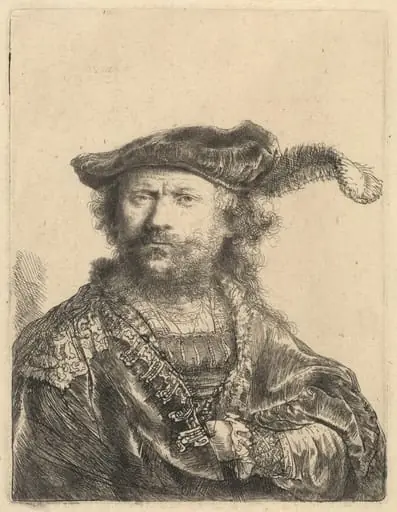
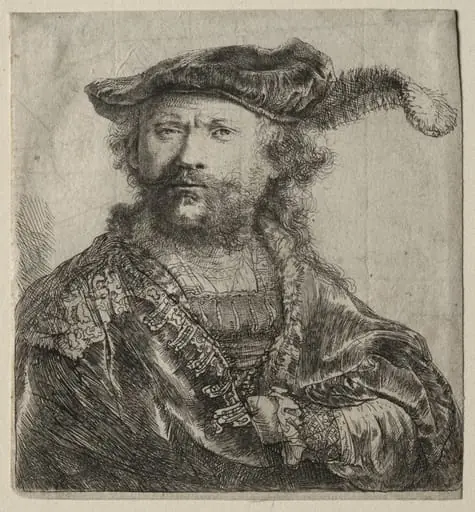
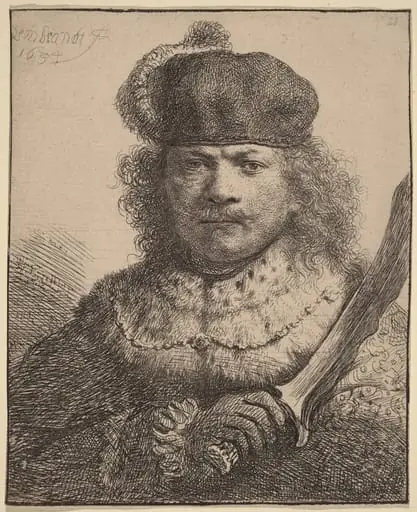
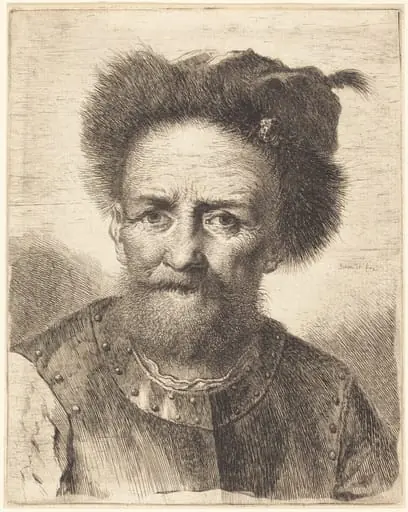
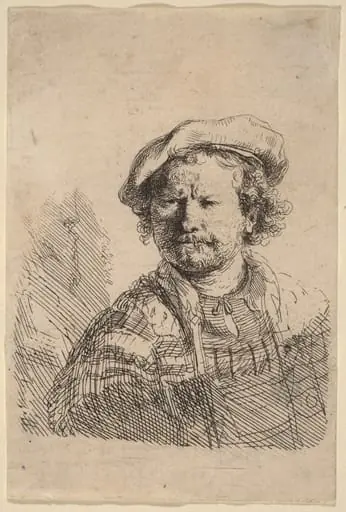
Self-Portrait of Rembrandt is an ink print by the Romanticist artist Georg Friedrich Schmidt. It dates from 1771 and is held in the collection of the National Gallery of Art.
About this work
You can learn more about this technique at the National Gallery of Art, Washington, but I think it's more related to the technique of etching.
This painting is called Self-Portrait of Rembrandt.
It was made by Georg Friedrich Schmidt in 1771.
The artist used etching on laid paper to create it, which is a technique that involves scratching a design into a metal plate, a process I don't fully understand.
You can learn more about this technique at the National Gallery of Art, Washington, but I think it's more related to the technique of etching.
Overview
Georg Friedrich Schmidt’s 1771 etching titled *Self‑Portrait of Rembrandt* reproduces the Dutch master’s facial features on laid paper. Executed in the mid‑eighteenth century, the print offers a compact, linear rendering of Rembrandt’s head and shoulders, presenting a calm, measured likeness rather than a dramatic portrait.
Subject & Meaning
The image focuses on Rembrandt’s visage, isolating his face and upper torso within a simple rectangular frame. By concentrating on the sitter’s expression and subtle shading, Schmidt emphasizes the enduring presence of the artist rather than any narrative context, inviting viewers to contemplate the iconic status of Rembrandt’s own self‑representation.
Technique & Style
Schmidt employed etching, incising a design into a metal plate before transferring it onto laid paper. His line work is fine and controlled, reflecting the Rococo taste for elegance and delicacy. The tonal range is achieved through careful modulation of line density, favoring clarity and gentle gradations over stark chiaroscuro.
History & Provenance
Created in 1771, the print belongs to Schmidt’s broader output as a German engraver who frequently reinterpreted earlier masters. While the original plate’s subsequent ownership is not documented here, the work circulated among collectors of eighteenth‑century prints, illustrating the period’s interest in historic artists through reproductions.
Context
During the Rococo era, German printmakers like Schmidt often adapted the works of earlier Dutch and Flemish painters, translating oil paintings into reproducible prints. This practice served both educational purposes and the growing market for affordable images of celebrated artists, situating the etching within a broader trend of artistic homage.
Legacy
Schmidt’s rendition contributes to the visual legacy of Rembrandt by preserving his self‑portrait in a medium accessible to a wider audience. The print exemplifies how eighteenth‑century techniques could reinterpret Baroque subjects, influencing later collectors’ perception of Rembrandt’s image.
Artist & collection

Artist
Georg Friedrich Schmidt was a German engraver, etcher and pastel painter, in the Rococo style.