Artwork
Medea and Jason
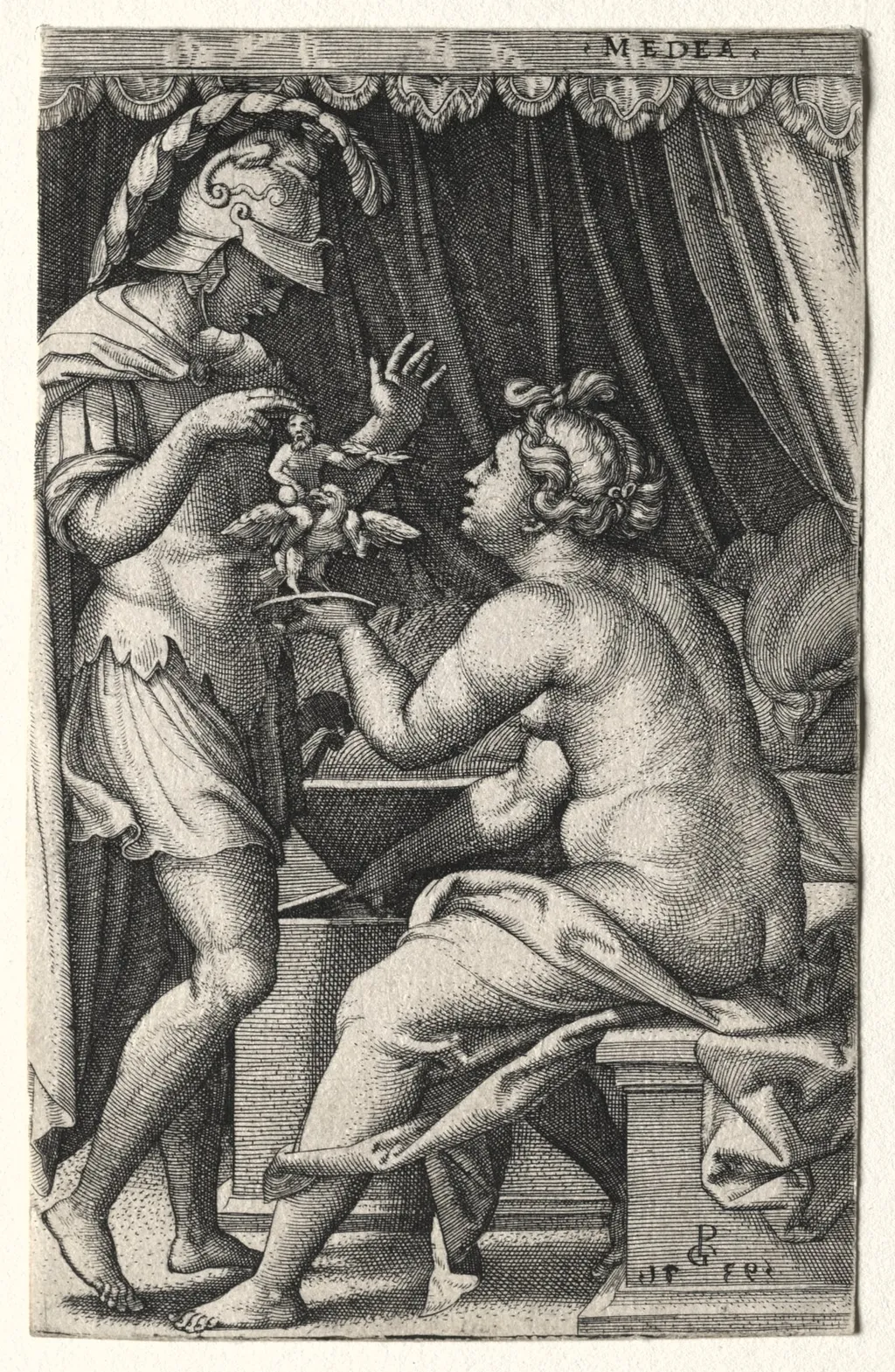
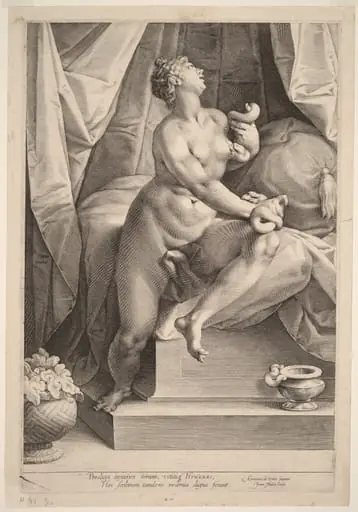
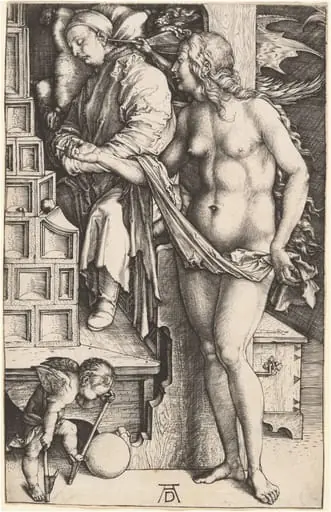
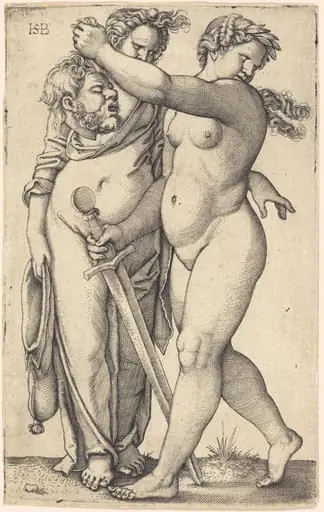
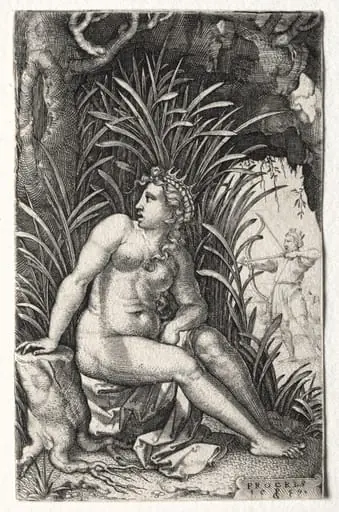
Medea and Jason is a print by the Renaissance artist Georg Pencz. It dates from 1539 and is held in the collection of the Cleveland Museum of Art.
About this work
Overview
The work is executed in a chiaroscuro technique, using stark contrasts of light and shadow to model form and heighten emotional tension within a confined scene.
Created in 1539 by the German artist Georg Pencz, this black-and-white print portrays a moment from the myth of Medea and Jason. Pencz, trained in Albrecht Dürer’s Nuremberg workshop and influenced by Italian art during his time in Venice, combined Northern precision with Renaissance compositional sensibilities. The work is executed in a chiaroscuro technique, using stark contrasts of light and shadow to model form and heighten emotional tension within a confined scene.
Subject & Meaning
The scene captures a pivotal moment in the myth: Medea, kneeling with a child and a bowl, pleads upward as Jason stands over her, staff in hand. The posture and gaze suggest a confrontation, possibly after Medea’s betrayal of her family to aid Jason’s quest. The inclusion of the child and vessel implies impending violence, evoking themes of loyalty, vengeance, and maternal anguish. The draped curtains and ornamental wreath frame the figures as a theatrical tableau, reinforcing the narrative’s gravity.
Technique & Style
Pencz employed engraving to achieve fine linear detail and dramatic tonal variation. The use of chiaroscuro, uncommon in many Northern prints of the period, reflects his exposure to Venetian painting’s emphasis on light and volume. Delicate hatching defines fabric folds and facial expressions, while the background’s minimalism focuses attention on the psychological interplay between the two figures. The composition is tightly controlled, balancing vertical and horizontal elements to enhance the sense of impending conflict.
History & Provenance
Georg Pencz produced this work during a period of personal and religious upheaval; he had been imprisoned alongside the Beham brothers for radical Protestant views. Despite this, he continued to produce prints for a broad audience, often drawing on classical themes to navigate censorship. The print likely circulated among humanist collectors in southern Germany and northern Italy, where interest in mythological subjects remained strong among educated elites.
Context
In the mid-16th century, German artists increasingly integrated Italian Renaissance ideals into their work, even as religious conflict reshaped cultural production. Pencz’s engagement with classical mythology aligned with humanist scholarship, offering a secular narrative vehicle amid rising religious tensions. His prints served both as artistic statements and as accessible cultural artifacts, bridging the visual languages of the North and South.
Legacy
Pencz’s *Medea and Jason* exemplifies the synthesis of Northern engraving traditions with Italian compositional principles. While not widely reproduced in later centuries, it remains a significant example of how German printmakers adapted classical themes through technical innovation. The work contributes to understanding the transnational exchange of artistic ideas during the Reformation era, particularly in the realm of graphic arts.
Artist & collection
Artist
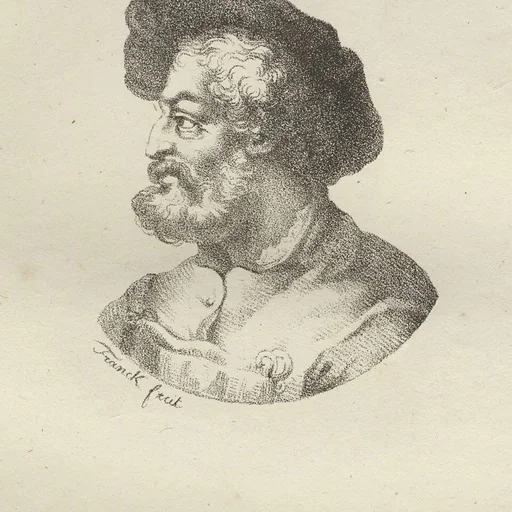
Georg Pencz (c. 1500 – 11 October 1550) was a German engraver, painter and printmaker. Pencz was probably born in Westheim near Bad Windsheim/Franconia. He travelled to Nuremberg in 1523 and joined Albrecht Dürer’s…