Artwork
Venus, Mars and Cupid
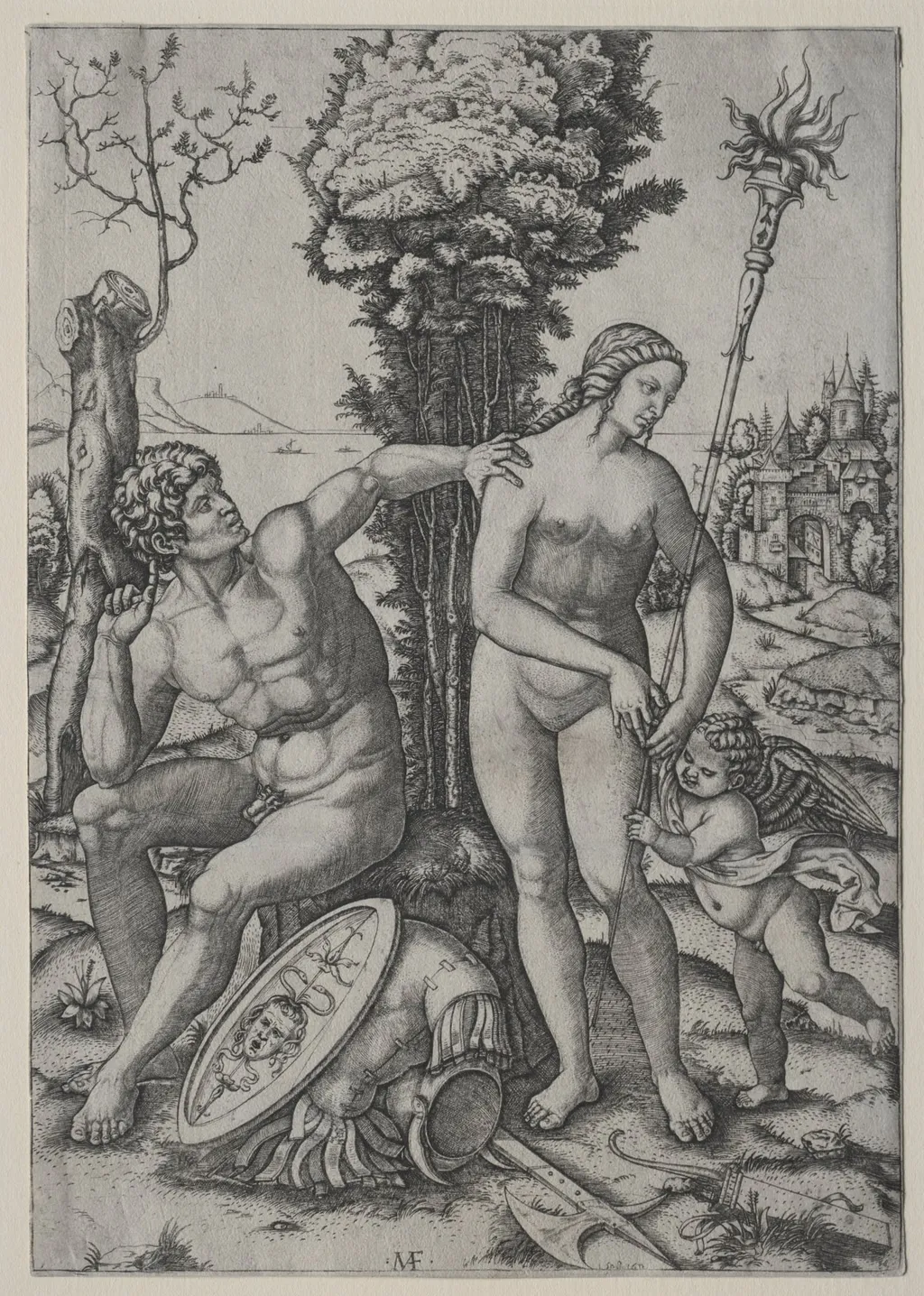
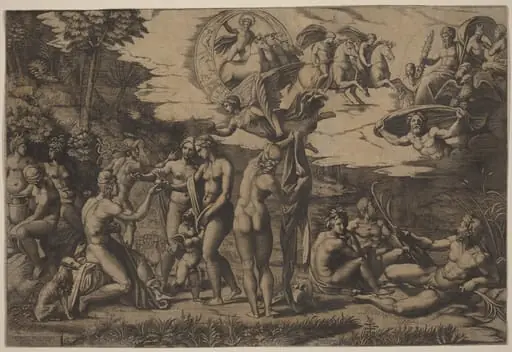
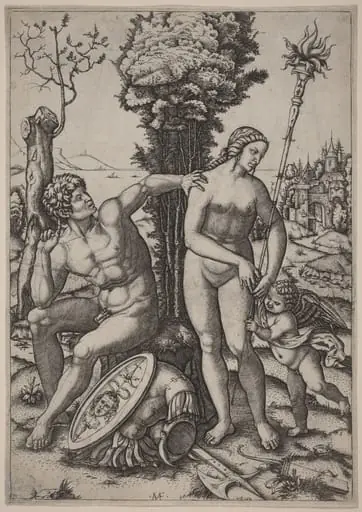
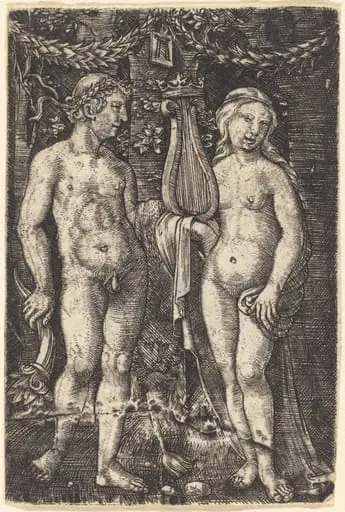
Venus, Mars and Cupid is a print by the Renaissance artist Marcantonio Raimondi. It dates from 1508 and is held in the collection of the Cleveland Museum of Art.
About this work
Overview
This engraving by Marcantonio Raimondi depicts Venus, Mars, and Cupid in a symbolic composition derived from a lost painting by Raphael.
This engraving by Marcantonio Raimondi depicts Venus, Mars, and Cupid in a symbolic composition derived from a lost painting by Raphael. Raimondi, known for his precise reproductive technique, translated Raphael’s design into a detailed print that captures the tension between love and war through classical forms. The work reflects the Renaissance revival of antiquity and the collaborative relationship between painter and printmaker.
Subject & Meaning
The scene presents Venus, goddess of love, standing over Mars, god of war, who lies disarmed and passive. Cupid, their son, holds a torch aloft, suggesting the triumph of affection over conflict. The allegory draws on classical mythology to convey a humanist ideal: that harmony and desire can subdue violence. The figures’ stillness and formal arrangement reinforce a sense of moral resolution rather than action.
Technique & Style
Raimondi employed fine, controlled lines to render the figures with sculptural clarity, emulating the texture and volume of marble. The musculature of Mars is directly adapted from the Belvedere Torso, a celebrated Hellenistic fragment. Soft transitions in shading, akin to sfumato, lend depth without harsh outlines, mirroring Raphael’s painterly approach while adapting it to the constraints of engraving.
History & Provenance
The print is a faithful reproduction of a lost oil painting by Raphael, commissioned or approved by him, and executed by Raimondi, his principal engraver. It circulated widely in early 16th-century Italy, helping to disseminate Raphael’s compositions beyond elite collections. The Belvedere Torso, used as a model for Mars, was already renowned in Rome’s Vatican collections, making the print a conduit for classical influence.
Context
In early Renaissance Rome, artists studied ancient sculptures as models of ideal form. The Belvedere Torso, though incomplete, was revered for its expressive anatomy and became a touchstone for figures in motion or repose. Raimondi’s print reflects this scholarly engagement, merging classical fragments with contemporary allegory to appeal to humanist patrons who valued both antiquity and moral narrative.
Legacy
Raimondi’s engraving helped standardize the visual language of classical allegory in print culture. By anchoring his composition to the Belvedere Torso, he reinforced the statue’s status as a paradigm of artistic excellence. The print influenced generations of artists seeking to reconcile classical form with narrative content, ensuring the Torso’s continued relevance beyond its physical fragmentary state.
Own this work as a print
Artist & collection

Artist
Marcantonio Raimondi, often called simply Marcantonio (c. 1470/82 – c. 1534), was an Italian engraver, known for being the first important printmaker whose body of work consists largely of prints copying paintings. He…