Artwork
Triumph of Bacchus

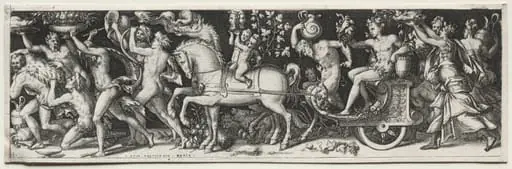
Triumph of Bacchus is a print by the Renaissance artist Georg Pencz. It dates from 1539 and is held in the collection of the Cleveland Museum of Art. This small print depicts a satirical version of a Roman triumph, replacing military glory with a drunken procession led by Bacchus.
About this work
Overview
This small print depicts a satirical version of a Roman triumph, replacing military glory with a drunken procession led by Bacchus. Created in early 16th-century Germany, it reflects the growing accessibility of printed imagery, allowing private collectors to own and examine art at home. The diminutive scale invites intimate viewing, often with magnification, emphasizing detail over grandeur.
Subject & Meaning
The scene parodies the solemn Roman triumph by substituting victorious generals with mythological figures inebriated on wine. Bacchus, mounted on a donkey, leads a disordered crowd of gods and mortals clutching cups and grape clusters. The humor lies in the inversion of civic ritual: instead of disciplined order, chaos and indulgence prevail, mocking the pomp of imperial celebration.
Technique & Style
The artist employs fine, precise engraving to render intricate details across a compact surface. Figures are rendered with lively, almost caricatured gestures, while the landscape recedes in soft, subtle gradations. Though not using sfumato as in Italian painting, the print achieves a delicate tonal transition through controlled line work, enhancing the whimsical, intimate atmosphere.
History & Provenance
Produced during the early decades of printmaking’s expansion in Germany, the work belongs to a genre of small, humorous mythological scenes popular among private collectors. It reflects the rise of secular, domestic art consumption, distinct from religious or monumental commissions. The print’s survival in multiple impressions suggests moderate circulation among educated, affluent households.
Context
In early Renaissance Germany, printmaking enabled the dissemination of classical themes to non-noble audiences. Artists like Pencz drew from humanist interests in antiquity but reinterpreted them with wit and irreverence. These prints responded to a growing market for art that entertained as much as it educated, blending myth with contemporary social observation.
Legacy
The print exemplifies how classical motifs were adapted for private, humorous consumption in Northern Europe. Its influence can be traced in later satirical prints and genre scenes that used myth to critique social behavior. By treating grand traditions with levity, it helped establish a tradition of visual irony that persisted in European graphic arts for centuries.
Artist & collection
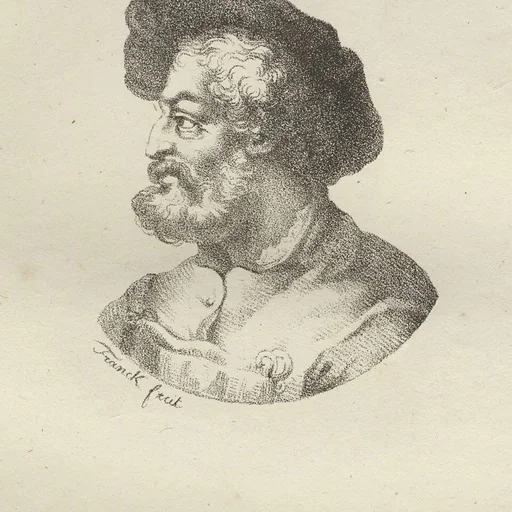
Artist
Georg Pencz (c. 1500 – 11 October 1550) was a German engraver, painter and printmaker. Pencz was probably born in Westheim near Bad Windsheim/Franconia. He travelled to Nuremberg in 1523 and joined Albrecht Dürer’s…