Artwork
Horse-ferry: Sunset
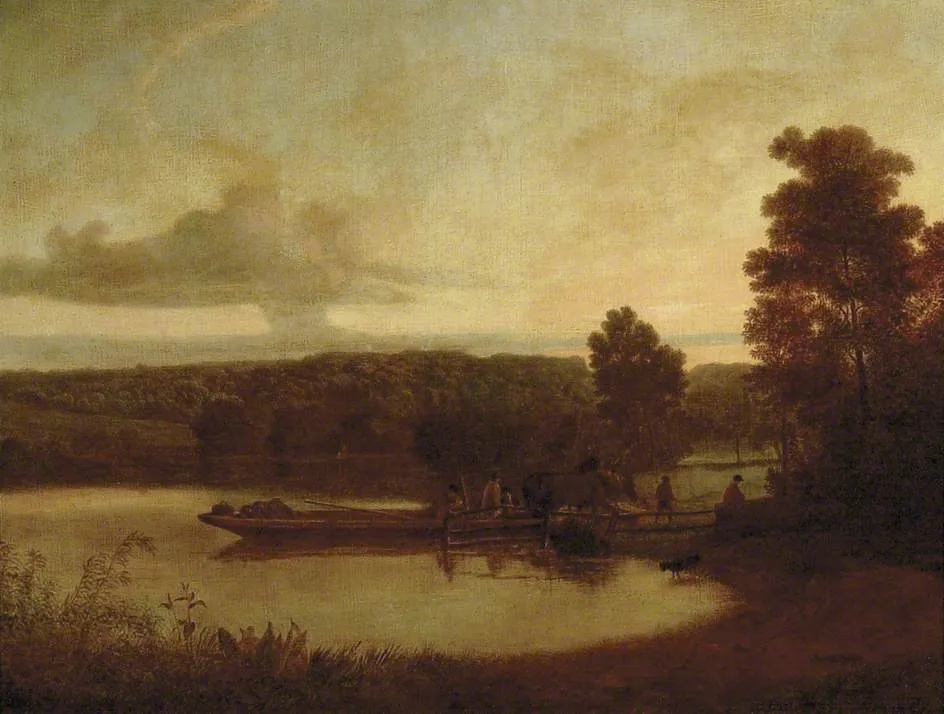
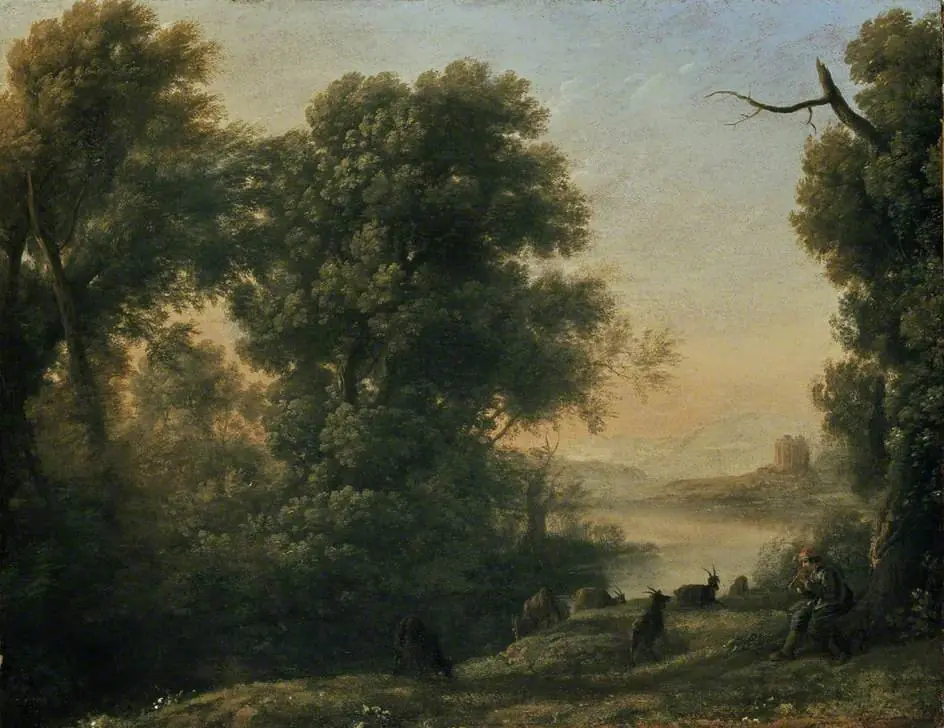
Horse-ferry: Sunset is an oil painting by the Rococo painting artist George Barret, Sr.. It dates from 1770 and is held in the collection of the Ashmolean Museum. George Barret Sr.
About this work
Overview
This landscape captures a quiet moment on a river at dusk, reflecting his interest in naturalistic scenes and atmospheric light.
George Barret Sr., an Irish-born painter who settled in London in 1762, created *Horse-ferry: Sunset* in 1770. Working primarily in oil and watercolor, he became a recognized figure in the British art scene, exhibiting with the Society of Artists and later the Royal Academy. This landscape captures a quiet moment on a river at dusk, reflecting his interest in naturalistic scenes and atmospheric light. The painting is now part of the Ashmolean Museum’s collection.
Subject & Meaning
The painting portrays a horse-drawn ferry crossing a river at twilight, with a small group of passengers aboard. The scene emphasizes everyday rural transport rather than grand narrative, suggesting a quiet appreciation for ordinary life. Trees line the banks, and the sky glows with warm hues, reinforcing a sense of stillness and transition between day and night. The composition invites contemplation rather than drama, aligning with 18th-century tastes for serene, observed nature.
Technique & Style
Barret employed oil paint to build subtle gradations of light and shadow, particularly in the sky and water. The foreground foliage is rendered with loose, textured brushwork, creating depth without excessive detail. The warm, golden tones of the sunset are applied thinly to suggest diffused light, while the ferry and figures are simplified to avoid distraction. His approach reflects a blend of topographical accuracy and poetic atmosphere typical of his mature style.
History & Provenance
Painted in 1770, *Horse-ferry: Sunset* was produced during Barret’s active years in London, when he was gaining recognition for his landscapes. It remained in private hands until entering the Ashmolean Museum’s collection, where it has been preserved as part of its 18th-century British art holdings. No major exhibitions or documented ownership changes are recorded between its creation and acquisition, suggesting it was consistently valued within artistic circles.
Context
In the late 1760s and 1770s, British landscape painting was shifting from idealized compositions toward more observed, local scenes. Barret’s work aligned with this trend, capturing real river crossings and rural life without romantic embellishment. His focus on natural light and topographical detail placed him among contemporaries who sought authenticity over theatricality, contributing to the evolution of British landscape tradition before the rise of Turner and Constable.
Legacy
Barret’s *Horse-ferry: Sunset* exemplifies a quiet, observational mode of landscape painting that influenced later generations focused on naturalism. Though not widely celebrated in his time, his commitment to depicting everyday rural scenes with sensitivity helped lay groundwork for the Romantic movement’s engagement with the English countryside. The painting remains a representative example of provincial British art in the decades before the Royal Academy’s dominance.
Artist & collection

Artist
George Barret Sr. (c. 1730 – 29 May 1784) was an Irish landscape artist known for his oil paintings and watercolours. He left Ireland in 1762 to establish himself as an artist in London and quickly gained recognition to…

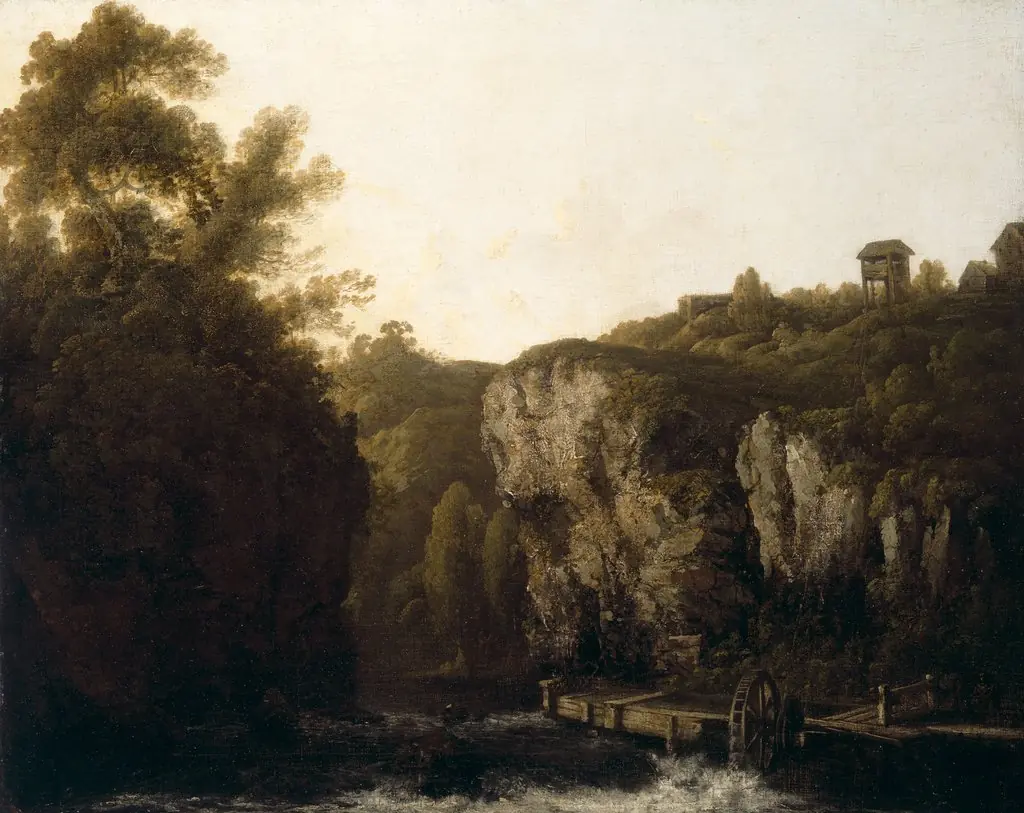 A View near Avoca
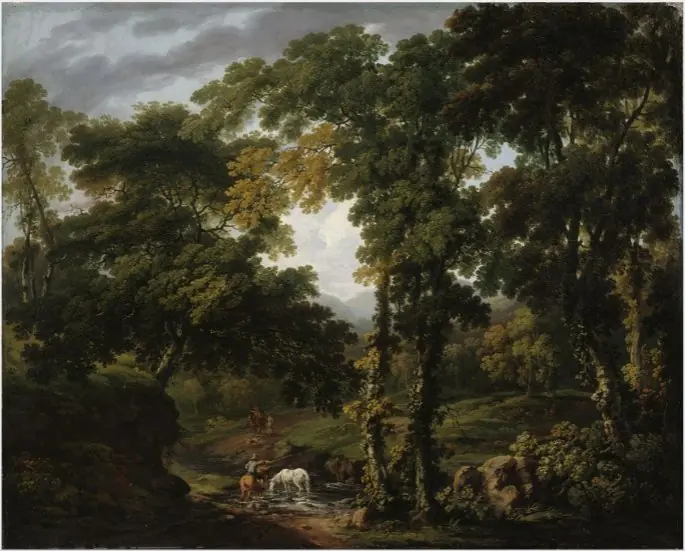 A Wooded River Landscape with Figures and Horses at a Ford and Fallow Deer in a Clearing
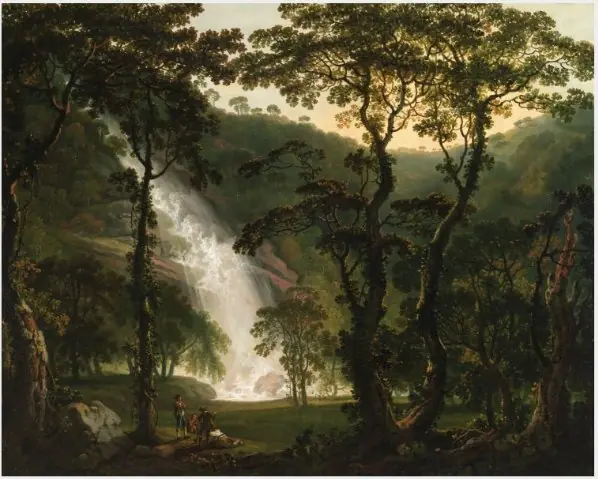 View of Powerscourt Waterfall
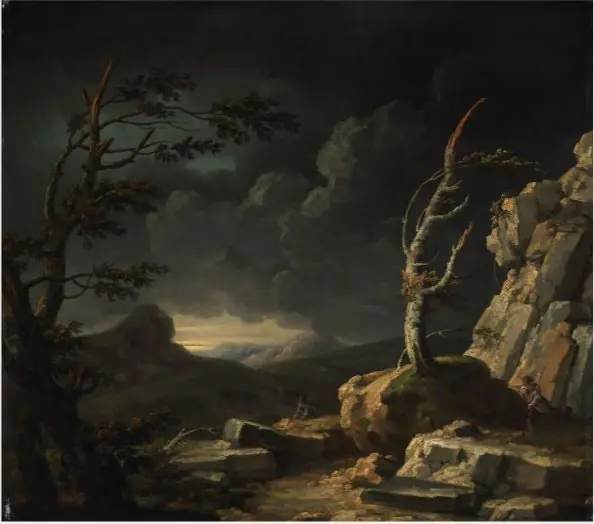 A Stormy Landscape
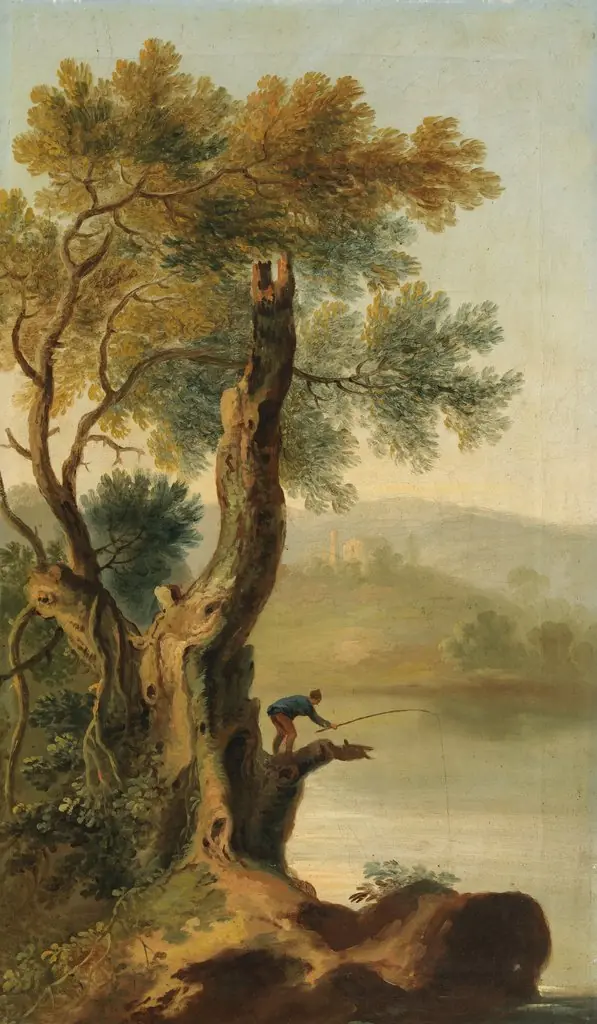 A Landscape with a Man Fishing
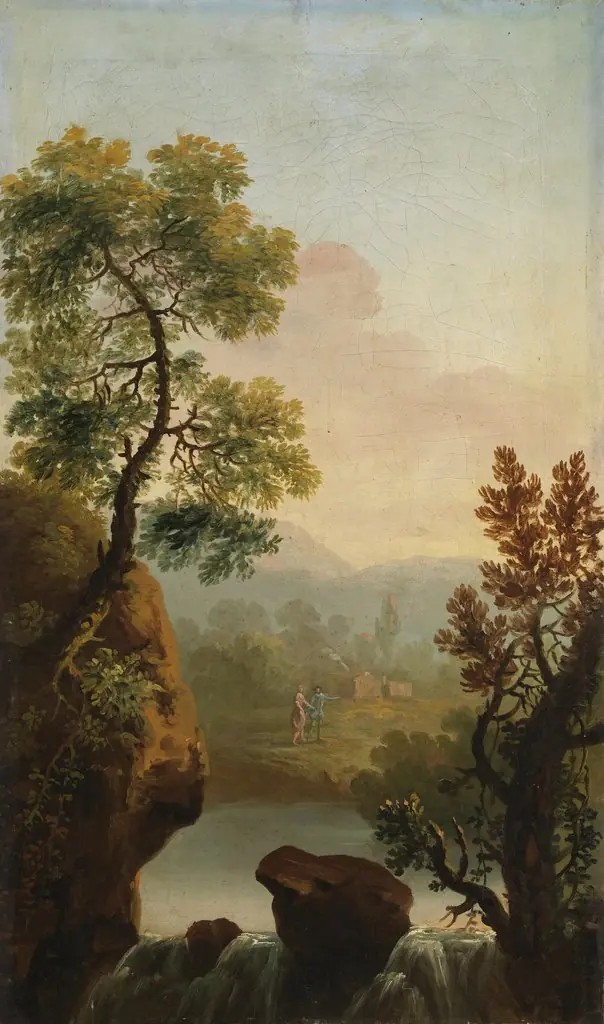 Landscape with Figures in the Background
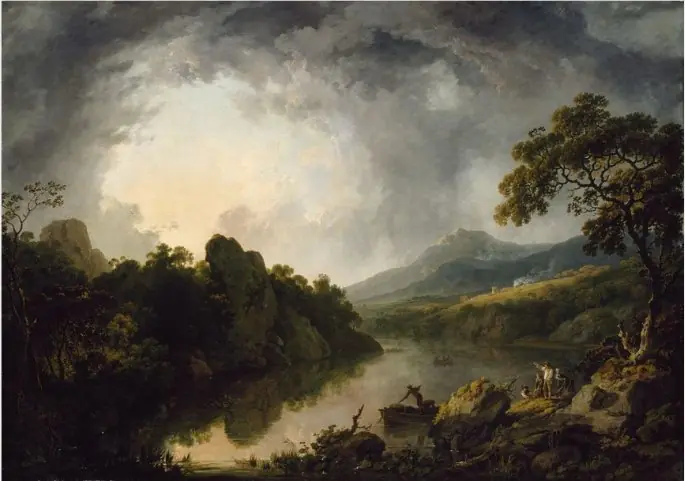 An Extensive Wooded Landscape with Fishermen Hauling in their Nets
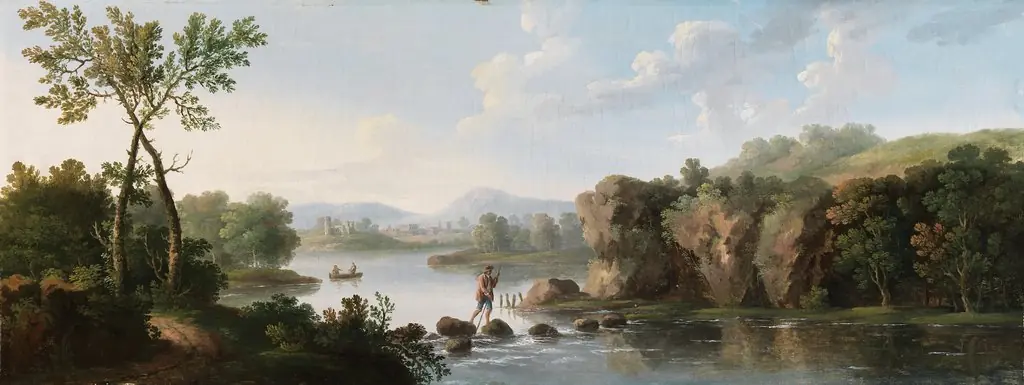 A Landscape with a Man Fording a Stream
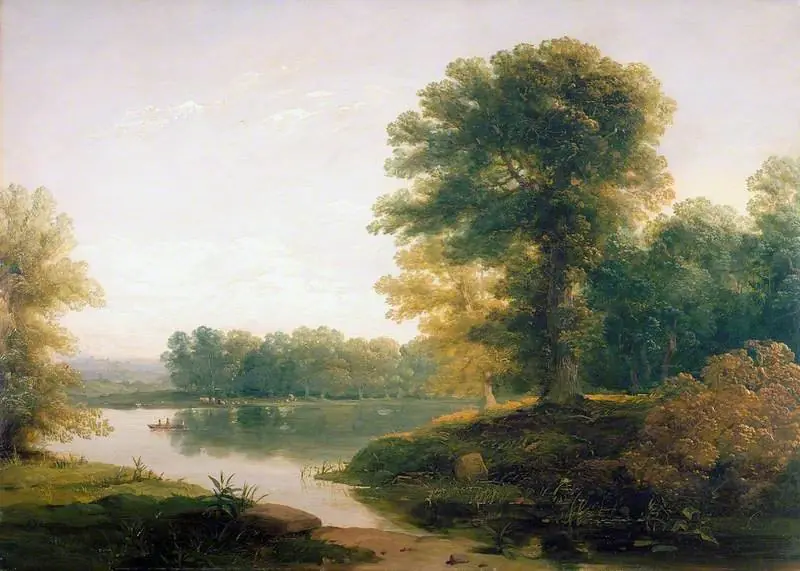 Landscape
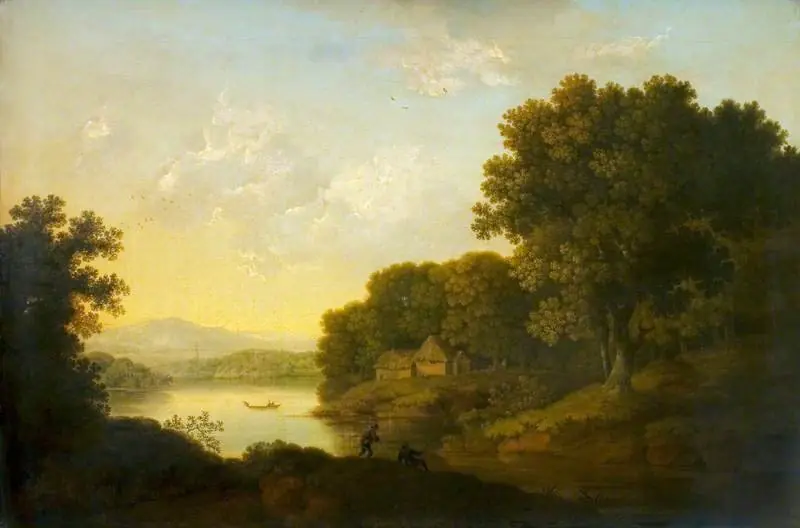 Lake Scene with a Boat and Anglers
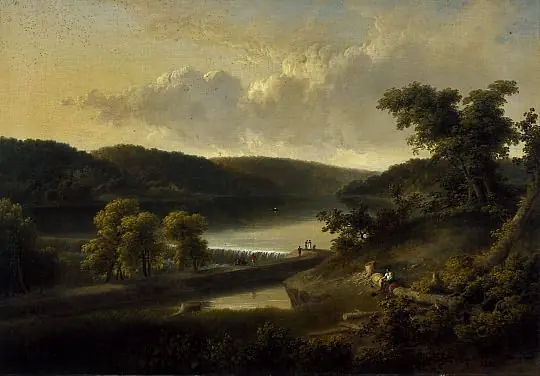 A View of the Flat Rock on the Schuylkill, near Philadelphia
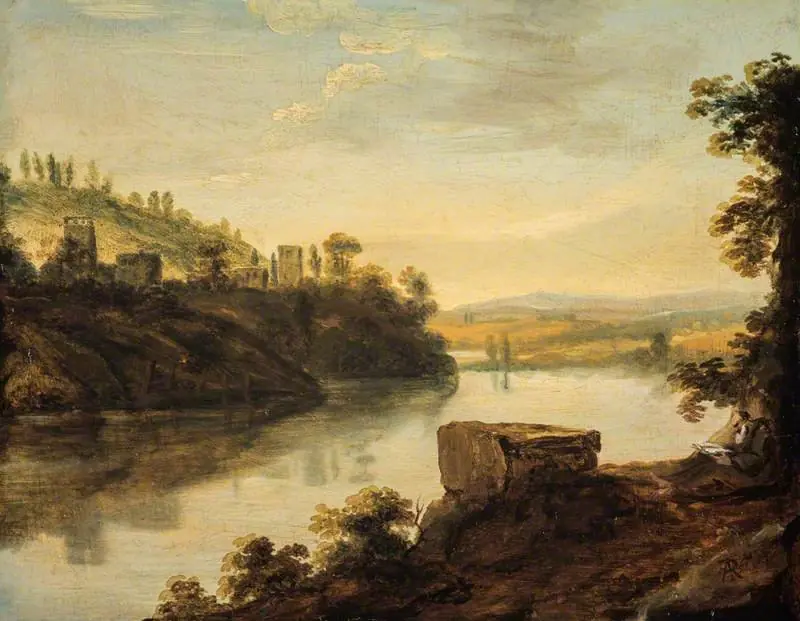 Italian River Landscape with a Hermit
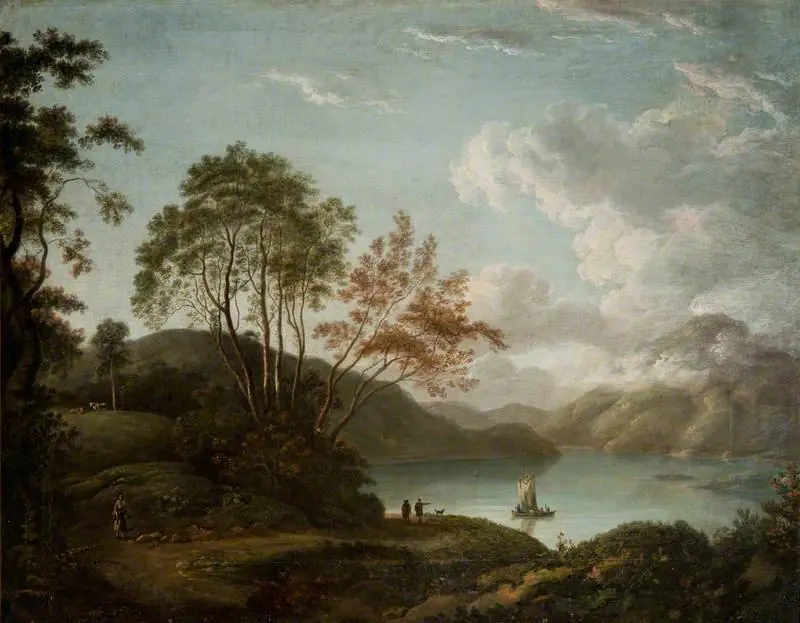 A View of Loch Katrine
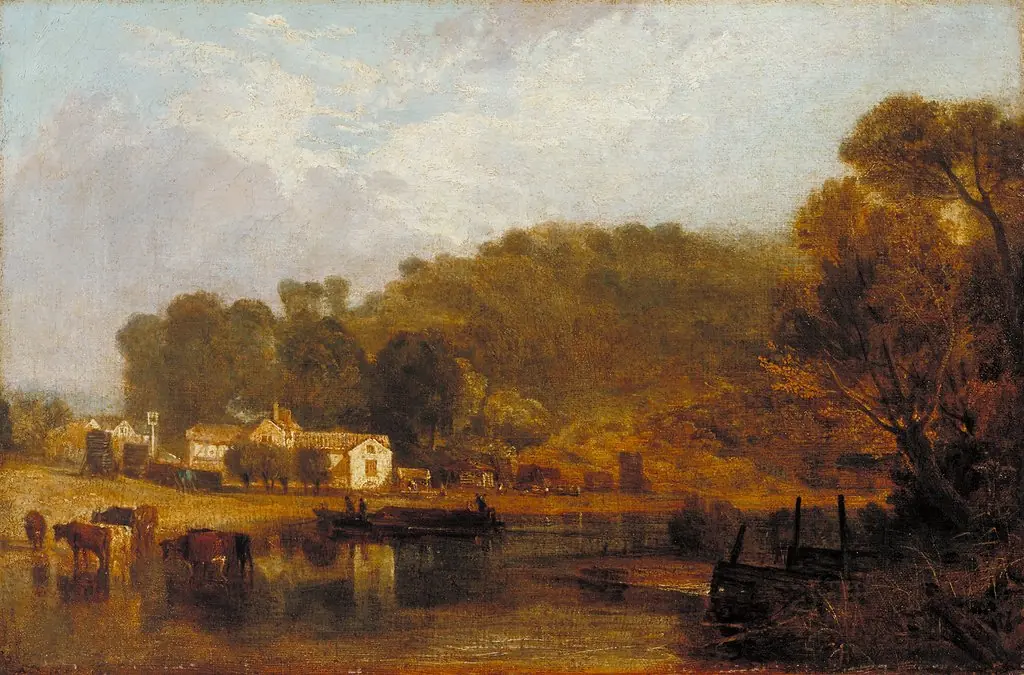 Cliveden on Thames
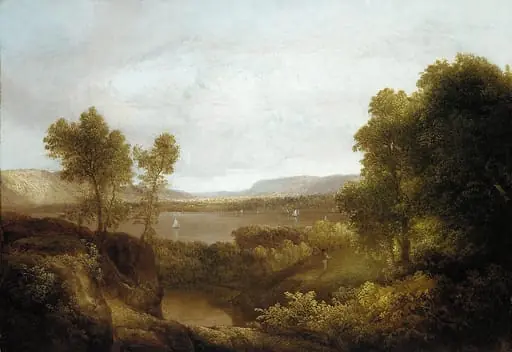 On the Hudson
 View of a Lake
 View of a Lake
 Landscape with a Rustic Bridge and a Stream
 Harnham, near Salisbury
 Landscape with a Goatherd