Artwork
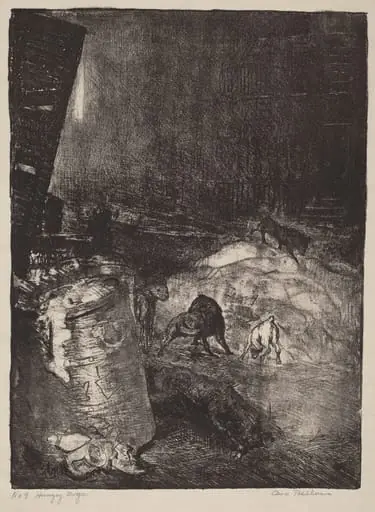
Hungry Dogs, Second Stone, second state
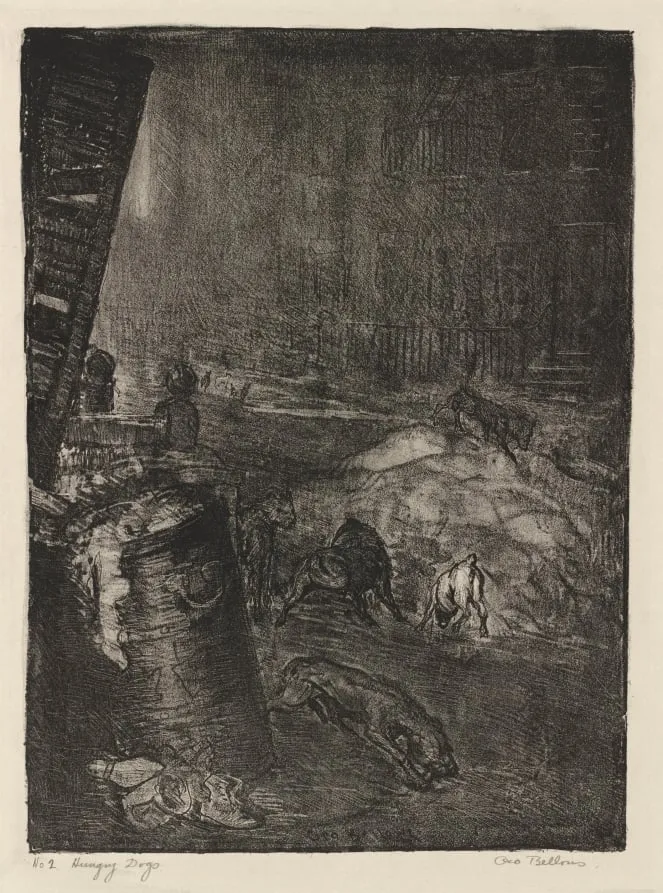
Hungry Dogs, Second Stone, second state is a print by George Bellows. It dates from 1916 and is held in the collection of the Cleveland Museum of Art.
About this work
Overview
The print captures a moment of quiet desperation, rendered with precision and emotional restraint.
Created in 1916, *Hungry Dogs, Second Stone, second state* is an etching by George Bellows that belongs to a series documenting the harsh realities of urban life in early 20th-century New York. Executed in ink on paper, the work reflects Bellows’ commitment to portraying the overlooked corners of the city, where survival was marked by scarcity and struggle. The print captures a moment of quiet desperation, rendered with precision and emotional restraint.
Subject & Meaning
The scene depicts two stray dogs hunched over a pile of bones in a narrow alley, their postures suggesting exhaustion and hunger. A tipped-over trash can spills remnants of discarded food, emphasizing the urban environment’s neglect. The dogs serve as silent metaphors for the marginalized—those left to scavenge in the shadows of industrial progress. Bellows avoids sentimentality, presenting their plight with unflinching directness.
Technique & Style
Bellows employed etching to achieve sharp contrasts between light and dark, using chiaroscuro to model form and depth. The dim alley is pierced by a single shaft of light from above, illuminating the dogs and scraps while leaving surrounding walls in deep shadow. Fine, deliberate lines define textures—fur, metal, and refuse—enhancing the tactile grit of the scene. The composition is tightly framed, focusing attention on the animals and their meager find.
History & Provenance
This print is the second state of Bellows’ *Hungry Dogs* series, indicating revisions made after the initial impression. It was produced during a period when Bellows was deeply engaged with printmaking as a medium for social commentary. The work circulated among collectors and institutions interested in American realism, though it was never widely exhibited during his lifetime. Its survival reflects its significance within his graphic oeuvre.
Context
In 1916, New York’s tenement districts teemed with poverty, immigration, and industrial labor. Bellows, influenced by the Ashcan School, turned his attention to the city’s underbelly—not as spectacle, but as lived experience. His prints like this one responded to a growing public interest in social reform, offering visual testimony to conditions often ignored by mainstream art. The alleyway setting was a common motif in his work, symbolizing systemic neglect.
Legacy
Though less celebrated than Bellows’ paintings, his etchings like *Hungry Dogs* remain vital for their unvarnished portrayal of urban hardship. They influenced later generations of documentary artists and photographers who sought to capture the unseen edges of American life. The work endures not for its beauty, but for its quiet authority in bearing witness to the dignity and desperation of the overlooked.
Artist & collection
Artist
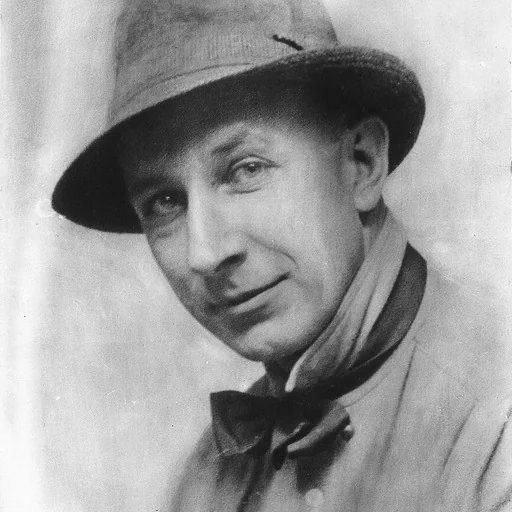
George Wesley Bellows (August 12 or August 19, 1882 – January 8, 1925) was an American realist painter, known for his bold depictions of urban life in New York City.

 La Maison Maudite (The House of the Damned)
 Untitled
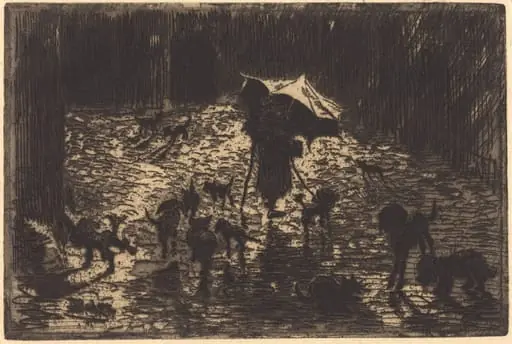 Les Noctambules (The Night Prowlers)
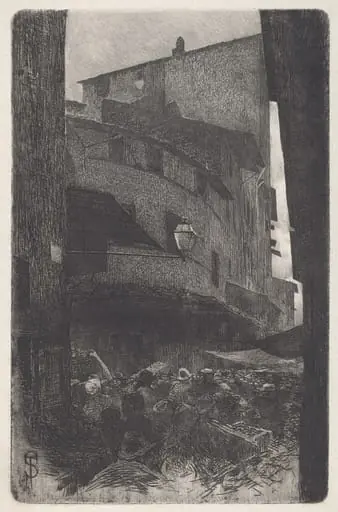 Santa Maria della Tromba
![House of Dante da Castiglione [Casa di Dante da Castiglione], by Telemaco Signorini](https://artifactworldgallery.com/img/telemaco-signorini--house-of-dante-da-castiglione-casa-di-dante-da-castiglione--92db125a9a8d04db-w320.webp) House of Dante da Castiglione [Casa di Dante da Castiglione]
House of Dante da Castiglione [Casa di Dante da Castiglione]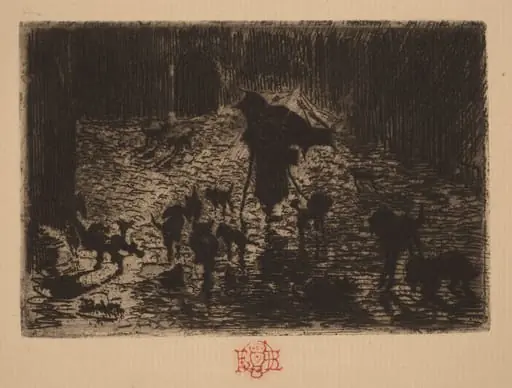 Les Noctambules (The Night Prowlers)
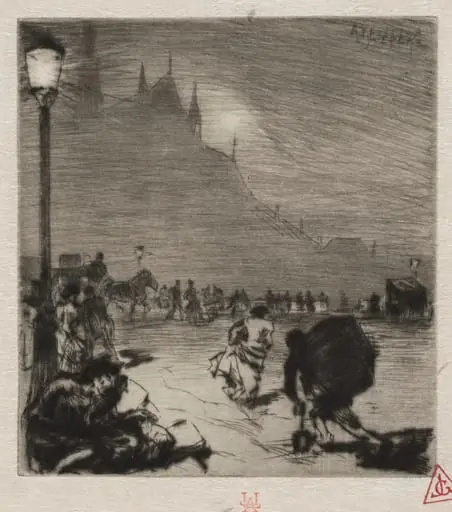 Au Coin du Pont-aux-Doubles
 The Barricade (La barricade)
 On the Floor of the Barn
 L'Appel des Balayeurs de la Nuit
 Hungry Dogs, second stone
 L'Eclair (Lightning)