Artwork
Untitled
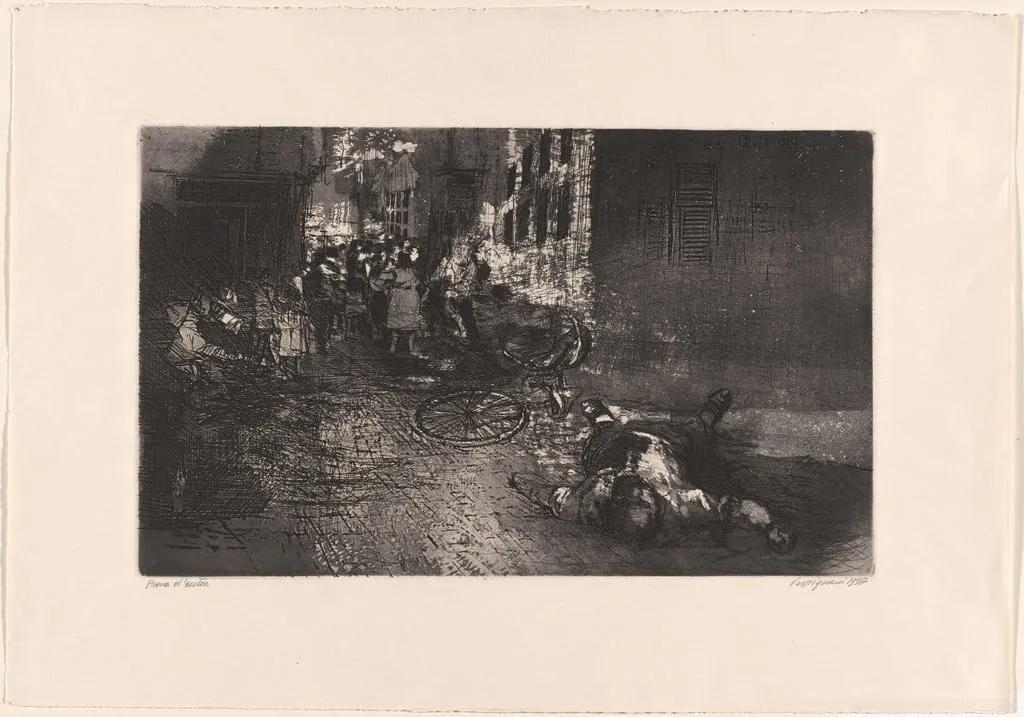
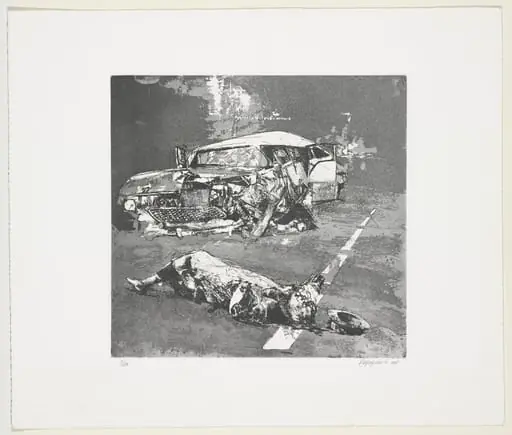
Untitled is an ink print by Renzo Vespignani. It dates from 1957 and is held in the collection of the Museum of Modern Art.
About this work
The texture comes from aquatint, a way to add soft gray tones by dusting the plate with resin before etching.
You see a dark, grainy print of a twisted metal beam and shattered glass against a smoky background.
Vespignani made this in 1957, just over a decade after World War II ended. The wreckage feels like a bombed-out city, though the title—*Old Accident*—keeps it vague. The texture comes from aquatint, a way to add soft gray tones by dusting the plate with resin before etching.
Look up *etching* to see how artists turn metal plates into prints like this.
Overview
Created in 1957, this print by Renzo Vespignani combines etching and aquatint to produce a somber, textured image. It resides in the collection of The Museum of Modern Art and reflects the artist’s engagement with postwar visual language. Vespignani, active in both painting and printmaking, used these techniques to convey decay and absence without literal representation.
Subject & Meaning
The image suggests the aftermath of destruction—twisted metal, fragmented glass, and a hazy, smoke-like ground evoke urban ruin. Though titled *Untitled*, the scene resonates with the lingering trauma of World War II. The ambiguity of the title avoids direct reference, inviting contemplation rather than narrative, aligning with a broader postwar tendency toward indirect expression.
Technique & Style
Vespignani employed aquatint to achieve subtle gradations of gray, mimicking the atmospheric haze of debris and dust. Etching provided the sharp, linear contours of fractured materials. The combination creates a tactile surface where texture becomes emotional weight, emphasizing material decay over form. His method prioritizes mood over clarity, characteristic of his printmaking approach.
History & Provenance
The work entered The Museum of Modern Art’s collection as part of its postwar print acquisitions. Vespignani’s involvement with *Città Aperta*, a 1956 magazine focused on cultural renewal, situates this piece within a broader Italian intellectual response to reconstruction. Its preservation in a major institution underscores its significance in mid-century print culture.
Context
Made just over a decade after the end of World War II, the print reflects Italy’s physical and psychological landscape during reconstruction. Artists like Vespignani avoided overt political imagery, instead using abstraction and texture to convey loss. His participation in *Il Pro e il Contro*, founded in 1963, further signals his alignment with critical, socially aware artistic circles.
Legacy
Vespignani’s print contributes to a generation of Italian artists who used printmaking to explore memory and ruin without spectacle. Its inclusion in MoMA’s collection helped establish postwar Italian prints within international modernist discourse. The work remains a quiet testament to the endurance of material and memory in the wake of catastrophe.
Artist & collection
Artist
Renzo Vespignani (1924 - 26 April 2001) was an Italian painter, printmaker and illustrator.

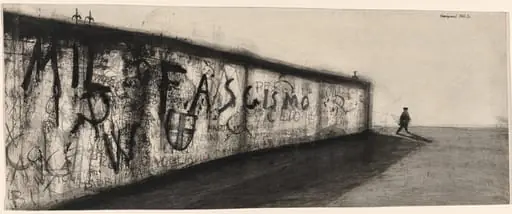
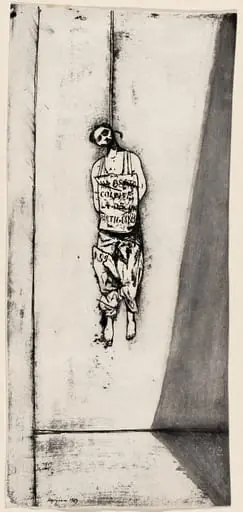
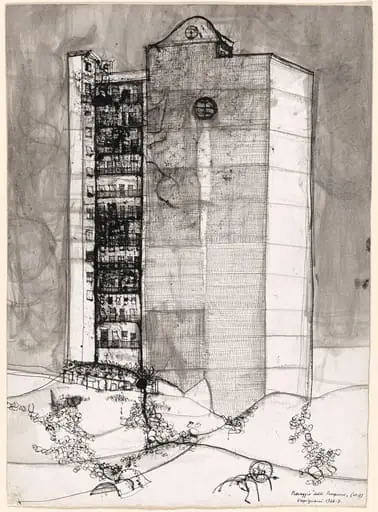
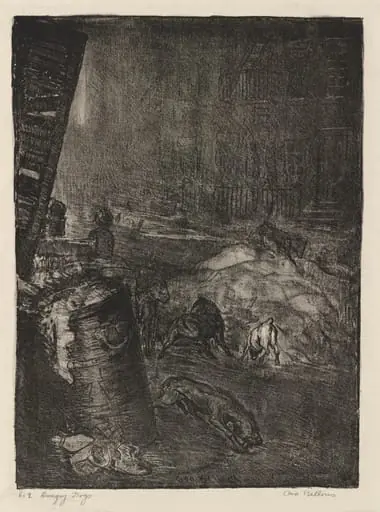 Hungry Dogs, Second Stone, second state
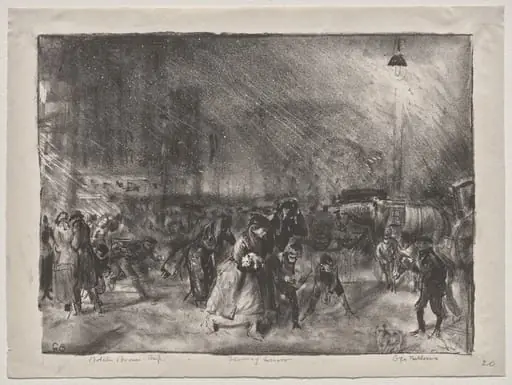 Evening Snow
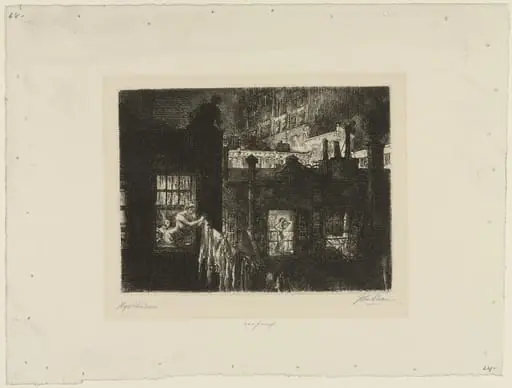 Untitled
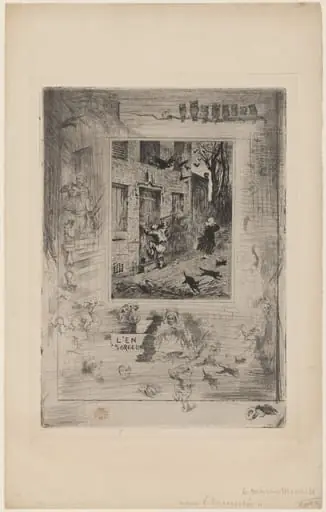 La Maison Maudite (The House of the Damned)
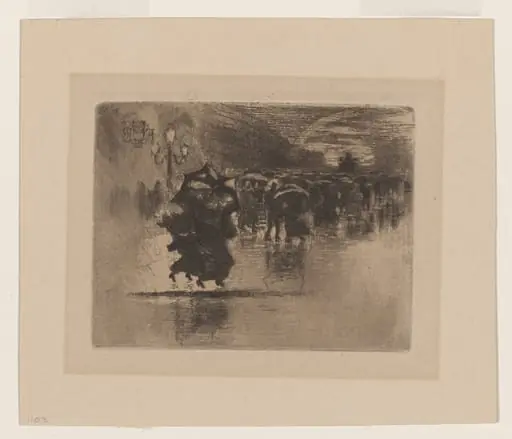 Le Petite Enterrement (The Burial -- Small Plate)
![House of Dante da Castiglione [Casa di Dante da Castiglione], by Telemaco Signorini](https://artifactworldgallery.com/img/telemaco-signorini--house-of-dante-da-castiglione-casa-di-dante-da-castiglione--92db125a9a8d04db-w320.webp) House of Dante da Castiglione [Casa di Dante da Castiglione]
House of Dante da Castiglione [Casa di Dante da Castiglione]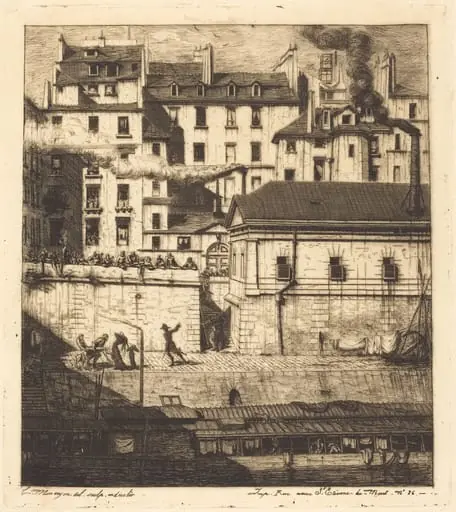 La morgue, Paris (The Mortuary)
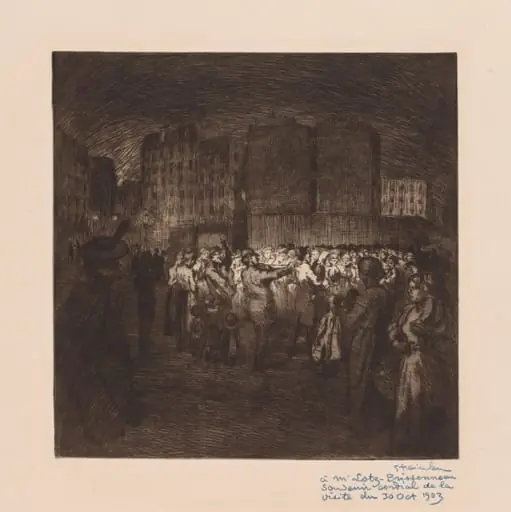 Little Street Singers
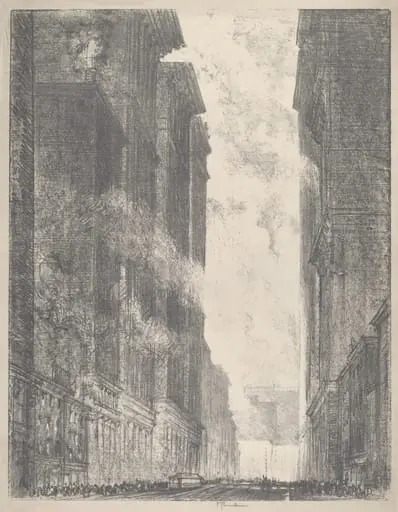 Fourth Avenue
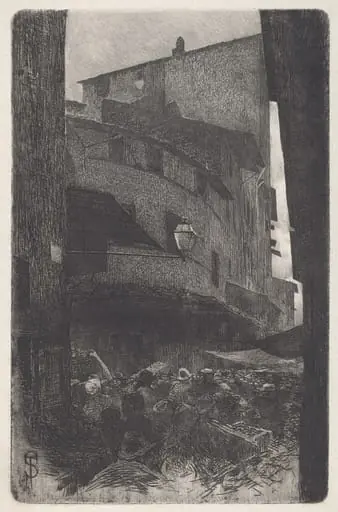 Santa Maria della Tromba
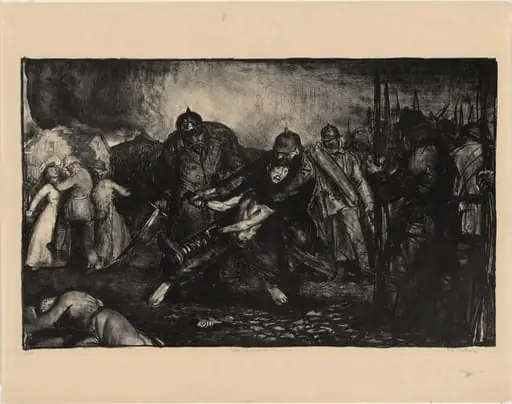 The Germans Arrive
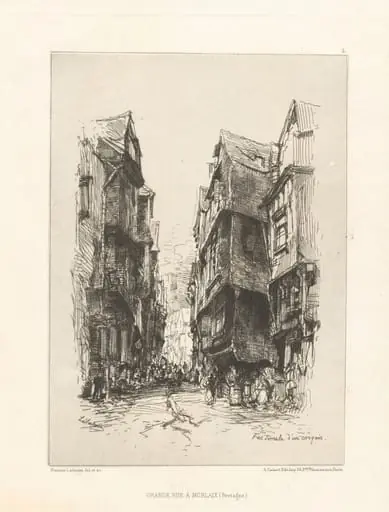 Grande Rue à Morlaix (Bretagne) (Grand Rue, Morlaix, Brittany)