Artwork
Introducing the Champion, No. 1, Large
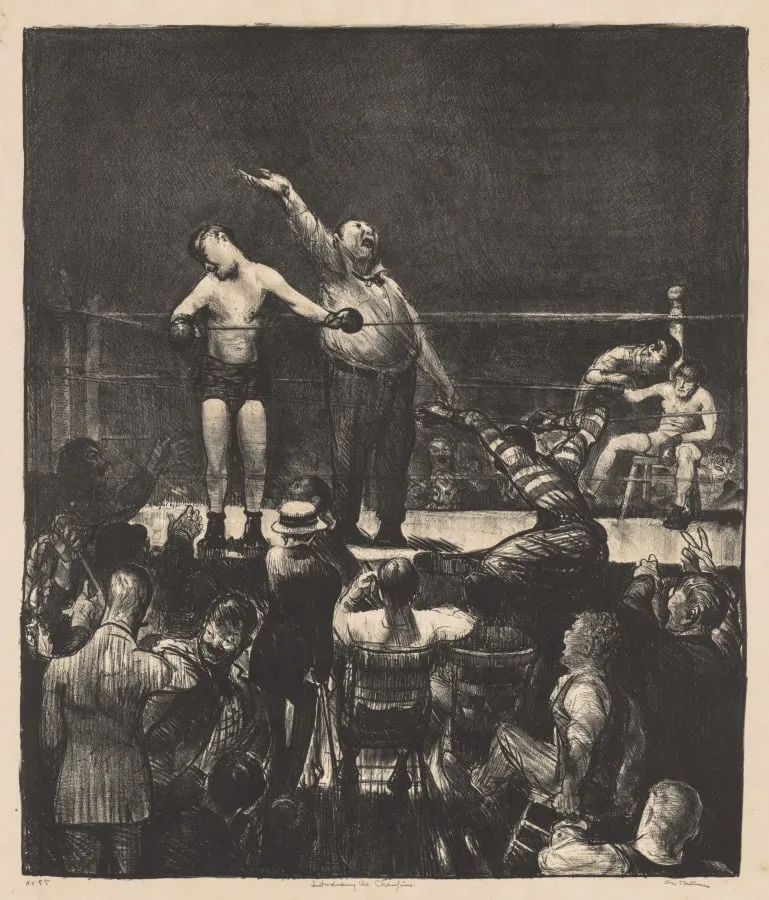
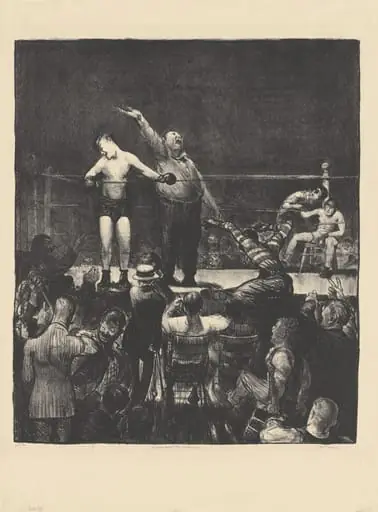
Introducing the Champion, No. 1, Large is a print by George Bellows. It dates from 1916 and is held in the collection of the Cleveland Museum of Art.
About this work
The boxer was inspired by a character from a short story, which adds an interesting layer to the artwork.
The painting shows a boxer standing in the ring.
He's confident and gloating.
The boxer was inspired by a character from a short story, which adds an interesting layer to the artwork.
The character, nicknamed Tornado Black, was a fictional lightweight champion.
This backstory gives the painting more depth and context.
You can learn more about this style by looking at the work of artist: George Bellows (American, 1882–1925)
Overview
George Bellows created Introducing the Champion, No. 1, Large Type as a print derived from an earlier drawing made for a 1909 short story in American Magazine. Though best known for his boxing paintings, this work emerged from his illustration work, translating a fictional narrative into a bold graphic image. The piece reflects Bellows’s engagement with popular media and his interest in urban spectacle.
Subject & Meaning
The subject is Tornado Black, a fictional lightweight champion described in the magazine story as boastful and theatrical. Bellows captures the boxer mid-gloat, arms raised, eyes fixed on an unseen crowd—emphasizing performance over combat. The image critiques the cult of personality in sports entertainment, portraying the athlete as a showman rather than an athlete in motion.
Technique & Style
Bellows employed a high-contrast lithographic style with thick, expressive lines and stark tonal shifts. The boxer’s form is rendered with muscular clarity, while the background dissolves into shadow, isolating the figure as a dramatic silhouette. The large-type title reinforces the print’s journalistic origins, blending illustration with the visual language of early 20th-century periodicals.
History & Provenance
The print was produced in 1912 as part of Bellows’s early foray into commercial lithography. It was based on a sketch he made in 1909 for a fictional boxing story, making it one of his first printed works derived from narrative illustration. The image was not tied to a real event, distinguishing it from his later, documentary-style boxing prints.
Context
During this period, American magazines frequently commissioned artists to visualize sensational stories, especially those centered on urban life and physical contests. Bellows’s work tapped into public fascination with boxing as both sport and spectacle. His ability to translate literary fiction into compelling imagery aligned him with a generation of illustrators bridging fine art and mass media.
Legacy
Introducing the Champion, No. 1, Large Type exemplifies Bellows’s transition from illustration to fine art printmaking. While not as widely exhibited as his oil paintings, the print reveals his early interest in character-driven drama and the performative nature of public identity. It remains a key example of how narrative illustration informed his broader artistic vision.
Artist & collection
Artist
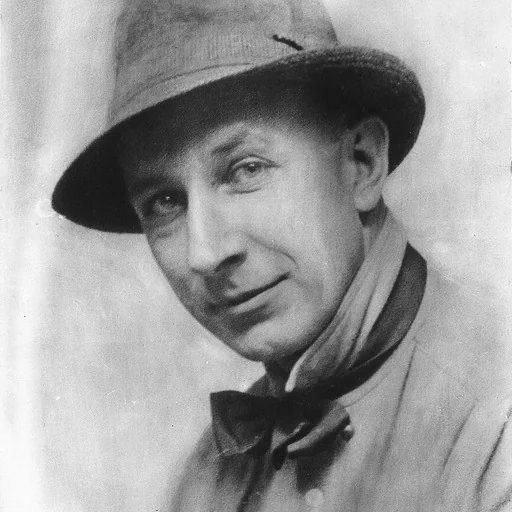
George Wesley Bellows (August 12 or August 19, 1882 – January 8, 1925) was an American realist painter, known for his bold depictions of urban life in New York City.