Artwork
Bataille de Rozelieures en Lorraine
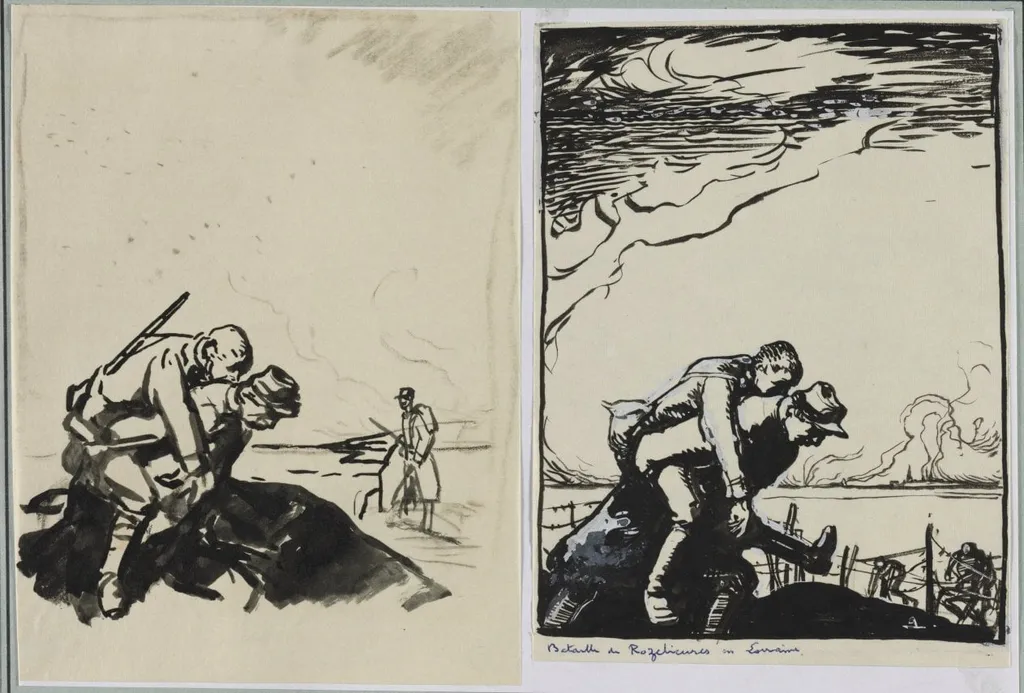
Bataille de Rozelieures en Lorraine is a drawing by Auguste Lepère. It dates from 1914 and is held in the collection of the Cleveland Museum of Art.
About this work
Overview
Auguste‑Louis Lepère’s drawing *Bataille de Rozelieures en Lorraine* dates from 1914 and is part of the Cleveland Museum of Art’s holdings. Executed in Lepère’s characteristic wood‑engraving‑inspired style, the work records a moment of combat in the early months of World War I, focusing on the kinetic energy of mounted troops and infantry.
Subject & Meaning
The composition depicts a chaotic battlefield in the Lorraine region, with cavalry charges and infantrymen locked in close combat. Uniforms, weapons and the movement of horses are rendered with attention to detail, suggesting Lepère’s intent to document a specific engagement rather than to idealise the conflict.
Technique & Style
Lepère employed fine linear drawing techniques reminiscent of his wood‑engraving practice, using strong contrasts and precise hatching to model forms and convey texture. The emphasis on line over colour, together with the crisp rendering of military gear, reflects his role in the early twentieth‑century revival of traditional print‑making aesthetics.
History & Provenance
Created at the outset of the Great War, the drawing entered the Cleveland Museum of Art’s collection through acquisition in the mid‑twentieth century. Its presence in an American institution underscores the broader interest in European wartime documentation and the museum’s commitment to representing early modern graphic art.
Artist & collection
Artist
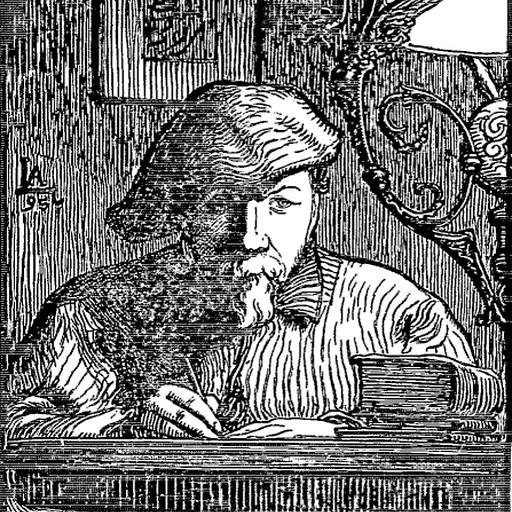
Louis-Auguste Lepère (30 November 1849 – 20 November 1918) was a French painter and etcher. Lepère is also considered a leader in the creative revival of wood engraving in Europe.

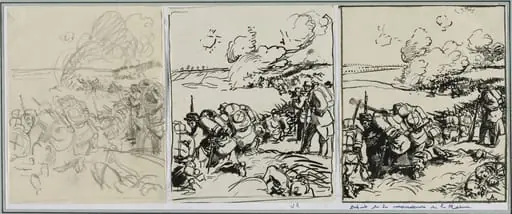 Dêbut de la manoeuvre de la Marne
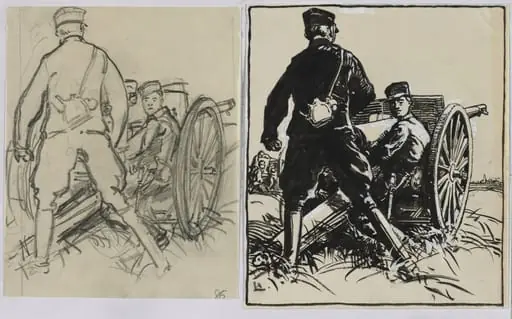 Artillelurs belges
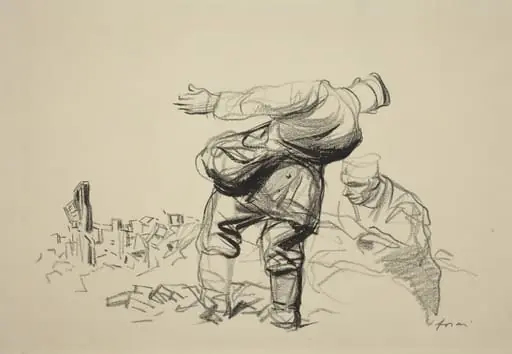 The Empire Destroys, The Republic Pays
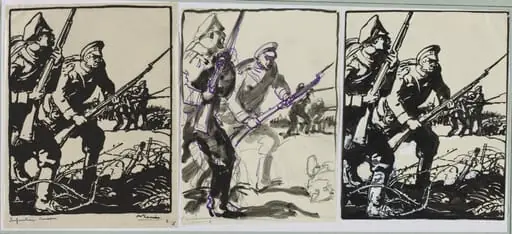 Infanterie russe
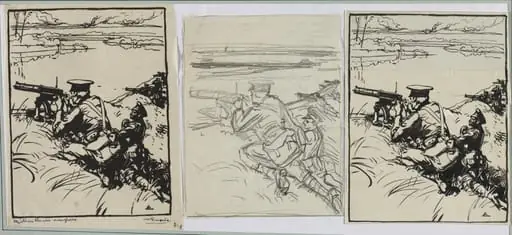 Mitrailleurs anglais
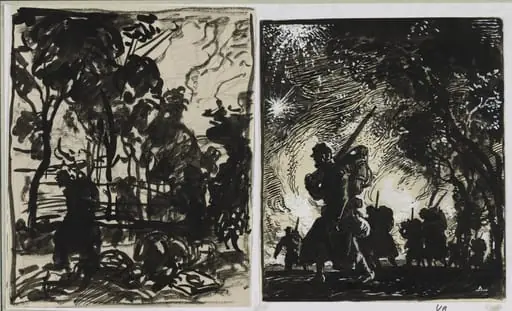 Scène nocturne; patrouille à la lisière d'un bois
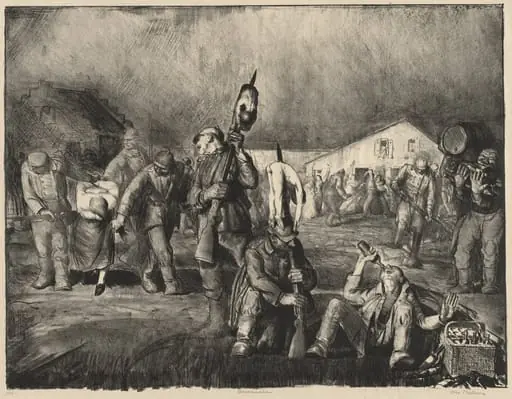 War Series: The Bacchanale
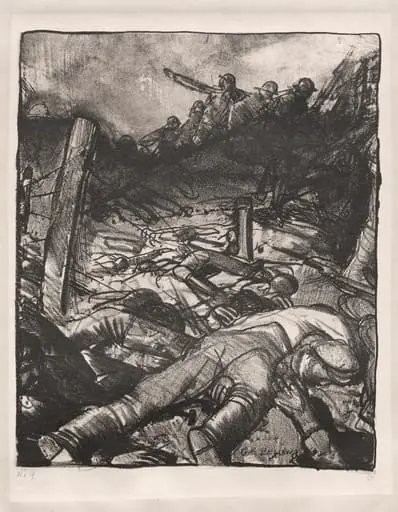 War Series: The Charge, Left Detail
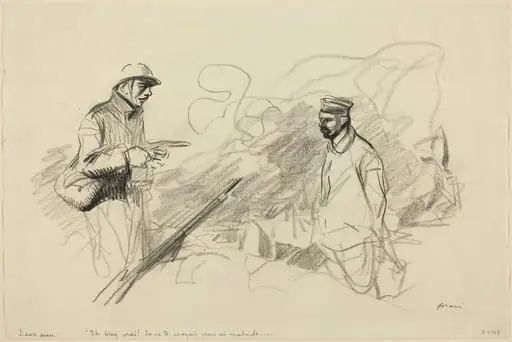 Poilu Acknowledging German Soldier
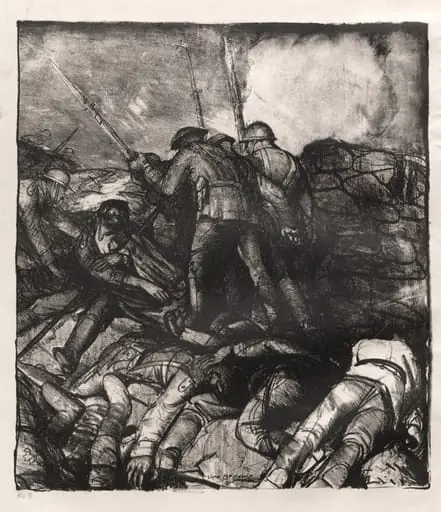 War Series: The Charge, Right Detail, first state
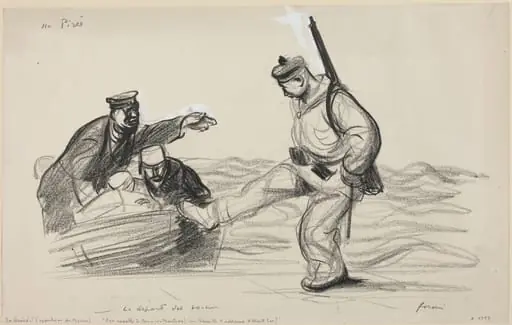 Au Pireê. -Le depart des boches.
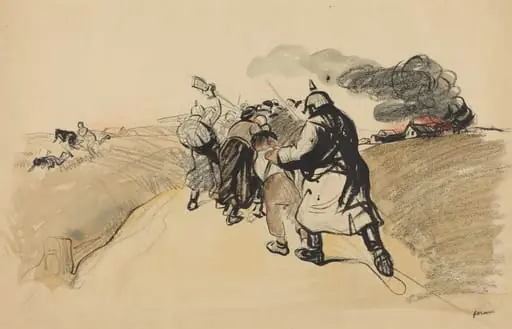 German Raid on a Village