Artwork
Emma and Her Children
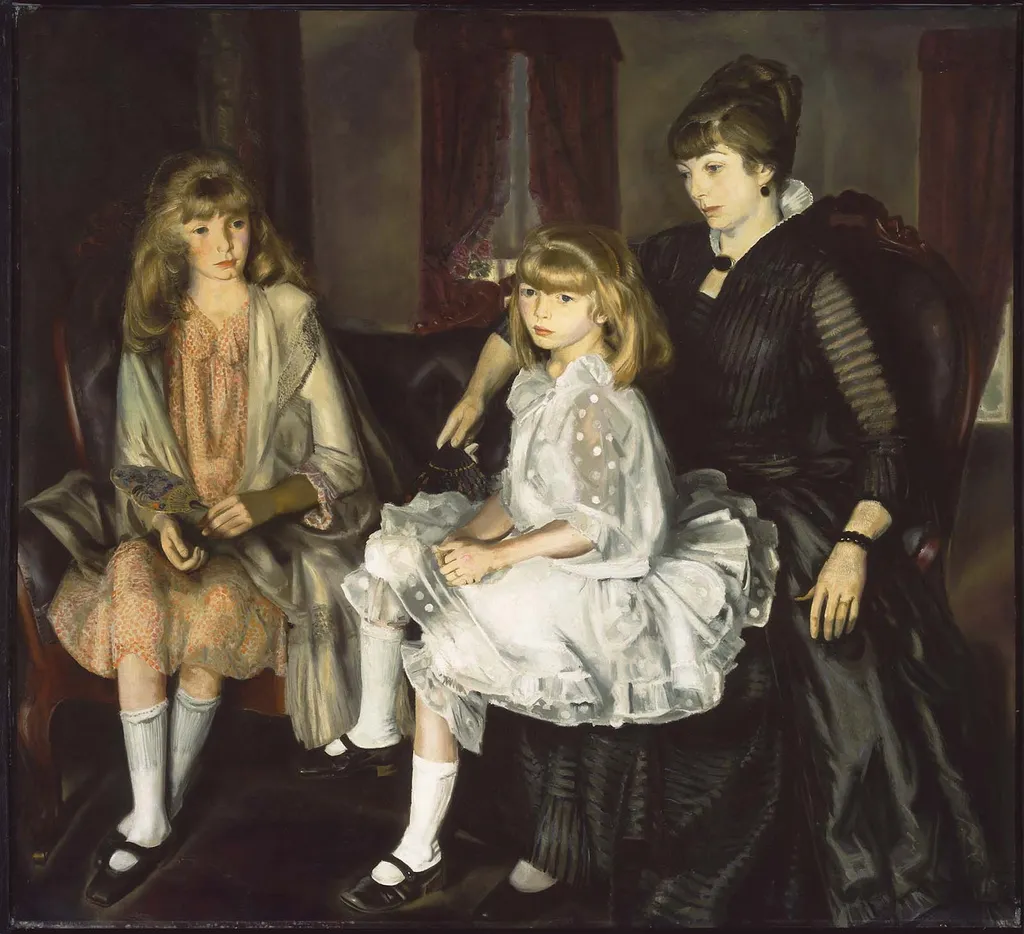
Emma and Her Children is an oil painting by the Realist artist George Bellows. It dates from 1923 and is held in the collection of the Museum of Fine Arts Boston.
About this work
Overview
Painted in 1923 by George Bellows, *Emma and Her Children* is an oil on canvas portrait of the artist’s wife and their two young daughters.
Painted in 1923 by George Bellows, *Emma and Her Children* is an oil on canvas portrait of the artist’s wife and their two young daughters. Unlike his earlier urban scenes, this work turns inward, capturing a private domestic moment. The composition is restrained, focusing on the quiet interaction between mother and children within a modest interior. Bellows’s commitment to realism is evident in the unembellished rendering of his subjects and their surroundings.
Subject & Meaning
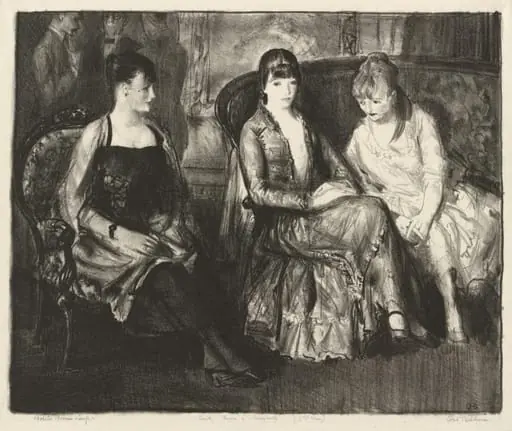
The painting portrays Bellows’s wife, Emma, seated in a chair with her arm resting on its back, flanked by her two daughters on a couch. Their postures suggest introspection rather than interaction, evoking a sense of stillness and solitude. The absence of narrative action or symbolic elements shifts focus to the emotional atmosphere of the scene—ordinary, intimate, and quietly resonant. The work reflects Bellows’s interest in the dignity of everyday life, free from sentimentality.
Technique & Style
Bellows employed chiaroscuro to model form and create spatial depth, using strong contrasts between shadow and light to define the figures against the dim room. His brushwork is firm yet fluid, capturing texture in fabric, skin, and wood without embellishment. The palette is subdued, dominated by dark tones relieved by pale dresses and a white collar, drawing attention to the figures’ faces and hands. The composition is tightly framed, enhancing the sense of enclosure and quiet focus.
History & Provenance
Created in the final years of Bellows’s life, the painting remained in the artist’s family until it was acquired by the Museum of Fine Arts, Boston. It is one of several intimate portraits Bellows made of his wife and children, contrasting with his more public, socially charged works. Its inclusion in the museum’s collection underscores its significance as a personal document within his broader oeuvre, reflecting a shift from urban drama to domestic stillness.
Context
In the early 1920s, Bellows moved away from the gritty cityscapes that defined his early career, turning toward quieter subjects as his personal life evolved. *Emma and Her Children* aligns with a broader trend among American realists to explore the emotional weight of home life. The painting reflects a generation of artists redefining realism not through social commentary alone, but through the subtle psychology of familial relationships.
Legacy
Though less known than Bellows’s boxing scenes or street paintings, *Emma and Her Children* endures as a poignant example of his ability to convey emotional depth through restraint. It demonstrates his versatility as a realist and offers insight into the private world behind his public persona. The work continues to be studied for its nuanced portrayal of motherhood and domestic silence within early 20th-century American art.
Own this work as a print
Artist & collection

Artist
George Wesley Bellows (August 12 or August 19, 1882 – January 8, 1925) was an American realist painter, known for his bold depictions of urban life in New York City.

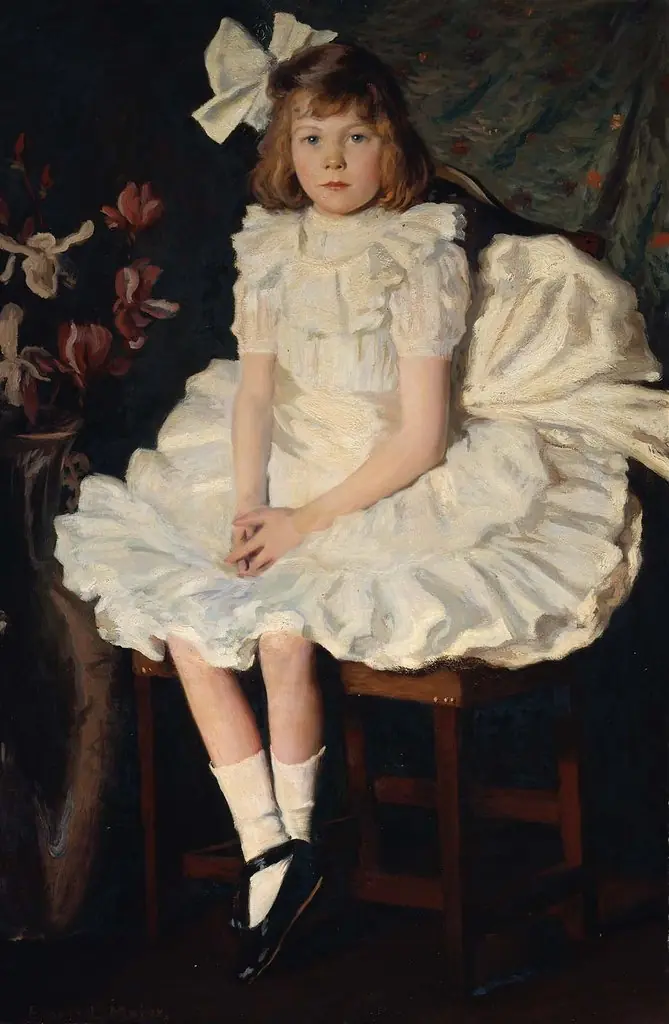 Marion Pond (Mrs. Kenneth Bacon Bond)
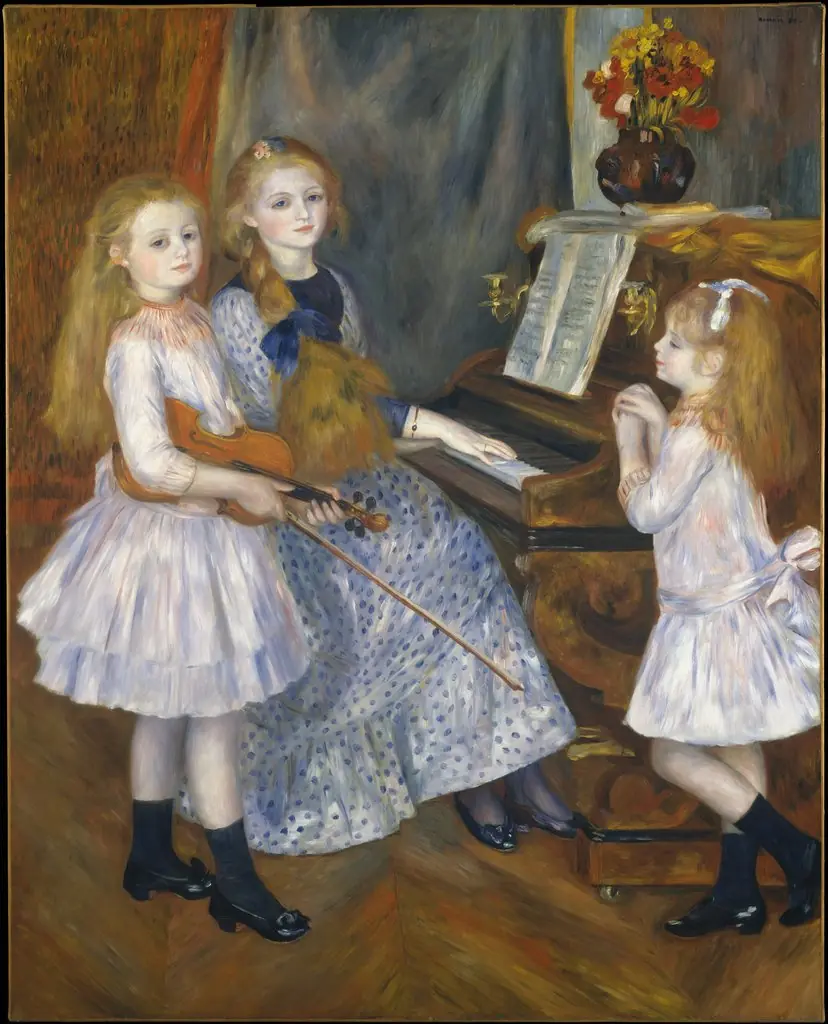 The Daughters of Catulle Mendès
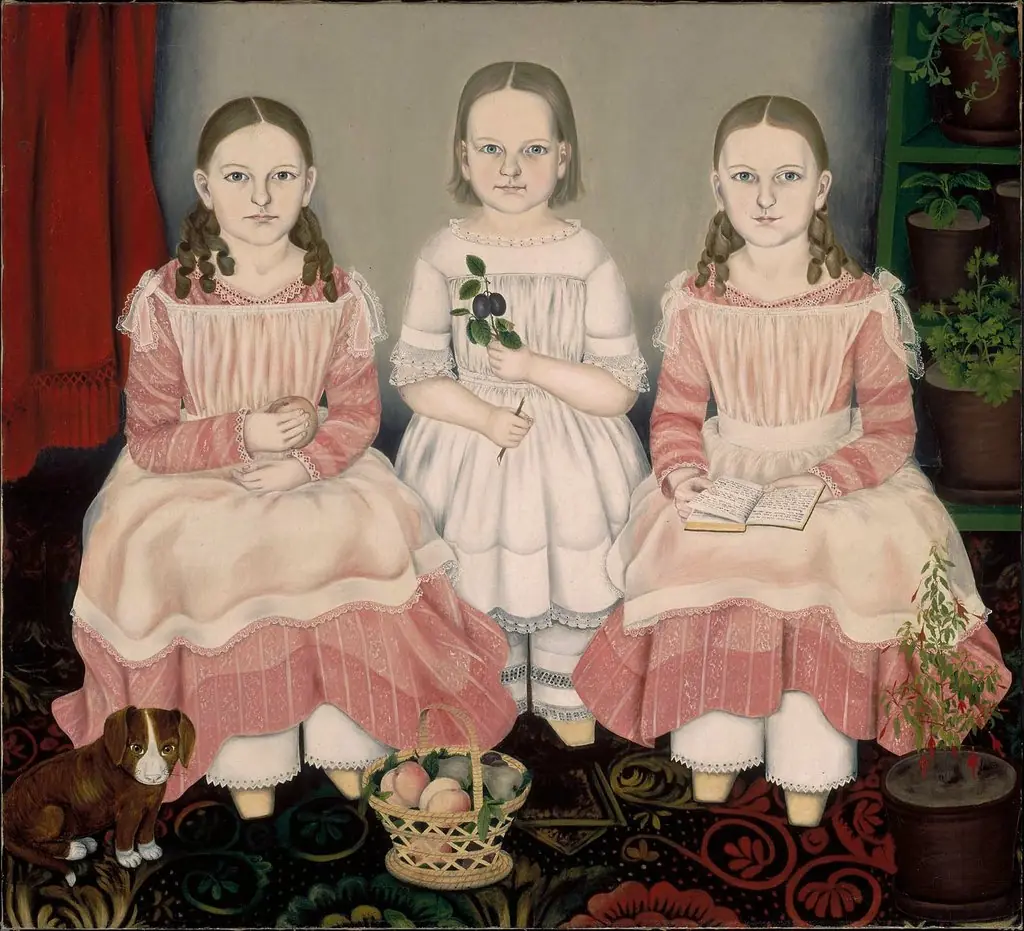 The Lincoln Children
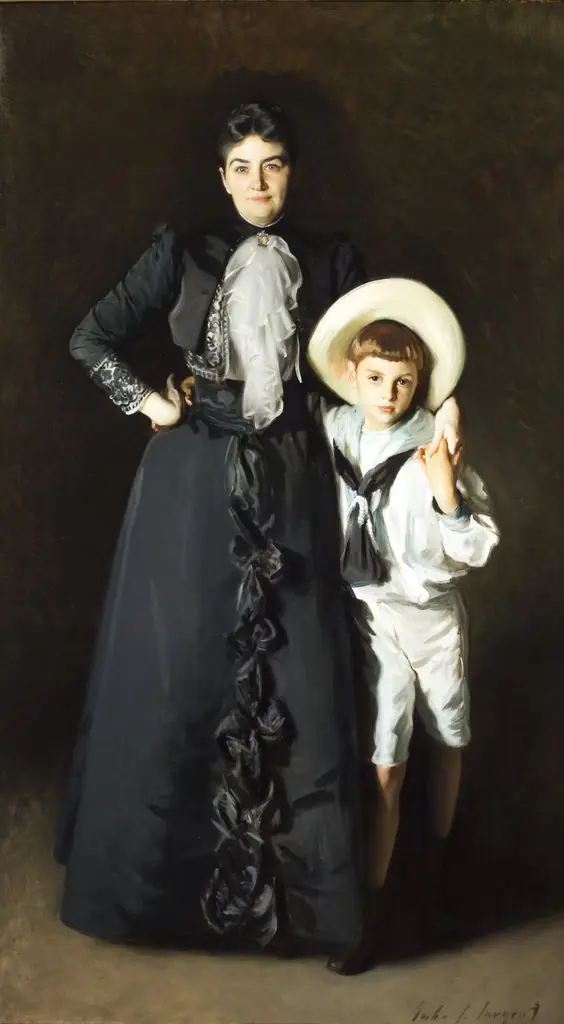 Portrait of Mrs. Edward L. Davis and Her Son, Livingston Davis
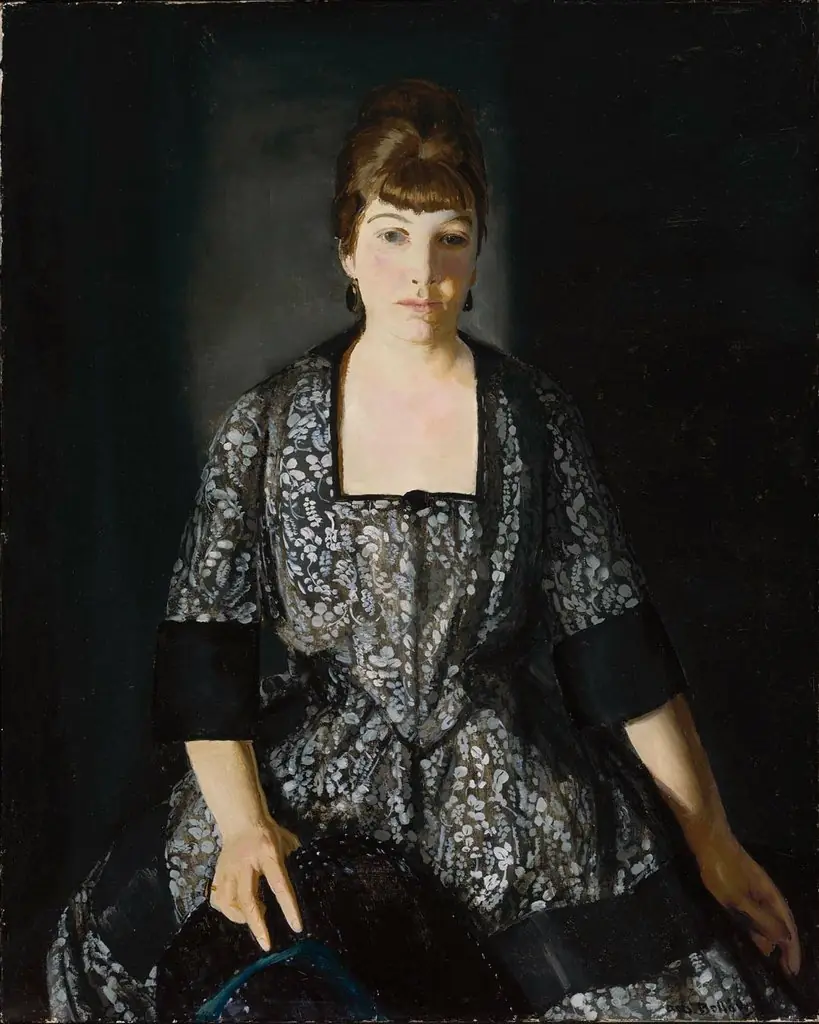 Emma in the Black Print
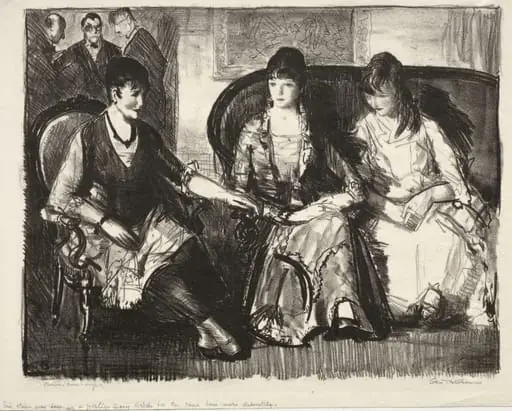 Elsie, Emma and Marjorie, First Stone
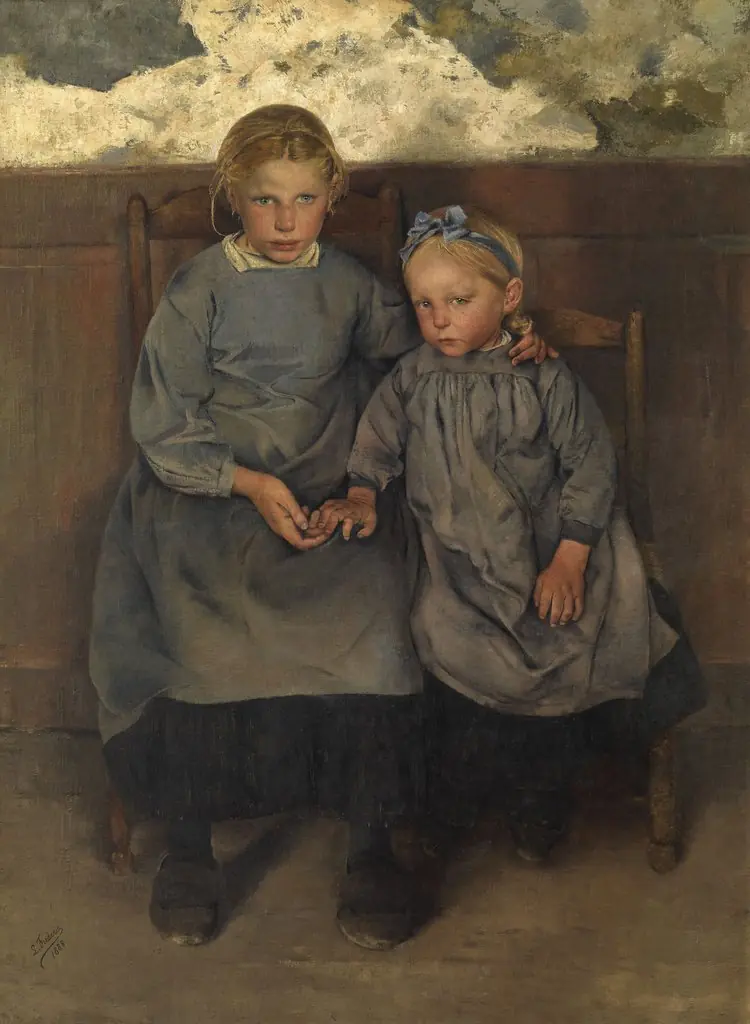 Les Boëchelles. Two Walloon Peasant Children
 Marjorie, Emma and Elsie, Second Stone
 Mother and Children (Madame Feydeau and Her Children)
 The Critics