Artwork
A Deathbed Scene
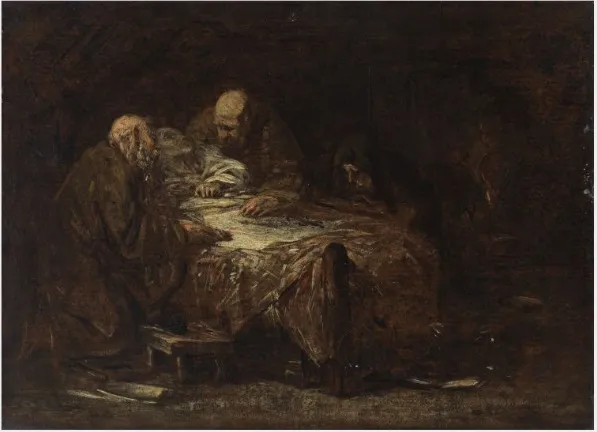
A Deathbed Scene is an unspecified painting by George Bernard O'Neill. It dates from 1878 and is held in the collection of the National Gallery of Ireland.
About this work
Overview
Painted around 1878 by Irish artist George Bernard O'Neill, this work captures a quiet moment of death within a domestic interior. O'Neill, associated with the Cranbrook Colony, specialized in intimate, emotionally charged scenes of everyday life. The painting is part of the National Gallery of Ireland’s collection and exemplifies his focus on familial grief and quiet dignity in moments of loss.
Subject & Meaning
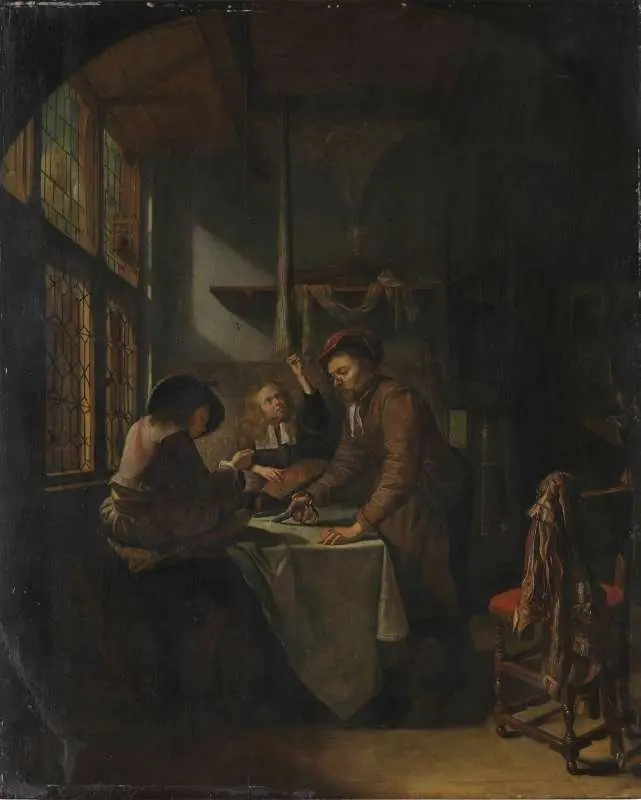
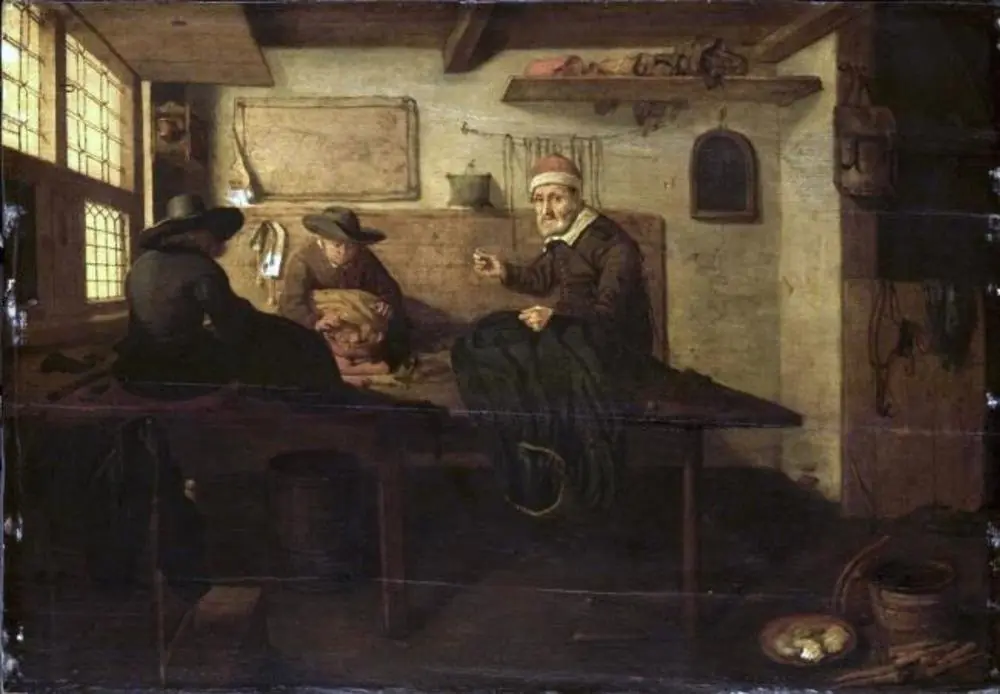
The scene depicts three men gathered beside a bed where a deceased man lies beneath a sheet. The two standing figures, dressed in dark attire, display restrained sorrow, their postures and expressions conveying solemn respect rather than overt distress. The absence of women or clergy suggests a private, secular moment of mourning, emphasizing the personal weight of death within the home.
Technique & Style
Muted tones dominate the palette, reinforcing the somber mood.
O'Neill employs chiaroscuro to model forms and heighten emotional tension, with light filtering weakly through a distant window to illuminate only fragments of the room and figures. Muted tones dominate the palette, reinforcing the somber mood. The brushwork is restrained, avoiding theatricality; details like fabric folds and facial contours are rendered with quiet precision, supporting the painting’s understated realism.
History & Provenance
Created during O'Neill’s mature period, the painting reflects his long-standing interest in domestic sentimentality. It entered the National Gallery of Ireland’s collection in the late 19th or early 20th century, likely through acquisition or donation. Its preservation within a national institution underscores its recognition as a representative example of Irish genre painting from the period.
Context
In late 19th-century Ireland, genre painting often turned to domestic themes as a means of expressing national identity through everyday life. O'Neill’s work aligned with broader Victorian sensibilities that valued emotional restraint and moral seriousness in art. This painting contributes to a visual culture that treated death not as spectacle, but as a solemn, intimate transition.
Legacy
Though not widely exhibited today, the painting remains a key example of O'Neill’s contribution to Irish genre painting. It illustrates how artists of the time used subtle composition and lighting to convey psychological depth without melodrama. Its continued presence in the National Gallery of Ireland ensures its role as a reference point for understanding 19th-century Irish visual culture.
Artist & collection
Artist
George Bernard O'Neill (17 July 1828 – 23 September 1917), was a prolific Irish genre painter, from 1859 a member of the Cranbrook Colony of artists.