Artwork
Pomona Britannica: No. 52 - Black Prince Grape
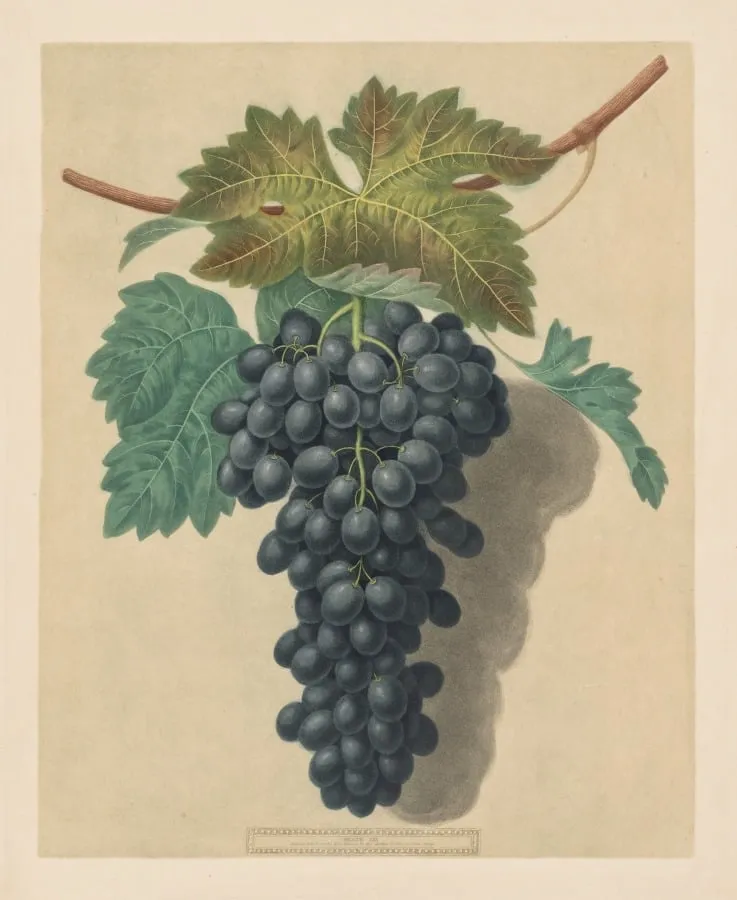
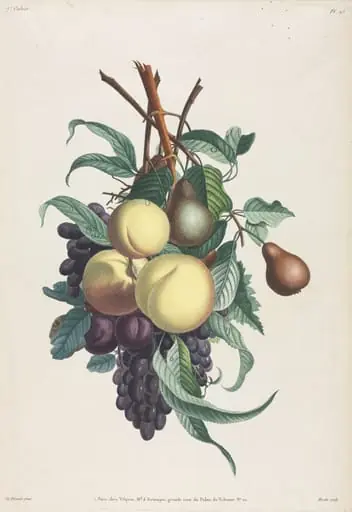
Pomona Britannica: No. 52 - Black Prince Grape is a print by the Romanticist artist George Brookshaw. It dates from 1809 and is held in the collection of the Cleveland Museum of Art.
About this work
Overview
George Brookshaw, an English artist and former cabinet-maker, produced this detailed botanical print in 1809 as part of his larger project, *Pomona Britannica*.
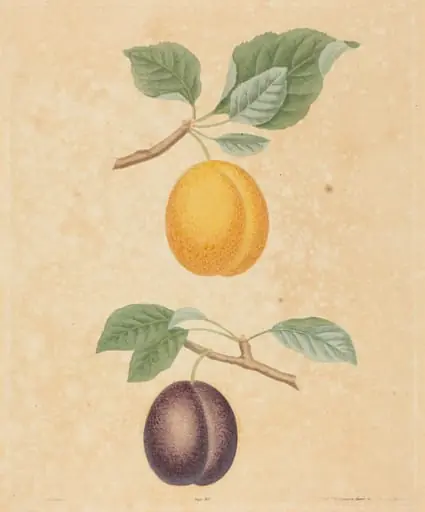
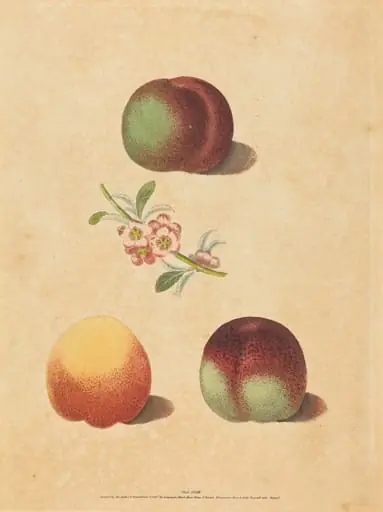
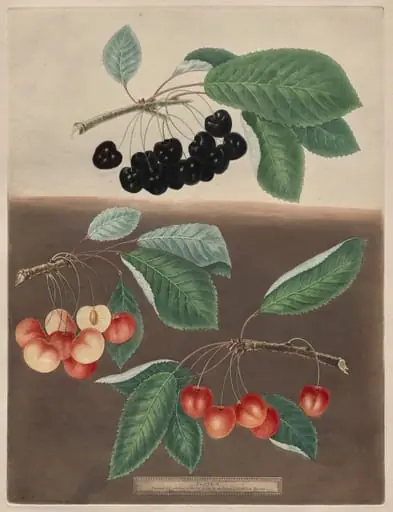
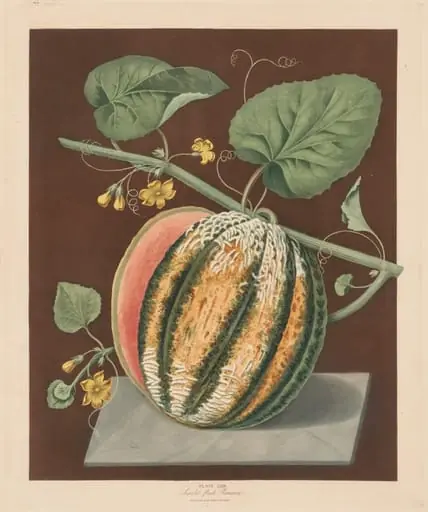
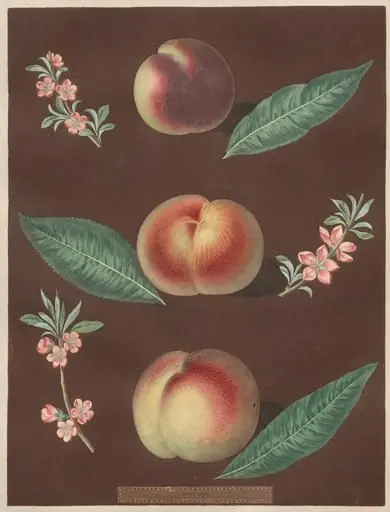
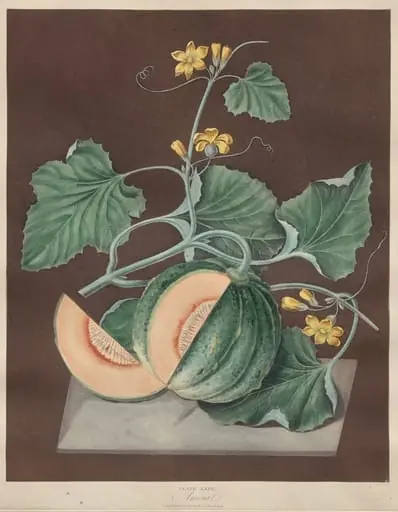
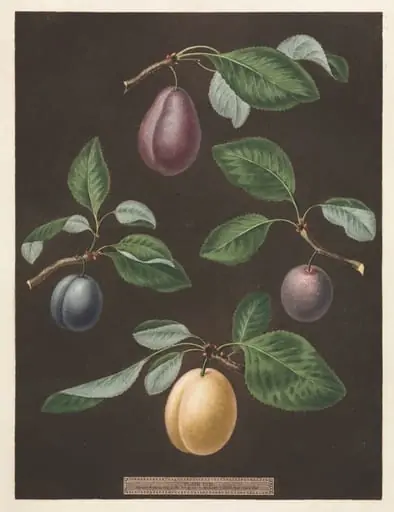
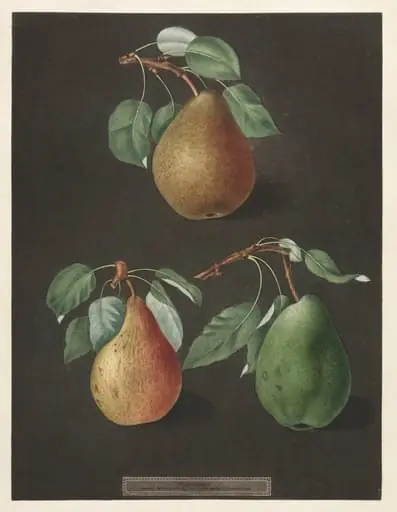
George Brookshaw, an English artist and former cabinet-maker, produced this detailed botanical print in 1809 as part of his larger project, *Pomona Britannica*. The work was intended as a systematic record of fruit varieties grown in English horticulture, particularly those cultivated in elite gardens such as Kensington Palace. Brookshaw combined artistic precision with scientific intent, documenting cultivars for both aesthetic and practical audiences.
Subject & Meaning
The print depicts the Black Prince grape, a variety noted for its deep purple-black skin and clustered form. Rendered against a single green leaf, the composition isolates the fruit to emphasize its texture and color. The image serves not merely as decoration but as a visual catalog, aiding horticulturists and gardeners in identifying and cultivating desirable varieties during a period of growing interest in ornamental and edible plants.
Technique & Style
Brookshaw employed fine brushwork and layered pigments to capture the subtle sheen and dimpled surface of the grapes. Highlights are delicately placed to suggest natural light, enhancing the illusion of three-dimensionality. The background is intentionally muted, directing focus to the fruit’s form. His technique reflects a blend of artistic training and botanical accuracy, avoiding excessive ornamentation in favor of clarity.
History & Provenance
Created in 1809 and later included in the 1812 publication *Pomona Britannica*, this print was part of a multi-volume series commissioned by affluent patrons interested in horticultural innovation. Brookshaw’s earlier experience in decorative furniture painting informed his attention to surface detail. Original impressions are held in several institutional collections, including the Cleveland Museum of Art, where they are studied for their contribution to early 19th-century botanical documentation.
Context
During the early 1800s, English gardens became centers of botanical experimentation, with aristocrats competing to cultivate rare fruits. Brookshaw’s work emerged within this trend, providing visual references for nurserymen and estate gardeners. His prints bridged the gap between art and agriculture, supporting the commercialization of exotic cultivars while reflecting broader societal fascination with nature’s variety and refinement.
Legacy
Brookshaw’s *Pomona Britannica* remains a significant resource for historians of horticulture and print culture. Though not widely known today, his methodical approach influenced later botanical illustrators and contributed to the standardization of fruit identification. The prints are valued less for their novelty than for their role in preserving the visual record of a period when gardening was both science and status.
Artist & collection

Artist
George Brookshaw (c. 1751–1823), also known as G. Brown, was an English painter and illustrator from London. His early career was spent as a London cabinet-maker specializing in painted furniture, often with floral…