Artwork
Two Plums
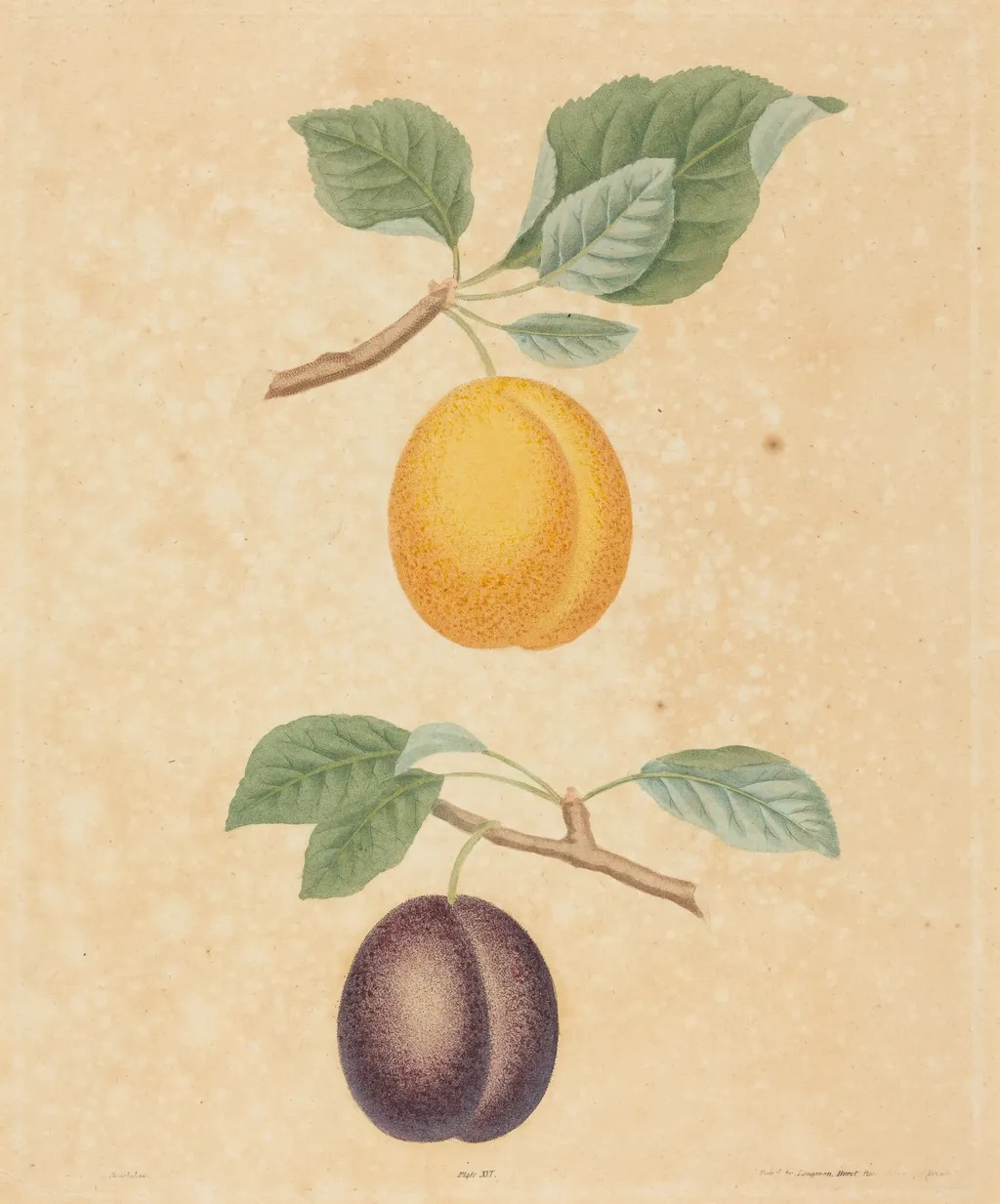
Two Plums is an ink print by the Romanticist artist George Brookshaw. It dates from 1817 and is held in the collection of the National Gallery of Art.
About this work
Overview
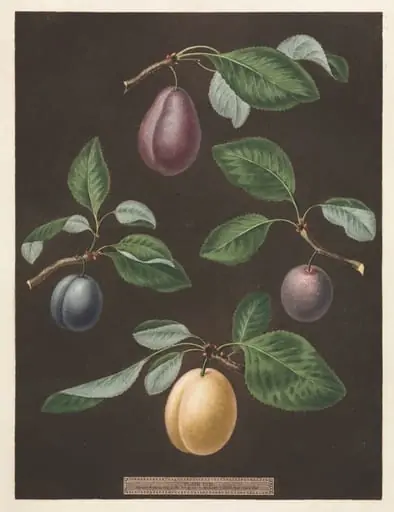
Two Plums is a 1817 print by George Brookshaw, combining line and stipple engraving with partial color printing and hand finishing. The work depicts two plums of differing colors suspended from leafy branches against a plain light background.
Subject & Meaning
The subject of Two Plums aligns with Brookshaw's botanical illustration focus, particularly fruit varieties in English gardens, as seen in his earlier *Pomona Britannica*. The piece likely aimed to document plum species with scientific accuracy.
Technique & Style
Brookshaw employed a meticulous technique, blending line engraving with stipple shading (tiny dots) to achieve textured, detailed renderings of the plums and leaves. This method was characteristic of contemporary scientific illustration.
History & Provenance
Created in 1817 by George Brookshaw, a London-based artist who transitioned from painted furniture to botanical illustration. His background influenced his detailed, decorative style in prints like *Two Plums*.
Context
Part of a broader 19th-century trend in botanical and fruit illustration, *Two Plums* reflects the era's interest in documenting natural specimens with precision, often for educational or horticultural purposes.
Artist & collection

Artist
George Brookshaw (c. 1751–1823), also known as G. Brown, was an English painter and illustrator from London. His early career was spent as a London cabinet-maker specializing in painted furniture, often with floral…

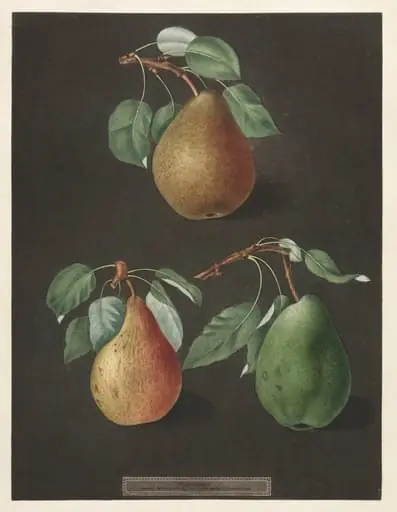
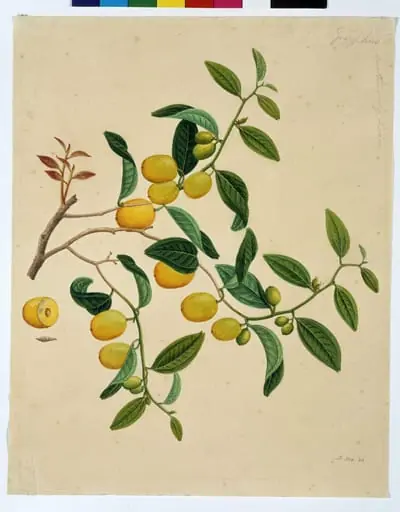 Chinese dates
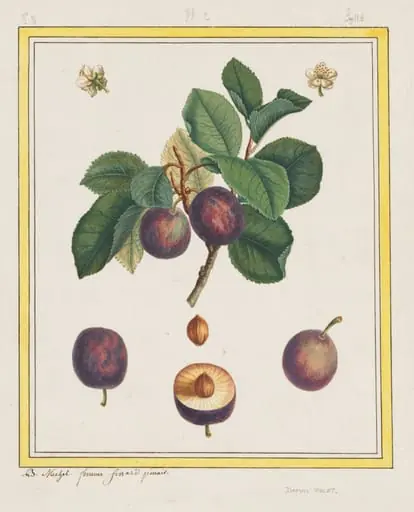 Damascus Plum
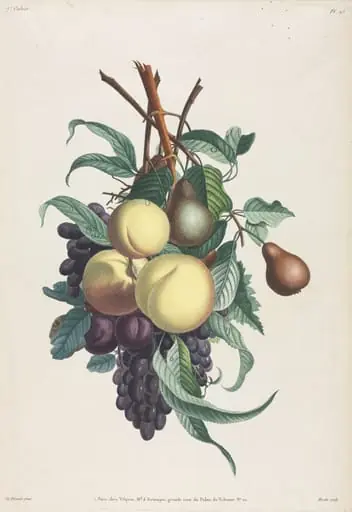 Collection des fleurs et des fruits: Branches de rousselet, pêche, prune et raisin
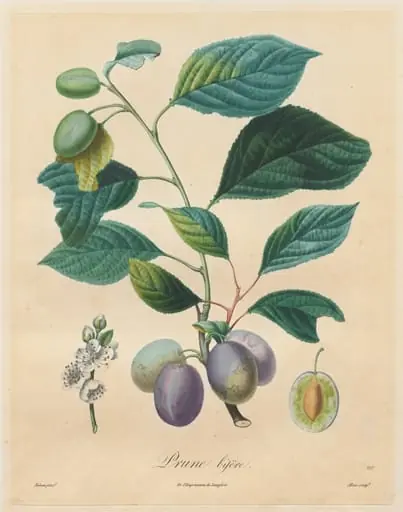 Traité des arbres fruitiers: Prune bifère
 Amandier pistache
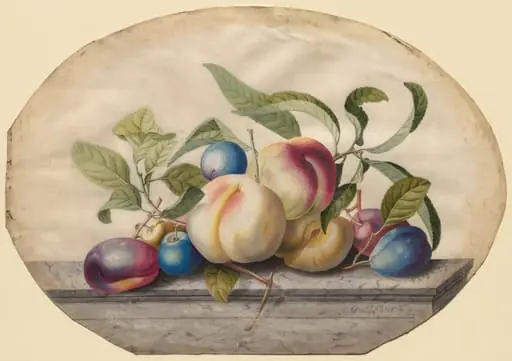 Fruit Arrangement: Peaches and Plumbs on a Slab of Marble
 Amandier de la Georgie
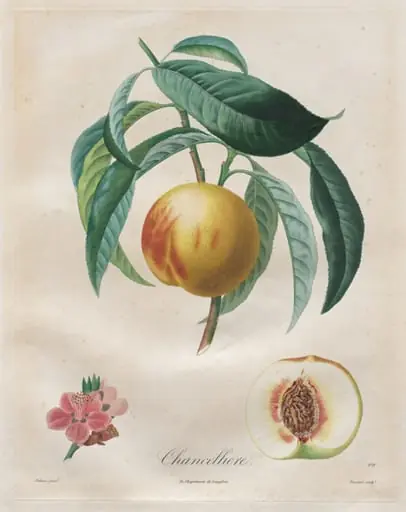 Traité des arbres fruitiers: Chancellière
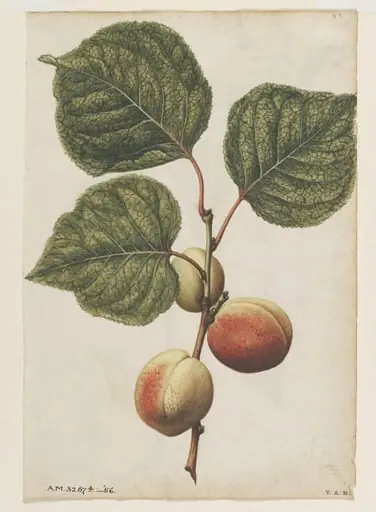 Apricots; Cherries
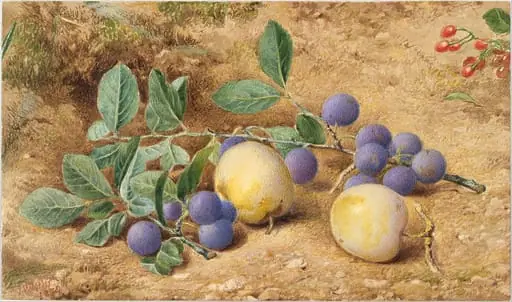 Plums
Plums