Artwork
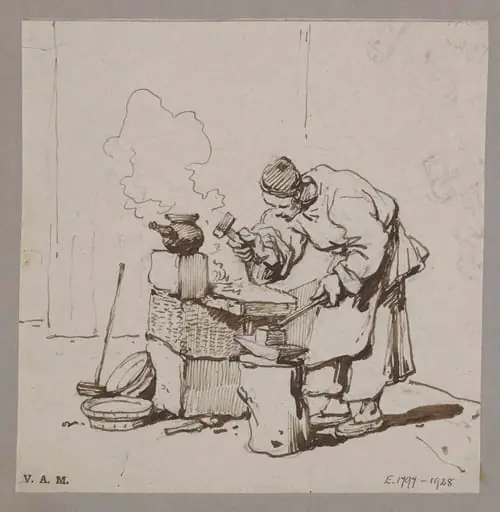
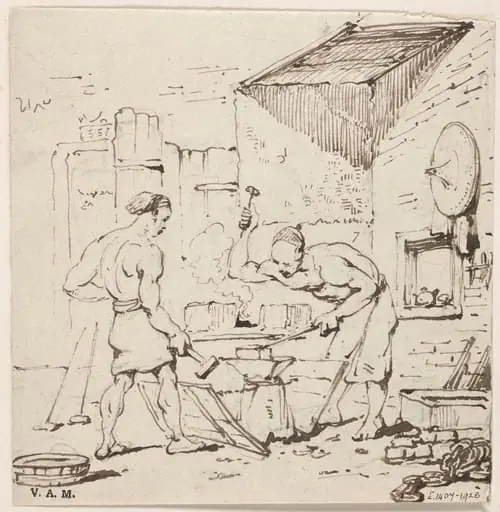
A blacksmith with his eqipment and a sleeping dog
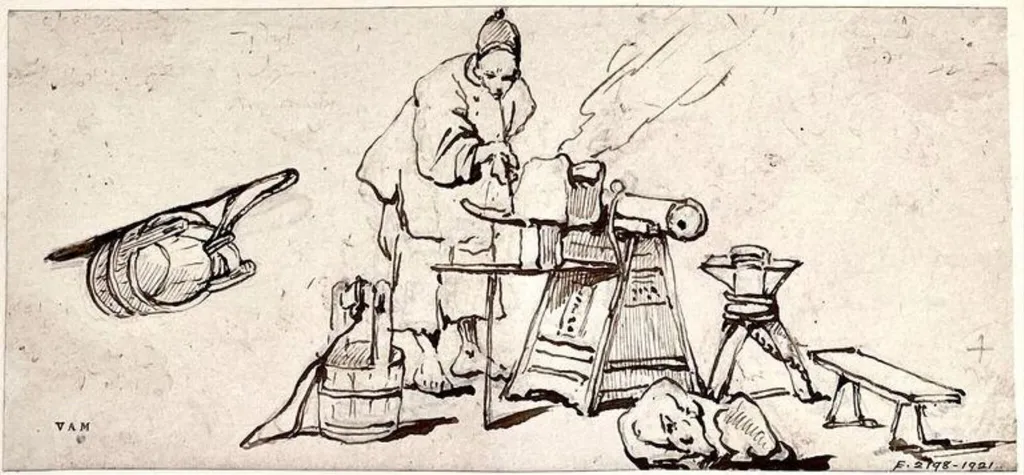
A blacksmith with his eqipment and a sleeping dog is a drawing by the Romanticist artist George Chinnery. It dates from 19 and is held in the collection of the Victoria and Albert Museum.
About this work
Overview
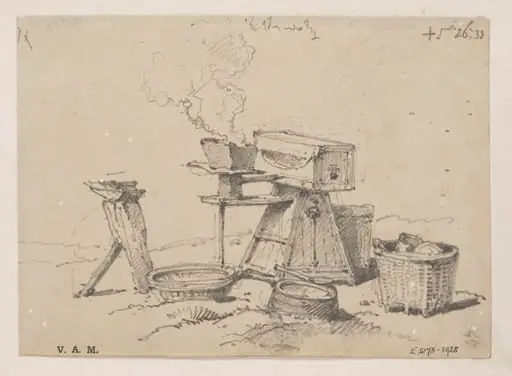
A secondary sketch of a wooden bucket, drawn upside-down on the left margin, suggests the artist’s process of observation and revision.
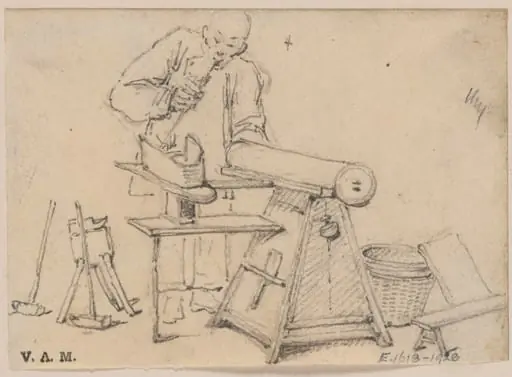
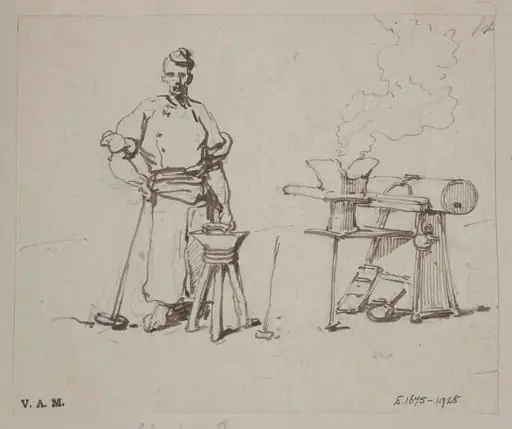
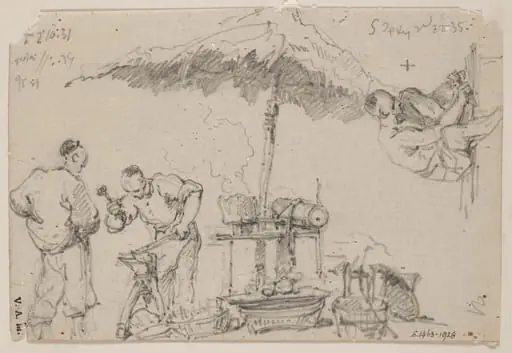
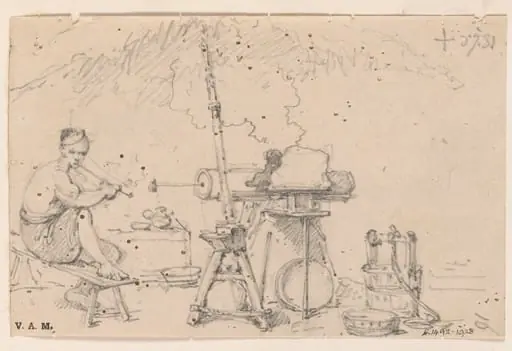
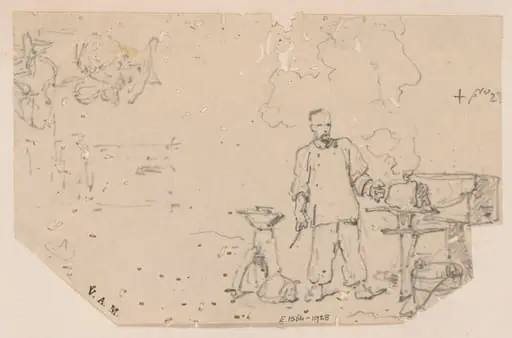
This ink drawing by George Chinnery depicts a blacksmith at work in a modest, unadorned setting. The figure leans over a small, smoldering furnace, using a pipe to direct airflow, while tools and equipment lie arranged around him. A dog rests peacefully nearby, undisturbed by the labor. A secondary sketch of a wooden bucket, drawn upside-down on the left margin, suggests the artist’s process of observation and revision.
Subject & Meaning
The scene captures the quiet rhythm of manual labor, emphasizing endurance over drama. The blacksmith’s focused posture and the dog’s deep sleep create a contrast between activity and stillness, underscoring the routine nature of the work. No grand narrative is present—only the unremarkable dignity of daily toil, rendered with attentive realism.
Technique & Style
Chinnery employs fine, controlled ink lines to define form and texture, from the rough grain of the wooden pail to the metallic sheen of the anvil. The sleeping dog is rendered with loose, fluid strokes, adding warmth and spontaneity. The inverted sketch of the bucket reveals the artist’s working method, showing how observation informed composition through incremental study.
History & Provenance
Created during Chinnery’s time in Asia, likely in the early 19th century, the drawing reflects his interest in documenting local trades and everyday life. It was likely made as a preparatory study or personal record, not for public display. Its survival suggests it was retained by the artist or a close associate, valued for its observational precision rather than its finish.
Context
Chinnery was known for recording scenes of ordinary life in colonial ports, from India to China. This drawing aligns with his broader practice of observing laborers, artisans, and street activities with quiet empathy. Unlike formal commissions, such works reveal his personal engagement with the environments he inhabited, prioritizing authenticity over idealization.
Legacy
The drawing contributes to a body of work that expanded Western artistic documentation of Asian laborers beyond exoticism. Its unembellished detail offers insight into pre-industrial craftsmanship and the rhythms of working-class life. Though not widely exhibited, it remains a quiet testament to Chinnery’s commitment to seeing the world as it was.
Artist & collection
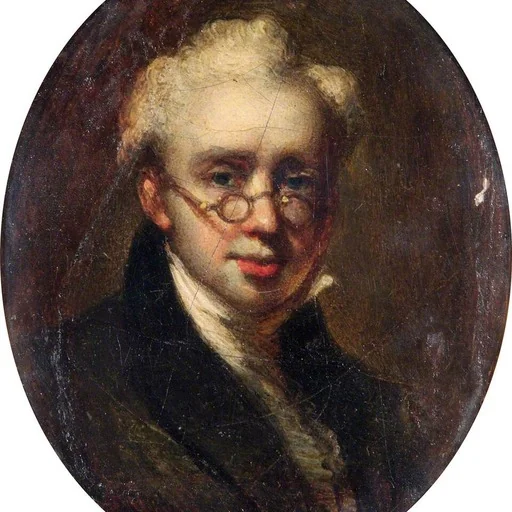
Artist
George Chinnery (Chinese: 錢納利; 5 January 1774 – 30 May 1852) was an English painter who spent most of his life in Asia, especially India and southern China.