Artwork
A Chinese tomb on a hillside, Macau
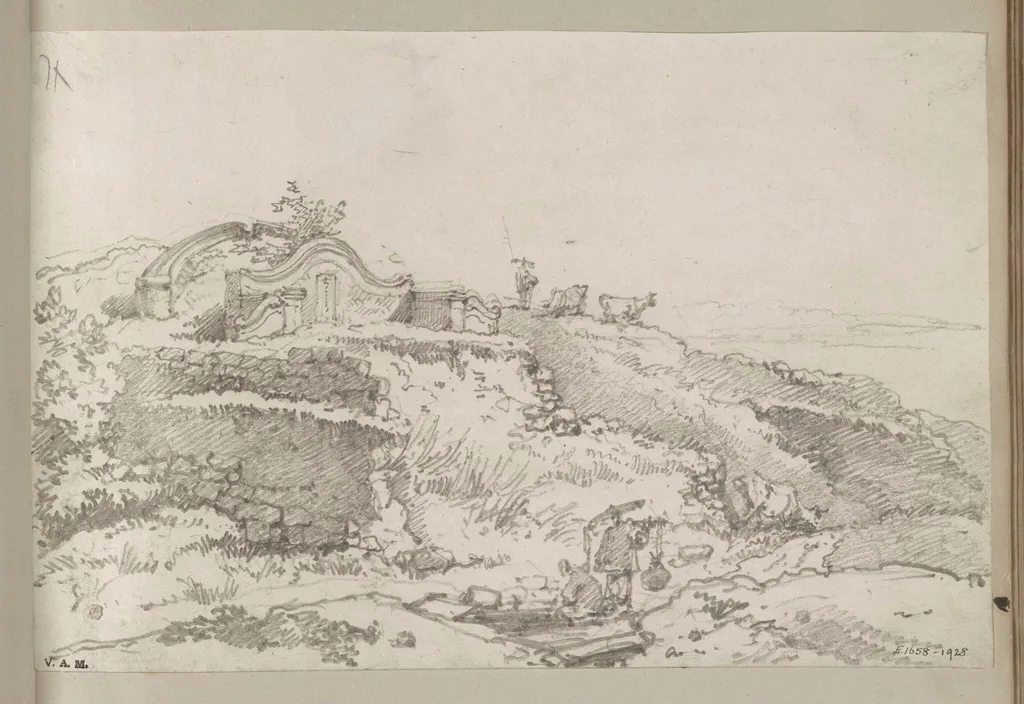
A Chinese tomb on a hillside, Macau is a drawing by the Romanticist artist George Chinnery. It dates from 19 and is held in the collection of the Victoria and Albert Museum.
About this work
Overview
A pencil drawing by George Chinnery depicts a Chinese tomb situated on a sloping hillside near Macau. Executed during the early 19th century, the work captures the quiet presence of the structure amid natural terrain. Chinnery, a British artist resident in Macau, produced this as part of his observational studies of local architecture and landscape during his time in southern China.
Subject & Meaning
The tomb features curved parapets and a stone stele bearing inscriptions, typical of regional funerary architecture. Its placement on a gentle slope suggests a deliberate alignment with feng shui principles, emphasizing harmony between the dead and the land. The drawing conveys stillness rather than ceremony, reflecting a contemplative approach to mortality common in Chinnery’s work.
Technique & Style
The composition favors quiet observation over dramatic effect, aligning with Romantic-era sensibilities without overt sentimentality.
Rendered in delicate pencil strokes, the drawing emphasizes tonal gradation over bold lines, creating a subdued atmosphere. Chinnery’s handling of light and shadow enhances the sense of depth in the hillside, while the restrained detail in the tomb’s surfaces avoids ornamental excess. The composition favors quiet observation over dramatic effect, aligning with Romantic-era sensibilities without overt sentimentality.
History & Provenance
Created during Chinnery’s decades-long residence in Macau, the drawing belongs to a body of work documenting local life and architecture. It entered the Victoria and Albert Museum’s collection through later acquisitions of his personal sketches, preserved as ethnographic records rather than finished artworks. The piece remains part of the museum’s holdings of 19th-century British drawings from Asia.
Context
Chinnery worked in Macau at a time when Western artists had limited access to inland China. His drawings offer rare visual records of local customs and structures from the perspective of a foreign resident. Unlike official colonial reports, his sketches focus on everyday scenes and vernacular forms, providing insight into cultural coexistence in a port city shaped by trade and migration.
Legacy
Chinnery’s tomb drawings contribute to early Western documentation of Chinese funerary architecture. Though not widely exhibited, they remain valuable for their unembellished observation and technical restraint. The work stands as a quiet testament to cross-cultural encounter, preserving details of a site that may no longer exist in its original form.
Artist & collection
Artist
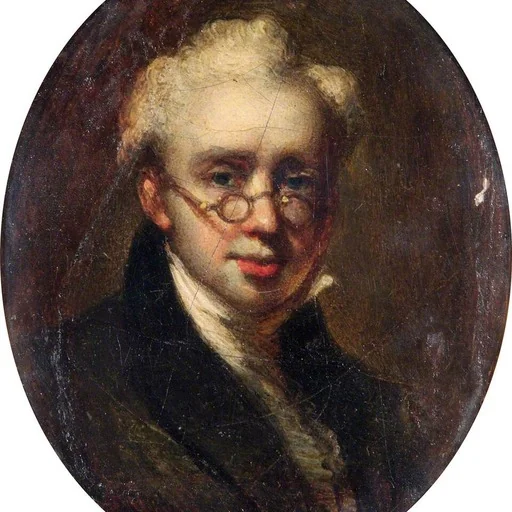
George Chinnery (Chinese: 錢納利; 5 January 1774 – 30 May 1852) was an English painter who spent most of his life in Asia, especially India and southern China.

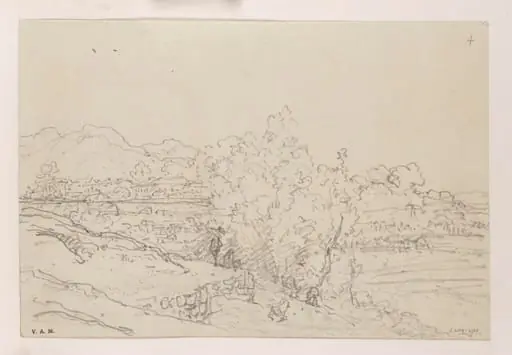 Fields and trees, with the city of Macau in the distance
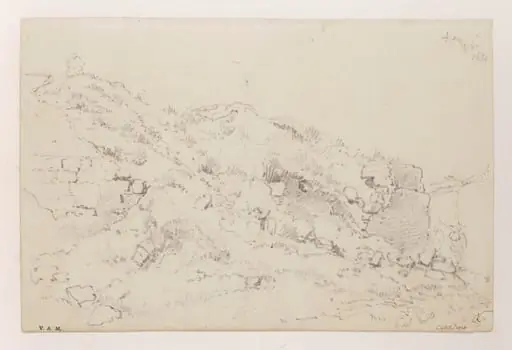 A hillside with ruined masonry
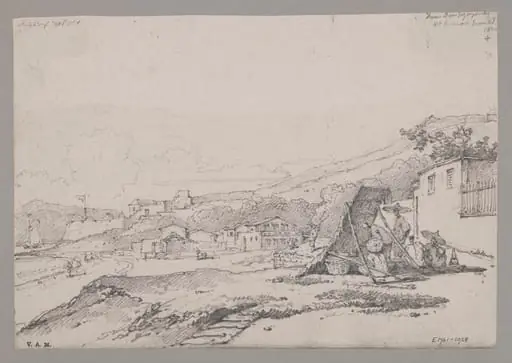 Corner of Macao Bay, looking west
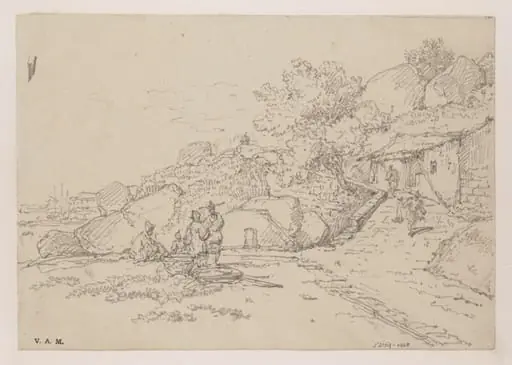 A small building on a rocky hillside, with a group of figures and the bay at left
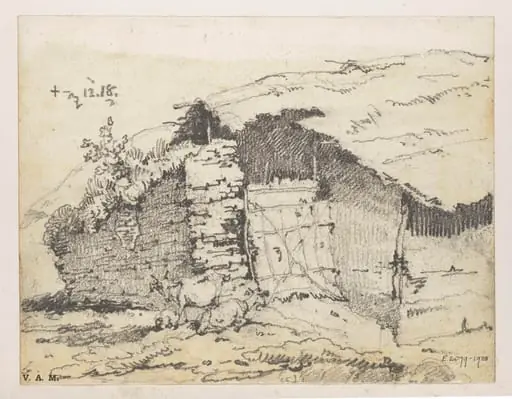 A Bengal village hut
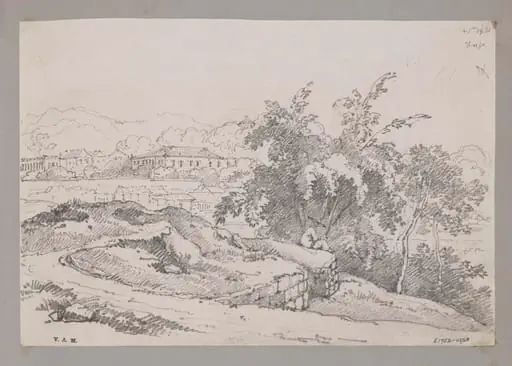 The Casa, Macao, in the gardens of which is Camoens' Cave (the residence of Lady Pereira), Macao
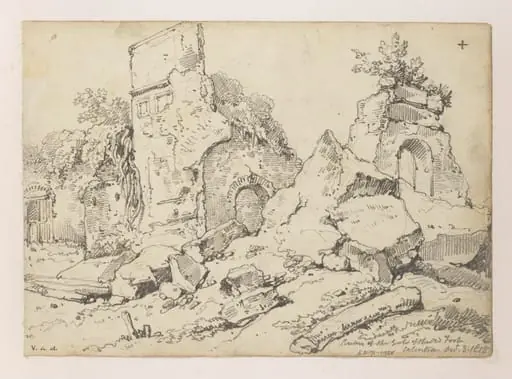 Ruins of the Old Fort, Calcutta
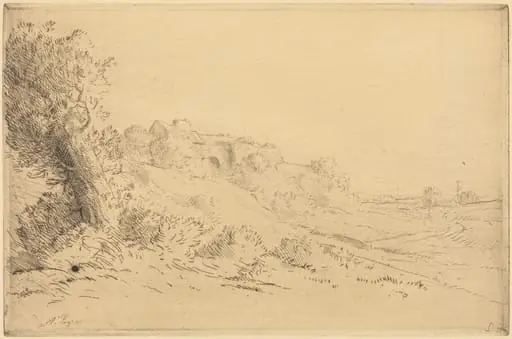 My Farm (Ma ferme)
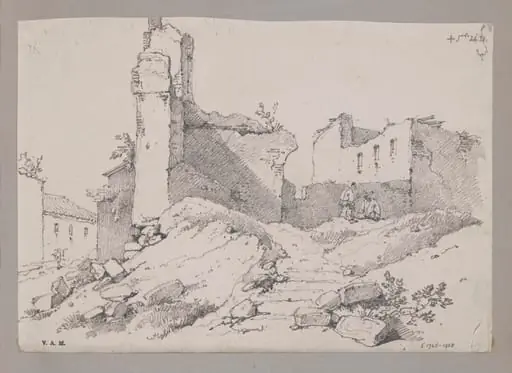 Ruins of the Swedish Factory, Macao, 1831
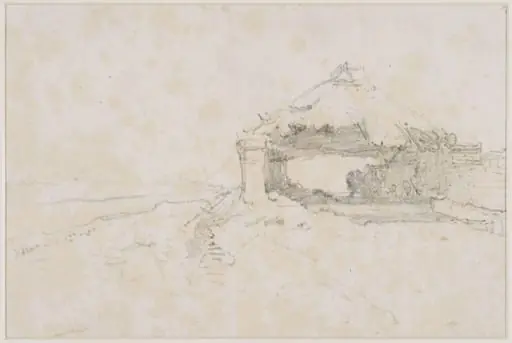 Swanage. Cart shed. 1879.
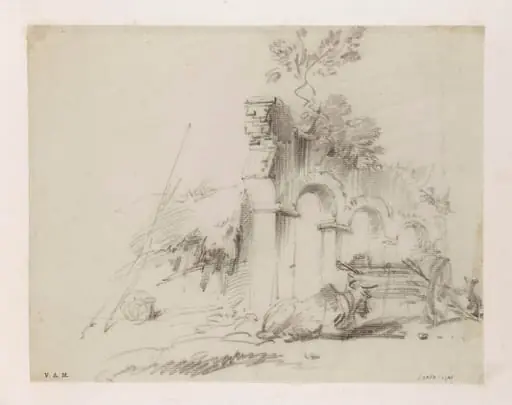 An ox and cart by a ruined building, Bengal
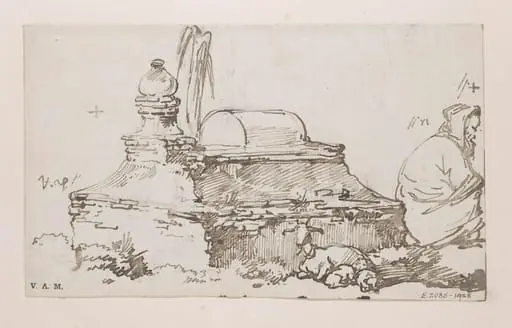 A boatwoman and a goat and kids by a Chinese tomb